Grape Powder
Minimum Order Quantity : 1-5 MT
Shelf life : 12-24 months under cool and dry storage
Common Incoterms : FOB, CIF, CFR
Documentation : includes COA, MSDS, phytosanitary certificate, certificate of origin, and inspection reports
Facilitated by Tradologie.com
Offered By : Grape Powder Exporters

This is a Vegetarian and plant-based product
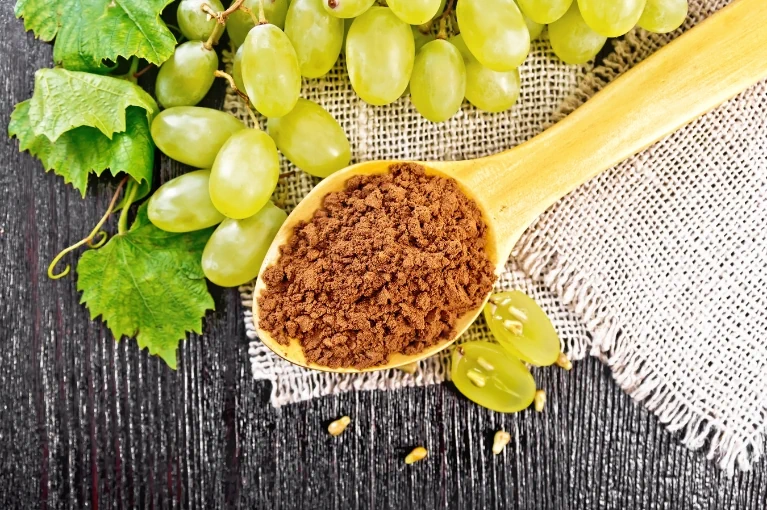
Grape powder , just to put simply, is grapes in a dry form, which in fact is easy-to-handle form and viable from the commercial flavouring perspective. Fresh grapes are great, no doubt. But they spoil fast, need careful storage, and prices swing depending on the season. Powder takes all that hassle out of the equation. You get the flavour and colour in a stable format that stores well and travels without headaches.
From a commercial angle, it fits neatly into today's food system where consistency matters more than anything else. Beverage companies, bakery players, confectionery brands, and nutraceutical firms use it to standardise taste and control costs. It also works well in instant mixes, health supplements, and flavour blends. The real appeal for bulk buyers is simple—long shelf life, predictable quality, and fewer supply risks. Once a product checks those boxes, it naturally starts moving in bulk.

| Category | Details |
|---|---|
| Grade Types | Spray-dried Grape Powder Freeze-dried Grape Powder Organic Grape Powder Conventional Food Grade Nutraceutical / Functional Grade Flavouring & Beverage Grade |
| Physical Parameters | Colour: Light purple to dark violet depending on variety Appearance: Fine, free-flowing powde Odour: Characteristic fruity aroma Taste: Sweet to mildly tart Solubility: Good in water and beverage formulations |
| Chemical Parameters | Moisture: Typically ≤ 5% Total Sugars: 50-70% (variety-dependent) pH: 3.0-4.5 Polyphenols & antioxidants (especially in dark grape varieties) Acidity: As per grape source |
| Microbiological Parameters | Total Plate Count within acceptable limits Yeast & Mold controlled Absence of pathogens such as Salmonella Compliance with international food safety standards |
| Purity / Particle Size / Moisture / Tolerance | Free from foreign matter Particle size as per buyer specification (80-200 mesh) Moisture within Codex tolerance No artificial colour unless declared Adulteration-free |
| Additives & Carrier Options | Maltodextrin or natural carriers (if used) Clean label options Sugar-free or low-carrier variants available |
| Applicable Standards | FSSAI (India) Codex Alimentarius ISO 22000 / HACCP Organic certification (if applicable) EU and US FDA compliance |
| Testing & Inspection Methods | Moisture and sugar analysis Antioxidant and polyphenol testing Microbial and heavy metal testing Residue and pesticide testing Third-party inspection (SGS, Intertek etc.) |
| Packaging Standards | Food-grade laminated bags 10-25 kg export cartons Bulk packaging for food processors Moisture-barrier and light-protective packaging |
| Shelf Life & Storage | Shelf life: 12- 24 months Store in cool, dry and dark conditions Protection from moisture and oxidation |
| Specification Source | Industry and export trade standards Food ingredient buyer specifications Regulatory and food safety authorities International flavour and nutraceutical norms |
By Form There's no single format in this business. Some buyers want very fine powder because it mixes faster in drinks and health blends. Others are okay with a slightly coarse texture, especially in bakery and snack applications. Spray-dried is what most companies go for because it's affordable and practical. Freeze-dried is more premium, but volumes are still smaller.
By Texture / Particle Size This comes down to how the powder behaves in production. Beverage companies usually want something that dissolves quickly and doesn't form lumps. In bakery or confectionery, the tolerance is wider. In contracts, this is normally defined by mesh size. Sounds small, but it can make or break processing efficiency.
By Variety & Origin Red and purple grape fruit powders move the most because the colour and flavour are stronger. That makes it easier for food brands. What's interesting is that green grape seed powder witnesses lesser demand and is confined to niche buyers. They keep options open depending on price, stock, and delivery timelines.
By Processing Level Some buyers insist on pure grape fruit powder with no additives. Others are fine with small amounts of carriers like maltodextrin because it improves stability and shelf life. In the nutrition space, concentrated powders with higher antioxidant levels are getting more attention. It's not a huge segment yet, but the margins are better.
By Moisture & Composition Low moisture is critical in exports. If the powder absorbs moisture and clumps, the shipment becomes difficult to handle. So this is checked closely. Apart from that, colour strength, sugar content, and antioxidant levels matter depending on the end product.
By Quality Grade Food-grade products move in bulk. Nutraceutical-grade is stricter and more specialised. The difference is mainly in testing, purity, and consistency. Buyers in this segment are willing to pay more, but they expect reliability every single time.
By Certification Organic and residue-compliant products are gradually gaining ground, especially in Europe and North America. Halal and kosher certifications also come up depending on the market.
By End Use So, it ultimately depends on which industry the customer wants the products for and how they eventually plan to use the product. Beverage, supplements, bakery, and confectionery players, for instance, all have different expectations and food applications. Low-moisture, as per the prevailing standards in the export, high-purity, and compliance-friendly grades are usually preferred in exports.
Most Traded Grade Standard spray-dried red grape powder online remains the most widely traded because it fits multiple applications and keeps demand stable.
Export-Preferred Grade Low-moisture, high-purity, and compliance-friendly grades are usually preferred in exports. B2b buyers show more eagerness towards stability and long shelf life than just low pricing simply because of commercial viability.
Application-wise Mapping Honestly, grape fruit powder doesn't sit in one fixed category. Beverage companies use it the most because it gives colour, flavour, and that natural tag without too much hassle. You'll find it enriches the tastes of smoothies, juices, health drinks, and drinks that are in the instant blend category. Bakery and confectionery players use it in fillings, chocolates, toppings, and dessert mixes. In the nutrition space, it goes into capsules, protein blends, and antioxidant products. Even snack brands add it in seasonings. Once a product works with it, brands usually don't mess around and change.
Industry-wise Usage Food and beverage still takes the biggest share. That's where the bulk volumes move. Nutraceutical and supplement companies come next. Smaller volumes, but higher value. Cosmetics and personal care brands are also testing it because of the antioxidant angle. It's early, but the interest is real.
Processing vs Retail vs Industrial Use Industrial buyers are all up for the commercial viability of the powder and look for how the powder actually performs in machines. Flow, stability, and consistency matter more than anything. Retail and private-label brands think differently. They want clean labels, organic claims, and visual appeal. Processors want balance—steady supply, easy blending, and predictable results. Everyone wants reliability, but for different reasons.
Export-oriented Applications In exports, demand is clearly shifting towards beverage, health, and clean-label segments. Europe and North America push this trend the most. Buyers there are not just looking for flavour. They want low moisture, good colour, residue compliance, and full traceability. Suppliers who get this right usually stay in the game longer.
| Rank | Exporting Country / Region | Indicative Trade Position |
|---|---|---|
| 1 | European Union | Largest global exporter due to strong food ingredient and nutraceutical industry/td> |
| 2 | United States | High-value and premium fruit powder exports |
| 3 | Singapore | Major re-export and trading hub |
| 4 | Germany | Strong processed food and ingredient sector |
| 5 | Netherlands | Key global trade and distribution centre |
| 6 | China | Competitive pricing and large-scale production |
| 7 | Italy | Premium and specialty fruit ingredient exports |
| 8 | France | High-quality and organic segment focus |
| 9 | Poland | Growinsg procesed food export base |
| 10 | United Kingdom | Strong demand-driven and specialty exports |
| Rank | Importing Country / Region | Indicative Trade Position |
|---|---|---|
| 1 | United States | Largest demand due to strong nutraceutical, beverage, and processed food industry |
| 2 | China | High consumption and ingredient demand in food and health sectors |
| 3 | European Union | Major processed food and clean-label ingredient market |
| 4 | Germany | Key importer within Europe for food and supplement industries |
| 5 | United Kingdom | Strong retail, beverage, and health product demand |
| 6 | Canada | Growing demandural fruit-based ingredients for nat |
| 7 | South Korea | Increasing use in functional foods and beverages |
| 8 | Netherlands | Major re-export and food distribution hub |
| 9 | France | Premium and organic fruit ingredient demand |
| 10 | Australia | Rising demand in health, wellness, and sports nutrition sectsor |
Note: These rankings are indicative based on HS Code 2106.90, which is widely used for fruit powders including grape powder. Actual trade positions may vary due to re-exports, blended formulations, and country-level classification practices.
Let's be honest, fruit powders were once seen as backup ingredients. Something companies used only when fresh supply got messy. That's changed now. The space has grown into a serious business. The market is already heading toward USD 62 billion by 2025, and if the current pace continues, it could move close to USD 96 billion by 2032. Not dramatic growth, but steady. And steady usually means predictable demand, which bulk buyers like.
The real push is coming from how nutrition is evolving. People are no longer buying generic “healthy” products. They want specific outcomes—immunity, gut health, skin, energy. Because of that, supplement brands are building customised formulations, and fruit powders fit perfectly into this model. They are easy to standardise, blend, store, and ship. No seasonal drama, no cold chain headaches.
Core Industries Let's keep it real. The bulk demand is coming from industries that don't like surprises. Supplement and nutraceutical companies are right at the front. They want ingredients that stay the same every time. No batch drama, no shelf-life tension. Fruit powders fit nicely into that system. Food and beverage brands are another big block. Think protein shakes, smoothie premixes, snack bars. Once these companies lock a formula, they don't keep changing suppliers. Stability matters more than experimentation.
Consumer / Industrial Trends The shift in consumer thinking is pretty obvious now. People are not buying random “healthy” products anymore. They want clear benefits—energy, immunity, digestion. Brands are reacting fast because that's where the money is. On the industrial side, the logic is even simpler. Fresh fruits come with too many headaches—seasonal supply, price jumps, storage losses. Powders remove that stress. Companies can store, plan, and produce without constantly watching the raw material market.
Innovation & New Applications What's interesting is where these powders are showing up now. Hydration mixes, wellness drinks, personalised nutrition packs, plant-based foods. Even ready-to-drink and convenience segments are using them quietly. The reason? They don't disturb existing production lines. No major changes, no heavy investment. And when something fits smoothly into a factory setup, adoption becomes easy. That's how steady demand builds over time.
| Parameter | Indicative |
|---|---|
| Indicative Bulk Price Range | USD 3,500 - 8,500 per metric ton (depends on spray-dried, freeze-dried, seed extract, and quality) |
| Unit of Trade | USD per metric ton (MT) |
| Export Price Trend | Moderately stable; moves with grape harvest, processing costs, and global demand for natural fruit ingredients |
| Regional Price Differences | Lower in India, China, and Turkey; higher in Europe and the US due to premium, organic, and compliance-driven demand |
| Premium Segment Pricing | Organic, freeze-dried, and nutraceutical-grade grape seed powder can exceed USD 9,000 – 12,000 per MT |
| Key Cost Drivers | Raw grape availability, drying technology, colour retention, polyphenol content, certifications, and packaging |
| Seasonal Impact | Prices can increase during low harvest periods or high demand in beverage and supplement industries |
| Freight Sensitivity | Medium to high, especially for exports to long-distance premium markets |
| Parameter | Indicative |
|---|---|
| HS Code | Product Category / Meaning |
| 0806 | Fresh grapes (raw material category) |
| 0806.20 | Dried grapes (raisins) |
| 2009 | Fruit juices (including grape-based concentrates used for powder processing) |
| 2009.61 | Grape juice (including concentrates) |
| 2008 | Fruit and edible plant parts, prepared or preserved |
| 2008.99 | Other processed or preserved fruit |
| 2106 | Food preparations not elsewhere specified |
| 2106.90 | Fruit powders, extracts, and ingredient blends |
| 2106.90.99 | Most commonly used global trade code for grape powder |
| Tax Classification (India) | Export: Zero-rated GST. Domestic: Typically 12–18% depending on formulation and end use. |
| Parameter | What Importers Focus On |
|---|---|
| Quality | Food-grade, hygienic processing, low microbial load, natural colour and flavour, stable shelf life with moisture control |
| Type & Grade | Spray-dried or freeze-dried, seed vs seedless, organic vs conventional, fine and free-flowing powder, uniform colour |
| Testing | Microbiology, heavy metals, pesticide residues, polyphenol content, moisture, third-party lab testing |
| Regulatory Compliance | Certification as per FSSAI, Codex, EU, US FDA, and destination market food safety norms |
| Documentation | Commercial Invoice, Packing List, Bill of Lading / Airway Bill, COA, Product Specification, MSDS, Certificate of Origin, Phytosanitary, FSSAI licence, HACCP / ISO copies, inspection reports, organic / halal / kosher / non-GMO (if required), allergen declaration, residue and traceability reports |
| Consistency | Same quality, colour, and taste in every shipment, long-term supply capability |
| Packaging | Bulk food-grade packaging, moisture-barrier bags, HDPE drums, palletized shipments |
| Traceability | Batch tracking, farm-to-processing transparency, sustainability and clean-label sourcing |
Packaging Types Nothing fancy here. Most grape or fruit powders move in 25 kg or 20 kg food-grade bags, usually with inner liners to keep moisture out. For bigger buyers, jumbo bags are used. Retail packs are a different game, but in bulk trade, it's mostly industrial packaging—strong, simple, stackable.
Storage & Shelf Life Keep it dry. That's the main rule. These powders hate moisture. Warehouses need to be cool, low humidity, and clean. If stored properly, shelf life usually runs 12 to 24 months depending on processing and moisture level. If storage is careless, clumping starts. And once that happens, complaints follow.
Incoterms (EXW / FOB / CIF) Most international deals happen on FOB because buyers prefer controlling freight. Some go for CIF if they want the supplier to manage shipping as well. EXW is more common in regional or repeat trades where logistics are already arranged. Nothing complicated, just depends on who wants control of the cargo.
Export Documentation Standard paperwork applies—invoice, packing list, bill of lading, certificate of origin, and often a certificate of analysis. Some markets also ask for phytosanitary or residue compliance documents. In global trade, missing paperwork delays cargo faster than anything else. So this part cannot be casual, even if everything else is.
| Category | What Buyers Usually Expect |
|---|---|
| Food safety compliance, FSSAI licence, phytosanitary certificate, Certificate of Analysis (COA), basic regulatory approvals as per importing country | Product Category / Meaning |
| Optional / Premium Certifications | HACCP, ISO 22000, FSSC, BRC, organic certification, non-GMO, clean-label, sustainability and traceability systems |
| Quality & Testing Compliance | Pesticide residue, heavy metals, microbiology, polyphenol content (for nutraceutical use), third-party lab testing |
| Region-Specific Compliance | Middle East - halal, hygiene, and shelf-life focus; Europe - strict pesticide, heavy metal, and traceability norms; North America - audits, transparency, and documentation; Asia & Africa - price-quality balance with compliance and supply reliability |
| Buyer-Specific Requirements | Halal, Kosher, allergen-free, gluten-free, and customized compliance as per end-use industry (food, beverage, supplements) |

The direction is quite straightforward now. This demand is not going anywhere because convenience is not a trend anymore, it has become the base of the food and nutrition industry. As more companies move toward ready, stable and easy-to-store ingredients, fruit powders like grape seed powder will keep getting space. It may not look very aggressive in numbers, but this is the kind of market that grows quietly and steadily. From a B2B angle, buyers are focusing more on reliability, shelf life and consistency rather than just price, which is actually a positive shift for serious suppliers.
Get in Touch


Importing grape powder online is quite simple through professional B2B sourcing platforms. Buyers can connect directly with verified global exporters, compare prices, check technical specifications, and request samples before finalising bulk orders. Platforms like Tradologie.com also help in documentation, quality compliance, and smooth international trade execution, which reduces sourcing risks and saves time.
The typical MOQ for grape powder starts from 1–5 metric tons, depending on the grade, packaging, and supplier. Premium variants such as freeze-dried, organic, or nutraceutical-grade products may require slightly higher quantities due to production costs and export logistics.
Grape powder is available in multiple formats such as spray-dried, freeze-dried, organic, conventional food-grade, and nutraceutical-grade. Buyers can also choose based on particle size, moisture level, antioxidant content, and whether carriers like maltodextrin are used. The most widely traded variant in global bulk markets is spray-dried red grape powder because it offers a balance of price, stability, and performance.
Most international transactions are conducted through LC (Letter of Credit), advance TT, or partial advance with balance against shipping documents. Long-term buyers and repeat importers may negotiate flexible terms depending on trust, contract size, and supplier relationship.
Bulk grape powder is imported globally, especially in the United States, Europe, China, South Korea, Canada, Australia, and the Middle East. Demand is strongest in regions with developed food processing, beverage, and nutraceutical industries.
The biggest demand comes from food and beverage, nutraceutical, supplement, bakery, and confectionery companies. It is also used in instant drink mixes, protein blends, flavouring, and functional foods. Some cosmetic and wellness brands are also exploring grape powder due to its antioxidant properties.
Importers usually expect complete documentation including COA, MSDS, certificate of origin, phytosanitary certificate, and third-party inspection reports. Quality checks typically cover moisture, microbial limits, pesticide residues, heavy metals, and antioxidant levels to ensure compliance with destination market regulations.
-powder-(1).webp)
.webp)
.webp)
.webp)
.webp)