Introduction
When exploring the core fruit powder definition, a wide variety of dehydrated, pulverized tropical and subtropical fruits make up this category, often collectively referred to as industrial fruit solids. They are highly shelf-stable and resistant to rapid spoilage. Around the world, food processors utilize them to manufacture infant formulations and commercial beverages. These concentrated powders have historically been a niche ingredient in specialized culinary applications. They now play a much larger role. They are being used more and more in contemporary global trade networks. This change aids in addressing important problems like post-harvest agricultural loss and global supply chain inefficiencies. Additionally, it satisfies the growing demand from consumers for natural flavorings and clean-label products. These fruit derivatives have historically minimized seasonal dependencies for bulk manufacturers. They are also essential to the cosmetics industry and producers of high-grade nutraceuticals. Fruit powders are therefore a very lucrative value-added agricultural product. A thorough description of these concentrated derivatives is given in this guide. Their commercial manufacturing varieties and industrial definitions are covered. It also describes the dynamics of bulk trade and global export metrics.

For those asking what exactly a dehydrated fruit powder is, food science classifies it as the moisture-free, concentrated solid form of natural fruit juice or pulp. Their extremely low water activity gives them a unique identity. They are very effective at inhibiting microbial growth because of this special physical feature. They therefore flourish in ambient storage conditions with no need for expensive cold-chain logistics. Technically speaking, the finalized fruit powder consists of tiny, free-flowing micro-particles of fruit solids. In most cases, these fresh fruits need particular pre-processing protocols. In order to remove the bulk water weight, this processing entails advanced spray-drying or freeze-drying. They are only prepared for commercial blending or human consumption following this important step. Fruit powders are classified as high-value dehydrated commodities by the agricultural export industry. They are very valuable commercially. Their low dependency on seasonal availability makes them highly valued by bulk buyers. They also have the amazing capacity to deliver consistent flavor profiles year-round. Almost always, raw fresh fruits fail in these same rigorous supply chain demands.
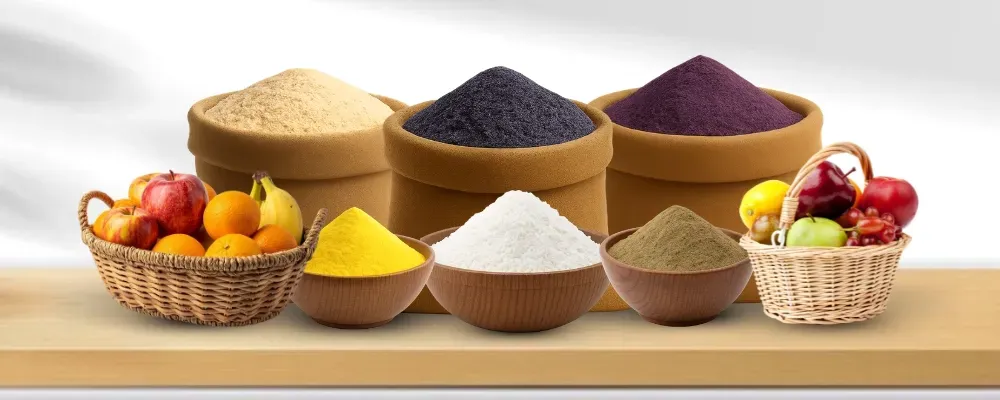
To put it simply, fruit powders are highly concentrated, extremely resilient natural flavorings. Long-term, ambient storage environments are ideal for their preservation. Fresh agricultural crops frequently have a difficult time surviving in these same conditions without rotting. Whole fruits usually need enormous amounts of refrigeration. They also require logistics companies to transport them constantly and carefully to prevent bruising. In contrast to those highly perishable crops, fruit powders are real "supply chain problem solvers." You may be closely examining the contemporary food manufacturing trade. If so, natural fruit powder will be marketed as a 100% real, clean-label ingredient. They are currently going through a huge boom in adoption. This economic boom is particularly apparent in the global market for packaged health foods. For marketing purposes, people frequently use general terms like dehydrated fruits and natural extracts. This broad term often includes items like candied peels or fruit leathers. But "fruit powder" is a far more precise term. It only refers to entirely pulverized, moisture-extracted particulate matter. Popular types of this particular export category include mango, banana, and papaya powders.
Understanding the commercial positioning of fruit powders requires a direct comparison with dominant global staples like raw, fresh fruit exports.
| Feature | Fruit Powders | Fresh Fruits |
|---|---|---|
| Moisture Content | Very low (strictly below 4–5%) | Extremely high (often 80–90% water) |
| Logistics Resilience | Extremely high; highly tolerant to extended transit times | Vulnerable to rapid spoilage and physical damage |
| Processing | Drying and milling required; varied extraction protocols | Washing, waxing, and temperature-controlled packing |
| Market Dominance | Rapidly growing (FMCG, supplements & cosmetics) | Global staples; heavily reliant on swift cold-chain freight |
| Trade Preference | Valued for concentrated flavor, standardization, and long shelf life | Traded for primary global raw consumption |
Think about the viewpoint of bulk fruit powder suppliers and B2B buyers. Consider the requirements for global food and beverage aggregators' operations. The true value of fruit powders is complex for these important industry participants. It mostly consists of clear functional advantages. The commodity also has significant logistical benefits.

The commercial application of fruit powders is heavily segmented, with the final end-use strictly dictated by the baseline manufacturing quality and specific drying method.
The final end-use of fruit powders is strictly determined by the drying technology and baseline raw fruit quality, making their commercial application highly segmented. Only unadulterated freeze-dried fruit powder is diverted for premium nutritional consumption and undergo a thorough vacuum-processing procedure prior to being offered for sale. These powders are processed by manufacturers into a range of retail-ready goods, such as infant formulas, daily vitamin supplements, and high-end protein blends. As a result, this market segment primarily serves health brands who are curious about maximum nutrient retention, as well as pharmaceutical buyers actively looking for pure bioactive compounds.
Conversely, the market treats standard spray-dried fruit powder distinctly differently, prioritizing massive, bulk-volume global trade. These versatile powders are a highly soluble, flavor-dense component that is mostly used in the commercial food industry to flavor packaged snacks, baked goods, and ready-to-drink beverage mixes. These spray-dried fruit powders are a major source of volume for industrial food processors since they totally control the extremely profitable instant-drink market in addition to conventional confectionery flavorings.
Industrial applications represent another distinct commercial avenue, where certain specific fruit varieties hold incredibly high value, particularly for large-scale topical formulations. Papaya powder, which is frequently utilized for its active papain enzymes, and citrus powders are the primary varieties utilized here. This bulk extraction process directly benefits the cosmetics industry by providing an essential natural raw material for the production of various exfoliating scrubs, organic face masks, and premium vitamin-C serums worldwide.
Regardless of the intended commercial application, proper bulk handling is a non-negotiable requirement across all varieties to ensure safe transit. Operators must enforce incredibly stringent humidity management, specifically keeping internal powder moisture strictly below 5%. Maintaining this exact threshold is vital to prevent dangerous caking or clumping, completely mitigating the risk of microbial fermentation during long-haul transit and preserving the cargo's commercial viability.
When evaluating the various types of fruit powders, the commercial market is absolutely not monolithic. Instead, it is highly fragmented. It comprises several distinct, geographically specific fruit varieties. Consequently, each specific type holds a unique, quantifiable trade value in the global supply chain.
In the realm of international fruit powder wholesale trade, strict classification systems apply for those looking to buy fruit solids in bulk. Powders are meticulously categorized by established drying methods before export. The "Spray-Dried" designation is the industry baseline for any bulk commercial flavor order, representing the standard, highly soluble quality for general trading by wholesale ingredient suppliers. Conversely, the "Freeze-Dried" label denotes a strictly premium, high-value product. These superior powders have been rigorously processed through sub-zero vacuum chambers. Therefore, they are contractually guaranteed to retain nearly 100% of their original cellular structure and nutrients. Furthermore, this rigorous process completely eliminates the need for maltodextrin or synthetic anti-caking carriers.
The manufacturing of fruit powders is highly geographically aligned with fresh fruit belts. It is predominantly concentrated within India's major horticultural states. These vast agricultural zones span extensively across Maharashtra, Andhra Pradesh, and Tamil Nadu. A few key geographic production zones currently control the majority of the export supply chain. Maharashtra's vast mango-producing region is one of the primary contributors. Additionally, South India's vast tropical fruit belts, which are the main source of bananas and papayas, are essential to powder production worldwide.
Commercially speaking, the entire procurement cycle is highly quality-dependent. It eliminates the acceptance of unripe or damaged raw materials for sweet powders. Instead, seasonal harvesting at peak ripeness plays a major role in the fruit's natural sugar (Brix) intake. Therefore, establishing and maintaining strong contract-farming ties with local orchards is necessary for reliable manufacturing.
The quality of the final powder is not left up to chance. Accurate harvest timing has a direct and significant impact. Additionally, maintaining commercial viability requires rapid post-harvest pulping. The fresh fruit must be swiftly processed into a pasteurized puree to halt enzymatic degradation before drying begins.
The primary manufacturing inputs require specialized industrial processing. The first crucial step typically involves high-capacity, automated washing and deseeding. Next comes rigorous, thermal pasteurization designed to completely neutralize pathogens. Finally, the fruit puree passes through highly sophisticated drying systems. Processing facilities utilize advanced spray-dryers with specific inlet and outlet temperatures to ensure rapid moisture evaporation. They also employ high-tech, multi-stage sieves to guarantee uniform particle size (e.g., 60 to 80 mesh). These stringent manufacturing steps collectively prepare the final powder. Ultimately, they ensure strict, unwavering compliance with demanding international food-grade export standards.
Tight regulations govern the international fruit powder export trade and dictate global food ingredient sourcing. These cross-border movements are subject to strict phytosanitary and food safety compliance. Suppliers must also continuously meet strict microbiological requirements.
Fruit powder is ideal for the international export market. Its inherent low perishability and high bulk density are the main causes of this. But this benefit depends on one important element. To avoid caking and spoiling, exporters must carefully maintain strict moisture-barrier packaging (like aluminum-lined heavy-duty kraft bags) during transit.
Supported by reliable agricultural processing infrastructure and a vast network of fruit powder manufacturers in India, the country currently holds a rapidly growing position in the global supply chain. In recent fiscal periods, fruit powder export from India has reached impressive volumes, sustained by a vast network of advanced manufacturing units. Financially, this outbound volume generates tens of millions of dollars in export value annually (APEDA). This solidifies the nation's status, as it capitalizes on its position as the world's second-largest producer of fruits. Other nations also contribute significantly to the international market. Brazil, China, and Vietnam represent major sources of outbound shipments. Their exports, however, skew heavily toward their own regional specialties. They mainly supply citrus, apple, or dragonfruit powders, which are primarily utilized for global beverage formulations.
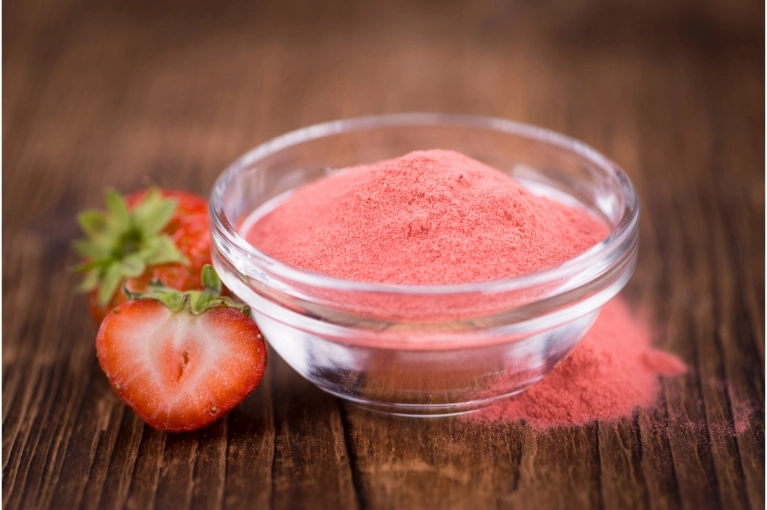
Rising global fruit powder demand and expanding global dehydrated ingredient import-export opportunities are significantly impacted by region and intended use. Large consumer bases are represented by North America and the European Union. They import large amounts from global strawberry powder suppliers and other fruit extract producers to supply their rapidly expanding clean-label FMCG industries. They also buy a lot of freeze-dried powders for the premium nutraceutical market. The import profile in the Middle East is slightly different. This area imports a lot of fruit powder for instant beverage mixes and commercial bakery applications. The United Arab Emirates and Saudi Arabia are major distribution hubs in this region.
Agrochemicals are usually heavily monitored in fruit cultivation destined for export powders. Because of this, thorough compliance checks are necessary for successful exportation. Maximum residue limits (MRLs) for pesticides must be strictly adhered to by all fruit powder suppliers. Additionally, a thorough heavy metal and microbiological panel (yeast, mold, salmonella) is required. The overall fruit powder price is significantly impacted by solubility and carrier-to-fruit ratios in addition to safety. Before completing transactions, buyers carefully consider the percentage of maltodextrin used as a drying aid, as it directly affects the fruit powder price per kg. In premium international contracts, this additive level is usually strictly limited or entirely prohibited.
Think about the complex global food ingredient ecosystem. Within it, India occupies a remarkably competitive position. At the moment, the country contributes significantly to the world's processed horticultural output. The push to reduce post-harvest agricultural waste has been one of the primary catalysts for this sector. The Indian domestic processing market underwent a significant transformation after modern agro-processing clusters were established, which simultaneously boosted bulk fruit powder sourcing from India. Security of the supply chain soon gained importance. As a result, the government quickly created comprehensive, aggressive export promotion policies (like the SAMPADA scheme). They implemented lucrative infrastructure subsidies as well. These financial incentives were specifically designed to support regional food parks and processing units. The fast-moving consumer goods (FMCG) industry shifted its focus concurrently. It witnessed a sharp rise in the creation of novel fruit-flavored products.
The commercial landscape is rapidly segmenting on a global scale. However, traditional artificial flavoring demand is currently facing heavy scrutiny. This shift is especially noticeable in large regions of North America and Europe. Natural, real-fruit ingredients are being demanded on a daily basis in these particular areas. For millions of consumers, clean labels consistently dictate their purchasing habits. In contrast, the economic situation facing manufacturing markets in developing nations is entirely volume-driven. There are unprecedented spikes in demand for affordable, instant-drink formulations. This dual-demand is described as high-volume commercial and high-value nutritional. This particular growth is primarily driven by two factors. These are the rapidly growing natural-beverage and preventative-health movements.
The data presents a clear picture in terms of finances. The global fruit powder market was projected to see immense growth throughout the current decade. Future growth is expected to remain substantial, according to industry experts in 2026. They predict that the global market value will continue scaling rapidly toward the end of the 2030s. This is a noteworthy financial trajectory. It shows a consistent Compound Annual Growth Rate (CAGR) estimated at over 7%. As a result, a fundamental economic shift is underway across the global agricultural processing market. The old, highly perishable nature of raw fruit export is evolving. It is no longer restricted strictly to cold-chain dependency. Its status has completely changed in the present. It is making a strong name for itself as a very high-yield, logistics-friendly ingredient.
-powder-(1).webp)
.webp)
.webp)
.webp)
.webp)