Strawberry Powder: A Guide to Varieties, Grades, and Global Trade
Through this guide, we provide a precise, trade-oriented overview of how this agricultural product is processed, graded, quality-validated, certified, priced, and moved through global supply chains to meet the technical expectations of bulk buyers.
Technical Overview for Trade and Bulk Procurement
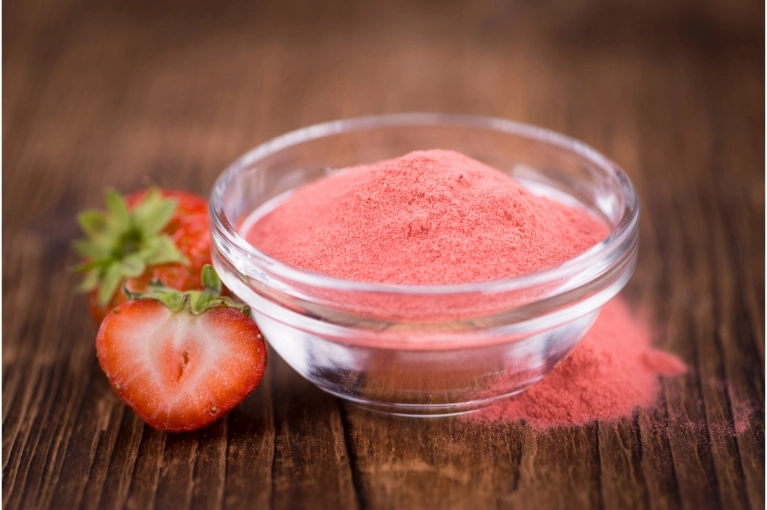
Derived scientifically from Fragaria ananassa, commercial strawberry powder is a cornerstone ingredient in the global food, beverage, and nutraceutical manufacturing sectors. The finished powder is concentrated, extremely fine, and highly soluble. The color of this dried fruit powder can be anywhere from a soft pastel pink to a deep, bright crimson, depending on the raw puree and the method used to dry it (usually freeze-drying or spray-drying). The extraction and drying processes keep a lot of naturally occurring fructose, citric acid, malic acid, and complex volatile esters in the product. This gives it a sweet, tart, and fragrant flavor. Across North America, the EU, and the Asia-Pacific regions, one of the primary strawberry powder uses serves as the industry standard for natural red fruit flavoring in dairy, confectionery, and instant beverage formulations.
The biochemical integrity, solubility, and particle consistency of Strawberry Powder are critical for industrial beverage manufacturers and flavor houses who procure it in bulk. The raw berry pulp is atomized through specialized spray-drying towers or subjected to cryogenic freeze-drying, causing the liquid to transform into a uniform micro-particulate powder. Its retained tartness and aromatic profile make it the preferred raw material for dry blending, where the "fresh berry" note must distribute evenly and dissolve instantly upon reconstitution. This provides a distinct advantage over liquid berry purees that drastically reduce the shelf-life of dry consumer packaged goods.
While commonly found in retail as standard strawberry milk powder, high-grade industrial material is engineered for specific 'Solubility Ratios' and physical formats (defined by Mesh Size). The spray-drying process requires a carrier agent (commonly maltodextrin or gum acacia) to encapsulate the sensitive fruit sugars and prevent the powder from instantly caramelizing or crystallizing onto the high-heat drying chamber walls.
Due to its immediate bioavailability and vast surface area, it works differently than whole dehydrated fruit pieces. It can be incorporated directly into dry nutraceutical blends or instant dessert bases. Although the natural fruit sugars are prone to rapid moisture absorption (deliquescence) once exposed to ambient air, manufacturers who choose to buy premium strawberry powder ensure superior mixing efficiency and consistency. This strict requirement necessitates high-barrier aluminum packaging to maintain flowability.
PRODUCT SPECIFICATIONS
Parameter
Standard / Limit
Solubility
> 95% in warm water (Spray-Dried)
Moisture Content
Max 3.0% - 5.0%
Carrier Content (Maltodextrin)
10.0% - 25.0% (Grade Dependent)
Total Ash
Max 3.0% - 5.0%
Particle Size (Mesh)
60 to 100 Mesh (Fine to Ultra-Fine)
Synthetic Colors / Flavors
Negative (Strictly tested for Red 40, Carmine, or Sudan dyes)
Color
Pale Pink (Spray-Dried) to Deep Red (Freeze-Dried)
Microbiology (Salmonella/E.coli)
Absent in 25g (Crucial for EU/US Dairy and Baby Food)
Foreign Matter
Max 0.1%
Heavy Metals (Lead, Arsenic)
Strictly Controlled ( < 1.0 ppm limits apply)
Critical Note: "Solubility" and "Botanical Purity" are the major specifications for Strawberry Powder. Premium buyers require "100% Fragaria Traceability," where the product offers a complex, authentic tartness distinct from generic fruit blends. A laboratory check for "Synthetic Adulteration" (adulteration with artificial strawberry essence combined with cheap beet root powder or synthetic red food coloring to mimic premium freeze-dried grades) is mandatory to ensure the product remains sound and fit for high-value export.
TYPES, GRADES & VARIANTS
In the highly competitive landscape of the Fruit Powder B2B marketplace, segmentation is rigorous. It is strictly driven by the raw material quality, drying technology, and carrier ratio:
Premium Freeze-Dried Strawberry Powder: The majority of the clean-label export market is composed of this type, which is the priciest and purest. You must flash-freeze the berry pulp and then vacuum out the moisture (sublimation) to eliminate all of the maltodextrin and other carrier agents.
Standard Spray-Dried Strawberry Powder: This is the industry standard for large-scale production and a crucial part of the global fruit powder market. It is typically much less expensive, paler pink, and slightly less tart than freeze-dried varieties. It is made from high-yield commercial strawberries grown in regions like China, Poland, and the USA. Because of its cost-effective processing and stable flavor, it offers excellent value for general commercial applications (such as instant milkshakes) but at a lower price point.
Air-Dried / Dehydrated Strawberry Powder: Granular and slightly less soluble, this variant is processed through traditional hot-air tunnel drying before being milled. It is heavily favored in the commercial baking sector where instant solubility is not required, but a robust baked-in flavor is essential.
Blended Commercial Powder: Not as common in high-end gourmet recipes, generic spray-dried berry blends are very common when costs need to be drastically cut. It mixes raw strawberry puree with cheaper neutral fruit bases (like apple or pear puree) and a high percentage of maltodextrin before drying. This creates a standard color and sweetness balance for generic industrial flavorings.
Strawberry Powder: Applications & End-Use
Food Processing (Industrial)
Industrial Dairy & Desserts: In industrial sweet applications, it serves as the primary source of authentic red berry flavor. It is found in everything from packaged ice cream bases to commercial strawberry yogurt formulations. Its inclusion provides a natural sweetness, tartness, and color. Additionally, it offers a robust berry profile without introducing unwanted water content that could cause ice crystallization in frozen desserts. Within industrial applications, these powders function as a critical "flavor and color anchor."
Confectionery & Baked Goods: This fruit powder is essential for the commercial bakery sector. It is a standard ingredient found in fruit-centered chocolates, gummies, and macaron fillings. Commercial frosting blends and cake pre-mixes also contain it. The fine structure of the milled powder allows for seamless blending with flours and sugars. This uniformity ensures that it does not separate during high-heat baking processes. Consequently, it delivers a consistent fruit flavor profile in every serving.
Non-Food Industrial & Specialized Blends
Nutraceuticals and Supplements: To maximize strawberry powder benefits, this specific market is driven by nutritional retention, creating a massive demand for freeze-dried strawberry powder. Therefore, supplement manufacturers prioritize natural Vitamin C and antioxidant (anthocyanin) percentages. They specifically seek out clean-label powders completely free from maltodextrin. The powder undergoes rigorous testing before encapsulation or inclusion in whey protein powders. Certified strawberry powder suppliers will typically require low-moisture, cryogenic grades for this specific purpose.
Instant Beverages & Dry Mixes: Fine mesh spray-dried powder (80+ mesh) is used as a base material in the instant dry mix industry. This cut is sourced from highly soluble grades. It is heavily blended into instant juice powders, commercial bubble tea bases, and serves as the ideal strawberry powder for smoothies. The flavor it provides is sweet, refreshing, and sharply authentic.
Supply & Demand Countries
Top Producing Countries & Export Hubs
Production Leaders: Bulk strawberry powder suppliers in China, the USA, and Poland currently stand as the dominant forces in the sector by volume. The export from these nations commands the majority of the global market share for processed strawberry products, capitalizing on massive raw berry cultivation and highly advanced dehydration infrastructure. Turkey and Egypt are also rapidly emerging as major competitive processors, while strawberry powder exporters in India are increasingly capturing market share across the Asia-Pacific and the Middle East.
Important Export Hubs: Consolidation zones in Shandong (China), California (USA), and Warsaw (Poland) serve as historical centers where exporters aggregate and atomize this specific product.
Top Importing Regions
North America: The USA and Canada represent a key internal and import market for "Freeze-Dried" and "Clean-Label" spray-dried grades. The demand here is massive and year-round, specifically for the sports nutrition (protein shakes) and functional wellness beverage sectors.
Europe: The EU is a strict regulatory market regarding heavy metals, pesticide residues, and carrier agent transparency. The demand focuses on pure, highly traceable material for direct premium dairy applications and high-end retail packaging, highly driven by Germany, France, and the UK's flavor blending industries.
Asia-Pacific: With numerous FMCG processors packaging material for instant milk flavorings and bubble tea chains, this region serves as a major importer of commercial-grade spray-dried powder. The demand here is for high-solubility powder for traditional and modern beverage applications.
Global Market Overview
Current Market Value: The global market for fruit powders remains robust, contributing to a broader fruit and vegetable powder industry projected to reach roughly USD 22.5 billion by 2028. The two main industries driving it are convenience beverages and clean-label flavorings. To meet this shifting demand, organic strawberry powder exporters are increasingly supplying manufacturers looking to replace synthetic strawberry essence and artificial red dyes (like Red 40). On the other hand, demand is changing in the health sector. In this market, freeze-dried pure strawberry powder is becoming intensely popular. Manufacturers of natural supplements are choosing more and more to purchase powder that has been thoroughly checked for heavy metals and added sugars.
Future Outlook: The market is expected to demonstrate steady, consistent growth. The demand for natural, plant-based flavorings in everyday foods is rising, according to premium fruit powder exporters. Second, ready-to-mix meal replacements and health drinks are becoming more and more popular worldwide. This is largely because powdered strawberry acts as both a flavor enhancer and a natural nutritional boost.
Trends: The market is moving from general "Berry Powder" trading to specific clean-label purchasing. Procurement managers looking to buy strawberry powder are increasingly sourcing via B2B platforms, though the market is moving heavily towards "No Added Sugar" and "Tapioca Maltodextrin" processing techniques to satisfy non-GMO and clean-label requirements.
Key Demand Drivers
The "Convenience Food" Economy: Global culinary trends depend significantly on dry natural flavorings. In fact, it serves as a dominant red fruit flavor in instant shakes, breakfast cereals, and yogurt dusts. As a result, import volumes frequently spike, consistent with consumer packaged goods production cycles.
Clean-Label Product Reformulation: Strawberry Powder is marketed heavily within the shift away from artificial additives. It is promoted specifically for providing natural color (anthocyanins) and authentic flavor without E-numbers. This wellness trend actively propels the demand for specific types of pure powder. Manufacturers require clean atomized products that have been strictly tested to ensure the absence of synthetic red dyes.
Extended Shelf-Life Manufacturing: Natural dry strawberry powder possesses an incredibly low water activity (aw), and because of this, it is currently the bedrock for dry mix manufacturing. It is increasingly utilized as a replacement for fresh or liquid fruit purees. You will find it applied in commercial formulations to prevent microbiological spoilage and extend the shelf life of the final retail product to 18-24 months.
Production & Supply Dynamics
The global Strawberry Powder market is characterized by year-round atomization, heavily dependent on the prior season's ripe berry puree extraction and freezing.
Supply-Side Realities: Processing leaders in China and Eastern Europe control most of the commercial spray-dried and premium freeze-dried markets because they are close to large strawberry-growing areas.
Seasonality: While spray-drying happens year-round using aseptically drummed or individually quick-frozen (IQF) fruit puree, raw material harvesting peaks strictly during the spring and early summer. The purees are extracted, sterilized, and drummed. The drying process is then scheduled according to export demand.
Processing Note: Strawberry powder requires highly specialized infrastructure. The spray atomization process requires a carrier to encapsulate the sticky fructose. If the carrier ratio is too low, the powder burns and sticks to the drying chamber; if too high, the flavor and color are heavily diluted. Freeze-drying requires massive energy expenditure for cryogenic vacuum sublimation. This industrial processing cost is a major component of the final strawberry powder FOB price.
Risks:
Adulteration & Fraud: Mixing low-quality apple powder or highly diluted maltodextrin bases with artificial strawberry flavor and artificial red coloring to resemble the premium grade is a significant trade risk. To confirm botanical authenticity and colorant absence, buyers must use lab and sensory testing.
Moisture & Caking: The powder's high natural sugar and acid content makes it incredibly hygroscopic. If it is exposed to humidity or packed with more than 5% moisture, it cakes into a sticky, unusable mass. If it clumps, it is useless for industrial mixers.
Export & Import Trend Analysis
Volume Trend: Growing. Demand is rising by an estimated 7-9% annually due to the popularity of natural strawberry powder in the global beverage sector and the aggressive expansion of clean-label manufacturing.
Value Trend: Highly Volatile. Prices fluctuate directly based on the raw strawberry crop, which is highly sensitive to late frosts, unpredictable weather, and labor shortages during harvest. Finished powder prices can swing typically by 20-30% in a season based on fresh fruit yields.
Key Insight: When executing a strawberry powder bulk purchase, buyers are increasingly specifying 'Carrier Percentage' alongside mesh size. Powders with lower maltodextrin content (10-15%) command a premium over standard bulk bags (25% carrier) because they deliver a much higher flavor impact per gram, reducing the total formulation cost for the end-user.
Price & Bulk Cost Indicators
Standard Commercial Powder (Spray-Dried): The strawberry powder price generally ranges from $5,000 to $8,000 per metric ton. This range sets the entry-level wholesale price, giving buyers a clear baseline. It is the standard cost for heavy beverage blends and commercial confectionery purposes.
Premium Powder (Freeze-Dried): Representing the absolute pinnacle of the market, this ultra-premium variant typically costs between $15,000 and $25,000 per MT, which translates to a significantly higher strawberry powder price per kg. The exorbitant cost is tied directly to the cryogenic vacuum processing and the 100% fruit concentration with zero cheap carrier agents.
Market Volatility: Volatility is directly linked to the raw berry harvest in major producing nations. It is also tied closely to industrial energy costs (for the drying towers and vacuum chambers) and Currency Exchange Rates. Processing facilities can hold IQF berries or aseptic puree, which creates a buffer, but bad crop years immediately spike the powder market.
HSN / HS Code & Tax Classification
HS Code (Global): 1106.30 (Flour, meal and powder of the dried leguminous vegetables or of fruit) - proper fruit powder HS code classification is crucial.
Indian HSN Code: 1106 30 10
Note: Strawberry powder HS code differentiation relies heavily on the ingredients list. Customs will strictly scrutinize the product for "food preparations" (HS 2106) if the carrier agent (maltodextrin) percentage is exceptionally high or if sweetening agents/synthetic flavors are detected.
Buyer Expectations & Trade Requirements
Solubility (Functionality): For beverage blenders, this is the most important prerequisite. Customers have very high standards for performance. When the powder is combined with water, they expect instant solubility with no lumping or sedimentation.
Botanical Authenticity: In the market, claims of using 100% real strawberries are highly significant. In an effort to save money, unscrupulous suppliers sometimes try to combine strawberry with less expensive apple or pear powders. When clients are paying for premium grades, this practice is completely unacceptable.
Chemical Purity: Regarding adulteration, markets in the US and the EU enforce strict regulations. To check for chemical contaminants, authorities conduct comprehensive inspections on a regular basis. These screening processes focus on unapproved additives like artificial esters and Red 40 dyes.
Moisture Limits: A maximum moisture threshold must be strictly followed by suppliers. This stringent limit is usually set at less than 5%. It is absolutely necessary to maintain this precise level of dryness in large industrial hoppers to ensure that the powder remains entirely free-flowing, preventing caking.
Logistics, Packaging & Trade Terms
Parameter
Specifications & Details
Packaging
Packaged in sturdy corrugated cartons or HDPE drums (20-25 kg). Features a thick, heat-sealed aluminum foil inner lining providing a total barrier to oxygen and moisture to prevent clumping.
Storage & Shelf Life
Shelf Life: 18 to 24 months.
Storage: Must be kept in a cool (below 20°C), dry, dark, and highly dehumidified environment to prevent hygroscopic sugars from crystallizing and natural colors from fading.
Incoterms & MOQ
Terms: FOB or CIF.
MOQ: Minimum 1 to 5 metric tonnes (LCL) for direct export wholesale rates.
Capacity: 12 to 14 metric tonnes per 20-foot Full Container Load (FCL) based on volumetric weight.
Required Documentation
Certificate of Analysis (solubility, carrier ratios, microbiological safety)
Current Phytosanitary Certificate
Formal Origin Certificate
Non-GMO Declaration
Future Outlook & Opportunities
Alternative Carriers: The landscape of industrial encapsulation is shifting. Producers are actively seeking innovative carrier agents. This ongoing search is heavily driven by rapidly evolving consumer dietary preferences. In its place, organic ingredients such as Gum Acacia and Tapioca starch are gaining significant commercial traction. There is a clear manufacturing advantage to these high-end alternatives. They make it possible for consumer packaged goods (CPG) companies to meet strict clean-label regulations.
Color Preservation Tech: Thermal degradation remains a recognized challenge in fruit atomization. Strawberry powder that has been spray-dried naturally loses its vivid red color during normal high-heat processing. A muted, pale pink appearance is frequently seen in the final product. To combat this physical limitation, manufacturers are channeling serious capital into advanced processing infrastructure. Specifically, they are engineering and deploying low-temperature spray-drying techniques. This modified technology aims to securely lock in the product's natural visual appeal.
Sugar-Free Demand: Technological capabilities within the food processing sector are expanding at a rapid pace. A major industry breakthrough is the increasing scalability of freeze-drying technology. Historically, this method was reserved for small, niche batches. Now, however, the technology is becoming economically viable for massive bulk operations. This expanded capacity represents a major shift for the global trade. Leading freeze-dried strawberry powder manufacturers can now reliably supply 100% pure, unadulterated berry powder at commercial volumes. This pure product completely eliminates the need for any sugar-based carrier agents.
Disclaimer: Market data, price indications, and trade regulations may change because of harvest conditions, geopolitical policies, and currency fluctuations. The technical details are for general guidance only; buyers must verify the details (Solubility %, Moisture, Carrier Agent Ratio, Microbiology, Authenticity) with suppliers through a Certificate of Analysis (CoA) before making a purchase. No specific trade result can be guaranteed.
Spray-dried powder is created by spraying berry puree into a hot-air tower, which requires a starchy carrier (like maltodextrin) to prevent burning, often resulting in a pale pink color. Freeze-dried powder is made by freezing the puree and using a vacuum to extract the water. Freeze-dried retains 100% pure fruit, a bright red color, and maximum nutritional value, but costs significantly more.
The natural red pigments in strawberries (anthocyanins) are highly sensitive to heat. During the high-temperature spray-drying process, these pigments degrade, resulting in a muted, pale pink powder. Bright red commercial powders often indicate either freeze-drying or the illicit addition of artificial dyes.
Because strawberries are naturally very high in simple sugars (fructose), the liquid puree would instantly caramelize and stick to the walls of a hot spray-drying machine. A carrier, usually maltodextrin, encapsulates the fruit molecules, allowing them to form a dry, free-flowing powder.
The natural fruit sugars and acids in the powder are extremely hygroscopic. If the foil packaging is left open and exposed to ambient air and humidity, the powder rapidly absorbs moisture, causing the sugars to melt and bind into rock-hard clumps, effectively ruining its free-flowing properties.
Because genuine strawberries are subject to crop volatility, unscrupulous suppliers sometimes use cheaper apple or pear pulp bases, adding synthetic strawberry flavor esters to mimic the aroma, and artificial red dyes (like Red 40 or Carmine) to mimic the color. Lab testing is required to prove botanical purity.
Need more help?
Need Help Expanding Your Business Globally?
Connect with our trade experts to understand buyer access, international trade opportunities, and membership benefits.
1M+
Verified Global
₹1.25+
Lakh Crore Trade Facilitated
70+
Countries Connected
Experience on Mobile App
Connect with Us
Fill in your details and our team will get in touch with you.
Unlock Global Trade Opportunities
Join a growing international trade ecosystem connecting buyers, exporters, and aspiring businesses across 70+ countries.
1M+
Verified Global
₹1.25+
Lakh Crore Trade Facilitated
70+
Countries Connected
Experience on Mobile App
Connect with Us
Fill in your details and our team will get in touch with you.
We use cookies
We use cookies to enhance site functionality, improve user experience, analyze website performance, and deliver relevant content in accordance with our Cookie Policy.
We use cookies
Essential Cookies
Essential cookies are strictly necessary for Tradologie.com to operate properly. They enable core functionalities such as security, session management, network stability, and cookie consent preferences. These cookies do not collect personal data and cannot be disabled.
Name
Vendor / Service
Purpose
Expiry
Privacy Policy
ASP.NET_SessionId
Tradologie.com / ASP.NET
Maintains secure user session across pages.
Session
https://privacy.microsoft.com/
__RequestVerificationToken
Tradologie.com
CSRF protection for forms.
Session
https://www.tradologie.com/privacy-policy/
cookie_consent
Tradologie.com
Stores consent preferences so the banner does not reappear.
We use analytics cookies to gather anonymous, aggregated information about how visitors interact with Tradologie.com. This helps us improve the site, measure the success of content and services, and prioritize performance fixes.
Functional cookies allow the website to provide enhanced usability and personalization. They store preferences such as language, region, chat settings, and login details for a smoother browsing experience. Disabling these cookies may limit certain features.
Name
Vendor / Service
Purpose
Expiry
Privacy Policy
user_lang / lang
Tradologie.com
Remembers chosen language.
1 year
https://www.tradologie.com/privacy-policy/
timezone_pref
Tradologie.com
Stores timezone preference for display.
6 months
https://www.tradologie.com/privacy-policy/
remember_user
Tradologie.com
Keeps logged-in state when chosen.
30 days
https://www.tradologie.com/privacy-policy/
livechat_session
Tawk.to
Maintains chat session state.
Session
https://www.tawk.to/privacy-policy/
Marketing
Marketing cookies are used to deliver advertising that is relevant to you and to measure the effectiveness of our marketing campaigns across platforms such as Google, LinkedIn, Meta and Microsoft. These cookies are set only with your consent.






-powder-(1).webp)
.webp)
.webp)
.webp)
.webp)