.webp)
Blueberry Powder
Minimum Order Quantity : 1-5 MT
Shelf life : 12-24 months under cool and dry storage
Common Incoterms : FOB, CIF, CFR
Documentation : includes COA, MSDS, phytosanitary certificate, Certificate of Origin, FSSAI licence, and pre-shipment inspection reports
Facilitated by Tradologie.com
Offered By : Bulk Blueberry Powder Suppliers

This is a Vegetarian and plant-based product
Blueberry powder is basically fresh blueberries in a more stable and manageable form. Fresh berries are good, but in bulk trade they are tricky. Shelf life is short, cold-chain costs are high, and availability keeps changing with the season. For processors and large buyers, this creates too many moving parts. Powder reduces that risk. It gives similar flavour and colour while making storage, transport, and planning much easier.
This is why the product is getting more attention in the industry. Beverage companies, bakery and flavour players, along with nutraceutical and health brands, use it to keep formulations steady and avoid disruptions. It also works well in dry mixes and functional foods where consistency is critical. For bulk buyers, the logic is practical—stable supply, less wastage, and better cost visibility. Once these basics are covered, most prefer regular sourcing instead of depending on fresh fruit cycles from blueberry powder exporters in India and other global countries

| Category | Details |
|---|---|
| Grade Types | Spray-dried Blueberry Powder Freeze-dried Blueberry Powder Organic Blueberry Powder Conventional Food Grade Nutraceutical / Functional Grade Flavouring & Beverage Grade |
| Physical Parameters | Colour: Light purple to deep blue depending on variety Appearance: Fine, free-flowing powder Texture: Smooth, non-gritty Odour: Characteristic fruity aroma Taste: Sweet to mildly tart Solubility: Good in water, dairy, and beverage formulations |
| Chemical Parameters | Moisture: Typically ≤ 5% Total Sugars: 40-65% pH: 3.0-4.5 Anthocyanins and antioxidant content (key functional components) Acidity: As per blueberry variety |
| Microbiological Parameters | Total Plate Count within acceptable limits Yeast & Mold controlled Absence of pathogens such as Salmonella and E. coli Compliance with international food safety norms |
| Purity / Particle Size / Moisture / Tolerance | Free from foreign matter Particle size customizable (80-200 mesh) Moisture within Codex tolerance No artificial colour unless declared Adulteration-free |
| Additives & Carrier Options | Maltodextrin or natural carriers (if used) Clean-label and low-carrier options Sugar-free variants available |
| Applicable Standards | FSSAI (India) Codex Alimentarius ISO 22000 / HACCP Organic certification EU and US FDA compliance |
| Testing & Inspection Methods | Moisture and sugar analysis Anthocyanin and antioxidant testing Microbial and heavy metal testing Residue and pesticide testing Third-party inspection (SGS, Intertek, etc.) |
| Packaging Standards | Food-grade laminated bags 10-25 kg export cartons Bulk packaging for food, beverage, and nutraceutical processors Moisture- and light-protective packaging |
| Shelf Life & Storage | Shelf life: 12-24 months Store in cool, dry, and dark conditions Protection from moisture, oxidation, and heat |
| Specification Source | Industry and export trade benchmarks Buyer and nutraceutical specifications Regulatory and food safety authorities Global flavour and functional food standards |
By Form There is no single format in this category. Some buyers want very fine powder because it blends faster in beverages and nutrition products. Others are comfortable with slightly coarse material, especially in bakery or confectionery where texture is not very critical. Spray-dried is what most companies go for since it is affordable and easy to scale. Freeze-dried is more premium, but the volumes are still smaller and linked to specialised or high-value applications
By Texture / Particle Size This mostly comes down to how the powder behaves in production. Beverage and instant mix manufacturers usually want quick dissolving material with low lumping. In bakery and snacks, the tolerance is wider. In bulk contracts, this is normally defined through mesh size. It may look like a small detail, but it affects mixing, processing speed, and overall efficiency.
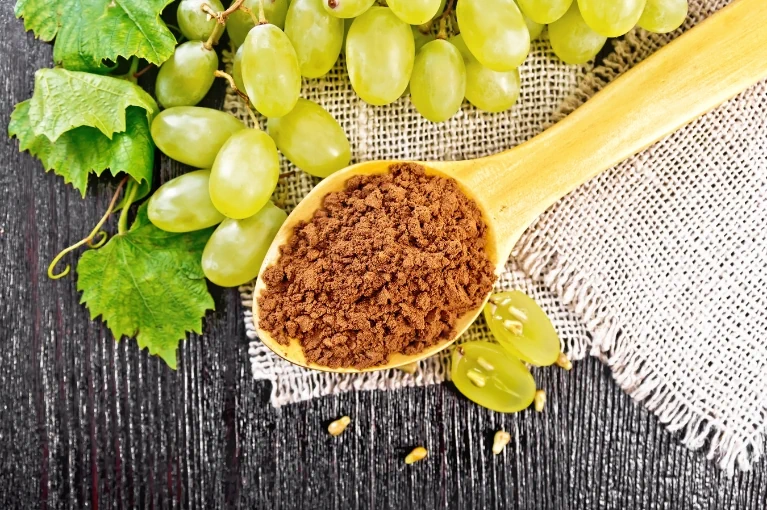
By Variety & Origin Red and purple grape powders move more because the colour and flavour are stronger. This makes formulation easier for food brands. White or green grape-based powders are used in some applications, but demand is relatively smaller. Some buyers also prefer specific origins based on consistency, pesticide limits, and price competitiveness, but in large trade reliability still matters more.
By Processing Level Some buyers insist on pure grape powder with no carriers. Others are fine with small amounts of carriers like maltodextrin since it improves flow and shelf life. In nutraceutical applications, concentrated or extract-based powders with higher antioxidant content are getting attention. It is not the biggest segment yet, but margins are better.
By Moisture & Composition Low moisture is critical in exports. If the powder absorbs moisture and clumps, handling becomes difficult and shelf life drops. Apart from that, colour strength, sugar level, and antioxidant value matter depending on the end product. These are normally checked during sampling and trials.
By Quality Grade Food-grade products move in bulk. Nutraceutical and functional grades are more specialised. These require tighter testing, better traceability, and consistent quality. Buyers in this segment are ready to pay more, but they expect stability in every shipment.
By Certification Residue-controlled and clean-label products are slowly gaining traction, especially in developed markets. Organic demand is still selective but growing. Halal and kosher also come up depending on the target market and product positioning and blueberry powder exporters in India and globally are keeping up with the demand.
By End Use It ultimately depends on the application. Beverage, flavouring, bakery, confectionery, and nutrition companies all look at different parameters. Colour stability, taste consistency, and low moisture are usually preferred in large-scale food processing.
Most Traded Grade Standard spray-dried red grape powder remains the most widely traded because it fits multiple food and beverage applications and keeps demand stable.
Export-Preferred Grade In exports, buyers usually focus on low moisture, strong colour, and smooth compliance. Definitely, if the powder loses colour or starts clumping during transit, it becomes not just a problem, but a huge problem. That's why most importers prefer dependable grades even if the blueberry powder FOB price is slightly higher.
Application-wise Mapping In real usage, it depends on what the buyer wants to solve. Beverage and instant mix companies mostly use blueberry powder for colour and flavour so they don’t depend on fresh fruit all the time. Bakery and confectionery players use it in fillings, coatings, and premixes where stability is more important than freshness. In the nutrition side, it goes into supplements and protein blends because it is easier to standardise. This is where certified blueberry powder suppliers usually get repeat business, since buyers here don’t like surprises in quality or paperwork.
Industry-wise Usage Most of the volume still comes from beverage, flavour, bakery, frozen dessert, and nutrition companies. At the same time, ready-meal and convenience food players are also picking it up. They prefer this route because it gives them more control over supply and cost instead of depending on seasonal berries.
Processing vs Retail vs Industrial Use Industrial buyers mostly care about volume and uninterrupted supply. Processors focus more on colour, taste, and how the powder performs in production. Retail and branded segments look at clean-label, traceability, and presentation. That’s why in bulk trade, specifications usually change depending on the final application.
| Rank | Exporting Country / Region | Indicative Trade Position |
|---|---|---|
| 1 | European Union | Largest global exporter due to strong food ingredient and nutraceutical industry |
| 2 | United States | High-value and premium fruit powder exports |
| 3 | Singapore | Major re-export and trading hub |
| 4 | Germany | Strong processed food and ingredient sector |
| 5 | Netherlands | Key global trade and distribution centre |
| 6 | China | Competitive pricing and large-scale production |
| 7 | Italy | Premium and specialty fruit ingredient exports |
| 8 | France | High-quality and organic segment focus |
| 9 | Poland | Growing processed food export base |
| 10 | United Kingdom | Strong demand-driven and specialty exports |
| Rank | Importing Country / Region | Indicative Trade Position |
|---|---|---|
| 1 | United States | Largest demand due to strong nutraceutical, beverage, and processed food industry |
| 2 | China | High consumption and ingredient demand in food and health sectors |
| 3 | European Union | Major processed food and clean-label ingredient market |
| 4 | Germany | Key importer within Europe for food and supplement industries |
| 5 | United Kingdom | Strong retail, beverage, and health product demand |
| 6 | Canada | Growing demand for natural fruit-based ingredients |
| 7 | South Korea | Increasing use in functional foods and beverages |
| 8 | Netherlands | Major re-export and food distribution hub |
| 9 | France | Premium and organic fruit ingredient demand |
| 10 | Australia | Rising demand in health, wellness, and sports nutrition sectors |
Note: These rankings are indicative based on HS Code 2106.90, which is widely used for fruit powders including grape powder. Actual trade positions may vary due to re-exports, blended formulations, and country-level classification practices.
If you look at the overall fruit ingredient space, blueberry formats have been growing steadily. Fresh berries are still popular, but in large-scale food production they create too many issues around shelf life and blueberry powder FOB price swings. That's why dried and powdered formats are getting more attention. They are easier to store, easier to move, and much more predictable from a sourcing point of view.
As per Market Research Future, the dried blueberry market was roughly around USD 3.4-3.5 billion in 2024. It is expected to move close to USD 7 billion by 2035, growing at around 6-7% annually. The main push is coming from beverages, nutrition products, and convenience foods where companies want stable fruit ingredients instead of seasonal raw material.
Most demand still interestingly comes from North America and Europe right now. But it is worth noticing that interest from Asia and the Middle East is slowly picking up because of the fact that organised food and modern retail expand. This is where future bulk trade is likely to grow.
Core Industries Most of the pull still comes from beverage, flavour, bakery, and nutrition companies. These players work on scale, so they cannot depend on fresh berries all the time. Powder gives them more control over supply and formulation. Frozen dessert and health-food brands also use it because they need the same taste and colour across different markets.
Consumer / Industrial Trends Right now, you can see brands moving more towards fruit-based and functional products. Blueberry works quite well in this space because of its natural antioxidant positioning in the market. While one can also not ignore the fact that convenience food is growing and this is true especially in urban markets. This pushes manufacturers to look for ingredients that are stable and easy to store. On the buyer side, there is also more focus on residue limits, traceability, and long-term sourcing instead of spot buying.
Quick Demand Triggers
| Parameter | Indicative |
|---|---|
| Indicative Bulk Price Range | USD 7,500 - 18,000 per metric ton (depends on spray-dried vs freeze-dried, organic, and antioxidant content) |
| Unit of Trade | USD per metric ton (MT) |
| Export Price Trend | Moderately volatile; influenced by berry harvest, processing costs, and demand from nutraceutical and functional food industries |
| Regional Price Differences | Lower in China and Eastern Europe; higher in the US, Canada, and Europe due to premium and organic demand |
| Premium Segment Pricing | Organic, freeze-dried, and high-anthocyanin blueberry powder can exceed USD 20,000 - 30,000 per MT |
| Key Cost Drivers | Raw berry availability, freeze-drying technology, antioxidant levels, colour retention, certifications, and packaging |
| Seasonal Impact | Prices may increase during poor harvest seasons or strong demand from supplements and health beverage segments |
| Freight Sensitivity | Medium to high, especially for long-distance exports to premium markets |
Disclaimer: Prices are indicative and may vary based on grade, origin, drying process, organic certification, antioxidant content, buyer compliance requirements, volume, and global logistics conditions. For the most accurate blueberry powder FOB price, kindly get in touch with our trade facilitation team.
| Parameter | Indicative |
|---|---|
| HS Code | Product Category / Meaning |
| 0810 | Fresh berries (including blueberries) - raw material category |
| 0813 | Dried fruits (used as a base reference for processed berry products) |
| 2008 | Fruit, nuts, and edible plant parts, prepared or preserved |
| 2008.99 | Other processed or preserved fruit |
| 2106 | Food preparations not elsewhere specified |
| 2106.90 | Fruit powders, extracts, and ingredient blends |
| 2106.90.99 | Commonly used global trade code for blueberry powder |
| Tax Classification (India) | Export: Zero-rated GST. Domestic: Typically 12-18% depending on formulation, carrier content, and end-use (food, beverage, nutraceutical). |
| Parameter | What Importers Focus On |
|---|---|
| Quality | Food-grade, hygienic processing, low microbial load, strong natural colour and flavour, high antioxidant value |
| Type & Grade | Spray-dried or freeze-dried, organic vs conventional, nutraceutical vs food grade, fine and free-flowing, consistent colour |
| Testing | Microbiology, heavy metals, pesticide residues, anthocyanin and antioxidant levels, moisture, third-party lab reports |
| Regulatory Compliance | Compliance with FSSAI, Codex, EU, US FDA, and importing country food safety regulations |
| Documentation | Commercial Invoice, Packing List, Bill of Lading, COA, MSDS, Certificate of Origin, Phytosanitary, FSSAI licence, inspection reports |
| Consistency | Uniform colour, flavour, and active content in every shipment, reliable and long-term supply capability |
| Packaging | Food-grade laminated bags, HDPE drums, moisture-barrier and light-protective packaging, nitrogen flushing for premium grade |
| Traceability | Batch-level traceability, farm-to-processing transparency, clean-label and sustainable sourcing |
| Customization | Flexibility in particle size, antioxidant levels, organic options, packaging, and formulation as per buyer requirement |
Packaging Types In actual trade, the focus is mainly on protecting the powder from moisture. Most bulk blueberry powder suppliers use food-grade inner lining with strong outer cartons. This helps during long transit where humidity becomes a real problem. Pack size usually depends on how the buyer plans to handle it. Some want smaller packs for easier warehouse movement. Large processors, on the other hand, prefer bigger cartons to reduce labour and handling time.
Storage & Shelf Life The biggest risk here is moisture. If the product absorbs humidity, it starts clumping and becomes difficult to use in production. So storage conditions matter more than anything else. When handled properly in a dry and cool environment, the product can remain stable for a long time. But serious buyers don't just rely on shelf-life claims. They check how the material performs after shipment and storage.
Shipping & Transit Considerations Buyers usually ask for clean and dry containers. In humid routes, desiccants are often used to reduce risk. Small things like this matter because if the shipment reaches with moisture damage, the whole lot becomes difficult to use.
Incoterms & Trade Practices Most deals happen on FOB or CIF. Some buyers want CIF because it gives clarity on landed cost. Others prefer FOB so they can manage freight on their side. Long-term buyers also plan shipments in phases to avoid sudden stock pressure and price swings.
| Category | What Buyers Usually Expect |
|---|---|
| Mandatory Certifications | Food safety compliance, FSSAI licence, Certificate of Analysis (COA), phytosanitary certificate, and regulatory approvals as per importing country |
| Optional / Premium Certifications | HACCP, ISO 22000, FSSC, BRC, organic certification, non-GMO, clean-label, sustainability and traceability systems |
| Quality & Testing Compliance | Pesticide residues, heavy metals, microbiology, anthocyanin and antioxidant validation, third-party lab testing |
| Region-Specific Compliance | Middle East - halal, hygiene, and shelf-life focus; Europe - strict pesticide, heavy metal, and traceability norms; North America - audits, transparency, and documentation; Asia & Africa - price-quality balance with compliance and reliable supply |
| Buyer-Specific Requirements | Organic, Halal, Kosher, allergen-free, gluten-free, and customized compliance based on end-use in food, beverage, and nutraceutical industries |

The real opportunity is looking up gradually in the emerging markets. Asia, the Middle East, and parts of Africa are moving fast towards processed and packaged foods. As these markets grow, companies don't want to depend on fresh fruit all the time. Stable ingredients like blueberry powder slowly start finding space, especially in beverages, desserts, and nutrition products. Another area is the premium and functional side. Health drinks, protein blends, and fortified foods are testing fruit powders more seriously now. Volumes are still small, but margins are better. Buyers are moving carefully, doing trials first, and then scaling once the product works.
Compliance and traceability are becoming a very important aspect at the same time. It is worth noting that certified blueberry powder suppliers who can maintain consistent quality and stable supply across seasons will have a clear edge in long-term bulk trade.
Get in Touch
Importing blueberry powder online is now a structured and transparent process. Buyers can connect with verified global suppliers through professional B2B platforms like Tradologie.com, where they can compare product grades, check certifications, request samples, and negotiate bulk pricing. The platform also supports documentation, compliance, and trade facilitation, which helps reduce sourcing risks and ensures smoother international transactions.
The typical MOQ for blueberry powder starts from 1–5 metric tons, depending on the processing method, packaging, and quality grade. Premium variants such as freeze-dried, organic, or high-antioxidant nutraceutical grades may require slightly higher quantities due to specialised production and export logistics.
Blueberry powder is available in multiple formats including spray-dried, freeze-dried, organic, conventional food-grade, and nutraceutical-grade variants. Buyers can also choose based on antioxidant content, particle size, solubility, carrier usage, and colour strength. Spray-dried blueberry powder remains the most widely traded due to cost efficiency and stable performance in large-scale food production.
The blueberry powder FOB price in India generally ranges between USD 7,500 to USD 18,000 per metric ton, depending on the grade, drying technology, antioxidant levels, organic certification, and packaging. Premium freeze-dried or high-anthocyanin variants can command higher prices. Tradologie.com helps bulk buyers compare quotations from multiple Indian and global suppliers to secure competitive pricing and reliable supply.
Bulk demand is strongest in the United States, Europe, China, Canada, Australia, South Korea, and the Middle East. These regions have well-developed beverage, nutraceutical, and functional food industries, which drive consistent demand for natural fruit ingredients.
Major users include beverage manufacturers, nutraceutical and supplement companies, bakery and confectionery brands, flavouring and seasoning companies, and functional food processors. It is widely used in smoothies, instant drink mixes, protein blends, desserts, and antioxidant-based formulations.
Importers typically expect complete documentation such as COA, MSDS, phytosanitary certificate, certificate of origin, FSSAI licence, and third-party inspection reports. Quality checks usually include moisture, microbial limits, pesticide residues, heavy metals, and antioxidant validation to ensure compliance with international food safety and nutraceutical standards.
-powder-(1).webp)
.webp)
.webp)
.webp)