Dry Mango Powder: A Guide to Varieties, Grades, and Global Trade
Through this guide, we provide a precise, trade-oriented overview of how this agricultural product is processed, graded, quality-validated, certified, priced, and moved through global supply chains to meet the technical expectations of bulk buyers.
Technical Overview for Trade and Bulk Procurement
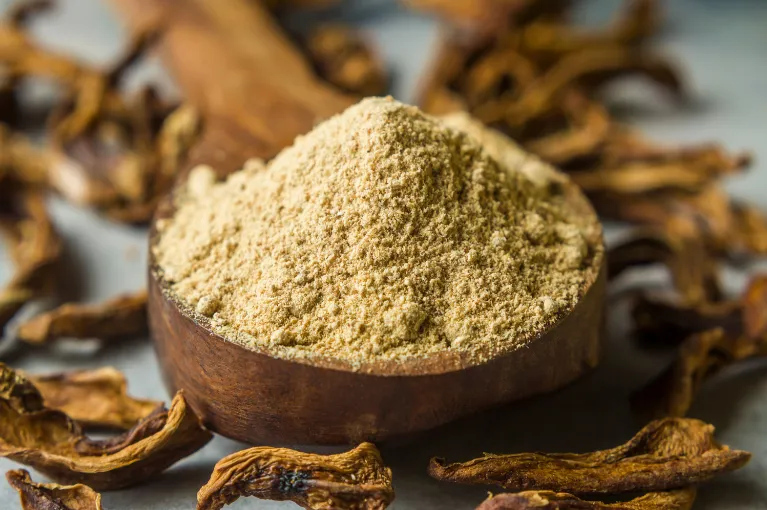
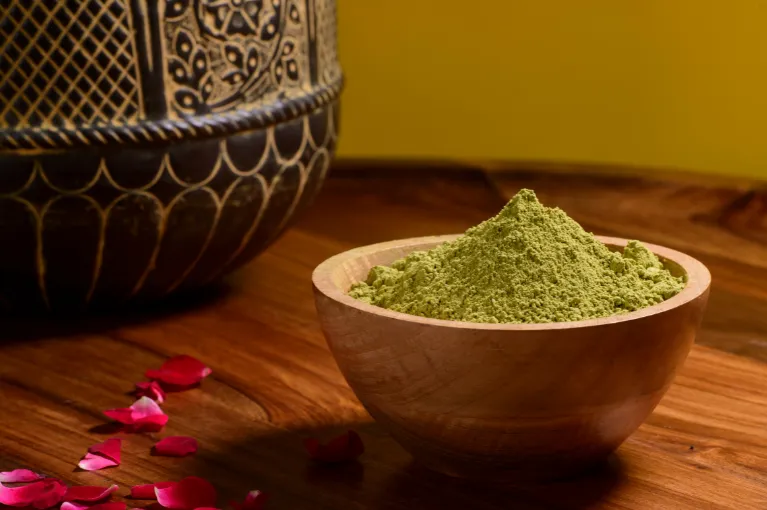
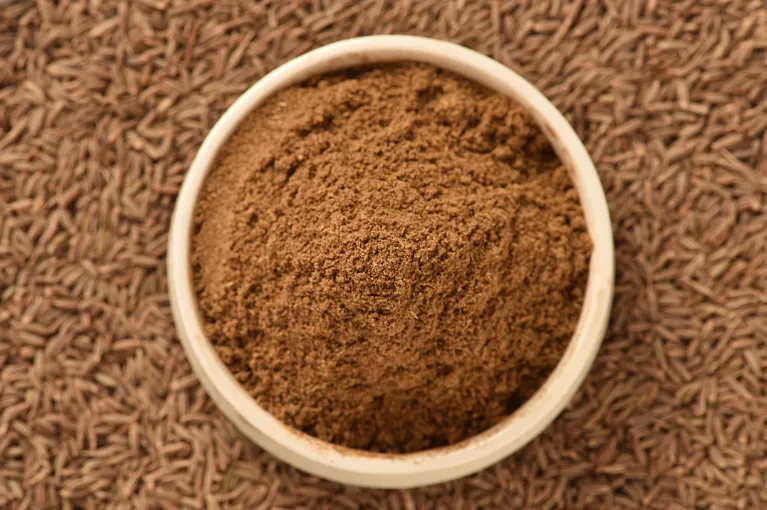
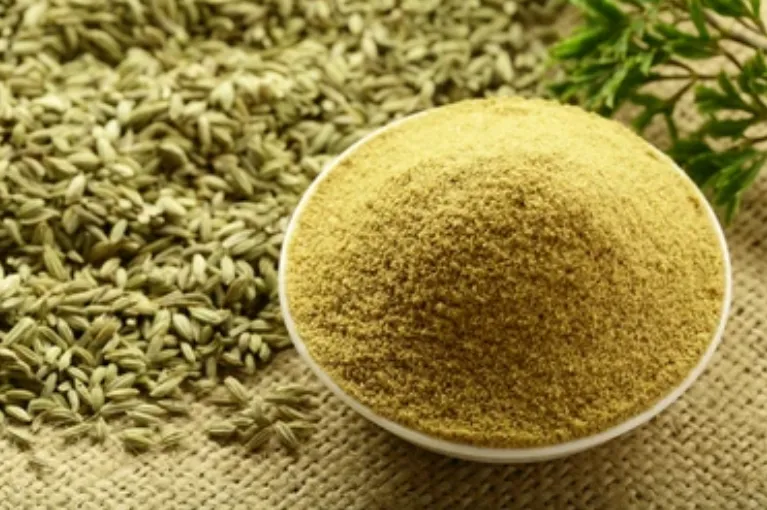
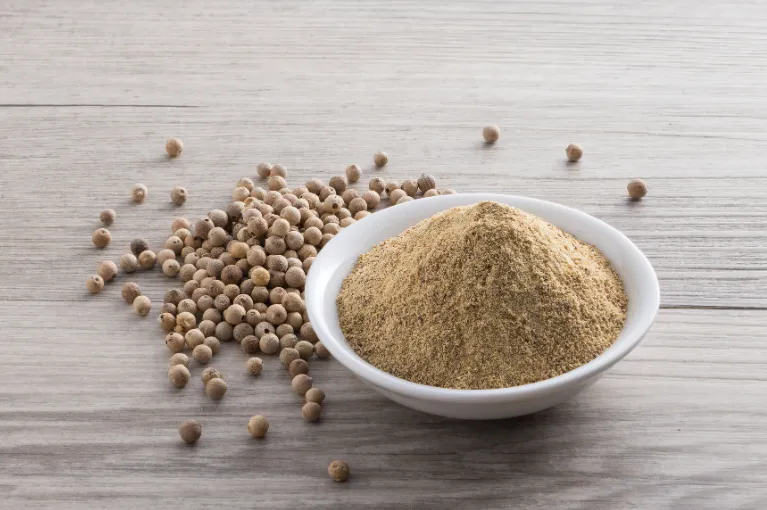
Known scientifically as Mangifera indica, "dry mango powder" is commonly referred to in the trade as amchur powder, amchur, or green mango powder. Commercially, it is a cornerstone of the global ethnic spice and seasoning trade. The milled powder is highly concentrated and fine. It has a pale beige to light brownish color depending on the raw material used (sun-dried green mango slices, also known as khatai) and the grinding method. Due to the high levels of naturally occurring citric and malic acids retained during the preceding drying process, it has a highly tart, tangy, and fruity flavor profile. This product is the industry standard for instant, natural souring in India, the UK, North America, and a large portion of the Middle East due to its ready-to-use, concentrated attributes.
The biochemical integrity and particle consistency of Dry Mango Powder are critical for industrial snack manufacturers and spice blenders who buy in bulk. The raw dried slices are pulverized through specialized milling machines, causing them to break down into a uniform mesh size. Its retained acidity and aggressive tartness make it the preferred raw material for dry spice compounding, where the "sour" note must distribute evenly without adding moisture to the final product—a distinct advantage over liquid alternatives like lemon juice or vinegar.
While commonly found in retail as standard "amchoor powder," high-grade material is engineered for specific "Acidity Retention" and physical formats (defined by Mesh Size). The process involves grinding the peeled, dried unripe mango slices under temperature-controlled conditions to prevent the natural sugars and acids from caramelizing or degrading due to friction heat.
Due to its immediate bioavailability and surface area, it works differently than whole dried mango slices. It can be added directly to instant marinade mixes or snack seasoning dusts. Although the natural fruit acids and sugars are prone to rapid moisture absorption once ground, manufacturers who choose to buy dry mango powder ensure superior mixing efficiency and consistency, requiring superior barrier packaging.
PRODUCT SPECIFICATIONS
Parameter
Standard / Limit
Acidity (as Citric Acid)
Min 15.0% - 25.0% (Origin & Maturity Dependent)
Moisture Content
Max 8% - 10%
Total Ash
Max 7.0% - 9.0%
Acid Insoluble Ash
Max 1.0% - 1.5%
Particle Size (Mesh)
40 to 80 Mesh (Standard to Fine)
Starch / Adulterants
Negative (Strictly tested for added starches or synthetic citric acid)
Color
Pale Beige to Light Brown
Microbiology (Salmonella)
Absent in 25g (Crucial for EU/US)
Foreign Matter
Max 0.5%
Mold / Aflatoxin
Strictly Controlled (B1, B2, G1, G2 limits apply)
Critical Note: "Mesh Size" and "Acidity Content" are the major specifications for Dry Mango Powder. Premium buyers require "High Natural Acidity," where the product offers a clean, fruity aroma and a sharp, tangy kick. A laboratory check for "Synthetic Adulteration" (adulteration with crystalline citric acid combined with cheap starches to mimic volume and sourness) is mandatory to ensure the product remains sound and fit for high-value export.
TYPES, GRADES & VARIANTS
In the highly competitive landscape of the Dry Mango Powder B2B marketplace, segmentation is rigorous. It is strictly driven by the raw material quality, mesh size, and microbial load:
Premium Light Powder (North Indian Origin): This internationally traded grade is regarded as the highest industry standard for flavor clarity. It is mostly sourced from Uttar Pradesh and Punjab, where leading suppliers uphold strict standards. It has a very pale beige hue and a distinctly fruity, tart kick. Because of its clean flavor and minimal fibrous residue, bulk mango powder suppliers frequently classify this variety as the premium seasoning standard.
Standard Commercial Powder (Mixed Origin): A staple of the global bulk powder market, this is the standard for heavy spice blends. It is generally slightly sweeter, less aggressively tart, and slightly darker than premium varieties. It is ground from mixed or slightly more mature green mango slices, offering high value for general commercial applications but a lower mango powder price point due to a less refined color profile.
Steam Sterilized Dry Mango Powder: This is the safest variety and dominates the high-end export market to the USA and the EU. In order to eliminate microbial loads (such as Salmonella and E. coli), the powder (or the whole dried slices before milling) is subjected to high-pressure steam treatment.
Coarse Grind (Low Mesh): Less common in general snack dusting but used where visual texture and slower flavor release are required in rustic spice blends or industrial pickling preparations.
Spray dried mango powder: Unlike traditionally milled powder, this highly soluble variant is produced by atomizing mango puree into a fine dust, making it ideal for instant beverage formulations and commercial flavorings.
DRY MANGO POWDER: APPLICATIONS & END-USE
Food Processing (Industrial)
Industrial Snack Foods & Seasonings: While exploring amchur powder benefits for digestive health, in industrial savory products, it serves as the primary source of that recognizable "tangy" bite. It is found in everything from potato chip dusts to extruded snacks. Its inclusion provides zest. Additionally, it offers a sharp acidic bite, yet it does so without adding moisture to the base product. Within industrial applications, these spices function as a critical "flavor anchor." Premium Light Powder is frequently selected for specific tasks. It is used when a clean "snap" is required. This clarity allows the flavor to cut effectively through heavy salt and fat.
Spice Blends & Masalas: This spice is essential for the savory sector. It is a standard ingredient found in Chaat Masalas and Chole Masalas. You will also see it in Tandoori Meat Rubs and various commercial curry blends. The fine structure of the milled powder allows for seamless blending. This uniformity ensures that it does not separate from other ground spices during transit. Consequently, it delivers a consistent tart flavor profile in every serving.
Non-Food Industrial
Nutraceuticals and Supplements: This specific market is driven by purity, creating a demand for pure dry mango powder. Therefore, supplement manufacturers prioritize natural vitamin C percentages and strict heavy metal limits. They specifically seek out certified organic mango powder or pure organic mango powder with a fine-mesh grind. The powder undergoes rigorous testing before encapsulation. This process is used to create digestive aids and natural vitamin supplements. These capsules are naturally rich in antioxidants and digestive enzymes. A dedicated bulk supplier will typically require low-moisture grades for this specific purpose. The resulting powder is utilized in wellness manufacturing. Additionally, it is a crucial component of modern Ayurvedic and alternative medicines.
Instant Beverages & Dry Mixes: Fine mesh powder (80+ mesh) is used as a base material in the instant dry mix industry. This cut is often sourced from highly soluble, clean grades. It may also be blended into dry marinades, instant chutneys, and soup bases. The flavor it provides is cooling and sharply appetizing. Because of this, it acts as an effective functional ingredient for summer drink blends (like Jaljeera).
SUPPLY & DEMAND COUNTRIES
Instant Beverages & Dry Mixes:
Production Leaders: Indian amchur exporters currently stand as the absolute dominant force in the sector by volume of milled powder. The amchur powder export from India has surged for high-quality, clean-label souring agents, capitalizing on the country's massive raw mango cultivation.
Important Export Hubs: The Uttar Pradesh, Punjab, and Maharashtra consolidation zones serve as historical centers of concentration where mango powder suppliers India mill this specific product. Two important international ports for containerized shipments of powder are Nhava Sheva and Mundra Port.
Top Importing Regions
North America: The USA represents a key market for "Sterilized" and "Organic" grades. The demand here is massive and year-round, specifically for the ethnic food manufacturing and clean-label seasoning sectors.
Europe: The EU is a strict regulatory market regarding Aflatoxin, Pesticide, and microbial levels. The demand focuses on clean, steam-sterilized material (often organic) for direct food applications and premium retail packaging, highly driven by the UK's large Indian culinary market.
Middle East: With numerous spice processors in Saudi Arabia and the UAE packaging material for traditional use, this region serves as a major importer of commercial-grade powder. The demand here is for high-tartness powder for traditional culinary applications.
GLOBAL MARKET OVERVIEW
Current Market Value: The global market for dry mango powder remains robust, contributing to a broader spice and seasonings industry projected to reach USD 30.98 billion by 2026. The two main industries driving it are ethnic convenience foods and clean-label flavorings. At the moment, dry mango powder is an increasingly popular dry functional flavor for manufacturers looking to replace synthetic citric acid. On the other hand, demand is changing in the health sector. In this market, steam-sterilized organic powder is becoming more popular. Manufacturers of Ayurvedic supplements are especially affected by this. They are choosing more and more to purchase powder that has been thoroughly checked for heavy metals. Powdered amchoor is more likely to be inspected for adulteration than traditional whole dried slices. Additionally, the broader picture is positive for the future.
Future Outlook: The market is expected to demonstrate steady, consistent growth. Several trends will drive this upward trajectory. First, organic amchur powder exporters are noticing an increasing consumer demand for natural, plant-based souring agents in mainstream foods. Second, the market for ready-to-eat spiced snacks is expanding globally. This is largely because powdered mango is easily applied as a topical seasoning.
Trends: The market is moving from general "FAQ" (Fair Average Quality) trading to specific parameter-based purchasing (e.g., "Guaranteed Natural Acidity Levels"). Procurement managers looking to buy amchur powder are increasingly sourcing amchur powder online via B2B platforms, though the market is moving heavily towards "Steam Sterilized" processing techniques.
KEY DEMAND DRIVERS
The "Convenience Food" Economy: Global culinary trends depend significantly on dry natural flavorings. In fact, it serves as a dominant tangy flavor in instant noodles, dry soup mixes, and potato chip seasonings. As a result, import volumes frequently spike, consistent with consumer packaged goods production cycles. This surge occurs specifically to meet the industrial demand for uniform flavor distribution.
Nutraceutical Health Management: Dry Mango Powder is marketed within traditional medicine and dietary supplements. It is promoted specifically for aiding digestion and providing natural Vitamin C. This wellness trend actively propels the demand for specific types of pure powder. Manufacturers require clean milled products that have been strictly tested for heavy metals.
Natural Preservatives & Tenderizers: Natural dry mango powder possesses natural enzymatic properties, and because of this, it is currently being explored for industrial meat processing. It is increasingly utilized as a dry natural meat tenderizer. You will find it applied in clean-label commercial marinades to break down proteins naturally.
PRODUCTION & SUPPLY DYNAMICS
The global Dry Mango Powder market is characterized by year-round milling, heavily dependent on the prior season's unripe green mango harvest.
Supply-Side Realities:
India (The Value-Add Leader): Amchoor manufacturers in India control the entirety of the high-end, sterilized, and blended powder market.
Seasonality: While milling happens year-round, raw material harvesting peaks strictly pre-monsoon (April to June). The green mangoes are sliced and sun-dried. The freshest powders with the most vibrant tartness hit the market shortly after this drying phase.
Processing Note: Unlike trading whole dried slices (khatai), Dry Mango Powder requires specialized infrastructure to "Mill" and "Sift." The grinding process generates heat; if not controlled, the natural sugars caramelize and the powder darkens, altering the flavor profile. This industrial processing cost is a component of the final powder FOB price.
Risks:
Adulteration & Fraud: A major trade risk involves mixing cheap starches (like corn or tapioca) blended with synthetic citric acid crystals to mimic the volume and sourness of genuine amchoor. Buyers must utilize lab testing to verify natural acidity and starch absence.
Moisture & Clumping: The powder is exceptionally hygroscopic due to its fruit sugar and acid content. It cakes into hard, unusable blocks if packed with more than 10% moisture. It is useless for industrial mixers if clumped.
EXPORT & IMPORT TREND ANALYSIS
Volume Trend: Growing. Demand is rising due to the popularity of ethnic Indian cuisine globally and the expansion of tangy ready-to-eat spiced snacks.
Value Trend: Moderately Volatile. Prices fluctuate directly based on the raw green mango crop, which is highly sensitive to unpredictable pre-monsoon weather and pest conditions. Finished powder prices can swing typically by 15-25% in a season based on harvest yields
Key Insight: When making a dry mango powder bulk purchase, buyers are increasingly specifying "Microbial Limits" alongside mesh size. Steam-sterilized powders command a premium over standard bulk bags because they reduce food safety risks for the end-user, especially since raw mangoes are traditionally sun-dried in open yards.
PRICE & BULK COST INDICATORS
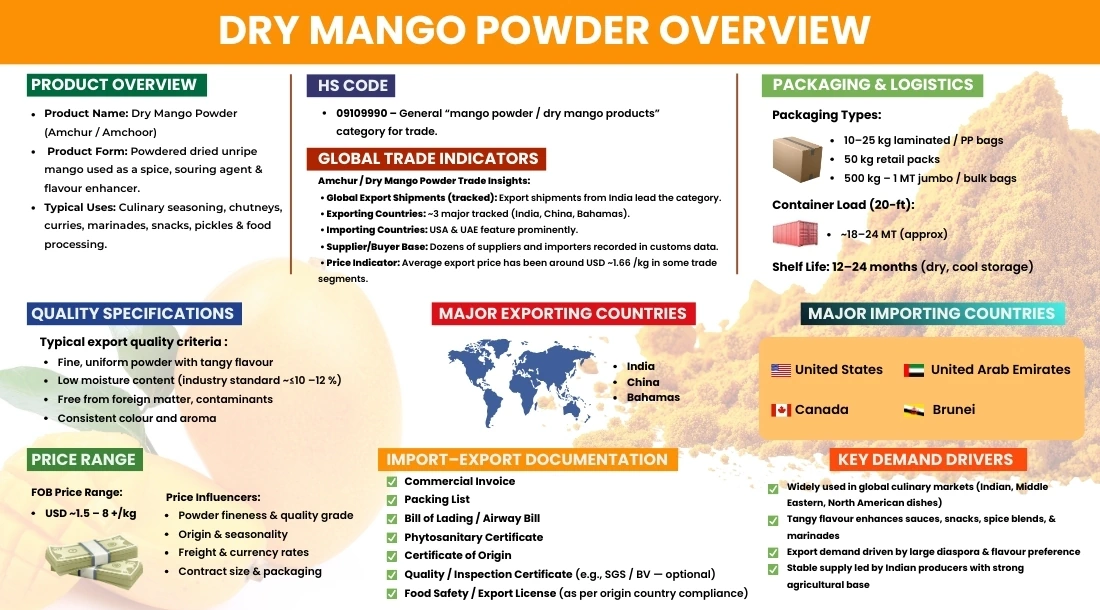
Standard Commercial Powder: Prices generally range from $1,500 to $2,500 per metric ton. This range sets the entry-level dry mango powder wholesale price. It is the standard cost for heavy spice blends and commercial snack seasoning purposes. Buyers must analyze the wholesale price carefully. To determine where to buy amchur wholesale, they should look at three specific metrics. First, check the amchur powder export price, which is the amchur powder FOB price. Second, review the import price per kg, also known as the landed cost. Finally, consider the price per ton for container-load volumes.
Premium Steam-Sterilized / Organic Powder: This variety typically costs between $3,000 and $4,500+ per MT. The export price is significantly higher for this grade. This increase is due to the intense capital requirement for sterilization equipment. Facilities must treat the powder carefully. They must also test it rigorously for zero Salmonella and low plate counts.
Market Volatility: Volatility is directly linked to the raw green mango harvest in India. It is also tied closely to processing electricity costs and Currency Exchange Rates. Processing facilities can hold dried slices (khatai) in climate-controlled warehouses, which creates an artificial floor for the market. Therefore, buyers must track raw crop reports prior to the Indian monsoon season. This monitoring is crucial for accurately calculating the final landed import price.
HSN / HS CODE & TAX CLASSIFICATION
HS Code (Global): 0910.99 (Spices; other spices) - proper mango powder HS code classification is crucial.
Indian HSN Code: 0910 99 15 (Amchur / Mango Powder)
Note: Dry mango powder HS code differentiation relies heavily on proving it is a pure single spice. Customs will strictly scrutinize the product for "mixed spices" if other bulking ingredients or synthetic acids are detected.
BUYER EXPECTATIONS & TRADE REQUIREMENTS
Mesh Size (Consistency): The most important requirement for snack blenders. Customers anticipate a particular physical outcome, such as 100% passing through 60 mesh. The particle uniformity is a key value driver for bulk purchases in order to prevent clogging of dusting machines.
Microbial Safety: Salmonella and E. Coli must be absent. Steam sterilization is increasingly expected for Western markets.
Chemical Purity: Adulteration checks (starch/synthetic citric acid) are strictly enforced.
Acidity (Potency): Must meet the minimum natural acidity threshold (usually 15% - 25%) to ensure the powder delivers the required souring power without relying on chemical additives.
Packaging: To prevent severe moisture and clumping issues, standard grade products are packaged in 20 to 25 kg multi-wall kraft paper bags with a thick, heat-sealed plastic liner. The packaging material used in high-grade or high-sterilization products includes bags within corrugated cartons lined with foil to prevent compression and moisture ingress during transportation.
Storage & Shelf Life: The product must be stored in a cool, dry, dark, and highly dehumidified environment to prevent the hygroscopic powder from caking. The product can be used within a period of 12 to 15 months in ideal conditions.
Incoterms & MOQ: Most deals are FOB or CIF. To negotiate direct export rates, the wholesale MOQ demands a full container load, which is equivalent to 15–17 metric tonnes or 20 ft FCL.
Required Documentation: Certificate of Analysis to be submitted to Customs to check mesh sizes, acidity, and microbiology; Fumigation Certificate; Phytosanitary Certificate; and Origin Certificate.
FUTURE OUTLOOK & OPPORTUNITIES
Sterilisation: Buyers are demanding transparent audits to confirm whether microbial reduction has been achieved through the use of steam or irradiation practices instead of chemical fumigants such as ethylene oxide (EtO).
Standardised Acidity Powders: Compared to standard bulk powder products that vary depending on the raw fruit, a high-potency powder with a guaranteed and standardised citric/malic acid percentage can be more profitable.
Clean-Label Replacement: Through extensive research and development, Amchoor is being positioned as a clean-label, standardised alternative to synthetic citric acid in the Western food manufacturing sector.
TRANSPARENCY & DISCLAIMER
Disclaimer: Market data, price indications, and trade regulations may change because of harvest conditions, geopolitical policies, and currency fluctuations. The technical details are for general guidance only; buyers must verify the details (Acidity %, Moisture, Mesh Size, Microbiology, Aflatoxin) with suppliers through a Certificate of Analysis (CoA) before making a purchase. No specific trade result can be guaranteed.
Dried mango slices are the whole, hard, sun-dried pieces of unripe green mango. Dry mango powder is the result of mechanically milling and pulverizing those dried slices into a fine, ready-to-use dust. Powder offers immediate tart flavor release but is far more susceptible to moisture damage than the whole slices.
Mesh size determines how fine the powder is. A higher mesh number (e.g., 80 Mesh) means the powder is finer. Consistent mesh size is critical for industrial snack makers to ensure the sour flavor coats potato chips or extruded snacks evenly without leaving gritty textures or clogging industrial seasoning tumblers.
Because genuine dry mango powder can be expensive, unscrupulous suppliers sometimes mix cheap, neutral starches (like tapioca) with synthetic crystalline citric acid to mimic the volume and sourness of genuine amchoor. This is a form of food fraud that alters the natural flavor profile and violates pure spice import regulations.
Because green mangoes are traditionally sliced and sun-dried in open yards, they naturally carry high bacterial loads from birds, dust, and soil. Steam sterilization uses specialized, high-pressure equipment to kill pathogens like Salmonella without using harsh chemicals. This extra processi ng step adds significant cost but is mandatory for EU/US food safety compliance.
While the acids themselves don't evaporate like volatile oils, the powder is extremely hygroscopic. If exposed to air, it rapidly absorbs moisture, causing the fruit sugars and acids to bind into rock-hard clumps. Once clumped, it loses its functional ability to be blended smoothly, effectively ruining the product for industrial use.
We use cookies to enhance site functionality, improve user experience, analyze website performance, and deliver relevant content in accordance with our Cookie Policy.
We use cookies
Essential Cookies
Essential cookies are strictly necessary for Tradologie.com to operate properly. They enable core functionalities such as security, session management, network stability, and cookie consent preferences. These cookies do not collect personal data and cannot be disabled.
Name
Vendor / Service
Purpose
Expiry
Privacy Policy
ASP.NET_SessionId
Tradologie.com / ASP.NET
Maintains secure user session across pages.
Session
https://privacy.microsoft.com/
__RequestVerificationToken
Tradologie.com
CSRF protection for forms.
Session
https://www.tradologie.com/privacy-policy/
cookie_consent
Tradologie.com
Stores consent preferences so the banner does not reappear.
We use analytics cookies to gather anonymous, aggregated information about how visitors interact with Tradologie.com. This helps us improve the site, measure the success of content and services, and prioritize performance fixes.
Functional cookies allow the website to provide enhanced usability and personalization. They store preferences such as language, region, chat settings, and login details for a smoother browsing experience. Disabling these cookies may limit certain features.
Name
Vendor / Service
Purpose
Expiry
Privacy Policy
user_lang / lang
Tradologie.com
Remembers chosen language.
1 year
https://www.tradologie.com/privacy-policy/
timezone_pref
Tradologie.com
Stores timezone preference for display.
6 months
https://www.tradologie.com/privacy-policy/
remember_user
Tradologie.com
Keeps logged-in state when chosen.
30 days
https://www.tradologie.com/privacy-policy/
livechat_session
Tawk.to
Maintains chat session state.
Session
https://www.tawk.to/privacy-policy/
Marketing
Marketing cookies are used to deliver advertising that is relevant to you and to measure the effectiveness of our marketing campaigns across platforms such as Google, LinkedIn, Meta and Microsoft. These cookies are set only with your consent.