Sourcing Garlic Powder: Mastering Quality, Compliance, and International Supply Chains
About The Product
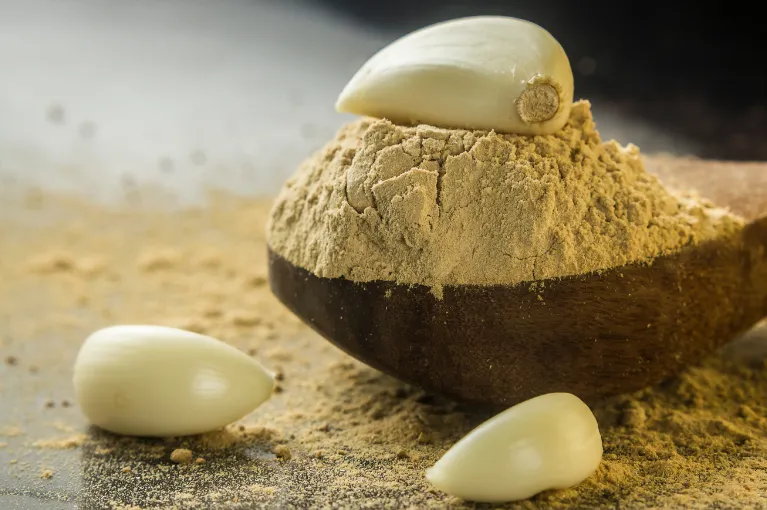
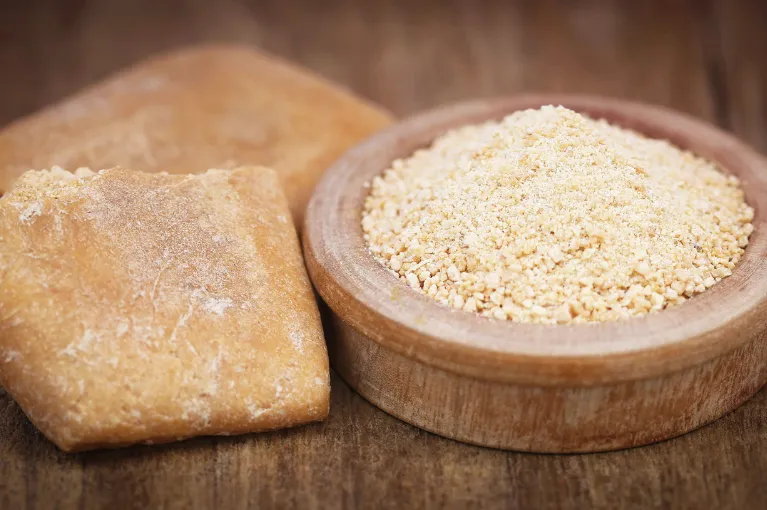
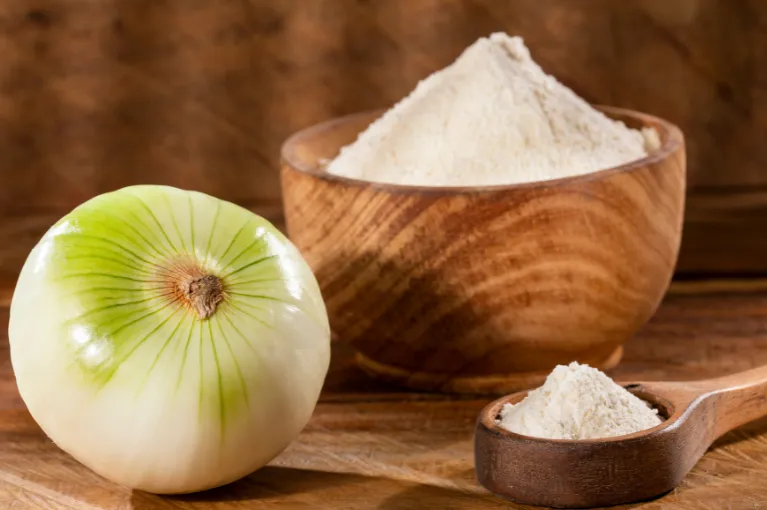
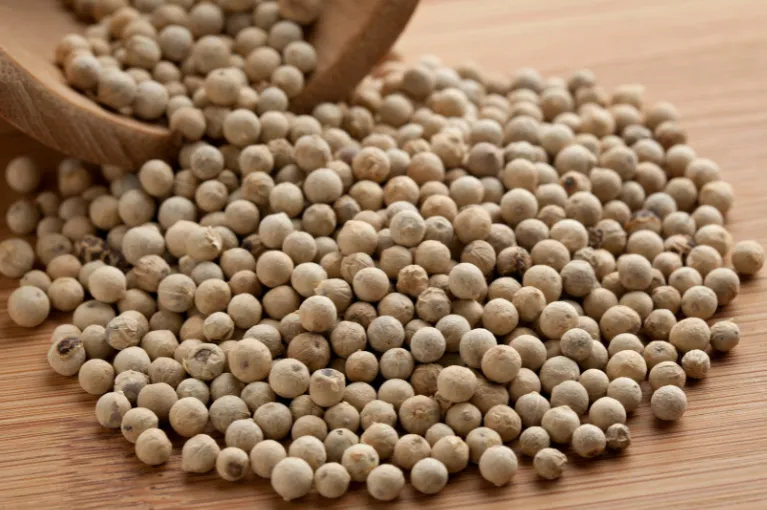
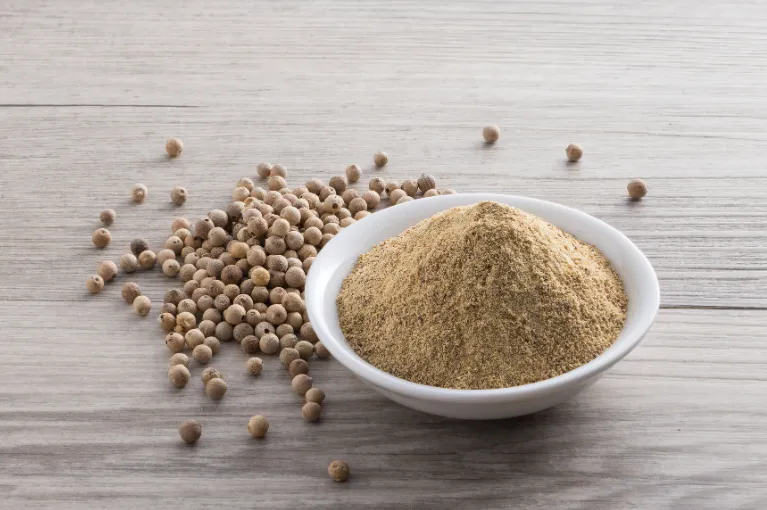
"Garlic Powder" is a staple B2B trade commodity, produced by dehydrating and milling the cloves (bulbs) of the Allium sativum plant into a fine, pungent meal. The commodity is valued by food manufacturers and spice blenders for two key characteristics: 'pungency' as a result of its organosulfur compound (Allicin) and 'solubility/dispersion', which allows for uniform flavour distribution in industrial processing. While it is often found in retail as a generic pantry staple, high-grade 'dehydrated garlic powder' for international Garlic Powder Export is a precision product, selected based on the mesh size, bacteria count (Standard vs. Low Bac), and SO2 (Sulfur Dioxide) limits.
For the international spice market, this white to cream powder is the benchmark for savoury flavour profiles. It is used as a cheap substitute for garlic, which requires less work and has a
longer shelf life, as well as a flavouring component in rubs and marinades. Pure Garlic Powder, in contrast to "Garlic Salt" or "Seasoning Blends," is composed of only one ingredient: dehydrated garlic, which also acts as the foundation for other flavours. This product is also used as a bioactive supplement due to its capacity to stimulate the cardiovascular and immune systems. This is particularly true in the nutraceutical industry and buyers looking for the import garlic powder price must consider these as viable options as well.
PRODUCT SPECIFICATIONS
Parameter
Standard / Limit
Purity
100% dehydrated cloves of Allium sativum
Moisture Content
Max 6.0% (Critical for preventing caking)
Total Ash
Max 5.0% (dry basis)
Acid Insoluble Ash
Max 0.5%
Volatile Oil
Min 0.25%
SO2 (Sulphites)
< 30 ppm (Natural) to < 50 ppm (Treated)
Adulteration
Corn starch, Flour, or Foreign Matter: STRICTLY ABSENT
Critical Note: People who buy garlic powder in bulk must specify the Microbiological Profile (e.g., Standard, Irradiated, or Steam Sterilised) in the purchase order. High plate counts often indicate poor hygiene during the dehydration process, while high SO2 levels indicate excessive bleaching to artificially whiten the product, which is a major compliance risk in the EU.
TYPES, GRADES & VARIANTS
In the garlic powder B2B trade, the product is segmented by its particle size (which dictates texture and release rate) and its processing method.
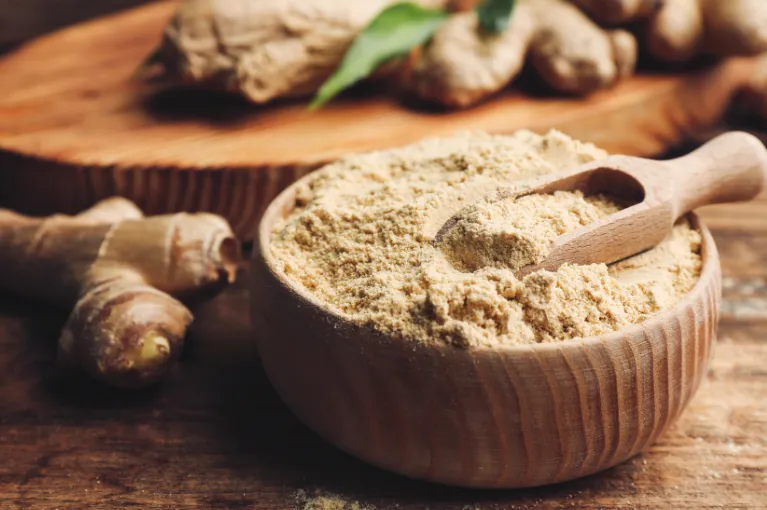
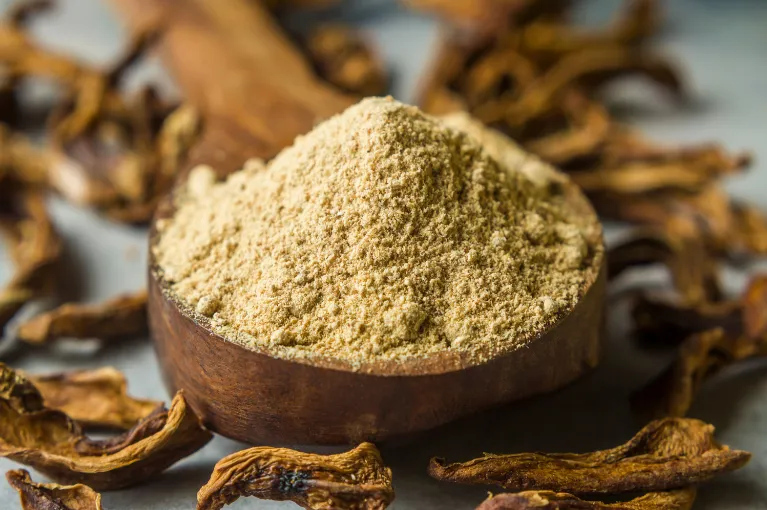
Garlic Powder: The most common form of processed garlic, achieving its form by being ground into a fine, flour-like consistency. It mixes well to dishes and is the preferred choice for sauces, soups, and seasoning blends.
Granulated Garlic: Coarser than powder, with a texture similar to sand. This type is much sought after in the USA and Europe for dry rubs and retail packaging because it does not clump as easily as fine powder.
Toasted / Roasted Garlic Powder: Processed from cloves that are roasted before grinding. It is known to have a mellower, sweeter, and nuttier profile compared to the raw pungent kick of standard powder. It is the preferred choice for gourmet applications and snack flavourings.
Agmark / Special Grades: In the Indian context, grades are often defined by colour (Creamy White vs. Slightly Off-White) and the inclusion of root content. "A-Grade" typically signifies pure clove processing without root skins.
APPLICATIONS & END-USE MAPPING
Food Processing (Industrial)
Meat, Dairy, and Bakery: Due to its high binding properties and uniform distribution of flavours, it is a great substitute for fresh garlic in sausages, meat products, and baked goods. It is also a key component in the flavouring of chips, dips, salad dressings, and spice blends.
Sauces and Ready Meals: Garlic powder is used as a flavouring base in liquid condiments such as ketchup, barbecue sauce, and mayonnaise. It is used as a flavour stabiliser in instant noodles and canned soups, which retain their savoury character even after extreme heat processing.
Oleoresin & Nutraceuticals
Extraction: Distillation or solvent extraction are used to make garlic oleoresin and allicin extracts from robust garlic varieties. These are rich in organosulfur compounds, which makes them of great value as functional ingredients in cardiovascular supplements and cholesterol-lowering medications.
Pharma: The bulb's hypotensive and antibacterial qualities are emphasised in the health and wellness category. Encapsulated garlic powder is sold for blood pressure regulation and immunity boosting, often requiring "deodorised" variants to prevent aftertaste.
Retail & HORECA
Culinary (Retail): This spice is marketed as a "Pantry Essential" and is found in almost every Western and Asian kitchen. It is used as a convenient seasoning for pizza, pasta, and grilled meats. Marketing kits often include "California Style" or "Stone Ground" as a feature that promises superior texture compared to generic fine powders.
Food Service (HORECA): This market demands volume and flowability. Catering and hotel chains utilise granulated grades as a cost-effective flavour agent. The focus is strictly on achieving a consistent pungent kick without the labour of peeling and chopping fresh garlic for bulk preparations.
SUPPLY & DEMAND COUNTRIES: Garlic Powder
Top Export Hubs & Producing Nations
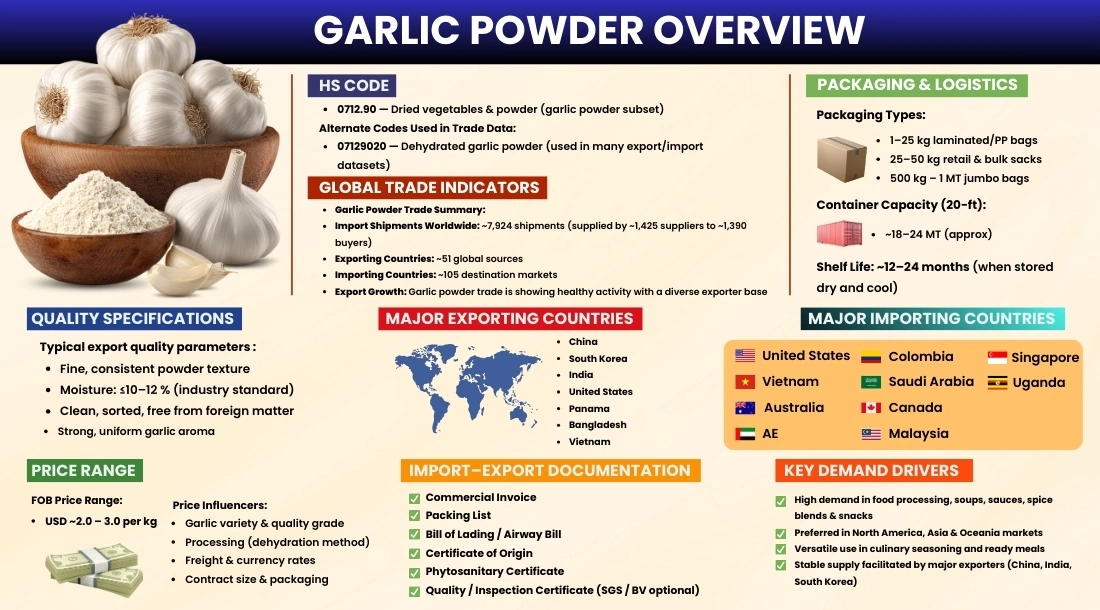
Production Leaders: China is the absolute dominant force, controlling a vast majority (approx. 70-80%) of the global dehydrated garlic market. A strong second is India (Madhya Pradesh, Gujarat, and Rajasthan), which has a spicy variety that is becoming more popular.
Principal Export Locations: Shandong province in China, more especially Jinxiang, is known as the "Garlic Capital of the World". The main hubs for trade routes and dehydration units in India are Mandsaur and Neemuch in Madhya Pradesh.
Top Importing Regions
Asia & Africa: Large-volume customers in Indonesia, Brazil, and Nigeria often source standard grades. This market operates on price sensitivity, often accepting slightly higher root content or off-white colour variations for mass-market seasoning cubes and noodles.
North America: The USA is the biggest importer of dehydrated garlic, utilising it heavily in the industrial meat and spice blending sectors. They frequently import "Granulated" grades and have strict requirements regarding heavy metals and filth.
Europe: A highly regulated territory. Compliance is not optional in this region—it’s the minimum standard. Consumers are not satisfied unless all paperwork confirms that there are no allergens (peanuts/gluten cross-contamination) or high sulphite levels. The bias is towards Steam-Sterilised consignments to ensure low microbial load.
Market Scope: Covers dehydrated flakes, granules, powder, and medicinal extracts.
KEY DEMAND DRIVERS
The convenience of a longer shelf life is also influencing how industries view produce. One of the main factors driving demand for dried garlic is the industry's shift away from fresh garlic because of the possibility of spoiling and its desire for quicker preparation times. And from a logistical perspective, one kilogramme of garlic powder is equivalent to five kilogrammes of fresh garlic, saving money on storage and transportation in the process.
The ready-to-eat (RTE) industry too, is seeing rapid growth. This includes frozen pizzas, instant noodles, and flavoured snacks, all of which require a flavour profile that can withstand shelf life. The industry is using garlic powder to maintain the flavour over time because fresh garlic is unable to meet these standards.
Immunity and health markets also affect demand. Garlic is acknowledged as a potent natural antibiotic. And with an increasing interest immunity boosting ingredients, the industry is recognising the implications. It is probably going to have an effect on the market price and accessibility of premium garlic powder with a high allicin content.
PRODUCTION, SUPPLY & MARKET RISKS: Garlic Powder
Supply Chain Dynamics
Harvest Time: The fresh garlic harvest typically occurs between February and March (India) and June and August (China). This is the critical window where raw material prices are set for the year.
Peak Market Arrivals: Following the harvest and dehydration, the bulk garlic powder suppliers see a significant influx of dry stock. The highest volume of dehydrated garlic officially enters the trading hubs during Q3 and Q4.
Risks to the Market and Quality
Hygroscopic Nature (Caking): Garlic absorbs moisture from the air because of its strong hygroscopic properties. It turns into a cake when exposed to moisture without the right packaging liners. Consequently, the product is not suitable for the majority of industrial processing applications.
Adulteration Risks: Garlic powder is vulnerable to adulteration due to its white or cream colour. To add weight, some manufacturers may combine fillers like maltodextrin, rice flour, or cornflour. In other cases, excessive amounts of the roots and outer skin are crushed together in order to save money, which may affect the ash content and flavour.
EXPORT & IMPORT TREND ANALYSIS
Volume Trend: Stable upward trajectory. Demand is inelastic as garlic is a foundational flavour in almost all global cuisines.
Value Trend: Increasing for "Toasted" and "Roasted" variants due to the premium snacking industry's demand.
Key Insight: There is a growing shift towards importing "Garlic Flakes" (sliced dried cloves) for destination grinding to ensure freshness and avoid the risk of adulteration common in pre-ground powders.
PRICE & BULK COST INDICATORS
Standard Grades (Standard Bac): Generally range between $1,200 to $1,800 per metric ton, depending on the crop yield in China.
Premium & Low-Bac Grades: Steam-sterilised or irradiated variants trade at a premium, ranging from $2,000 – $2,800 per MT.
Organic: Certified Organic batches command a 40% - 60% markup due to the difficulty of growing garlic without synthetic inputs and the lower yields.
Market Volatility: Note- Figures are indicative for Q4 2024. Pricing is highly sensitive to the "Garlic Cycle" (boom and bust planting cycles in China).
HSN / HS CODE & TAX CLASSIFICATION
HS Code (Global): 0712.90 (Dried Vegetables; Mixtures of vegetables.Garlic).
Indian HSN Code:
0712 90 20: Garlic, Dried (Powder/Flakes).
Taxation: Subject to GST (in India, usually 5%) and Import Duties. Anti-dumping duties are frequently applied to Chinese garlic in certain jurisdictions (like the USA and India).
BUYER EXPECTATIONS & TRADE REQUIREMENTS
Particle Size (Mesh) is the most important physical indicator. The buyer will not accept "Granulated" (40 mesh) if they ordered "Powder" (100 mesh), as it affects the mixability in their product.
Microbiological Analysis is non-negotiable for US and EU trade. There should be strictly low counts of TPC (Total Plate Count), Yeast, and Mould.
Sulphite Testing is strictly regulated. There are strict specifications against high SO2 levels, which are often used to bleach the garlic to a bright white colour.
Garlic powder is highly sensitive to moisture and aroma transfer. We advise packing large shipments (20 kg / 25 kg) in aluminium foil-laminated bags or double-polylined cartons to create a robust moisture barrier. Standard HDPE bags are often insufficient for long sea voyages.
Storage and shelf life
Keep in an air-conditioned space (below 25°C, 60% relative humidity). If the packaging seal is kept tightly closed, bulk garlic powder exporters can keep it for 18 to 24 months without browning or caking.
Incoterms
FOB is the standard term for established trade relationships, while CIF is preferred by new trade partners to manage the risk of moisture damage during transit.
REGULATORY COMPLIANCE & CERTIFICATIONS
Mandatory Compliance (Producing Origins):
FSSAI / CIQ: Food safety registrations in India (FSSAI) or China (CIQ).
Spices Board of India: (For Indian Exporters - RCMC).
Specific Requirements for EU Market Access:
Allergen Control: Strict declarations required to ensure no cross-contamination with peanuts or wheat (gluten).
Sulphite Declaration: If SO2 exceeds 10 ppm, it must be declared as an allergen.
Certifications for Premium/Specific Markets:
BRC / IFS: Global food safety standards essential for supplying to Western supermarkets.
Kosher & Halal: Almost universally required for garlic powder used in processed foods and additives.
FUTURE OUTLOOK & OPPORTUNITIES
Black Garlic Powder: The fermentation of garlic to create "Black Garlic" is creating a "Super-Premium" gourmet grade that offers a sweet, balsamic flavour profile and commands significantly higher prices.
Origin Branding: Similar to wine, manufacturers are moving towards marketing "California Garlic" or "Indian Hill Garlic" to differentiate from generic Chinese stock, focusing on pungency levels (High Allicin) rather than just price.
Clean Label: The push for "Sulphite-Free" processing is becoming a major competitive advantage, using air-drying techniques rather than chemical bleaching to appeal to health-conscious consumers.
TRANSPARENCY & DISCLAIMER
Quick heads-up: market data, price indicators, and trading rules may change depending on harvest trends, foreign policy shifts (especially anti-dumping duties), and exchange rate movements. The specifics mentioned in this section are general and not specific to any entity. If you are a prospective buyer, it is always a good idea to check the actual figures for SO2, Ash, and Micro Limits with the seller through a Certificate of Analysis (CoA) prior to purchase. There is no specific trading result that is guaranteed.
The universal HS Code is typically 0712.90. The specific code often used is 0712 90 20.
Garlic powder is hygroscopic. If exposed to air or humidity, it absorbs moisture and hardens. Always store in airtight, moisture-barrier packaging.
Pure Garlic Powder should not. However, unethical traders may add flour or starch to increase weight. Always request an Adulteration Test (microscopy or chemical) with your shipment.
The difference is particle size. Powder is flour-like (100 mesh) and mixes instantly; Granulated is sand-like (40-60 mesh) and flows better without clumping.
Quality is defined by Colour (White/Cream), Pungency (Allicin), Bacteria Count (Low Bac), and Moisture content.
We use cookies to enhance site functionality, improve user experience, analyze website performance, and deliver relevant content in accordance with our Cookie Policy.
We use cookies
Essential Cookies
Essential cookies are strictly necessary for Tradologie.com to operate properly. They enable core functionalities such as security, session management, network stability, and cookie consent preferences. These cookies do not collect personal data and cannot be disabled.
Name
Vendor / Service
Purpose
Expiry
Privacy Policy
ASP.NET_SessionId
Tradologie.com / ASP.NET
Maintains secure user session across pages.
Session
https://privacy.microsoft.com/
__RequestVerificationToken
Tradologie.com
CSRF protection for forms.
Session
https://www.tradologie.com/privacy-policy/
cookie_consent
Tradologie.com
Stores consent preferences so the banner does not reappear.
We use analytics cookies to gather anonymous, aggregated information about how visitors interact with Tradologie.com. This helps us improve the site, measure the success of content and services, and prioritize performance fixes.
Functional cookies allow the website to provide enhanced usability and personalization. They store preferences such as language, region, chat settings, and login details for a smoother browsing experience. Disabling these cookies may limit certain features.
Name
Vendor / Service
Purpose
Expiry
Privacy Policy
user_lang / lang
Tradologie.com
Remembers chosen language.
1 year
https://www.tradologie.com/privacy-policy/
timezone_pref
Tradologie.com
Stores timezone preference for display.
6 months
https://www.tradologie.com/privacy-policy/
remember_user
Tradologie.com
Keeps logged-in state when chosen.
30 days
https://www.tradologie.com/privacy-policy/
livechat_session
Tawk.to
Maintains chat session state.
Session
https://www.tawk.to/privacy-policy/
Marketing
Marketing cookies are used to deliver advertising that is relevant to you and to measure the effectiveness of our marketing campaigns across platforms such as Google, LinkedIn, Meta and Microsoft. These cookies are set only with your consent.