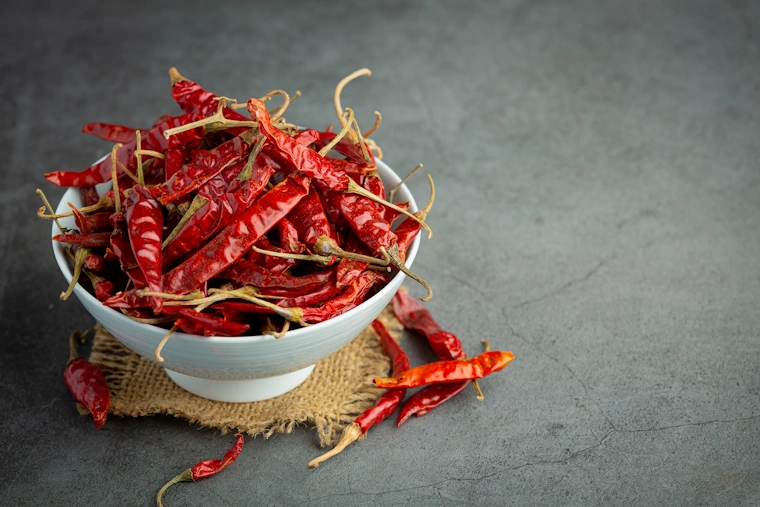
Dried Red Chilli
Minimum Order Quantity : 5-10 MT
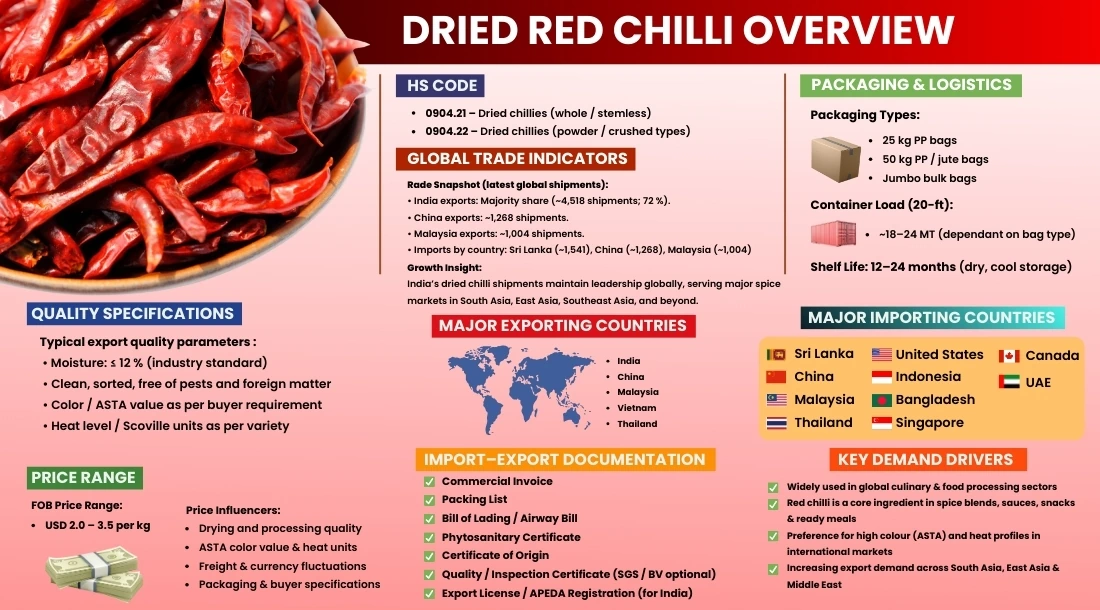
Packaging Types : 10 kg, 25 kg, 50 kg PP or jute bags; bulk packaging / containers available
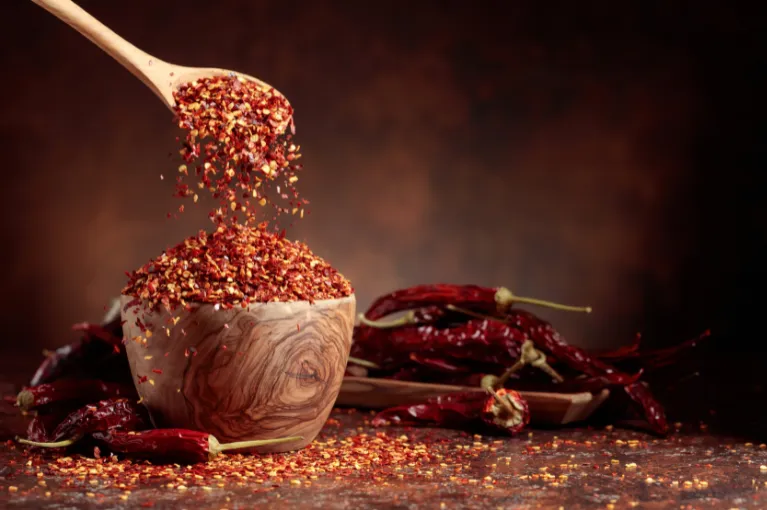
Forms Available: Whole dried chillies (with stem / stemless), crushed / flakes, premium grades
Shelf Life : 12-18 months in cool, dry storage
Moisture Content : ≤12% (Export Standard)
Admixture / Broken : Less than 2–4% depending on grade
Colour & Appearance : High ASTA colour, premium, standard, organic
HS Code : 09042110
Origin : India – Guntur, Karnataka, Telangana, Maharashtra, Odisha
Certifications : ISO, HACCP, FSSAI, APEDA, Organic
Through this guide, we provide a precise, trade-oriented overview of how this agricultural product is processed, graded, quality-validated, certified, priced, and moved through global supply chains to meet the technical expectations of bulk buyers.
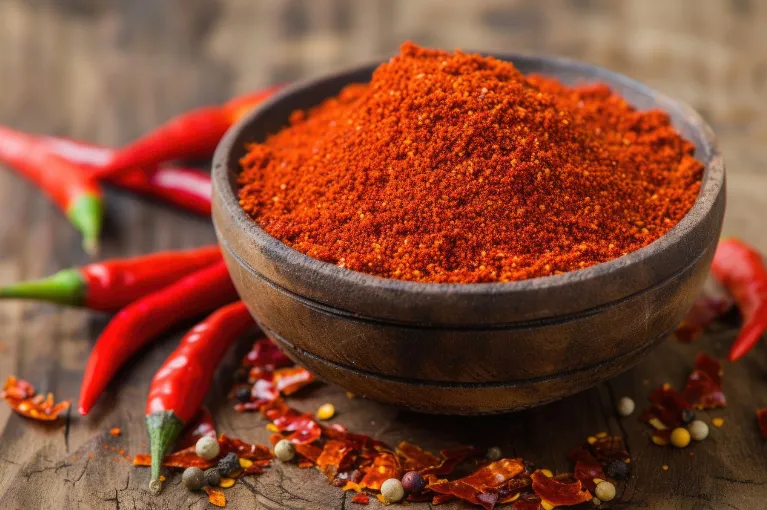
“Dried Red Chillies,” known domestically as Lal Mirch or Sabut Mirch, are a pungent, vibrant spice product harvested and sun-dried to preserve their fiery heat and rich colour. Unlike chilli powder, this product retains the pod's integrity, consisting of the dried skin (pericarp), which holds the colour, and the placenta/seeds, which hold the heat. This product is prized by the Spice Blending, Oleoresin (Color & Heat Extraction), and Food industries for its biting pungency (Capsaicin), high colouring value (Capsanthin), and distinctive fruitiness. For food manufacturers and extractors who are planning to buy dried red chilli bulk, it is important to understand these subtleties of structure to determine which processing grade to purchase.
While commonly recognised as a pantry staple or a tempering spice in retail, high-grade whole chillies are engineered for precise "Heat-to-Color ratios" and visual uniformity (Stemless vs. With Stem). The process involves harvesting the crop when the fruit is fully ripe and red, and drying it to a specific moisture level to prevent mould growth.
It functions differently from chilli powder because of its whole format. It can be used as a visual garnish in hot pots or for solvent extraction.
Because the volatile oils and pigments are protected within the dried skin of the pod, providing a sustained, stable shelf life as opposed to the rapid oxidation of colour in powder, their physical wholeness is essential.

| Parameter | Standard / Limit |
|---|---|
| Purity | 98% - 99% (Machine Cleaned / Stem Cut) |
| Moisture Content | Max 10% - 12% |
| Pungency (SHU) | 20,000 - 100,000+ (Variety Dependent) |
| Color Value (ASTA) | 40 - 160+ (Variety Dependent) |
| Protein Content | Min 23% (Standard) to >28% (Premium) |
| Colour | Bright/Vibrant Green (Premium) to Dull Green/Brown (Standard) |
| Total Ash | Max 7.0% - 8.0% (dry basis) |
| Acid Insoluble Ash | Max 1.3% |
| Broken / Loose Seeds | Max 3% - 5% (Grade Dependent) |
| Broken / Loose Seeds | Max 3% - 5% (Grade Dependent) |
| Damaged / Discoloured | Max 2% - 4% |
| Foreign Matter | Max 1.0% (Stemless / Best Quality) |
| Aflatoxin | Strict Limits (e.g., < 10 ppb for EU) |
| Size/Length | Varies (e.g., 5cm - 12cm) |
Critical Note: "SHU" (Scoville Heat Units) and "ASTA" (Color Value) are the major specifications for dried chilli. Premium buyers require "Stemless Quality" (Stems removed by hand or machine), where the product has not been adulterated with dyed pods or foreign matter. A visual check for "Yellow/White Pods" (sun-bleached or virus-damaged) is mandatory to ensure the product remains sound and fit for consumption.
In the highly competitive landscape of the dried red chilli B2B trade, segmentation is rigorous. It is strictly driven by four specific metrics:
Food Processing (Industrial)
Non-Food Industrial
Top Producing Countries & Export Hubs
Top Importing Regions

The "Global Heat" Palate Modern food culture is undergoing a shift. It is moving steadily toward bolder, spicier flavor profiles. Chilli is the foundational spice for Sichuan, Indian, Mexican, and Thai dishes. Consequently, the snack and fast-food industries are looking into reliable supply chains more and more. They use chilli to provide the "kick" that drives sales in chips, noodles, and fried chicken. This trend is directly driving industrial demand for consistent, high-SHU pods.
Natural Colouring (Clean Label) Global awareness of artificial additives is rising. This shift has maintained a consistent market for Paprika and Chilli Oleoresins. Companies are now actively seeking specific qualities. They require chillies with high ASTA values that allow for the marketing of "Natural Color" and "No Artificial Dyes."
The Oleoresin Boom Traditional raw spice usage is evolving. In these sectors, the spice is treated as a raw material for extraction. It is viewed as a dense packet of oil and pigment. This drives demand for specific varieties like Teja (for heat extraction) and Byadgi (for color extraction) that offer high yields per metric ton.
The global chilli market is characterized by a "Cold Storage" supply reality where India acts as the central reservoir, storing massive stocks in temperature-controlled warehouses to feed the world year-round.
Supply-Side Realities
Processing Note: Unlike simple harvesting, chilli requires precise "Drying" to lower the moisture from ~70% to ~10%. Sun-drying on tarpaulins is standard, but mechanical drying is rising to ensure hygiene. Cold Storage (approx 4°C - 6°C) is vital to preserve the red colour.
Packaging Standards Due to the nature of dried chilli, which is voluminous and lightweight, it has to be compressed to optimize shipping costs. Chilli is packed in 25kg/50kg Jute or PP bags. For export, these are often "Pressed Bales" where the chillies are mechanically compressed to fit more tonnage into a container (approx 14MT per 40ft container). For premium varieties, carton packing (non-pressed) is used to prevent breakage.
Storage & Shelf Life Chilli has a volatile colour, which fades rapidly in heat. Chilli has to be kept in Cold Storage (approx 5°C) to maintain the red pigment. If stored at ambient temperature, the color will darken to brown within weeks. The shelf life of whole dried chilli in cold storage is 12-18 months.
Incoterms & Documentation FOB/CIF is the standard practice for chilli trading. The documentation required is similar to that for other spices: Certificate of Analysis (specifically for Aflatoxin and Sudan Dye), Phytosanitary Certificate, Bill of Lading, and Certificate of Origin (GSP/COO).
Regulatory Compliance & Certifications Mandatory steps for a new market entrant:
IPM & Residue-Free Chillies (The "Safety" Wave) There is an aggressive global shift toward chemical safety. This has created a dedicated market for IPM (Integrated Pest Management) Chillies, where pesticide load is strictly monitored. The segment is led by major retail chains in the EU and the USA. For Western manufacturing, these chillies offer a safe ingredient that complies with strict MRLs (Maximum Residue Limits).
Oleoresin Extraction (The "Efficiency" Factor) Driven by the global interest in natural colouring and standardized heat, Western markets are actively seeking the consistency of Chilli Oleoresins. The star of this category is the High-Color Byadgi or High-Heat Teja. These are processed to maximise yield.
Sustainable Sourcing (Ethical Focus) Whether sourcing dried chillies online or via traditional auctions, the global supply chain is forcing a check on labor practices and water usage. In the Bulk Trade, this has spurred a shift towards "Rainforest Alliance" or sustainably certified farms in India.
Disclaimer: Market data, price indications, and trade regulations may change because of harvest conditions, geopolitical policies, and currency fluctuations. The technical details are for general guidance only; buyers must verify the details (SHU, ASTA, Aflatoxin) with suppliers through a Certificate of Analysis (CoA) before making a purchase. No specific trade result can be guaranteed by Tradologie.
Get in Touch
With Stem chillies have the green stalk attached to the pod; they are cheaper but require processing. Stemless chillies have the stalk removed (manually or mechanically), offering 100% usable spice and higher purity, though at a higher price point.
ASTA stands for the American Spice Trade Association color value. It measures the extractable color of the chilli. A higher ASTA number (e.g., 100-160) means a deeper, richer red color, which is crucial for natural coloring agents.
Aflatoxin is a toxin produced by mould if chillies are not dried quickly or stored properly in humid conditions. It is a carcinogen. Most developed nations have strict import limits (e.g., 5-10 ppb) and will reject shipments that exceed them.
In the general bulk trade, the Teja (S17) variety is widely considered the hottest commercially available bulk chilli from India, often exceeding 85,000-100,000 SHU.
Chilli is harvested in Spring (Feb-April). By summer, the fresh crop is finished, and the market relies on Cold Storage Stock. Prices fluctuate based on how much stock is left in the warehouses and the holding power of the stockists.