Key Highlights
- Global pulses market is estimated at $103.2 billion in 2025.
- AGT Foods, Viterra, and ADM are major global pulse suppliers.
- Olam specializes in Asian and African pulse varieties.
- Saibaba Agrilink focuses on processed and value-added pulses.
- Moisture control is critical for long-distance pulse shipments.
- Third-party inspection helps verify quality before payment.
- Packaging should match the buyer's warehouse and handling setup.
Legumes—chickpeas, lentils, yellow peas, black matpe—are pretty much holding global food security together globally. They're mostly affordable, loaded with plant protein, and they handle long ocean voyages surprisingly well without going bad.
If you're running procurement for a food processing plant, managing a wholesale import business, or dealing in agricultural commodities, you already know that picking the right bulk pulses suppliers isn't just about finding the lowest quote per ton. It's about who can actually deliver 20 containers on time without moisture issues or customs holds.
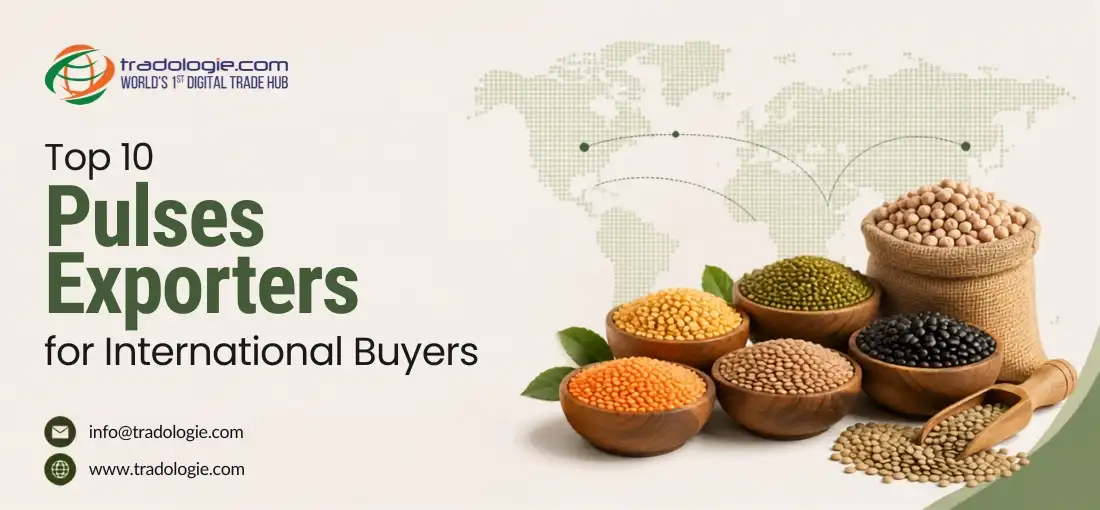
So let's talk about the big players. Here’s a grounded look at the top 10 pulses exporters supplying global buyers today, along with what's actually happening in the market.
What’s the Global Pulses Market Size Looking Like?
So how big is actually the pulses traded globally in actual dollar terms? Market data from IMARC Group estimates the global pulses market to be around $103.2 billion for the year 2025. And it's climbing slowly and steadily. And the Estimates suggest it could hit 138.0 billion dollars by the year 2034. This figure eventually works out to a compound annual growth rate CAGR of about 3.20%.

Why the steady push?
Honestly, a big chunk of it is just changing eating habits. Food manufacturers are grabbing pulse flours and protein starches for everything, this includes vegan meats, gluten free pasta and other such stuff, and even daily snacks. Plus, farmers love them because legumes naturally fix nitrogen back into the soil during crop rotation. So the supply keeps growing alongside the demand.
Top 10 Global Pulses Supplying Companies
When you're looking to book container loads or full vessel shipments, these are ten of the most established global pulses suppliers handling bulk trade worldwide:
1. AGT Food and Ingredients
Ask anyone on a pulse trading desk to name a dominant supplier, and AGT Foods is usually the first name out of their mouth. They're based in Canada, but their processing setup spans North America, Turkey, Australia, and South Africa.
They handle massive volumes of split red lentils, green lentils, yellow split peas, and Kabuli chickpeas. Their real edge? The sheer scale of their splitting and optical color-sorting facilities. When you need large, uniform shipments where every bag matches the lab sample, AGT is usually the default choice.
2. Viterra
Viterra is a heavyweight across agricultural commodities in general. They originate huge pulse volumes out of primary growing belts in Canada, Australia, and Europe, moving cargo through their own deep-water port terminals.
They deal heavily in whole yellow peas, Desi chickpeas, faba beans, and green lentils. If you're an importer buying at vessel scale rather than a couple of ocean containers, Viterra’s port infrastructure helps keep per-ton freight costs down.
3. Archer Daniels Midland (ADM)
ADM doesn't need much of an introduction in agribusiness circles. Their specialty pulse arm taps directly into farming networks across North and South America, supplying food-grade beans directly to major food manufacturers.
They excel in dry edible beans—pinto, navy, black turtle beans—alongside specialized pulse protein ingredients. For food factories that need strict USDA compliance, batch consistency, and full supply chain traceability, ADM is a solid partner.
4. Scoular
Scoular operates out of the US and has been navigating grain and pulse supply lines for over a century. They run a wide network of grain elevators and processing plants that clean, grade, and package legumes for both food and animal feed.
Their lineup covers black beans, dry edible peas, chickpeas, and specialty beans. What buyers like about Scoular is flexibility. Need a 25 kg bagged container shipment for wholesale distribution? Or loose bulk container liners for a processing facility? They'll set up the shipment format based on how your warehouse handles intake.
5. Broad Grain Commodities
BroadGrain is a major Canadian merchant handling the origination, processing, and export of grains and pulses to over 80 countries.
They specialize in green lentils (Laird and Eston grades), red split lentils, yellow peas, and dark red kidney beans. Because they maintain direct relationships with farm origins across North and South America, they're good at holding tight moisture specs and seed sizing—which matters a lot if you're selling to canning plants.

6. Columbia Grain International
If your supply chain relies on crops coming out of the Pacific Northwest or Northern Plains in the US, you'll run into Columbia Grain constantly. They operate a massive web of grain elevators linked directly to rail lines heading to coastal ports.
They are particularly strong in green and yellow split peas, chickpeas, and Spanish brown lentils. Their rail-to-port connections mean faster lead times, which helps when a food processing plant is running low on raw materials.
7. Olam Food Ingredients (OFI)
Olam takes a slightly different approach by focusing heavily on origination hubs across Asia, Africa, and Australia. They are one of the go-to global pulses suppliers for specialized Asian and Middle Eastern pulse varieties.
Their core strengths lie in black matpe (Urad), pigeon peas (Toor dal), green mung beans, and chickpeas. Because Olam has teams right on the ground in growing regions like Myanmar and East Africa, they offer direct access to regional crops that larger Western trade houses don't always carry.
8. Saibaba Agrilink Private Limited
Operating out of South Asia, Saibaba Agrilink has established itself among the top pulses sellers for processed and value-added pulses. They cater heavily to buyers across the Middle East, East Asia, and North America.
They specialize in milled and polished dals—including Toor dal, Chana dal, and Moong dal—as well as sorted Kabuli chickpeas. Their processing plant uses modern optical Sortex machinery, which means you get ultra-clean split pulses ready for retail shelves or commercial kitchens without extra re-cleaning.
9. JKT Global
JKT Global is an international trading firm operating out of major trade hubs like Singapore, Dubai, the Netherlands, and India. They bridge the gap between regional farm origins and food distributors across Europe and the Middle East.
Their product catalog centers on red kidney beans, black eye beans, mung beans, and white alubia beans. Importers often work with JKT Global because of their multi-origin flexibility. If prices spike in one country, they can shift sourcing to another origin to keep your landed costs reasonable.
10. PL Global (Global Pulse)
With decades of experience in international commodity markets, PL Global serves food wholesalers and distributors across Europe, Africa, and the Middle East.
They offer a solid range of processed pulses, including the famous Chana dal, black-eyed peas, split peas, and a wide variety of pre-packaged consumer bags. They are a great fit as one of the top pulses sellers that handle both bulk trade and consumer packaging if you need private-label pulses that are ready for shelf and retail packs.
Top Supplying Companies at a Glance
To help you compare your options, here is a quick overview of how these leading pulses exporters globally stack up:
| Company Name | Primary Origination Hubs | Core Product Specialization | Key Advantage for Buyers |
|---|---|---|---|
| AGT Food and Ingredients | Canada, Turkey, Australia | Lentils, Peas, Chickpeas, Pulse Flours | Massive global splitting & sorting capacity |
| Viterra | Canada, Australia, Europe | Yellow Peas, Desi Chickpeas, Faba Beans | High-volume bulk vessel shipment logistics |
| ADM | USA, Canada, South America | Dry Edible Beans, Pulse Ingredients | USDA-grade quality and food-tech integration |
| Scoular | USA, Canada | Beans, Peas, Chickpeas | Flexible bagged and container shipping |
| BroadGrain Commodities | Canada, South America | Green/Red Lentils, Kidney Beans | Multi-origin sourcing and strict moisture control |
| Columbia Grain | USA | Split Peas, Chickpeas, Brown Lentils | Direct rail-to-port supply for canning plants |
| Olam Food Ingredients (ofi) | Myanmar, Australia, Africa | Black Matpe, Pigeon Peas, Mung Beans | Unbeatable reach in Asian & African crops |
| Saibaba Agrilink | India | Milled Dals, Sortex Chickpeas | High-purity split pulse processing |
| JKT Global | Singapore, Dubai, Europe | Kidney Beans, Mung Beans, Alubia Beans | Multi-region trade desks & custom packing |
| PL Global | Middle East, Asia | Chana Dal, Black Eyed Beans | Decades of retail and bulk supply experience |
What Actually Matters When You're Buying in Bulk?
Look, anyone who has imported a few containers of chickpeas or lentils will tell you the same thing: the real headaches never start until the ship docks.
You sign a contract thinking everything is locked in, and then local customs flags a 2% extra moisture content or finds trace weed seeds. Suddenly your load is sitting in port limbo, and demurrage fees are ticking away every 24 hours.
So how do experienced trade buyers handle this?
First off, you have to be almost obsessive about moisture numbers in the sales contract. If you're shipping red lentils on a 35-day ocean transit through hot tropical routes, 13.5% moisture is a gamble. You want that contract cap closer to 12%, period. A tiny jump in moisture inside a dark container turns into mold before the vessel even crosses the equator.
Also, don't just rely on the seller's in-house quality certificate. That's a classic mistake.
Always write a third-party testing clause into your payment terms—SGS, Cotecna, or Intertek pulling random bags right at the loading port berth. If the lab sheet doesn't match your contract specs for broken seeds and foreign matter, the bank doesn't release the LC funds. Simple as that.
And honestly, keep your warehouse setup in mind before picking your packaging. If your factory floor isn't equipped with automated bag-slitting hoppers, ordering 1-ton jumbo totes sounds great on paper until your floor crew is stuck manually cutting them open. Sometimes paying a few extra dollars per ton for 25 kg PP bags saves you three days of bottlenecked labor on arrival.
Bottom Line
Connecting with the top 10 pulses exporters gives your business the supply security and pricing predictability needed in today's volatile agricultural market. Once you know which trading houses excel in specific crops—whether it's Canadian lentils from AGT or specialty beans from Olam—you can negotiate better contract terms, manage freight risks, and keep your facilities running without interruptions.
Disclaimer
The information provided in this article is for educational and informational purposes only. Supplier capabilities, product availability, market conditions, prices, quality specifications, and trade requirements may change over time. Buyers should independently verify supplier credentials, product specifications, certifications, inspection reports, and applicable import regulations before entering into a bulk pulse transaction.