Key Highlights
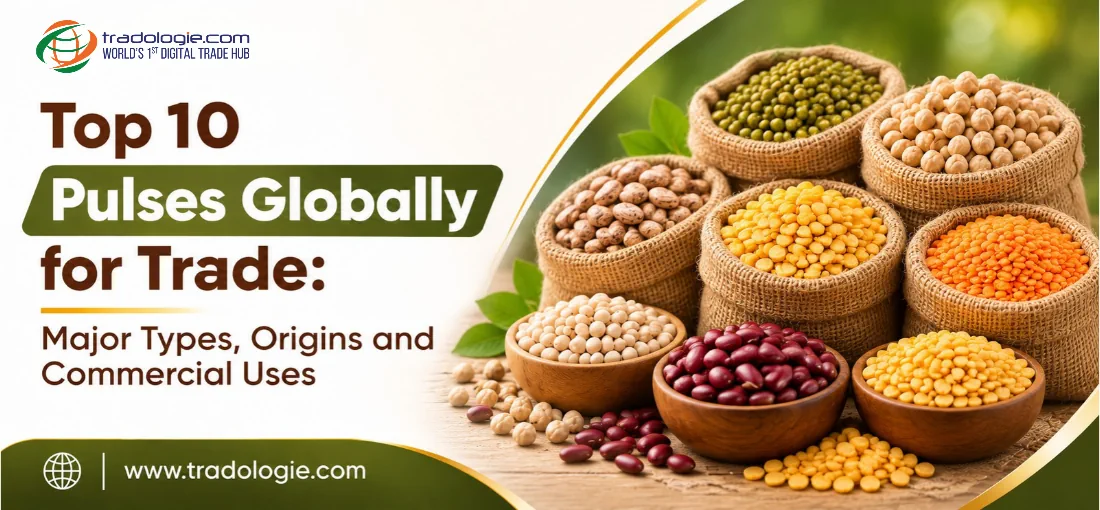
- The top 10 pulses traded globally include chickpeas, lentils, dry peas, dry beans, pigeon peas, cowpeas, mung beans, black gram, broad beans and lupins.
- India, Australia, Canada, Myanmar, Türkiye and Russia are among the important pulse-producing and exporting countries.
- Chickpeas are widely used for hummus, curries and flour, while lentils are popular in dals, soups and ready meals.
- Dry peas are important for pea protein and starch production, while kidney beans, mung beans and pigeon peas serve diverse food markets.
- Global pulse trade reached approximately 20.7 million metric tonnes in 2024, with Canada accounting for around 24% of exports and China emerging as the largest importer.
Introduction :
Pulses are some of the most widely traded agricultural commodities, playing an important role in providing natural sources of protein across Asia, Africa, Europe and the Americas. The top 10 pulses for trade include chick peas, lentils, dried peas, kidney beans and pigeon peas.
The top pulses for trade globally are cultivated in many different climates and are used for various applications within the food industry. Some are used for traditional meal preparation, whilst others are used for canning, pulse flour, protein concentrates, snack products and more.
Pulses are popular globally due to their versatility within the food industry, depending on consumer preferences, food security, availability, price and processing demand. By understanding the main types of pulses traded internationally, you can easily determine which products would be most suitable to choose.
Keep reading this informative blog piece as it will tell you the top 10 varieties of pulses globally that are traded in large quantities

10 Important Pulses for Global Trade
What are Pulses?
Pulses are typically leguminous crops that are harvested for their dry edible seeds. This includes dry beans, chick peas, pigeon peas, lentils, dried peas, cow peas, dried broad beans, Bambara beans, vetches, lupins and other minor pulses according to the Food and Agriculture Organization.
It is important to note that some pulses are not included within this group. For example, soy beans and ground nuts are usually classified separately as they are primarily used for oil. Fresh peas and beans are also classified as vegetables.
Within international trade, dried pulses are typically included under HS code 0713, however individual pulses have their own 6 digit codes.
Top 10 Pulses Globally For Trade
1. Chickpeas - India, Australia & Türkiye
Chickpeas, also known as garbanzo beans, are one of the most important top 10 varieties of pulses globally . There are two main types of chickpeas:
- Desi chickpeas - Smaller, darker and have a thicker skin.
- Kabuli chickpeas - Larger, light colour and are widely used globally.
- Origin & Main Growing Area: India is a major producer of chickpeas. Australia, Türkiye, Russia, Canada and Mexico are also important growing regions.
- Features: Chickpeas are rich in protein, firm and have a nutty taste. They are available whole, split and can also be processed into flour.
- Uses: Hummus, falafel, curries, snacking, canning, salads and chickpea flour.
Chickpeas are an important pulse to trade globally due to their popularity across South Asia, Middle East, North Africa and Mediterranean markets.
2. Lentils - Canada, Australia & India
Lentils are amongst the most widely traded pulses. There are many varieties available, with red lentils, green lentils, brown lentils and black lentils being the main varieties.
Red lentils are often split and dehulled. Green and brown lentils are often traded in whole form.
- Origin & Main Growing Area: Canada, Australia, India, Türkiye, Russia and United States.
- Features: Lentils are small and lens-shaped with relatively quick cooking times.
- Uses: Soups, stews, dals, ready meals, salads, pulse flour and packaged products.
Canada is a major country for trading lentils. It supplies large quantities to South Asia, Middle East and other importing countries.
3. Dry Peas - Canada, Russia & United States
Dry peas are among the largest pulse categories traded globally. Yellow peas and green peas are the most common varieties. Yellow peas are in particularly high demand for processing.
Dry peas are harvested once the peas have fully matured and dried in their pods.
- Origin & Main Growing Area: Canada, Russia, United States, France, Ukraine, Australia and other areas of Europe.
- Features: High in starch, moderate protein and suitable for processing. Available in whole, split and processed forms.
- Uses: Split pea soup, snacking, animal feed, pea protein, starch, flour and plant based products.
Dry peas have gained popularity due to the growing use of pea proteins in food production.
4. Dry Beans - Myanmar, United States & Brazil
Dry beans are a broad category. Many varieties exist such as kidney beans, navy beans, pinto beans, black beans and adzuki beans.
They come in various sizes, colours, shapes and characteristics. Different varieties are preferred in different regions.
- Origin & Main Growing Area: Brazil, Myanmar, India, United States, China, Mexico and a few African countries.
- Features: A wide range of colours and sizes, moderate protein content and good storage potential.
- Uses: Canned products, soups, stews, baked beans, refried beans, ready meals and packaged products.
Dry beans are one of the largest categories of pulses globally. They play an important role in international trade.
5. Pigeon Peas - India, Malawi & Tanzania
Pigeon peas, also known as tur or arhar, are an important pulse in South Asia and parts of Africa. They are usually supplied whole or split/dehulled.
Pigeon peas thrive in tropical and semi-arid areas.
- Origin & Main Growing Area: India, Myanmar, Malawi, Tanzania, Kenya & Uganda.
- Features: Medium sized, good protein content and can be cultivated in dry areas.
- Uses: Dal, curries, soups, traditional dishes, pulse flour & packaged products.
India is one of the largest consumers and producers. This can influence how much is imported from East African countries and Myanmar.
6. Cowpeas - Nigeria, Niger & Brazil
Cowpeas are widely cultivated in tropical and subtropical climates. They are also known as black eyed peas due to having a dark spot around the hilum.
They are an important food crop throughout West Africa and are also consumed in parts of Asia, Latin America & the Caribbean.
- Origin & Main Growing Area: Nigeria, Niger, Burkina Faso, Senegal, Brazil and other African countries.
- Features: Moderately drought tolerant, small to medium sized and good protein content.
- Uses: Boiled dishes, stews, fritters, flour, snacking and traditional dishes.
Cowpeas are highly popular in certain regions, especially West Africa.
7. Mung Beans - India, Myanmar & China
Mung beans, also known as green gram, are widely consumed throughout South & South East Asia. They are small green seeds.
They can be supplied in whole, split and dehulled forms.
- Origin & Main Growing Area: India, Myanmar, China, Thailand, Indonesia, Vietnam & Australia.
- Features: Small green seeds, quick cooking time and suitable for sprouting.
- Uses: Dal, soups, sprouts, noodles, desserts and snacks.
Mung beans are highly popular in Asian cuisines. They can be used for sprouts and traditional processed foods.
8. Black Gram - India & Myanmar
Black gram, commonly known as urad or urad dal, is an important pulse in South Asian cuisines. They can be supplied in whole, split and dehulled white urad dal forms.
This crop is particularly important in Indian food preparations.
- Origin & Main Growing Area: India, Myanmar, Nepal and other areas of South Asia.
- Features: Small black seeds with a white centre. Suitable for binding and fermentation.
- Uses: Dal, idli/dosa batter, papad, vada, traditional snacks and pulse based products.
Myanmar is an important supplier globally. Import demand, crop availability and trade policies can influence prices and volumes.
9. Broad Beans - Australia, China & Egypt
Broad beans, also known as fava beans or horse beans, are an important pulse. They are cultivated in temperate and subtropical areas.
They come in various sizes and can be supplied in whole, split and processed forms.
- Origin & Main Growing Area: Australia, China, Egypt, United Kingdom, Ethiopia and parts of Europe.
- Features: Large flat seeds, moderate protein content and firm texture.
- Uses: Soups, stews, falafel, snacking, flour, protein and animal feed.
Australia is an important exporter.
10. Lupins - Australia, Poland & Germany
production.
Sweet lupins have lower levels of bitter alkaloids than traditional bitter varieties.
- Origin & Main Growing Area: Australia, Poland, Germany, Russia and other areas of Europe.
- Features: High protein content, moderate fibre content and suitable for processing.
- Uses: Lupin flour, baking, protein, meat alternatives and animal feed.
Australia has developed a large industry for lupins. It supplies both domestic processors and international buyers.

Popular Pulses Globally
| Pulse | Main Growing & Exporting Countries | Typical Uses |
|---|---|---|
| Chickpeas | India, Australia & Türkiye | Hummus, flour, snacking & curries. |
| Lentils | Canada, Australia & India | Dal, soups, salads & ready meals. |
| Dry Peas | Canada, Russia & United States | Pea protein, flour, snacking & soups. |
| Dry Beans | Myanmar, United States & Brazil | Canned products, stews & packaged products. |
| Pigeon Peas | India, Malawi & Tanzania | Dal, curries & traditional dishes. |
| Cowpeas | Nigeria, Niger & Brazil | Stews, fritters & flour. |
| Mung Beans | India, Myanmar & China | Sprouts, dal, noodles & desserts. |
| Black Gram | India & Myanmar | Dal, papad, idli & dosa. |
| Broad Beans | Australia, China & Egypt | Snacking, soups, flour & protein. |
| Lupins | Australia, Poland & Germany | Protein, flour & animal feed. |
Note - This list highlights some of the most important pulses commercially. It isn't an official ranking, but there are many varieties within each category.
Pulse Trade Worldwide
Pulses are in strong demand globally due to their affordability, contribution to food security and growing usage in pulse based ingredients.
According to the OECD-FAO Agricultural Outlook 2025-2034, in 2024 there were around 20.7 million metric tonnes traded globally. This represented an increase of around 1.5 million tonnes from the previous year. Canada was the largest exporter at around 24% of global trade. China was the largest importer.
Each of the main pulse categories has its own trading characteristics. Canada plays an important role in dry peas and lentils. Australia has a substantial presence in chickpeas and broad beans. Myanmar also plays an important role in exporting certain beans.
Examples of 2024 Trade (WITS)
Below are some examples of exports for certain pulses in the 0713 category.
| Pulse | HS Code | Top Exporter | Value (2024) | Quantity |
|---|---|---|---|---|
| Dried Chickpeas | 071320 | Australia | US$1.12 Billion | 1.59 million MT |
| Dried Lentils | 071340 | Canada | US$1.63 Billion | 1.93 million MT |
| Dried Peas | 071310 | Canada | US$1.14 Billion | 2.62 million MT |
| Dried Kidney Beans | 071333 | United States | US$406.90 Million | 329,814 MT |
| Dried Broad Beans | 071350 | Australia | US$285.50 Million | 657,982 MT |
Source - World Bank World Integrated Trade Solution (WITS). Data from UN Comtrade. 2024. This shows the amount exported to the world for the following HS codes.
As shown, Canada and Australia are major exporters for some of the main pulses. However, it is important to examine each individual product as this can influence export values due to differences in quality, variety, price etc.
Things to Consider When Buying Pulses Internationally
When selecting the right pulse for your requirements, there are a few factors to consider.
- Type & Quality: Make sure you know which variety you need, along with the required size, colour, quality and origin.
- Moisture: Excessive moisture can cause deterioration and storage-related issues.
- Foreign Material: Make sure you know the permissible levels of stone, dust, broken/damaged seeds and foreign matter.
- Broken Seeds: Can create processing-related issues.
- Pesticides: Make sure the consignment complies with food safety standards for the destination country.
- Packaging: Usually available in 25kg, 50kg sacks and bulk.
- Exports Documentation: Make sure you have the correct invoice, packing list, certificate of origin, phytosanitary certificate, certificate of analysis & bill of lading.
- Import Regulations: Make sure you understand the customs regulations, import duties, food safety standards & phytosanitary requirements for the destination country.
Ensure you know how much your supplier has available, when they can ship, the port they will load from, payment terms and agreed Incoterms.
Conclusion
There are many different pulses traded globally. They are used across various food products and industries. Chickpeas, lentils, dried peas, beans and pigeon peas are key commodities. Mung beans, black gram, broad beans and lupins play an important role in specific regions and processing applications.
Knowing where your pulses originate from, their commercial characteristics and their quality will help you identify the right supplier. As plant based proteins and diverse ingredients continue to gain traction, pulses will continue to play an important role within the global agricultural industry.
Disclaimer
Pulse production, international trade values, export rankings and market demand may change over time. The ten categories discussed represent commercially important pulses and do not constitute an official global ranking. Trade figures are based on the OECD-FAO Agricultural Outlook 2025–2034 and 2024 WITS data sourced from UN Comtrade. Buyers and exporters should verify the latest trade statistics, product specifications and destination-country import requirements before entering into a commercial transaction.