Key Highlights
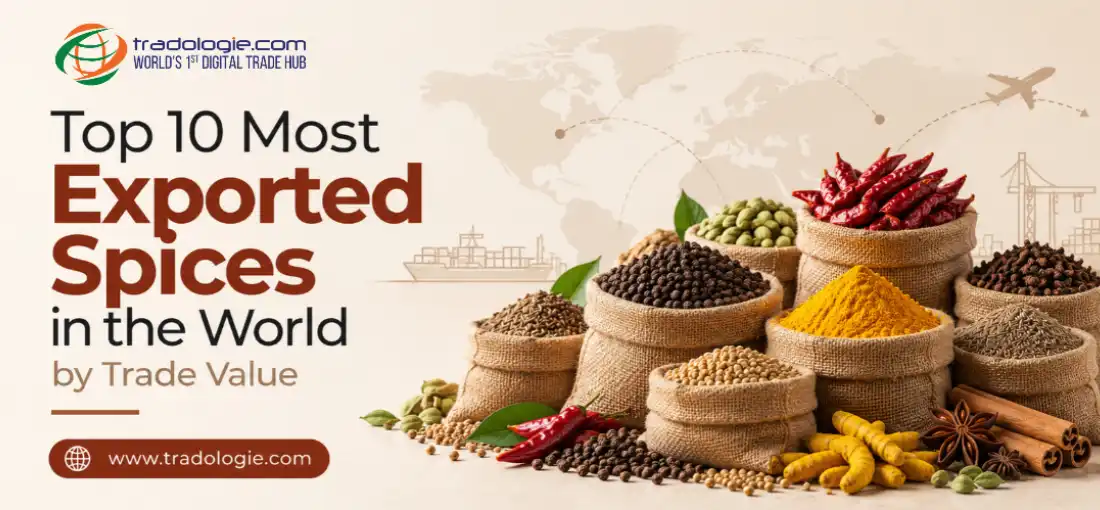
- The most exported spices in the world include black pepper, cumin, ginger, turmeric, cardamom, cinnamon, cloves, coriander seeds, nutmeg and saffron.
- Vietnam leads global dried pepper exports, India leads cumin seed exports, and Madagascar is a major exporter of cloves, according to the article's 2023 trade data.
- Global spice trade values vary by HS code, as some categories cover multiple spices rather than individual products.
- Export opportunities depend on international demand, product quality, sourcing costs and competition.
Introduction
Spices have been traded around the world for centuries and now play significant roles in many sectors including food manufacturing, seasoning, restaurants and ready meals. To identify which are the most exported spices in the world, it is essential for spice exporters to determine where international demand lies and which countries produce these commodities.
Using trade data we can see from the World Bank's World Integrated Trade Solution (WITS) and UN Comtrade that certain spices have substantial export values globally. Depending on whether you look at individual spices or HS code categories you will get different results. Keep reading this informative blog piece as it will tell you about the most exported spices in the world.
Top 10 Spices Exported Globally
You may notice that we are not looking at a comparison of the most individual spices but rather the most significant. The reason for this is that some fall into HS code categories which encompass multiple products. International trade HS code comparison is one of the most prominent ways to compare the most traded spices.

1. Pepper
When it comes to the top 10 spices globally, Black pepper is one of the most widely used spices internationally. It can be found in households, restaurants, meat processing and seasoning. It has a strong presence in Europe, North America and Asia.
Vietnam is a major exporter of this spice. Using data from WITS we can see that they exported around 683.2 million US dollars' worth of dried pepper (HS 090411) in 2023. Brazil followed with around 248.5 million US dollars.
As with all products, the quality, moisture levels, cleanliness and consistency can influence whether or not your product is accepted by buyers. Whole peppercorns and ground pepper can vary depending on what you are trying to achieve.
2. Cumin
Cumin is a highly significant spice within South Asian, Middle Eastern, North African and Latin American cuisine. It can also be found within many spice mixes, seasonings and processed foods.
India is the leading country exporting this spice. Using WITS we can see that they exported around 616.6 million US dollars' worth of cumin seeds (HS 090930) in 2023. This equated to around 147,324 tonnes. China followed with a value of around 105.7 million US dollars.
Overall this is a valuable export for spice exporters within India. However, factors such as availability, pricing, quality and pesticide residue can influence the success of an export deal.
3. Ginger
Ginger can be exported in many forms. Fresh, dried, crushed and processed. It can be found within drinks, confectionery, sauces and food manufacturing.
China is a major exporter of ginger alongside many other spices. Within the broader category of HS 0910 which includes ginger, saffron, turmeric and many more spices, we can see that China exported around 657.5 million US dollars.
This does not include just ginger. When looking to source ginger, ensure you compare fresh and dried varieties.
4. Turmeric
Turmeric has a strong presence within South Asian cuisine. It can also be found in seasoning mixes and food processing. India is a significant producer and exporter.
International demand will be influenced by factors such as colour, curcumin levels, form and use. Whole dried turmeric, turmeric powder and extracts will be required for different buyers.
As an exporter, ensuring that your turmeric has a consistent colour, is free from contamination and meets food safety standards within the destination country will help establish repeat business.
5. Cardamom
Cardamom is a valuable spice which can be found in confectionery, drinks, traditional cooking and premium spice mixes. Due to the distinctive aroma and relatively high value per unit, quality is essential.
Guatemala is a major exporter of this spice. Within the category of nutmeg, mace and cardamoms (HS 0908), we can see that they exported around 368.8 million US dollars in 2023.
Variety, size, colour, aroma and moisture levels can influence buyer preferences. High-value grades can be achieved but will depend on consistent quality.
6. Cinnamon
Cinnamon can be found in baked goods, drinks, desserts, sauces and seasonings. Sri Lanka and Vietnam are important exporters but will vary in terms of trade.
Sri Lanka exported around 205.7 million US dollars' worth of whole or uncrushed cinnamon (HS 090610) in 2023. Vietnam exported a comparable amount at around 205.5 million US dollars.
As an exporter, ensure you know the variety, flavour, colour and intended usage by the buyer. Ground cinnamon and whole cinnamon will vary.

7. Cloves
Cloves can be found in food processing, spice mixes and some industrial uses. Due to the distinctive aroma, quality and storage are important.
Madagascar exported around 248.4 million US dollars' worth of cloves (HS 090700) in 2023, making them the largest exporter by value. Indonesia followed with around 99.6 million US dollars.
Quality of the harvest, stem content, moisture and the quality of the dried buds can influence acceptance. Ensuring proper storage will also help preserve the aroma during delivery.
8. Coriander Seeds
Coriander seeds are used extensively within Indian cuisine, spice mixes, pickling and food processing. Due to their versatility they have substantial demand from several countries.
India is a significant exporter due to its established spice processing industry. However, you cannot determine its exact position in the list of most valuable individual spices in the world due to it being part of a general category. Ensure that you check the correct data.
As an exporter, ensure you source seeds with the right size, colour, aroma, cleanliness and residue limits for the destination country.
9. Nutmeg and Mace
Nutmeg and mace are two different products from the same plant. They can be found in baked goods, confectionery, drinks and spice mixes.
Indonesia exported around 112 million US dollars' worth of nutmeg (HS 090810) in 2023. This equated to around 19,477 tonnes. India followed with around 29.2 million US dollars.
This is just for nutmeg. As an exporter ensure you check both products separately as they can vary in terms of supply, specifications and pricing.
10. Saffron
Saffron is distinctive in terms of the amount exported. As it is a high-value product per kilo due to the labour-intensive harvesting and careful handling.
Iran is a major producer and exporter. Spain and other trade centres also play a role.
However, to determine exactly where it ranks among the top exports globally you will need to examine the data for the individual product. It falls under the same category as other products in the HS 0910.
As a buyer, ensuring that it is genuine, strong in colour, has a distinctive aroma, low moisture levels and no adulteration is essential. As an exporter, knowing that it can be traced back and has robust quality assurance can be very important.
Top Spice Exporters
Below you can see how the leading exporters vary:
| Spice/HS Code | Leading Exporter | 2023 Value |
|---|---|---|
| Dried Pepper (HS 090411) | Vietnam | 683.2 million US dollars |
| Cumin Seeds (HS 090930) | India | 616.6 million US dollars |
| Whole or Uncrushed Cinnamon (HS 090610) | Sri Lanka | 205.7 million US dollars |
| Cloves (HS 090700) | Madagascar | 248.4 million US dollars |
| Nutmeg (HS 090810) | Indonesia | 112.0 million US dollars |
| Ginger, Saffron, Turmeric & Other Spices (HS 0910) | China | 657.5 million US dollars |
Data taken from World Bank WITS, based on 2023 UN Comtrade data. Different HS codes so do not add up.
Things to Consider as a Spice Exporter
Knowing which are the most traded spices in the world is just the beginning. Just because something is a popular commodity doesn’t mean it will be profitable.
Traders should consider:
- Demand - Ensure you know which countries are consistently importing.
- Specifications - Ensure you know the moisture levels, cleanliness, pesticides, contamination and food safety standards.
- Price - Know the price of the product at origin, plus shipping, packaging, duty and specifications required by buyers.
- Supply - Ensure the product is available in season, stored properly and can be supplied consistently.
- Buyer - Ensure you know the business, payment terms and what they require.
When looking to export spices from India you should consider that just because it is a large market it may not be the most suitable option. Sometimes there can be stringent regulations, well-established suppliers and intense competition on price.
Conclusion
There are many different spices that are exported globally. Pepper, cumin, ginger, turmeric, cardamom, cinnamon, cloves, coriander, nutmeg and saffron all have distinct markets.
Using the data from WITS we can see that Vietnam are the leading exporters of dried pepper, India for cumin and Madagascar for cloves. Many other countries are leading in different spice categories. This means that understanding the specifications, supply and demand of the destination market enables traders to capitalise on opportunities.
Ultimately, the most exported spices in the world should be evaluated based on their trade value, but also the reliability of supply and what international buyers require. By combining trade data from HS codes with practical research you will have a better idea of which commodities and countries to focus on.
To export or import spices globally in bulk, register as a seller on Tradologie.
Disclaimer
This article provides general nutritional information and is not a substitute for personalised medical or dietary advice. Individual requirements may vary, particularly for people with diabetes or other health conditions. Consult a qualified healthcare professional for advice suited to your circumstances. Nutritional guidelines and trade statistics should be checked against the latest available sources.