Key Highlights
- India already accounts for about 36% of global red chilli production and exports, which means exporters start with scale on their side before price talks even begin.
- Red chillies aren’t moving only into kitchens anymore. Pharma and cosmetic buyers, especially those sourcing capsaicin, are quietly becoming part of the demand mix alongside food manufacturers.
- In real trade terms, deals close on quality. Buyers usually look for moisture close to 11% or lower, clean lab reports, and residue-free lots — that’s what separates repeat suppliers from one-time sellers.
- Demand is widening. South-East Asia is pulling more volume, while Europe and North America are leaning toward organic and traceable chillies, opening doors for exporters who can meet those expectations.
India’s Role in red Chilli Exports

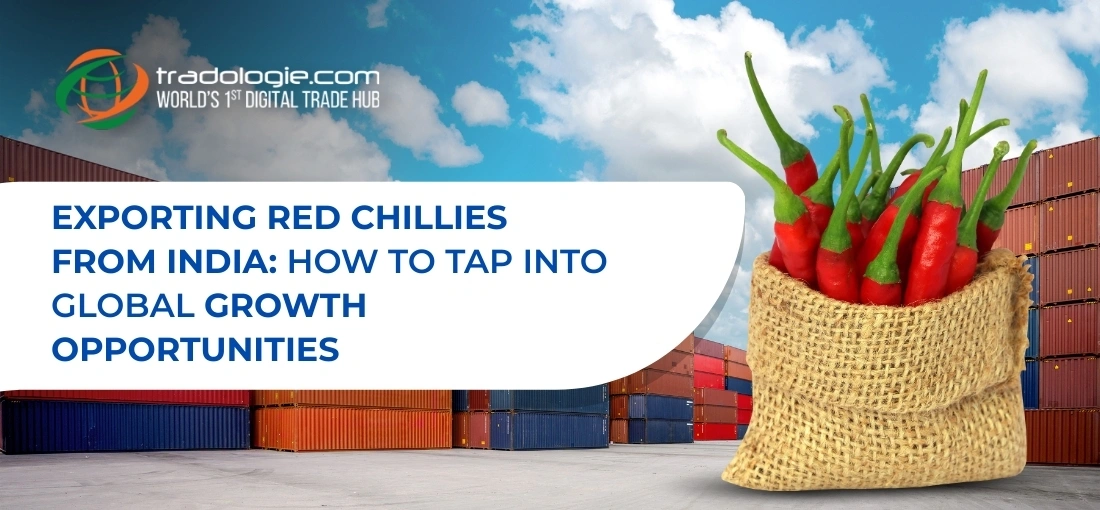
India is the number one producer and exporter of red chillies in the world with a whopping 36% of the world market share of all red chillies produced globally. This provides businesses with an excellent opportunity to export red chillies from India to buyers around the globe while also developing a beneficial relationship with their customers.
This informative piece of blog will talk about how to tap into the global red chilli exports opportunities.
Why Export Red Chillies From India Leads the Global Spice Market
India has a diverse climate and many types of soil which allow it to grow more than 400 varieties of red chili peppers. There are also several states that produce high-quality red chili peppers; Andhra Pradesh, Telangana, Karnataka and Madhya Pradesh all produce red chili peppers that meet global standards.
Indian red chillies are known for their beautiful colour and high quality, abundant oleoresin content and heat measured using Scoville heat units.
Understanding the Red Chilli Export Process
A comprehensive understanding of how to navigate red chilli exports requires a detailed attention-to-detail approach to documentation, adherence to the standards of quality, and the regulation requirements that must be followed. There are many things merchants should be aware of when preparing for this process:
Registration and Licensing
Registration and licensing requirements for anyone who wants to ship spices; registration with the Spice Board of India, and an Import Export Code from the Directorate General of Foreign Trade. In addition to this could be other requirements such as FSSAI registration, phytosanitary certificates, and certificates of origin documents.
Quality Parameters
The quality benchmark that potential buyers for red chilli from around the world would be; an acceptable moisture content of 11% or less, acceptable aflatoxin levels, and no pesticide residues present. The use of accredited third-party laboratories for quality control testing adds additional confidence to buyers and eases the customs clearance process for exporters.
Packaging and Logistics
Red dried chillies must be packaged in moisture-proof materials to protect their freshness during shipment; as it may be shipped to various locations (the shipping routes typically originate from major ports such as Mundra, Chennai and Nhava Sheva). Depending on buyers’ preferences, red dried chillies can be shipped either in the whole form, as crushed red chilli flakes or red chilli powder.
Who Are the Leading Global Red Chilli Buyers?
In order to find reliable red chilli buyers worldwide, it is essential to establish an accurate customer base. There is a wide variation in the types of companies that could be potential buyers, across multiple sectors:
- Food manufacturers will be looking for Red Chilli as one of their main ingredients when manufacturing sauces, seasoning and prepared meals
- Spice traders who will collect large quantities of Red Chilli and resell it to retailers and wholesalers
- Pharmaceutical companies who are using Capsaicin extract to create a pain-relieving formula
- Cosmetic manufacturers who are adding Red Chilli to their product lines to create warming creams or for use in hair care.
- Utilizing transaction trade facilitation platforms like Tradologie, participating in International Food expositions and attending government-sponsored Buyer/Seller meetings are avenues to identify and connect with potential Importers.
Emerging Red Chilli Export Opportunities

Indian suppliers of fresh red chillies now have a range of new red chilli export opportunities due to changing market trends.
Increasing demand for red chillies in South-East Asia countries
Thailand, Indonesia and Vietnam are buying large quantities of red chillies because they are using them to enhance their developing food processing industries, and prefer to receive shipments of dried whole chillies in bulk as part of their local grinding/blending process.
Organic and Sustainable Sourcing
Buyers based in Europe and North America have started to prefer organic certified and sustainable products. Manufacturers that grow their products using organic techniques, and have traceability systems in place, will typically receive higher price levels in these regions.
Value-Added Strategies to Maximize Red Chilli Export Opportunities
In addition to the traditional method of receiving dried red chillies, growing demand is also seen for chilli oleoresins, oils and available ready to use pastes. Manufacturers now have access to higher margins from production of these value-added products, and can depend less on commodity price fluctuations.
Digital Direct Trade
By using digital platforms, small suppliers are now able to contact and deal directly with potential buyers around the world, and cut out many traditional middlemen. In doing so small suppliers will experience lower cost and be able to offer more transparent pricing with a higher level of quality.
How to Build Long-Term Relationships With Global Red Chilli Buyers?
The quality of your product, availability and price, and effective communication with your customer are the most important factors in operating a successful international trading operation for red chillies. If you want to gain the business of the largest amount of customers possible, you must be able to offer your customers:
- A stable price structure with the option to book at that price in advance of shipment.
- The ability to sell to them in various quantities at a specified time depending on their needs.
- Complete documentation regarding the goods you shipped, including lab tests, shipping estimates, and proofs of compliance.
- Responsiveness to your customers' inquiries and requests regarding order status and other issues that may arise.
Conclusion
The demand for Indian red chillies is continuing to increase across the globe as both the food sector and consumer preferences for more flavourful and bold tastes are increasing. If you have the desire to invest in high-quality product and buyer relationship development, you will find that there are substantial profits available to you in the industry. Whether you are a long-established trading firm or new to the business, understanding the dynamics of the marketplace and what your buyers want will allow you to successfully export red chillies from India, and to capture an increasing portion of this growing market.
.webp "Global Clove Import Demand: Industries Driving Bulk Trade Worldwide")