
Key Highlights
- Import Surge: January 2026 saw a massive 3x YoY import spike (706,000 MT) driven by depleted domestic stocks and favorable CPO pricing against soft oils.
- Tax Advantage: A steep duty gap intentionally protects local refiners; Crude Palm Oil (CPO) faces an effective duty of ~16.5%, while refined RBD Palmolein sits at ~35.75%.
- Customs Codes: Ensure proper clearance by utilizing HS 1511 10 00 for raw CPO and HS 1511 90 20 for refined palmolein.
- Supplier Dynamics: Indonesia and Malaysia control over 84% of the market. Indonesia's decision to pause its B50 biodiesel mandate (holding at B45) has kept crucial export volumes available.
- Pricing Benchmark: The Malaysian CPO exchange remains the primary price guide, with landed CIF India costs typically adding USD 80–150/MT to cover ocean freight and insurance.
- Procurement Strategy: Bulk buyers should prioritize raw CPO to exploit the tax gap and use forward contracts (like Bursa Malaysia futures) to hedge against sudden market shifts.
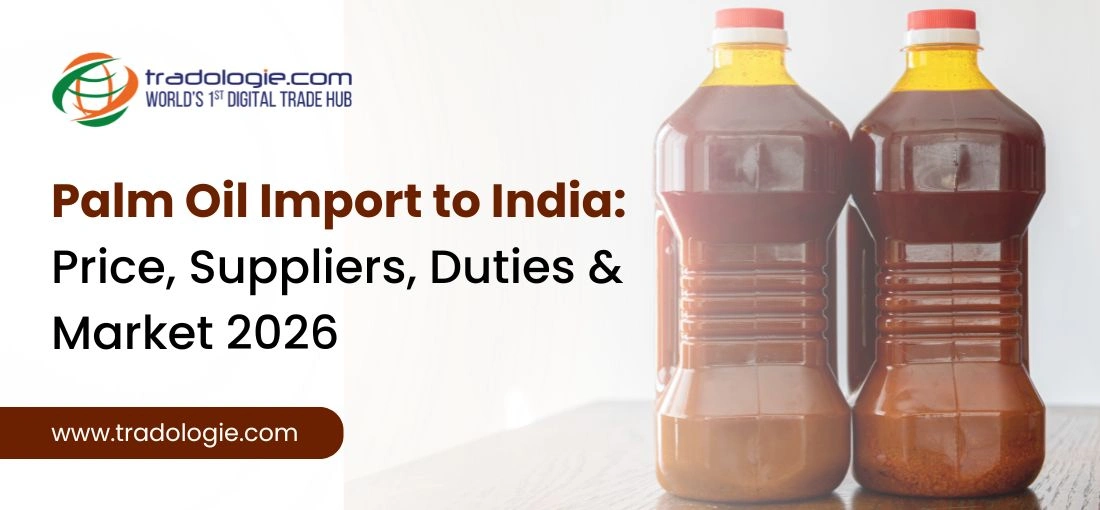
India is the most populous country in the world. Naturally, its demand for edible oils is massive. The country must bring in large volumes of farm goods non-stop. This basic need makes India a key player in the global vegetable oil trade.
However, the 2026 landscape for palm oil import India is changing rapidly. It is not business as usual. Buyers face quick tax changes. Suppliers in Southeast Asia are shifting their export rules. Global trade routes are also facing new pressures.
Are you a bulk trader using B2B platforms like Tradologie.com? Or maybe an agri-business, refiner, or FMCG buyer? If so, you need to know more than just seasonal crop sizes. You need to grasp the palm oil market in India deeply. You must predict rule changes. You must secure strong supply chains. Timing your forward contracts is also vital.
The prices, sources, and trade patterns that characterize the B2B palm oil industry in 2026 are broken down here in a clear and comprehensive manner.

The 2026 Palm Oil Market in India: An Overview
India buys about 60% of its needed edible oil from other countries. This heavy reliance leaves the nation open to global market swings. Palm oil makes up the biggest chunk of these imports. It is highly favored for a few simple reasons. It is very cost-effective. It yields a lot of oil per plant. It is also incredibly useful for food processing and commercial frying.
In 2026, navigating the global vegetable oil market requires careful planning. Buyers rely entirely on ocean shipping. Any delay at sea hits local retail prices almost right away.
The Indian government tries to stop these sudden price jumps. They actively use import taxes as a tool. This balances the profit margins of importers with the daily cost for regular consumers. Knowing these big, macro trends is step one for any successful bulk buying plan.
India's Big Import Surge: Restocking in 2026
Early 2026 saw a massive buying wave. Indian importers purchased huge amounts of palm oil very quickly. In January 2026 alone, India brought in 706,000 metric tons. This was more than three times the 203,000 tons bought back in January 2025.
What caused this giant threefold jump? A few things happened at once. First, local edible oil stocks were running very low. Second, crude palm oil import India prices were cheap compared to soybean and sunflower oil. Finally, there was a noticeable drop in soybean oil shipments from Argentina.
Total palm oil imports should bounce back nicely to 9.3 million metric tons in 2025/26. This is a big recovery from recent slow periods. This data tells B2B buyers something very important. The market jumps quickly when CPO prices drop. Buyers must act fast. Booking orders early during price dips is smart. Otherwise, you might end up paying a high "restocking premium" when everyone else rushes to buy.
Raw vs. Refined Palm Oil: The Tax Shift
The Finance Ministry recently changed import taxes. This is a vital variable for bulk buyers trying to figure out their final landed costs. The government always has two main goals here. First, keep kitchen cooking oil cheap. Second, protect the factories and profits of local oil refineries.
Here is how the taxes break down:
- Crude Palm Oil (CPO): Taxes on crude oil are very friendly right now. The basic customs duty is 10%. But there are extra fees, like the farm cess and social welfare tax. Add those up. The true CPO duty in India 2026 is about 16.5%. This structure strongly favors buying bulk raw material.
- Refined Palm Oil: Refined oil taxes are much higher. The RBD Palmolein import duty starts at a steep 32.5%. When you add the extra fees, the final tax rate hits around 35.75%.
This huge tax gap has a clear, intentional purpose. It pushes buyers to choose raw CPO over refined products. This keeps Indian extraction plants and refineries busy, protecting local jobs and profits.
HS Codes for Palm Oil Imports
You need the correct paperwork to clear customs smoothly. Using the right HS code is an absolute must for B2B trade. Here are the main codes and their basic taxes.
| Product | HS Code | Basic Customs Duty |
|---|---|---|
| Crude Palm Oil (CPO) | 1511 10 00 | 10% (effective ~16.5% with cess) |
| RBD Palmolein (refined) | 1511 90 20 | 32.5% (effective ~35.75%) |
| Palm Kernel Oil (crude) | 1513 21 00 | 10% |
| Palm Fatty Acid Distillate | 3823 11 00 | Check current notification |
Note: Import tax rates can change fast. The government does not always give a warning before changing them. The April 2025 change was the last major update. Always check the latest Central Board of Indirect Taxes and Customs (CBIC) alerts before signing any new import deals.
Top Palm Oil Suppliers to India
Historically, Southeast Asia dominates the list of palm oil suppliers India relies upon. Their local laws heavily impact how bulk trading works on platforms like Tradologie.com.
Key Suppliers to the Indian Market
| Supplier Country | Indian Market Share |
|---|---|
| Indonesia | ~44% of shipments; ~37% by import value (2024-25 data) |
| Malaysia | ~27% of shipments; single largest supplier by value in May-June 2025 |
Note: Market share changes depending on how you measure it (by total shipments or total money spent). Together, Indonesia and Malaysia control over 84% of India's total palm oil import market.

Understanding Indonesia's Supply
The story about Indonesia's palm oil shipments to India in 2026 is quite interesting. It is not just a simple tale of missing supplies. Indonesia actually exported a lot of CPO and palm products early in the year.
Sales hit US$4.69 billion in just January and February 2026. This was a massive 26.40% jump in value from the year before. The total volume also grew. It went from 3.33 million tons to 4.54 million tons. Good export prices and strong global demand caused this surge. India's own rush to restock its shelves played a big part too.
What about Indonesia's plan to mix palm oil into its local fuel (the biodiesel mandate)? It is a real factor, but its effect in 2026 was smaller than expected. Indonesia wanted a B50 mix. They stepped it back to B45 for the time being. They want to study the policy more carefully. The full B50 plan might not start until late 2026. Because of this delay, more CPO stayed available for global export.
Let's look at their prices. In April 2026, the Indonesian government set a CPO reference price. It was USD 989.63 per metric ton. Export taxes and levies change based on this specific price. For Indian buyers, this means Indonesia still has plenty of volume to sell. However, the government's price mechanism keeps the baseline cost fairly high.
Malaysia's Palm Oil Trade
Malaysia expects to produce about 19.60 million metric tonnes of CPO in 2026. This is a bit lower than their near-record output in 2025. The palm trees are simply going through a natural rest phase after a peak year.
Still, the Malaysian palm oil import route is absolutely crucial. Malaysia is India's top supplier when you look at total money spent. India bought USD 508.12 million worth of Malaysian palm oil in May and June of 2025 alone. To put that in perspective, that is almost seven times more than Pakistan, which is Malaysia's second-biggest buyer.
Malaysia is a great choice for procurement managers. They get high oil yields. They track their supply chains very well. Their mills also run very efficiently. Malaysia offers a strong, premium backup when Indonesian supplies get tricky or expensive.
Palm Oil Prices in India: Global Benchmarks
To fully understand the palm oil price India sees today, you must look at global commodity exchanges. You also have to watch ocean shipping costs closely. Importers need to constantly compare FOB (Free on Board) prices at the source with CIF (Cost, Insurance, and Freight) prices at the destination.
As of April 2026, Indonesia's reference price stood at USD 989.63 per metric ton. This number is not random. It is calculated using a few major markets. It looks at the Indonesian CPO exchange (USD 855.66/MT). It checks the Malaysian CPO exchange (USD 981.28/MT). It also includes Rotterdam prices in Europe (USD 1,209.81/MT).
Indian buyers should use the Malaysian exchange as their main price guide for future contracts. The final CIF India price will naturally be higher. It usually costs USD 80 to 150 more per metric ton than the Malaysian FOB price. This extra cost covers freight shipping and insurance. Market experts issue a clear warning here. Global tensions and shipping route problems are the new normal. These risks add a permanent, embedded cost to all landed goods.
Bulk Buying Strategies for 2026
Prices bounce around a lot. Supply rules change often. Agri-businesses handling crude palm oil import India must play smart. They need sophisticated plans to protect their profit margins. Here is what leading traders are doing.
- Hedge Your Bets: Buying only on the spot market is dangerous in 2026. Prices can spike fast. Importers should use Bursa Malaysia palm oil futures. This locks in a base price. It protects your business from sudden tax changes or global shocks.
- Mix Up Your Supply: Southeast Asia completely controls palm oil. But you can mix up your broader edible oil basket. Smart buyers import steady CPO volumes. But they also watch for cheap, quick deals on sunflower or soy oil to balance their costs.
- Use the Tax Gap: The government wants you to buy raw oil. Take full advantage of it. Stick to CPO instead of refined palmolein. This lets you profit from the ~19.25% tax difference. It ensures your domestic refineries stay busy and profitable.
- Buy Online: Use B2B digital platforms like Tradologie.com. This cuts out the middlemen. You can negotiate directly with global mills and exporters. Direct talks usually lead to the best possible FOB prices.



-distributorship-process-investment--margin.webp "Fortune Oil (Adani Wilmar) Distributorship: Process, Investment & Margin")