What Is Canola Oil?
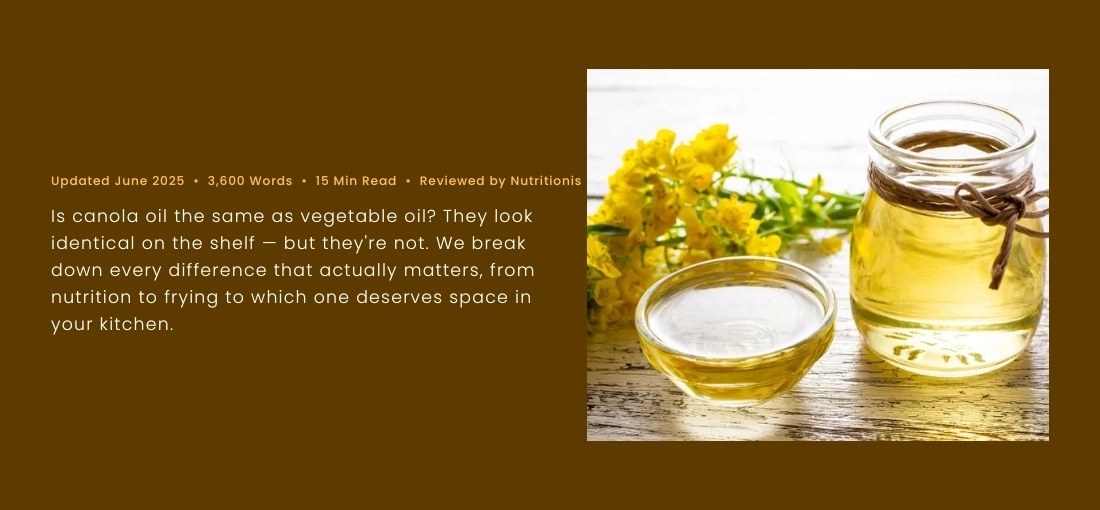
Canola oil is pressed from the seeds of the canola plant, a variety of rapeseed (Brassica napus) that was developed in Canada in the 1970s. The name "canola" comes from Canadian Oil, Low Acid — it was specifically bred to remove erucic acid, a compound found in natural rapeseed that can be harmful in large amounts.
After harvesting, canola seeds are crushed and the oil is extracted (often with a solvent), then refined to remove color, odor, and impurities. The result is a light, pale-yellow oil with an extremely neutral flavor — it won't compete with the taste of your food.
Canola Oil
- Source Seeds of the canola (rapeseed) plant
- Origin Developed in Canada; major global crop
- Smoke Point ~400–468°F (204–242°C)
- Flavor Neutral, very mild
- Saturated Fat ~7% (lowest of common oils)
- Omega-3 (ALA) ~11% — notably high
- GMO Status Mostly GMO in North America; non-GMO available
- Best For Frying, baking, sautéing, dressings
What Is Vegetable Oil?
"Vegetable oil" is a broad, generic term for any oil made from plant sources. The bottle on the grocery shelf is almost always a blend — typically dominated by soybean oil, but it may also contain corn oil, sunflower oil, canola oil, palm oil, or others depending on the brand and season.
Because manufacturers can change the blend without updating the label, the exact composition of vegetable oil isn't always transparent. This makes it cheap and versatile — but less consistent nutritionally than single-source oils.
Vegetable Oil
- Source Blend of plants — usually soybean-dominant
- Smoke Point ~400–450°F (204–232°C), varies by blend
- Flavor Neutral to mildly stronger (blend-dependent)
- Saturated Fat ~12–15% (varies by blend)
- Omega-6 ~50–60% — very high
- Omega-3 ~1–7% — lower than canola
- GMO Status Usually GMO soybean-based
- Best For Frying, baking, sautéing — everyday use
Canola Oil vs Vegetable Oil: Full Comparison Table
| Feature | Canola Oil | Vegetable Oil |
|---|---|---|
| Source | Single plant (canola/rapeseed) | Blend (usually soybean + others) |
| Smoke Point | ~400–468°F | ~400–450°F |
| Flavor | Neutral, very mild | Neutral to mildly stronger |
| Color | Pale yellow | Pale yellow to golden |
| Saturated Fat | ~7% ✓ Lower | ~12–15% |
| Monounsaturated Fat | ~63% ✓ Higher | ~25% |
| Omega-3 (ALA) | ~11% ✓ Higher | ~1–7% |
| Omega-6 | ~21% | ~50–60% (much higher) |
| Calories (per tbsp) | ~120 kcal | ~120 kcal |
| Heart Health | ✅ AHA Recommended | ✅ AHA Recommended |
| Best for Frying | ✅ Yes | ✅ Yes |
| Best for Baking | ✅ Yes | ✅ Yes |
| 1:1 Substitution | ✅ Yes | ✅ Yes |
| Price | Slightly higher | ✓ Slightly lower |
| Non-GMO Option | ✅ Widely available | Less commonly labeled |
Is Canola Oil the Same as Vegetable Oil?
This is the most searched question about these oils — and the answer requires a small distinction.
All canola oil is a vegetable oil. But not all vegetable oil is canola oil.
Think of it like squares and rectangles. Canola oil belongs to the broader "vegetable oil" category (oil from a plant), but the bottle labeled "vegetable oil" at the store is a different product — typically a soybean-dominant blend with its own nutritional profile.
When you buy canola oil, you know exactly what's in the bottle: oil pressed from the canola plant. When you buy a generic vegetable oil, you're getting a blend whose exact ingredients can change by brand, season, and price of raw materials.
For most cooking purposes, this distinction is minor. But for health tracking, dietary planning, or specific nutritional goals — knowing the difference matters.
Which Is Healthier: Canola Oil or Vegetable Oil?
This is what most people really want to know. Let's be precise.
Fat Breakdown Per Tablespoon
| Fat Type | Canola Oil | Vegetable Oil (soy-based) |
|---|---|---|
| Total Fat | 14g | 14g |
| Saturated Fat | 1g (7%) ✓ | 2g (12–15%) |
| Monounsaturated Fat | 9g (63%) ✓ | 3.5g (25%) |
| Omega-3 (ALA) | 1.3g (11%) ✓ | 0.9g (~7%) |
| Omega-6 | 2.9g (21%) | 6.9g (50%+) |
| Calories | ~120 kcal | ~120 kcal |
| Vitamin E | 2.4mg | 1.1mg |
| Vitamin K | 10mcg ✓ | 2.5mcg |
What This Means For Your Health
Canola oil advantages:
- Lower saturated fat — Less of the fat that raises LDL ("bad") cholesterol
- More monounsaturated fat — The same heart-healthy fat type found in olive oil, linked to reduced cardiovascular risk
- Higher omega-3 content — Helps reduce systemic inflammation; most people eating a Western diet are already omega-3 deficient
- Better omega-3:omega-6 ratio — A highly imbalanced omega-6:omega-3 ratio (too high in omega-6) is associated with increased inflammation
About vegetable oil: It's not "unhealthy" — but its high omega-6 content, combined with the typical modern diet's already-high omega-6 intake, can worsen the ratio. Because it's a blend, the nutritional value also varies widely by brand.
The AHA recommends both canola and vegetable (soybean) oil as heart-healthy choices — both are far preferable to butter, coconut oil, or lard for everyday high-heat cooking. The health difference between these two oils is modest; the bigger win is replacing saturated fats entirely.
Canola vs Vegetable Oil for Frying
For frying, both oils are excellent. Here's how they compare across frying scenarios:
Both canola and vegetable oil comfortably exceed the 350–375°F required for most home deep-frying, meaning neither will smoke, break down, or create off-flavors at standard temperatures.
Deep Frying
Both work superbly. If doing extended restaurant-style frying (holding oil at high temp for hours), canola oil may hold up slightly better due to its higher monounsaturated fat content, which oxidizes more slowly than polyunsaturated fats.
Pan Frying & Sautéing
Functionally identical. Canola's ultra-neutral flavor may be marginally preferable when you don't want any oil flavor — but in practice, most people can't tell the difference.
Air Frying
Either oil works as a light spray or coating. No meaningful difference in result.
Frying Verdict: For home frying, canola oil and vegetable oil perform identically. For commercial or prolonged frying sessions, canola has a marginal stability advantage. Either choice is excellent.
Can You Substitute Canola Oil for Vegetable Oil (and Vice Versa)?
Yes — in virtually every recipe, they are interchangeable at a 1:1 ratio. Here's the full breakdown:
For very delicate recipes (light chiffon cakes, neutral mayonnaise): some vegetable oil blends have a subtly stronger flavor — canola may be marginally preferable. For health-conscious cooking: if reducing omega-6 intake is a priority, canola is the better choice. For tight budgets: vegetable oil is typically cheaper — use it freely.
Canola vs Vegetable vs Corn Oil vs Olive Oil
Canola vs Vegetable vs Corn Oil
| Feature | Canola Oil | Vegetable Oil (soy) | Corn Oil |
|---|---|---|---|
| Source | Canola plant | Soybean + blend | Corn germ |
| Smoke Point | 400–468°F ✓ | 400–450°F | ~450°F |
| Saturated Fat | 7% ✓ Lowest | 12–15% | 13% |
| Omega-3 (ALA) | 11% ✓ Highest | ~7% | <1% |
| Omega-6 | 21% ✓ Lowest | 50%+ | 54% |
| Flavor | Most neutral | Neutral | Slight corn taste |
| Heart Health | Best of three ✓ | Good | Good (some studies) |
| Price | Mid | Lowest ✓ | Mid |
Vegetable Oil vs Canola Oil vs Olive Oil
| Feature | Canola Oil | Vegetable Oil (soy) | Extra Virgin Olive Oil |
|---|---|---|---|
| Smoke Point | 400–468°F ✓ | 400–450°F | 375–405°F |
| Flavor | Neutral | Neutral | Fruity, peppery |
| Monounsaturated Fat | 63% | 25% | 73% ✓ |
| Omega-3 | 11% ✓ | ~7% | ~1% |
| Antioxidants/Polyphenols | Low | Low | Very High ✓ |
| Best For Frying | ✅ Best | ✅ Great | ⚠️ Medium heat only |
| Best For Dressings | Works | Works | ✓ Preferred |
| Price | Moderate | Lowest ✓ | Highest |
For dressings, drizzling, and medium-heat cooking where flavor matters — extra virgin olive oil is the gold standard. Its polyphenol antioxidants are unmatched among cooking oils. But for high-heat frying or neutral baking, stick with canola or vegetable oil.
Our Verdict: Canola Oil vs Vegetable Oil
Bottom line: Canola oil has a modest but real nutritional advantage — more omega-3s, more monounsaturated fats, less saturated fat. For health-conscious cooking, choose canola. For everyday budget cooking, vegetable oil is perfectly fine. In any recipe, they are always interchangeable 1:1. If you want the healthiest option overall, step up to extra virgin olive oil for medium-heat cooking and dressings.
Storage & Shelf Life
Both oils store similarly:
- Unopened: 1–2 years in a cool, dark pantry
- After opening: 3–6 months for best quality
- Signs of rancidity: Bitter, paint-like smell; darker color; waxy residue
Store away from heat and light — never next to the stove. Keep bottles sealed tightly after use. If you cook infrequently, buy smaller bottles rather than economy sizes to avoid rancidity before you finish. Vegetable oil blends with higher saturated fat (palm oil content) tend to stay fresh slightly longer.
Frequently Asked Questions
The Key Takeaways
- Canola oil comes from one plant; vegetable oil is a blend (usually soybean-based)
- Both have high smoke points (~400–468°F) — both are safe for all high-heat cooking
- Canola has more omega-3s and monounsaturated fats; vegetable oil has more omega-6s
- You can substitute them 1:1 in every recipe — no adjustment needed
- For frying, baking, and sautéing — they perform identically
- Canola wins on health; vegetable oil wins on price
- Neither is a bad choice; both are far healthier than butter or coconut oil for frying
- For the healthiest fat overall, use extra virgin olive oil at medium heat



.webp "Cold-Pressed vs Refined Sunflower Oil Exports – Quality, Markets & Tips")