Key Highlights
- Direct shipping routes from Mundra can reduce transit times to the US East Coast.
- Transshipment routes may lower flexibility but increase delivery risk and lead times.
- Freight costs include ocean freight, fuel surcharges, and terminal handling charges.
- Container selection significantly impacts rice export profitability.
- Moisture control is essential for maintaining cargo quality during transit.
- Efficient route planning helps reduce logistics costs and shipment delays.
Introduction:
If you're moving heavy agri-containers out of India, stalling on the water kills your margin. Premium basmati and non-basmati rice are volatile biological cargo. Let them sit too long inside a dark, unventilated steel box, and you're dealing with rancid grain, mold, or an automated FDA rejection for infestation.
When you start pulling ocean freight rates India to USA 2026 quotes from forwarders, don't just chase the lowest baseline slot price. A cheap booking is a massive liability if the ship gets stuck transshipping in the Mediterranean for two weeks.

Your true shipping cost of rice exports from India to the USA depends entirely on your choice of maritime route and how well you handle the weight limits at the destination gate. Mundra Port handles the bulk of the northern grain belt, but once the container clears the terminal gate, you have two ways to play the Atlantic crossing.
Direct Strings vs. Transshipment Docks
Direct Loops
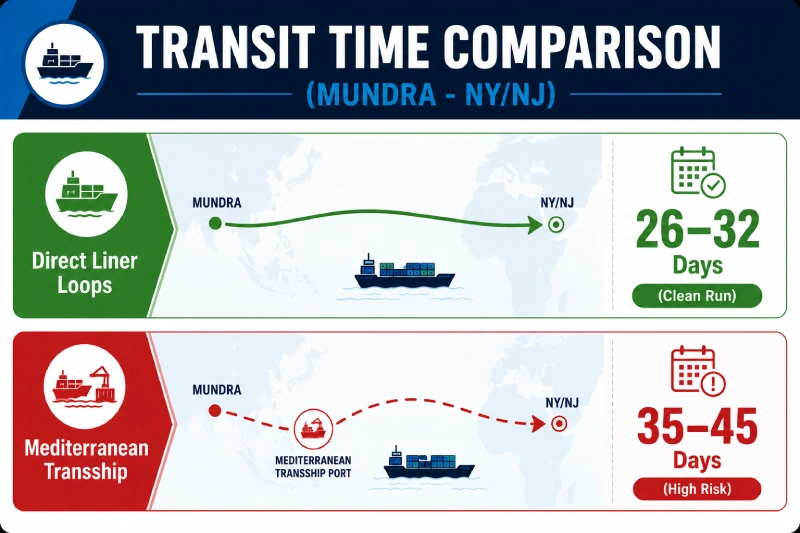
Alliances run direct, single-stop services that clear Mundra, cross the Arabian Sea, pass through the Mediterranean, and run straight for the US East Coast.
- The Clock: Expect a clean 26 to 32 days port-to-port.
- The Reality: Use these for premium aromatic rice shipments. Fewer port calls mean the container stays stowed undisturbed in its slot. You avoid the extreme temperature swings that happen when boxes sit on baking transit asphalt.
Transshipment Routes
Your container is dropped at intermediate hubs like Algeciras, Valencia, or Gioia Tauro. A secondary transatlantic vessel hoists it for the final run.
- The Clock: Pushes your lead times out to 35 to 45 days minimum.
- The Trap: If the regional feeder ship catches a storm or a labor strike in Europe, you miss the transatlantic connection. Your rice sits on an open dock, sweating under high humidity. This is where internal moisture clumping starts.
Financial Layout: Mundra to NY/NJ Cost Sheets
Do not build your landed cost sheets based on raw spot rates alone. Carriers hide fees in the surcharges. To get the actual freight charges from India to America, you need to calculate fuel variations and destination terminal handling.
The matrix below maps the current tentative expenses tracking food-grade shipments for this cycle:

Estimated Billing Breakdown (FCL)
| Fee Component | 20ft Heavy-Tested Box | 40ft High-Cube Box | What Triggers the Cost |
|---|---|---|---|
| Base Ocean Freight | USD 3,200 – USD 3,800 | USD 4,100 – USD 4,900 | Standard port-to-port slot price. |
| Bunker Adjustment (BAF) | USD 450 – USD 600 | USD 800 – USD 1,100 | Fuel surcharge tied to global marine crude. |
| Peak Season Surcharge | USD 300 – USD 500 | USD 600 – USD 900 | Added when harvest export volumes spike. |
| Origin Handling (OTHC) | USD 120 – USD 160 | USD 180 – USD 240 | Mundra Port crane and yard staging tariffs. |
| Destination Fees (DTHC) | USD 250 – USD 350 | USD 350 – USD 450 | NY/NJ terminal gate-out fees. |
| Total Estimated Expense | USD 4,320 – USD 5,410 | USD 6,030 – USD 7,590 | Use this for your landed margin math. |
Operational Disclaimer: The freight charges listed above are tentative, based on current 2026 market baselines, and are provided solely for informational and strategic planning purposes. Actual spot rates, bunker surcharges, and local carrier tariffs fluctuate continuously based on real-time sailing conditions, peak demand spikes, and geopolitical routing updates. Exporters must secure firm, written quotes from forwarders before locking in final buyer contracts.
Weight Optimization: The 20ft vs. 40ft Choice
When you’re managing the shipping cost of rice exports from India to the USA, weight limits dictate your final container economics. Rice is incredibly dense. It doesn't volume out like garments or furniture; it hits legal payload limits while the container is visually half-empty.
- The 20ft Heavy Preference: Standard 20-foot heavy-tested boxes have a much lower tare weight than 40-footers. This lets you pack more actual grain mass before tripping US road and rail weight laws. You can comfortably pack 24 to 26 metric tons of bagged rice into a heavy-tested 20ft box.
- The 40ft Margin Trap: A 40ft box costs significantly more in baseline freight, but US road regulations limit its total payload capacity to roughly the same weight ceiling as the 20ft unit. Squeezing heavy grains into a 40ft box means you're paying premium ocean rates to transport empty air across the ocean. That is a fast way to inflate your per-kilo rice shipping container costs.
Watch out for the destination highway grid. Most US East Coast states enforce a strict 80,000-lb gross vehicle weight limit for trucks. Overweight boxes landing at New York require specialized tri-axle chassis or costly highway permits. Those hidden, secondary lines can completely wreck your final freight charges from India to America ledger.
Pre-Loading Quality Checklist
Speed on the water doesn't save a container that fails customs checks due to moisture damage or insect infestation. A single mold flag at an offloading terminal drops your shipment into a manual hold yard for weeks, completely destroying your rice shipping container costs.
Enforce these three steps at the Mundra loading yard before sealing any doors:
- Kraft Paper Lining: Line the entire interior steel ceiling and upper walls with thick, absorbent kraft paper. Place high-capacity hanging silica gel pouches uniformly across the pallets. This catches the internal condensation when the ship shifts into cold Atlantic waters.
- Odor Vetting: Rice absorbs scents instantly. Run a physical smell test inside every empty box before accepting it from the liner. Reject any unit showing chemical stains or lingering oil smells from previous industrial cargo.
- Moisture Caps: Never pack grain with core moisture levels sitting above 13%. Run multi-stage moisture checks after the sortex cleaning. Keep your levels strictly below 12% before sealing the bags.
Summary
The days of playing ocean logistics by ear are completely over. Protecting your trade margins on the Mundra-to-New York run means treating transit routes, container sizes, and moisture control as rigid technical requirements. Stick to direct liner loops, run your numbers using heavy-tested 20ft boxes, and implement ironclad warehouse protections. That is how you turn a volatile maritime route into a highly stable, high-margin trade flow.
Disclaimer
The freight rates, transit times, logistics costs, and operational recommendations discussed are indicative and intended for informational purposes only. Actual shipping schedules, freight charges, fuel surcharges, terminal handling fees, and transit durations may vary based on carrier availability, port congestion, geopolitical events, weather conditions, and market demand. Exporters should obtain current quotations from shipping lines, freight forwarders, and logistics providers before making commercial decisions.