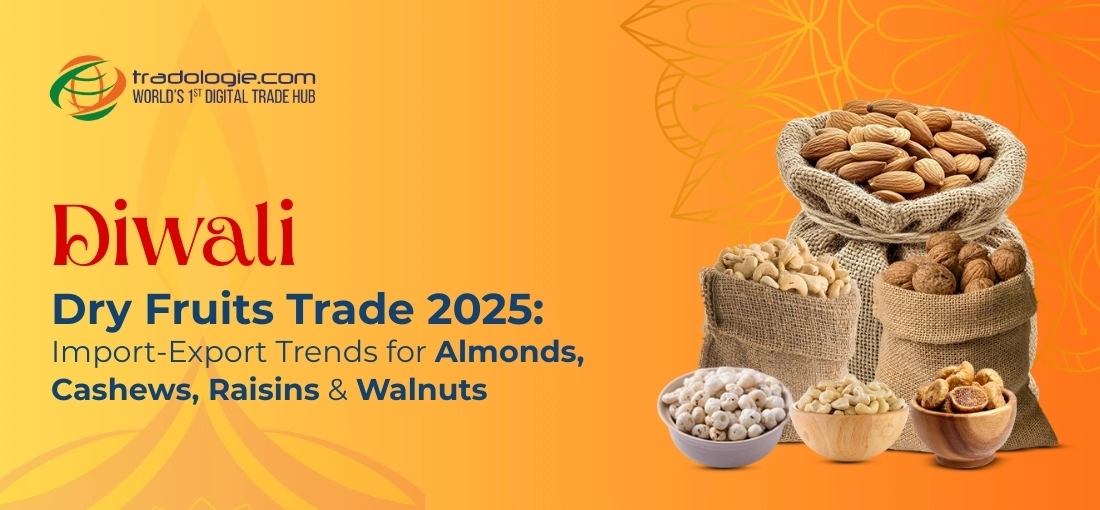
Over the past 25 years, there has been a substantial change in the international trade of agricultural products. There were notable changes in the buying and selling of dried fruits between 2000 and 2025. It used to be a small, seasonal, local business. It's a huge network around the world these days. This huge network makes billions of dollars every day.
Do you work in the transportation field? If so, learning about these changes is more than just a history lesson. It is an important tool for your business every day.
People all over the world are changing what they eat. Now, ships and trucks also have a lot better cold storage. Also, countries are always making new trade deals. All of these things made the market for dried fruits around the world go up. By 2025, it was worth about $7.24 billion. Fortune Business Insights says that growth will continue. They think the market will grow by 5.70% every year for the next ten years. To do well in this field, you need to know what happened in the past. You also need to know the rules of trade and which countries export the most.
From 2000 to 2025, the world's leading exporters of dry fruit are examined in detail.
The Growth of the Global Dry Fruit Market (2000-2025)
Back in the year 2000, only a few countries controlled the dry fruit trade. Most of these were in the West or the Middle East. Then, supply chains improved across the globe. This caused the market to expand rapidly.
Twenty years ago, the United States was the absolute leader. They dominated the export of all fruits and nuts. But time passed, and farming methods evolved. New countries entered the market. They offered goods at lower prices. Bit by bit, these new players chipped away at the US lead.
As we moved into the 2020s, global production stayed at a high level. The world began to make about 3 million metric tons (MT) of dried fruit every year. The International Nut and Dried Fruit Council (INC) recently sent out new numbers. For the 2024/25 farming year, they estimate production hit 3.33 million MT. This steady output is a great sign. It shows that farming businesses are very strong. They can easily bounce back from bad weather and shipping delays.
The Trade Giants: Top Exporting Nations
The list of the top exporting countries today is very different from the list from 2000. The US is still the world leader in tree nuts. They export a lot of almonds and pistachios to other nations. Conversely, dried fruits belong to a different category. They are identified by Harmonized System (HS) Code 0813 in trade logs. This group is now controlled by nations with specific farming climates.
The Observatory of Economic Complexity (OEC) keeps track of these numbers. According to their data, global trade for dried fruits (HS 0813) reached $3.13 billion in 2024.
Here are the clear leaders in this market today:
- Turkey: Turkey has slowly pushed the US out of the top spot. Over the last two decades, it became a true farming giant. The Turkish Ministry of Trade shares some impressive stats. For example, Turkey controls nearly 68% of the world's dried apricot supply. They are also the number one exporter of dried grapes, known as sultanas. They lead the world in dried figs, too. In recent years, Turkey's yearly exports in this sector often cross the $500 million mark.
- The United States: The US certainly lost some of its total market share to Turkey. Even so, it remains a powerful exporter on the world stage. Today, the US focuses mostly on specialty items. Their main exports include dried cranberries, prunes, and raisins. Over the past five years, the US has held steady. They control about 11% of the global export share.
- Chile and Thailand: Both of these countries have raced up the global ranks. Chile has a unique geographic advantage. It has opposite seasons to the Northern Hemisphere. Because of this, Chile can supply buyers up north during their winter months. Recently, Chile's export value climbed to over $310 million. Thailand has taken a different path. It relies on a very strong food processing industry. Thanks to this setup, Thailand is now a major exporter of mixed dried fruits and tropical varieties.
Production Volumes: What Moves in Bulk?
You need to look at specific crops to understand the bulk export market. Not all dried fruits trade in the same amounts. The market leans heavily on a few main crops. These crops support big food processing and retail packing businesses.
Here is the global dried fruit production share. These are estimated averages for 2023 to 2025:
| Commodity Type | Global Production Share (%) | Primary Exporting Regions |
|---|---|---|
| Table Dates | 37% - 42% | Middle East (Iran, Saudi Arabia), North Africa |
| Dried Grapes (Raisins/Sultanas) | 35% - 42% | Turkey, USA, Chile, South Africa |
| Prunes | ~7% | USA, Chile, France |
| Dried Cranberries | ~6% | USA, Canada |
| Dried Apricots & Figs | ~9% (Combined) | Turkey, Uzbekistan, Afghanistan |
Source: INC Statistical Yearbooks (2022-2024).
Table dates and dried grapes are very important. Together, they make up nearly 80% of all global production volume. This makes them the most vital goods for bulk shipping containers.
Changes in Middle Eastern and Asian Markets
The Middle East and Central Asia have always grown dry fruits. Between 2000 and 2025, countries here updated how they export. Iran, Saudi Arabia, and Uzbekistan upgraded their systems. Iran is still a huge player. It exports massive amounts of dates and pistachios. In the past, this brought in over $1.1 billion in market value for them.
At the same time, countries in Southeast Asia made big changes. Vietnam is a great example. They completely changed the processing side of the business. Vietnam mostly imports raw cashews from Africa. Then, they process them and ship them out to the world. Vietnam acts as a middleman processing hub. This shows that adding value to a crop can make just as much money as growing it.
Handling Customs: Using HSN Codes
Big farm trades involve a lot of money. Wrong customs forms can cause huge problems. Shipments can get delayed. Port fees can pile up. Sometimes, customs officials even take the goods.
The Harmonized System (HS) is very important here. It is the core of international trade tracking. Most dried fruits use HS Code 0813. This covers general dried fruits and mixtures of nuts or dried fruits.
You must understand the specific 6-digit and 8-digit codes. This is needed to get taxes right. It also helps you get benefits from free trade deals. Plus, it makes crossing the border much smoother.
Make your cross-border shipping easier today. Stop customs delays and get your taxes right for bulk shipments. See the complete HSN Code List or use an HSN Code Finder Tool to protect your global supply chain.
Trade Rules and IEC Codes
Selling farm goods overseas is not just about finding a buyer. You must follow strict health and safety rules. You have to meet limits on chemical residues. You also have to follow local trade laws.
For many businesses, getting an Importer-Exporter Code (IEC) is required. It is the very first step to legally trade across the globe. You cannot clear customs without the right licenses. You cannot send commercial shipments. You also cannot receive payments in foreign money.
Trade rules have moved online over the past 25 years. This makes following the rules faster. But, the fines for breaking the rules are much bigger now.
Do not let paperwork slow you down. Make sure your business is set up legally for big trades. See the Complete IEC code list to speed up your setup. Then, you can start shipping right away.
Looking Ahead (2025 and Beyond)
The global dry fruit market will see new changes after 2025. There will be challenges. There will also be huge chances to grow.
Climate change will hurt crop amounts in usual places. Places like California and the Mediterranean will feel this. Because of this, big buyers are changing where they get their goods. They are looking at new sellers in South America and Central Asia. They want to make sure they always have a steady supply.
At the same time, more people want to buy these goods. People in Europe and North America want healthier snacks. Also, the middle classes in China and India are growing. They are eating way more imported, high-quality dried fruits.
The next ten years will be good for smart trade workers. You need to build strong, trusted partnerships in other countries. Put your business at the front of global farm trade. Maybe you need to buy high-quality goods in bulk. Or, maybe you want to sell your crops to the world. Your next big partnership is just a click away.
Expand your business today:
- Buyer Registration
- Seller Registration