Key Highlights
- Dabur is one of India’s oldest FMCG brands, founded in 1884.
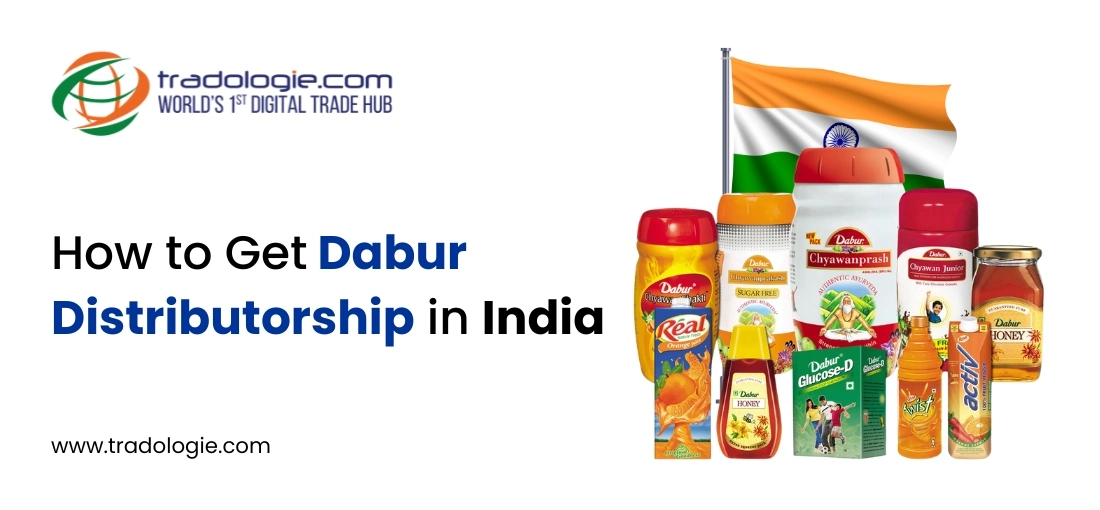
- Popular products include Dabur Honey, Chyawanprash, Real Juices, Amla Hair Oil, and Hajmola.
- Starting a Dabur distributorship typically requires ₹10 lakh to ₹25 lakh investment.
- Distributors usually need 500–1,000 sq. ft. warehouse space with delivery logistics.
- Distributor margins in the FMCG sector generally range between 4% and 10%.
- Application involves contacting Dabur regional offices, submitting infrastructure details, and signing a distribution agreement.
Introduction:
Some brands bank on flashy marketing to gain customer trust and capture the market. Others build it brick by brick over decades, by extensively becoming a household staple.

Dabur belongs to the second category.
The brand has long been exquisitely associated with Ayurvedic wellness and natural healthcare for many families in India. A spoonful of Dabur Honey in the morning. A bottle of Chyawanprash returns to the dining table every winter. And the familiar green bottle of Dabur Amla Hair Oil is tucked away in bathroom cabinets.
The thing is, Dabur has spent more than a century building this reputation as a trusted Ayurvedic and FMCG brand
But products alone don’t create a nationwide presence. Behind those bottles and jars reaching millions of homes is a vast distribution network working quietly across cities and towns.
Warehouses receiving stock from regional depots.
Distributors supplying hundreds of retail shops.
Delivery vehicles making daily rounds to pharmacies, grocery stores, and supermarkets.
And that’s exactly where opportunities open up for entrepreneurs interested in a Dabur distributorship.
If you’re exploring the FMCG distribution business, let’s take a practical look at how to get Dabur distributorship, what investment may be required, and how the application process usually unfolds.
A Brief Look at Dabur’s Legacy
Dabur is one of India’s oldest and most recognized consumer goods companies.
Founded in 1884, the brand originally began as a small Ayurvedic medicine enterprise. Over time, it expanded into a large FMCG company offering products across healthcare, personal care, and food categories.
Today, Dabur’s portfolio includes well-known products such as:
- Dabur Honey
- Chyawanprash
- Dabur Amla Hair Oil
- Real Fruit Juices
- Vatika Hair Care Products
- Hajmola Digestive Tablets
You’ll notice something interesting here.
These products span several daily-use categories — from food items to personal care and wellness products. That variety allows Dabur products to appear in many types of retail stores.
And naturally, that creates a strong demand for efficient distribution networks across India.
Why FMCG Distribution Is a Strong Business
The thing about FMCG products is that they move constantly through the retail market and especially if you get Dabur Distributorship.
A bottle of honey sells.
A new one replaces it.
Hair oil runs out at home, and another bottle is purchased.
This cycle repeats week after week.
Retailers therefore depend heavily on local distributors to keep their shelves stocked.
A typical Dabur distributor may supply products to:
- Kirana Stores
- Supermarkets
- Pharmacies
- Cosmetic shops
- Wholesale Retailers
Once a distributor builds relationships with retailers, orders tend to become regular. That’s why the FMCG distribution business often relies more on steady turnover than on large per-product margins.

Investment Required for Dabur Distributorship
Now let’s talk about the practical aspect — the investment.
Truth be told, the investment requirement usually depends on the city size and distribution territory. But generally speaking, starting a Dabur distributorship may require an investment somewhere between ₹10 lakh and ₹25 lakh.
This amount usually covers:
- Distributor security deposit
- Warehouse or storage space
- Initial product inventory
- Delivery vehicles or logistics setup
- Working capital for ongoing stock supply
The thing is, FMCG distributors must maintain consistent product availability. Retailers rely on distributors for regular replenishment, so maintaining sufficient stock becomes essential.
Space and Infrastructure Requirements
Now let’s talk about infrastructure.
A Dabur distributor typically operates from a warehouse or storage facility, usually around 500 to 1,000 square feet, depending on the size of the market.
Unlike dairy distribution, most Dabur products do not require cold storage, which makes storage relatively simple.
- Organized storage racks
- Basic inventory management
- Delivery vans or small trucks for supplying retailers
Because once the distributor starts supplying dozens of shops, efficient logistics becomes crucial.
Profit Margin in Dabur Distribution
Now comes the question that every prospective distributor considers — the margin.
In the FMCG sector, distributor margins are usually moderate but stable.
For many consumer goods companies, distributor margins often fall somewhere between 4% and 10%, depending on the product category and promotional schemes.
For example:
- Health and wellness products may offer slightly higher margins
- Food products like honey or juices may have moderate margins
- Special schemes and incentives sometimes increase overall earnings
The thing about FMCG distribution is that profitability usually depends on sales volume and retailer network size.
Distributors supplying hundreds of shops often generate strong monthly turnover through steady product movement.
Basic Requirements to Become a Dabur Distributor
Now if you’re wondering about eligibility, the requirements are fairly straightforward.
Companies like Dabur typically look for distributors who have:
- Adequate working capital
- Warehouse infrastructure
- Logistics capability for product delivery
- Basic business experience in trading or distribution
The thing is, distribution businesses run on relationships and reliability.
Retailers prefer working with distributors who maintain consistent supply and respond quickly to orders.
Application Process for Dabur Distributorship
Now let’s talk about the application process.
Many entrepreneurs assume the process might be complicated, but in reality it follows a fairly familiar structure.
First, you typically contact Dabur’s regional sales office or distribution department and express interest in becoming a distributor.
After that, well… you simply put forward your distributorship request.
Pretty much the standard routine for most FMCG partnerships.
You’ll usually share details such as:
- Your business background
- Warehouse and logistics setup
- Proposed distribution area
- Investment capability
Once the company reviews the proposal, they may evaluate the territory and market potential.
If everything aligns with their distribution plans, the next step usually involves finalizing the distributor agreement and placing the initial product order.
And that’s when the distribution business actually begins.
Can Online B2B Platforms Help in Finding Distribution Opportunities?
Now here’s something worth mentioning.
Many entrepreneurs today explore online B2B trade platforms when looking for dealership opportunities or supplier partnerships.
These platforms often connect:
- Manufacturers
- Distributors
- Wholesalers
- Bulk buyers
The thing is, such platforms function as digital marketplaces for business networking.
While official distributorship approvals typically happen through the company’s direct channels, B2B platforms can still help entrepreneurs explore opportunities within the FMCG and healthcare supply ecosystem.
Final Thoughts
The thing about Dabur distributorship in India is that it operates within a very stable segment of the market.
Products related to wellness, personal care, and daily household needs continue to sell consistently if we were to sum up. Consumers swear by established brands that have a good perception within their mind, and retailers rely on distributors to keep them on the shelves.
Success depends on factors like logistics efficiency, inventory management, and strong retailer relationships, of course.
The business can become quite reliable and successful once the distribution network begins running smoothly and efficiently, however.
Looking to partner with global FMCG brands? Start your distributorship journey
Disclaimer
The information provided in this article is for general informational purposes only. Investment costs, profit margins, infrastructure requirements, and the application process for a Dabur distributorship may vary depending on company policies, location, and time. Readers are advised to verify the latest details directly with Dabur India Ltd. or its authorized representatives before making any financial or business decisions.