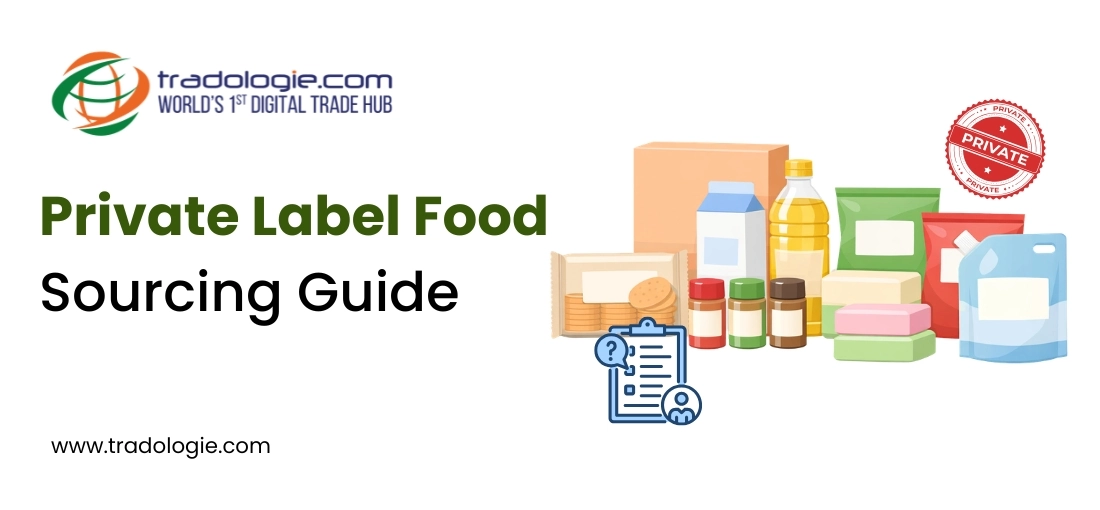
The private label food industry has gone from being a cheap option to being a major player in grocery stores around the world. According to the Private Label Manufacturers Association (PLMA), store brands account for nearly 20% of US grocery sales, which generate over $200 billion annually. Due to the widespread belief that store brands are the best, foreign consumers are searching for highly qualified manufacturers in other nations.
However, buying food across borders is not easy. There must be strict quality control, careful movement of goods through the supply chain, and strict rules and regulations. Import-export process mistakes can lead to large financial losses, delayed shipments, and harm to a company's reputation. Global sourcing managers and bulk buyers must take a methodical approach in order to minimize these risks and maximize their procurement strategies.
Did You Know?
Most importers are very aggressive when it comes to negotiating freight rates and unit prices, but they often have a hidden weakness in upstream traceability. Under Withhold Release Orders (WROs), U.S. Customs and Border Protection (CBP) can and does seize whole bulk shipments right at the port if there is even a hint of unverified labor practices at the farm or factory level. We will explore how to mandate strict Environmental, Social, and Governance (ESG) compliance later in this checklist to insulate your brand from these catastrophic border enforcement actions.
Here is a complete checklist for sourcing private label food, made just for bulk trade and international import businesses.
Market Analysis, Geopolitics, and Product Viability
A rigorous internal audit must precede any outreach to global suppliers. Strategy always comes first. You must define the precise specifications of your intended import. Detail is critical at this stage. This requires locking in exact flavor profiles. It also means establishing a strict target for commercial shelf life. Lastly, you must map out any non-negotiable restrictions regarding raw ingredient sourcing.
Importantly, geopolitical volatility must be considered in a thorough viability assessment. Importers are at great risk when they rely on a single origin point. Margin erosion can occur overnight due to trade policies, anti-dumping duties, and abrupt tariff implementations, especially those that impact agricultural exporters. In order to stabilize their supply of bulk commodities, progressive procurement teams are expanding into new agricultural export hubs.
It's also important to look at landed costs early on in the process. Make sure the estimated retail price leaves enough room after taking into account the Free on Board (FOB) price, international shipping, customs fees, and domestic storage. If the profit margin can't easily handle a 5% to 10% change in international freight rates, the product might not be able to stay in business for long.
Identifying and Vetting Global Suppliers
Sourcing a generic supplier is rarely difficult. Yet, identifying a truly reliable and open manufacturing partner requires deep due diligence. You must start by tapping into proven global trade networks. Specialized B2B agri-commodity platforms serve as excellent launchpads. Major international trade shows, such as SIAL in Paris or Anuga, also offer prime networking. Still, this initial discovery phase is only the beginning.
Procurement teams need to go far beyond simple introductions when assessing possible manufacturing partners. Request an extensive due diligence package up front, which needs to contain the following:
- Comprehensive Documentation & Licenses: Don't accept a simple company registration. Request verifiable export licenses specific to your product category, localized business permits, and tax registration certificates.
- Infrastructure and Equipment Verification: Without the machinery to support it, a declared production capacity (measured in Twenty-foot Equivalent Units, or TEUs per month) is meaningless. Request a detailed equipment list. For example, when they get large amounts of pulses, broken rice, or raw spices, do they use high-tech optical color sorters and in-line metal detectors to make sure there is as little foreign matter as possible?
- Raw Material Traceability: A trustworthy supplier needs to demonstrate the source of their raw materials. Demand visibility into their farm-to-factory traceability protocols to ensure they aren't masking poor-quality crop blending from unvetted domestic markets.
- Financial Liquidity and Credit Reports: A factory that lacks cash flow is a massive liability. Require independent, third-party financial credit reports (such as a Dun & Bradstreet D-U-N-S number report) to ensure the manufacturer possesses the operational stability to float large production runs without demanding exorbitant advance payments.
- Subcontracting Transparency (The "Phantom Factory" Risk): A common trap in global sourcing is the "bait and switch," where a pristine primary facility wins the contract, but the actual production is subcontracted to an unvetted, lower-tier facility to cut costs. Enforce a strict disclosure policy regarding their secondary facility networks.
- Export Market Overlap: To confirm their current export markets, examine their past Bill of Lading (B/L) data. A supplier is intrinsically more reliable than one who only ships to regions with lax food safety regulations if they have successfully negotiated the strict Maximum Residue Limits (MRLs) of the European Union or the FDA regulations of the United States.
Quality Assurance and Regulatory Compliance
There is no space for safety mistakes when food is sourced globally. The legal systems are harsh. Your bottom line will suffer greatly if you violate these guidelines. It takes initiative to defend your private label. Ensuring a seamless customs clearance process is equally crucial. Procurement teams must implement these non-negotiable guidelines in order to reduce these risks:
- Recognize Regulatory Risks: Rejections at borders occur on a daily basis. Every year, the Food and Drug Administration (FDA) of the United States releases an Import Refusal Report. Every year, thousands of food import lines are rejected, according to the data. The most common infractions are adulteration and misbranding. These figures need to be taken seriously by procurement teams. Every day, extreme caution is necessary.
- GFSI Certifications are Required: Quality-related handshake agreements are out of date. Verbal assurances from foreign vendors should not be trusted. Verify that the factory actively adheres to established safety procedures. Programs authorized by the Global Food Safety Initiative (GFSI) must be promoted by them. There are a number of strong options available to you. SQF, BRCGS, and FSSC 22000 are prominent international standards.
- Check U.S. Import Requirements: U.S. market entry is highly regulated. The supplier is legally required to be registered with the FDA. Their operational facilities must also pass intense scrutiny. Furthermore, their entire supply chain must align with specific legal frameworks. This includes full compliance with the Food Safety Modernization Act (FSMA) preventive controls.
- Enforce Independent Lab Testing: Factory data is not an objective truth. Do not build your quality assumptions on their internal reports alone. Make independent, third-party lab testing a mandatory contractual term. Demand this analysis on all pre-shipment samples. This must be completed before the goods leave the factory floor. It remains the only reliable method to check microbiological safety, heavy metals, and pesticide limits.
Negotiating Bulk Trade Terms and MOQs
Negotiation in global food sourcing goes way beyond the unit price. It is fundamentally about allocating risk. You must dictate responsibilities through standard international trade terms (Incoterms 2020).
- FOB (Free on Board): This grants you total control over ocean freight and logistics. It is the preferred method for veteran importers.
- CIF (Cost, Insurance, and Freight): This places the logistics burden entirely on the supplier. It is technically simpler. However, it often results in hidden margin markups.
You must also actively negotiate the Minimum Order Quantity (MOQ). Factories predictably push for massive MOQs to hit economies of scale. Do not accept these initial terms. Insist on a heavily reduced volume for the initial trial run. At the same time, lock in a sliding scale pricing agreement. This legally obligates the supplier to drop unit costs as your future order volumes increase.
Trade Finance and Payment Structures
Global sourcing creates immense counterparty risk. Securing your payment structure is just as critical as locking in the unit cost. The International Chamber of Commerce (ICC) tracks this closely. They note that up to 80% of global trade utilizes trade finance or credit insurance. These tools are the only way to bridge the gap between global buyers and sellers.
Never rely exclusively on an advance Telegraphic Transfer (T/T) for initial orders. This practice is highly inadvisable. Leverage a documentary Letter of Credit (L/C) at sight instead. This ensures your capital is protected. The manufacturer only gets paid after delivering compliant shipping documents to your bank. Trust will eventually build after several successful shipments. Importers can then safely move to Open Account (O/A) terms. This vastly improves corporate cash flow. Most buyers target 30 to 60-day payment windows backed by export credit agencies.
Custom Packaging, Labeling, and IP Protection
In bulk food imports, your product presentation serves a dual purpose: it must survive the physical rigors of international ocean freight while strictly complying with the destination country’s retail laws.
Below is a breakdown of the critical requirements to secure your product and your brand:
| Strategic Focus Area | Primary Objective | Required Action & Compliance Standard |
| Packaging Durability & Integrity | Survive transit and preserve product shelf life. | Work closely with the manufacturer to select materials offering high moisture and oxygen barriers. Ensure structural integrity for bulk container loading. |
| Retail Labeling & Localization | Comply with destination market consumer protection laws. | Meticulously translate and localize all text. Accurately display nutritional panels, mandatory allergen declarations, and clear Country of Origin markings. |
| Intellectual Property (IP) Security | Prevent theft of proprietary assets and brand identity. | Execute a robust Non-Disclosure Agreement (NDA) before sharing recipes, logos, or designs. Register trademarks in both the manufacturing country and the target market. |
Environmental, Social, and Governance (ESG) Sourcing
Complete supply chain transparency is a mandate shared by regulatory bodies and end users. ESG has shed its status as a simple corporate catchphrase. It is now a potent mechanism for strict border enforcement. Every day, U.S. Customs and Border Protection (CBP) demonstrates this. Bulk shipments are actively targeted and seized at the port. Withhold Release Orders (WROs) against products linked to forced labor are used to accomplish this.
Purchasing agricultural products such as processed foods, raw spices, lentils, and bulk rice carries a certain amount of risk. Importers must therefore enforce strict traceability down to the individual farm. Never take claims without proof. Verify the accredited ethical sourcing certifications held by your foreign suppliers. SMETA (Sedex Members Ethical Trade Audit) and Fair Trade are two great instances. These audits confirm labor practices that can be verified, safe working conditions, and sustainable environmental practices. You can protect your private label from severe legal ramifications and catastrophic PR catastrophes by implementing these mandatory checks.
Logistics, Cold Chain, and Customs Clearance
Global food transportation requires meticulous preparation. Deep coordination is simply not optional. Safeguarding your margins is a top priority. Maintaining product integrity is just as crucial. Thus, logistics requires the exact same strategic rigor as your initial sourcing.
- Account for Logistics in Landed Costs: Consider the World Bank's Logistics Performance Index. It highlights a critical financial metric. Logistics and trade facilitation absorb 10% to 15% of total landed costs. This cost must be baked into early financial models. Failing to do so routinely destroys overall profitability.
- Partner with Specialized Forwarders: Avoid general cargo handlers. Their lack of niche focus is dangerous. Partner exclusively with seasoned freight forwarders. Ensure they specialize in food products and agricultural commodities. This focused expertise is what safely navigates complicated global shipping routes.
- Secure and Monitor the Cold Chain: Perishable goods carry distinct risks. Temperature-sensitive sourcing mandates reliable reefer containers. Secure this equipment well in advance. Then, enforce the deployment of continuous data loggers. They provide unbroken monitoring of the cold chain. This surveillance must cover the entire journey from the factory to your receiving warehouse.
- Proactively Manage Customs Documentation: Customs delays destroy product value. They drastically reduce commercial shelf life. They simultaneously generate heavy demurrage penalties. Prepare your customs broker ahead of time. Provide all required documentation well in advance of the ship's arrival. The Bill of Lading and the Commercial Invoice are required documents. Strict Phytosanitary Certificates are also necessary for agro-commodities.
Trial Shipments and Continuous Vendor Management
Shifting from sample approval to full-scale production is inherently risky. This transition mandates a carefully phased approach. It also requires rigorous, ongoing oversight. Ensuring long-term supply reliability is the primary objective. Protecting your financial margins is the secondary goal. To succeed, immediately implement these essential vendor management practices:
- Execute Commercial Trial Shipments: Do not scale procurement based on air-freighted "golden samples." This assumption routinely leads to disaster. Commission a trial commercial shipment instead. A single 20-foot container or a Less than Container Load (LCL) is ideal. This action stress-tests the entire global supply chain. It reveals the supplier's genuine mass production quality. Furthermore, it validates the actual effectiveness of your customs clearance procedure.
- Establish Precise KPIs: Vendor management is a perpetual operational requirement. It begins the moment the supply chain goes live. You must define precise Key Performance Indicators (KPIs) immediately. Use these specific benchmarks to track critical metrics. Focus heavily on measuring vendor communication responsiveness. Diligently record their on-time shipment percentages and track all defect rates.
- Conduct Routine Site Audits: Initial factory vetting degrades in value over time. Do not rely on those early reports indefinitely. Demand that the manufacturer consistently uphold all established standards. You can verify this by conducting rigorous yearly site audits. One crucial check must always be performed during these visits. Actively verify that they are not quietly outsourcing your production to unapproved, secondary facilities to cut operational costs.
Conclusion: Securing the Global Supply Chain
The success of your import-export strategy is directly related to developing a profitable private label food brand. Architectural resilience is just as important to success as finding the best FOB price. By carefully following this checklist, which covers everything from negotiating trade finance and geopolitical tariffs to enforcing stringent ESG and GFSI standards, buyers can transform overseas sourcing from a liability into a potent competitive advantage. Your retail brand's shelf-level success is ultimately determined by your diligence during the sourcing phase.