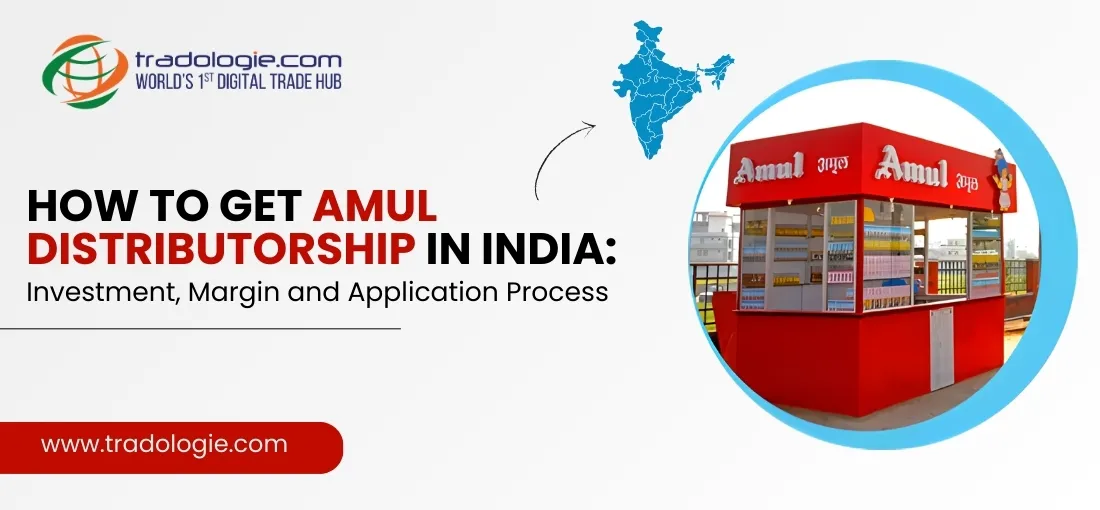
How to Get Amul Distributorship in India: Investment, Margin and Application Process
Key Highlights
- Amul distributorship operates under the cooperative network of GCMMF (Gujarat Cooperative Milk Marketing Federation).
- Entrepreneurs can apply for Amul wholesale distributorship, parlours, or preferred retail outlets.
- Initial investment typically ranges between ₹2 lakh and ₹10 lakh , depending on scale.
- Distributor profit margins generally range from 2.5% to 10% across different dairy products.
- Basic requirements include warehouse space, cold storage, delivery vehicles, and working capital.
- Application involves contacting the regional office, submitting documents, infrastructure review, and approval.
Introduction
Spend even a little time strolling and observing India's dairy market, and you'll definitely notice one name popping up almost everywhere. It's none other than Amul. The brand's butter, milk, ice creams, and cheese simply dominate the Indian shelves of neighborhood kirana stores to big supermarket chains.
The thing is, Amul didn't build this massive presence overnight. A large part of that reach comes from its strong distribution network. Thousands of distributors and dealers across India help move products from dairy plants to retail counters every single day.
And that's exactly where many entrepreneurs start wondering: Can I get Amul distributorship too?
Well, the short answer is yes. But like most dealership opportunities, there are a few things you should know first — the investment, the profit margin, and of course the application process.
You are at the right blog if you want to know how to get Amul distributorship in India. This informative piece of write-up will provide you all the vital information on the same.
Understanding the Amul Distribution Model
Before talking about investment or paperwork, it helps to understand how Amul's system actually works.
Amul isn't just a usual company like the other FMCG folk out there in the market. It is managed by the Gujarat Cooperative Milk Marketing Federation (GCMMF). So the brand works through a cooperative structure instead of operating like a typical private FMCG company. It's like the farmers produce the milk, processing units convert it into products, and distributors help it reach the market.
You'll notice that the system relies heavily on local distributors and dealers. That's where opportunities open up for small and medium entrepreneurs.
Depending on the region, Amul offers a few different dealership models:
- Amul Preferred Outlet (APO)
- Amul Railway Parlour
- Amul Ice Cream Scooping Parlour
- Amul Wholesale Distributorship
The wholesale distributorship is usually what people refer to when they talk about large-scale Amul dealerships.
Investment Required for Amul Distributorship
Now let's talk about the money part — because that's usually the first question everyone asks.
The thing is, the investment requirement isn't extremely high compared to other FMCG distributorships. But it still depends on the type of dealership you're applying for.
For a standard Amul distributorship, the investment may include:
- Security deposit
- Warehouse or storage space
- Delivery vehicles
- Working capital for stock
In most cases, the initial investment can range between ₹2 lakh and ₹10 lakh, depending on scale and location.
For example:
- Small ice cream parlours may start around ₹2-5 lakh
- Large distribution networks may require ₹5-10 lakh or more
You'll notice that cold storage facilities often become important, especially if you're dealing with milk, butter, and frozen products.
That's where planning ahead really helps. A small refrigerated storage setup can make distribution far smoother.
Profit Margin in Amul Distributorship
Now let's come to the part that really interests most people — the margin.
The thing with dairy products is that margins are usually steady rather than extremely high. But the volume of sales tends to compensate for that.
For Amul distributors, margins typically fall in the range of 2.5% to 10%, depending on the product category.
For example:
- Milk and dairy beverages: around 2.5% - 3% margin
- Butter and cheese: around 8% - 10% margin
- Ice cream products: slightly higher margins
You'll notice that while milk itself has lower margins, the real earnings often come from value-added products like ice creams, paneer, chocolates, and cheese.
Application Process for Getting Amul Distributorship
Now let's talk about the application process to get Amul distributorship.
And honestly, the process is not overly complicated.
Well, you just need to go ahead and put the application in, and after that it's pretty much the standard routine most dealership processes follow.
Here's roughly how it works.
Step 1: Contact Amul Regional Office
First, you'll need to reach out to the nearest Amul regional office or distributor network manager.
They'll usually guide you about:
Availability of distributorship in your area
Required investment
Infrastructure requirements
Sometimes the opportunity depends on whether Amul already has a strong distributor operating in your city.
Step 2: Submit the Application
Next comes the paperwork.
You'll need to submit a formal distributorship application, along with basic documents such as:
- Identity proof
- Address proof
- Business registration (if applicable)
- Warehouse or shop details
The thing is, this part is usually straightforward. You submit the application and then the company evaluates whether your location and infrastructure fit their distribution network.
Step 3: Location and Infrastructure Review
Once the application goes through the initial screening, Amul representatives may evaluate your proposed storage or shop location.
They'll check things like:
- Accessibility for delivery vehicles
- Storage capacity
- Cold storage setup for dairy products
You'll notice that logistics matter a lot here. Dairy products move quickly, so efficient storage and transport are essential.
Step 4: Approval and Agreement
If everything checks out, Amul may approve the process to get Amul distributorship.
At that stage, you'll typically sign a distribution agreement and submit the required security deposit.
And that's where the actual business begins — stocking products, connecting with retailers, and building a distribution network.
Can Online B2B Platforms Help?
Now here's something interesting that many new entrepreneurs overlook.
These days, several B2B commodity and trade platforms operate online, helping businesses connect with suppliers, distributors, and dealership opportunities.
The thing is, such platforms often act as business matchmaking ecosystems.
Through them, you can sometimes:
- Discover Amul dealership opportunities
- Connect with FMCG suppliers
- Build relationships with bulk buyers or retailers
Platforms focused on B2B trade and commodity sourcing can sometimes help entrepreneurs explore opportunities in distribution, including dairy and food products.
So while applying directly to Amul is still the primary route, these digital platforms can help expand your business network.
Final Thoughts
The thing about Amul distributorship in India is that it sits in a very stable industry — dairy.
Milk, butter, cheese, ice cream — these are products that people buy almost every day. That constant demand creates a reliable market for distributors.
Of course, success depends on factors like location, supply management, and retailer relationships. But once the network starts running smoothly, the business can become quite sustainable.
So if you're someone looking to enter the FMCG or dairy distribution business, Amul distributorship is definitely worth exploring.
And who knows — with the right planning and a bit of patience, you might soon find yourself running a supply network that moves thousands of dairy products across your city every single day.