What Is FMCG? Full Form, Meaning and Fast-Moving Consumer Goods Explained
Definition
Products that sell quickly at a relatively low cost are called fast-moving consumer goods.
What Are Fast Moving Consumer Goods (FMCG)?
Fast Moving Consumer Goods (FMCG) are everyday products that are sold quickly and at relatively low prices. These goods are purchased frequently by consumers and usually have a very high turnover rate in retail stores.
Unlike durable goods that last for many years, FMCG products are typically non-durable items used daily. Because people buy them regularly, manufacturers and retailers must maintain a constant supply through efficient production, logistics, and distribution systems.
Common examples of FMCG include packaged food, beverages, toiletries, personal hygiene products, and household cleaning supplies. These products are available in supermarkets, convenience stores, and increasingly through e-commerce platforms.
KEY TAKEAWAYS
- Fast-moving consumer goods (FMCG) are non-durable, everyday products that sell quickly at relatively low prices and require continuous replenishment.
- The global FMCG market was valued at USD 14.63 trillion in 2025 and is projected to reach USD 21.8 trillion by 2033–34, growing at 4–5.4% annually.
- Examples of FMCG products include packaged food, beverages, soaps, shampoos, laundry detergents, and toiletries consumed daily by households worldwide.
- The FMCG industry runs on a 5-stage supply chain — raw material procurement, manufacturing, packaging, distribution, and retail sales.
- E-commerce platforms now drive nearly 40% of FMCG distribution growth, reshaping how everyday goods reach consumers around the world.
FMCG Meaning
To fully grasp what FMCG means in the modern commercial landscape, one must look at the velocity of inventory turnover. In business and retail, the FMCG meaning refers to non-durable goods that are consumed at a rapid pace and require continuous replenishment.
But what does FMCG mean for bulk trade and farming? It means looking far beyond the local grocery store. Instead, it represents a huge, connected web of global trade.
Think about raw farm goods like wheat, sugar, oilseeds, and cocoa. Farmers must harvest these crops quickly. Next, factories process them in large amounts. Companies then package and ship these goods across the globe. All of these steps happen rapidly to meet our everyday consumer needs.
In short, the FMCG industry connects farm fields directly to our homes. To make this work smoothly, the sector depends heavily on trade deals between countries. It also relies on highly organized shipping across international borders.
What Is the FMCG Industry
Many people wonder what the FMCG industry actually is. Simply put, it acts as a massive economic engine. This engine takes raw farm crops and basic chemicals. It then turns them into the everyday items you see on store shelves. The sheer size of this market is incredible. In fact, a recent 2025 report by SkyQuest Technology valued the global FMCG market at roughly USD 14.63 trillion. To work smoothly, this giant sector relies on a perfectly timed system. This system stands on three main pillars:
Supply Chain : This first step focuses on moving massive amounts of raw materials. It relies heavily on the bulk import and export of goods. The shipping and delivery side of this is incredibly valuable. According to Future Market Insights (2026), the global FMCG logistics market hit an estimated USD 121.9 billion in 2025.
Companies must buy farm crops like palm oil, cotton, and grains from all over the world. Moving these bulk items across borders takes a lot of careful planning. Teams must work hard to avoid shipping delays. They constantly have to plan around bad weather and political problems in different countries.
Manufacturing : The next step happens inside massive factories. These facilities process farm crops in huge amounts. Speed and avoiding waste are the top priorities here.
Big companies use smart technology to keep things moving fast. They rely heavily on artificial intelligence and automated machines. These modern tools help turn raw imports into the exact same consumer goods every time. At the same time, this technology ensures that very little of the raw farm crop goes to waste.
Retail Distribution : The final part of the journey brings the products to buyers. This step involves moving finished goods through huge delivery networks. Products are shipped out to many different types of stores.
You will find them on the shelves of giant supermarkets. They are also sent to small, local family shops. A great example of this is the traditional Kirana stores found across India.
Online shopping has also recently altered this step. These commonplace items now arrive at our doorsteps more quickly than ever thanks to the explosive growth of quick delivery apps.
Types of FMCG Products
Let us look closely at fast-moving consumer goods. They usually fit into a few main groups. These items control our daily habits. They also push huge amounts of global trade. Around the world, these specific products make up a massive share of what countries buy and sell.
- Packaged Food This group includes processed meals, baked treats, and everyday snacks. The global hunger for these farm-based exports is growing fast. Countries want more goods that are ready to eat. Take India, for instance. India sent a lot of processed "Other Food Preparations" to other countries in 2025. The Ministry of Commerce's data from The Trade Vision (2026) says that these specific food exports were worth USD 972.4 million.
- Beverages A large range of everyday drinks fall under this category. It includes simple bottled water and sweet soft drinks. It also covers farm-grown items like fermented teas and roasted coffee beans. Huge volumes of these liquids and raw beans cross oceans every single day to meet buyer demand.
- Personal Care Products We use these products to maintain the cleanliness and grooming of our bodies. Makeup, toiletries, and everyday hygiene products are on the list. Here, shampoos and soaps are excellent examples. Many people are unaware that these products frequently originate on farms. To make them, factories mainly use natural farm extracts and plant oils.
- Household Cleaning Products This final group helps keep our homes spotless. It includes laundry detergents and strong surface sprays. Dishwashing liquids also fall into this category. Factories produce these chemical and natural mixes in massive batches. They are then packed into containers and shipped worldwide to fill supermarket shelves.
Examples of FMCG Products
Fast-moving consumer goods include a wide variety of products that consumers purchase regularly. These items are essential for daily living and are typically sold in large volumes.
Some common examples of FMCG products include:
- Packaged foods such as biscuits, noodles, breakfast cereals, and ready-to-eat meals
- Beverages including bottled water, soft drinks, tea, coffee, and fruit juices
- Personal care items such as shampoo, soap, toothpaste, deodorant, and cosmetics
- Household cleaning products like detergents, dishwashing liquids, and surface cleaners
- Over-the-counter healthcare products such as pain relief tablets, vitamins, and basic medical supplies
These products move quickly through retail shelves because they are consumed regularly and require frequent replenishment.
Top FMCG Companies
People often ask what FMCG companies actually are. In the global market, these are massive, multinational businesses. They completely dominate retail sales around the world. More importantly, they drive the huge demand for bulk farm crops. A few leading giants control most of this international trade.
Nestlé
Nestlé is one of the biggest buyers in the world. They purchase massive amounts of farm exports in bulk. Their factories rely heavily on global shipments of raw materials. They constantly import whole coffee beans and raw cocoa. They also need a continuous, huge supply of bulk dairy products from farmers everywhere.
Unilever
This company owns a massive collection of food and personal care brands. Because of this, Unilever depends heavily on global farming. Palm oil is one of their most important raw materials. They also use many other natural farm extracts. They buy these agricultural goods in huge bulk orders just to keep their worldwide factories running every day.
Procter & Gamble (P&G)
P&G stands as a true giant in the global market. They focus deeply on everyday household goods and fabric care. They are also a top player in personal hygiene items. Producing millions of these daily goods requires a steady supply chain. They rely on massive imports of raw chemical and natural plant ingredients to meet consumer needs.
PepsiCo
PepsiCo is a powerful force in the world of snacks and drinks. Their entire business is tied directly to global agriculture. They rely completely on massive supply chains for potatoes, corn, and raw sugar. Farmers across the globe harvest these specific crops in bulk. They do this simply to meet PepsiCo's massive, non-stop daily manufacturing needs.
Understanding the Growth of the Global FMCG Market: The Multi-Trillion Dollar Powerhouse
The Fast-Moving Consumer Goods (FMCG) industry acts as the engine of the global economy. Experts looked closely at this market in 2024. They valued it at an impressive USD 14.1 trillion.
This massive number is not staying still. The industry is on track for serious growth over the next ten years. Look ahead to the years 2033 and 2034. By then, the total market value could jump to anywhere between USD 19.7 trillion and USD 21.8 trillion. That expected jump means the market is growing by about 4% to 5.4% every single year. (Sources: SkyQuest Technology Consulting and Expert Market Research, 2025).
Why is this happening? People simply cannot live without these everyday items. Shoppers need them daily. Therefore, they buy them all the time. They also buy them in huge quantities. This constant, never-ending need is powerful. It makes the FMCG sector a core part of trade around the world.
Key Factors Driving Continuous Growth
Several different factors work together to drive this massive industry forward. Let's break down the main drivers.
Rapid Population Growth and Rising Urbanization
More people are moving to cities every day. This urban shift creates a major change in daily habits. It leads to a much higher demand for processed and easy-to-get goods.
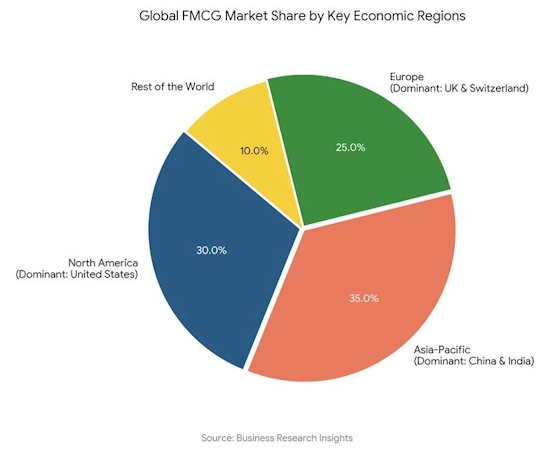
For example, look at the Asia-Pacific region. It currently accounts for over 45% of the total global demand for FMCG products. This huge share is largely due to its fast-growing city populations (Source: Business Research Insights, 2026).
Expanding Middle-Class Incomes
People are earning more money worldwide. As their buying power grows, their shopping habits naturally change.
Consumers start buying more premium items. They also look for products that offer extra value or save time. In the United States, for instance, a typical household now spends more than $6,000 every year on packaged consumer goods (Source: Global Growth Insights, 2025).
Rising Need for Packaged Foods and Convenience
Modern life is very busy. These hectic schedules have created a booming convenience economy. People constantly want quick meals and snacks.
In fact, snacks now make up about 34% of all FMCG sales. Within this snack category, health-focused and high-protein options are soaring. These healthier choices account for a massive 21% of the global growth in snacking.
The Boom of Retail Stores and E-commerce
The internet has completely changed how we shop for everyday items. Online stores are becoming the main way many people buy groceries and essentials.
E-commerce platforms now drive nearly 40% of the industry's worldwide distribution growth. Furthermore, digital ads and online research heavily influence over 65% of all FMCG purchases (Source: Business Research Insights).
Leading Countries Powering FMCG Production
The FMCG industry is truly global. However, the production and major market shares are not spread evenly. They are heavily concentrated in a handful of key economic powerhouses.
The United States
The U.S. is the undisputed giant of the FMCG world. It serves as the home base for massive, long-standing manufacturers. Brands like Procter & Gamble, PepsiCo, and Coca-Cola operate from here.
Because of this, the U.S. represents the largest single market by dollar value. The beverage industry is especially strong. It alone brings in over 30% of the nation's total FMCG revenue.
China
China has an enormous manufacturing setup. It also boasts a domestic consumer base of more than 1.4 billion people. This makes China both a leading producer and a massive consumer.
The country is quickly upgrading its supply chains with digital technology. Strong local brands also play a big role. Together, these factors keep China at the very front of global FMCG production.
India
Experts often call India the ultimate emerging market. Inside the country, the FMCG sector is the fourth-largest driver of the economy. Recent data from early 2025 shows an interesting trend.
FMCG sales volumes in rural areas are growing much faster than in cities. Rural markets grew at 8.4%, while urban markets only grew at 2.6%. This jump is powered by rising incomes in farming communities. It also relies on India's massive ability to produce goods locally.
Switzerland and the United Kingdom
These two European nations are geographically small. However, they are absolute titans in FMCG production. Their power comes from housing the headquarters of global corporate giants.
Nestlé is based in Switzerland. Unilever and Diageo call the UK home. Thanks to these companies, Europe holds a very strong position. The continent currently controls about a 28% global share in premium FMCG product categories.
Characteristics of FMCG Products
The massive value of the FMCG industry does not happen by accident. Instead, it is built on four specific market traits. These key features explain exactly why this global sector is so powerful and fast-paced.
High Demand
People need these items every single day just to live. Because of this daily need, the overall global demand is extremely high. To meet this constant hunger, factories must keep running without a break. This creates a massive, never-ending need for raw farm crops and basic chemicals from suppliers all around the world.
Low Price
Most of these everyday items are sold at a relatively low price. Because individual items are cheap, companies do not make much money on a single sale. Instead, their financial success depends entirely on selling massive amounts of goods. They must focus intensely on high-volume bulk trade. Moving millions of low-cost items across borders is the only way these giant businesses stay profitable.
Short Shelf Life
A large number of FMCG products go bad very quickly. Packaged foods and raw dairy products are prime examples of items with a short shelf life. Because they spoil fast, companies cannot leave them sitting in regular warehouses. They must move these perishable items rapidly using special temperature-controlled shipping. This fast, cold-chain delivery system is absolutely crucial to keep farm goods fresh before they reach the consumer.
Frequent Purchases
Shoppers do not just buy these items once. They return to the store to buy them over and over again. This constant, repeat buying creates a steady, predictable cycle of sales. It drives continuous demand for both local retail stores and giant wholesale buyers. In the end, this reliable, repeated spending helps to keep the entire global economy stable.
Difference Between FMCG and Consumer Durable Goods
Understanding the distinction between these two categories is crucial for grasping global supply chain dynamics. While FMCG relies on rapid turnover, consumer durables are built for longevity.
| Feature | State | Consumer Durable Goods |
| Lifespan | Short (Days to months) | Long (Years) |
| Purchase Frequency | High / Daily or Weekly | Low / Infrequent |
| Price Point | Relatively low | High |
| Inventory Turnover | Extremely fast | Slow |
| Supply Chain Focus | Perishability, cold-chain, rapid logistics | Warehousing, parts sourcing, delayed obsolescence |
| Examples | Packaged food, soap, beverages | Refrigerators, cars, furniture, electronics3.83 |
FMCG Supply Chain and Global Trade
The fast-moving consumer goods (FMCG) industry relies on a very fast and smooth global supply chain. People use up these everyday products quickly. Also, many of these items go bad in a short amount of time.
Because of this, companies cannot afford delays. They must move goods rapidly. The journey starts at the raw material source and must flow perfectly all the way to the retail store.
The 5 Stages of the FMCG Supply Chain
Raw Material Procurement: This is the very first step. Companies buy basic farming goods to make their products. Wheat, sugar, palm oil, cocoa, and dairy products are among them. Brands buy these materials from farmers all over the world. They also work with large global commodity suppliers.
Manufacturing and Processing: Next, the raw materials go to massive factories. Here, large industrial machines turn them into the final products we buy. Today's FMCG factories are highly advanced. They use automated robots. They also rely on artificial intelligence. These large-scale systems keep production moving quickly and smoothly.
Packaging: After making the product, it must be wrapped or boxed. Companies use standard sizes and shapes for their packaging. This standard size makes the items safe and easy to ship. Additionally, food stays fresher longer when it is packaged well. Lastly, it makes the merchandise appear tidy and accessible on store shelves.
Distribution and Logistics: Now, the finished goods need to move. They travel through a massive web of shipping and tracking routes. First, they often go to large storage warehouses. Then, they move to bulk buyers or direct retailers. Today, many items go straight to massive e-commerce fulfillment centers.
Retail and Consumer Sales: This is the final stop on the journey. The products finally reach the people who will use them. Shoppers buy them from large supermarkets or small corner stores. They also pick them up from local shops and internet marketplaces.
Managing this whole process well is incredibly important. Even a tiny delay can cause huge problems. A small hiccup might empty store shelves. It can also cause prices to shoot up all around the world.
Impact of E-commerce on the FMCG Industry
The internet has completely changed the FMCG world. Think back to just a few years ago. People usually bought their daily goods from local grocery stores. They walked the aisles of big supermarkets.
Today, the story is very different. Many shoppers would rather order their household items online.
Online stores and instant delivery apps have shifted how we shop. They have changed our buying habits in a few major ways:
- Lightning-Fast Deliveries: People now get their daily necessities dropped at their doors in record time.
- Endless Choices: Online stores offer a much wider range of products than a physical store shelf can hold.
- Better Prices: Shoppers can easily compare costs online. This leads to highly competitive pricing between brands.
- Easy Subscriptions: Customers can set up automatic, recurring deliveries for essential items they need every month.
FMCG companies clearly see this shift happening. As a result, they are spending heavily on digital marketing. They are also building their own websites to sell directly to the public. Finally, they are teaming up with massive online marketplaces. These steps are absolutely vital. They help brands stay competitive in a fast-changing retail world.
FAQ Section
What does FMCG stand for?
FMCG stands for Fast Moving Consumer Goods.
What is FMCG industry?
It is the global sector responsible for sourcing, manufacturing, distributing, and selling high-turnover, relatively low-cost consumer goods. It heavily intersects with agricultural supply chains and global bulk trade.
What are FMCG products?
These are everyday consumable items that leave the shelves quickly, including packaged foods, beverages, toiletries, cosmetics, and household cleaning supplies.
What is FMCG sales?
FMCG sales refer to the high-volume, low-margin commercial process of distributing these fast-moving goods to wholesalers, retailers, and ultimately the end consumers, often relying heavily on rapid inventory replenishment.