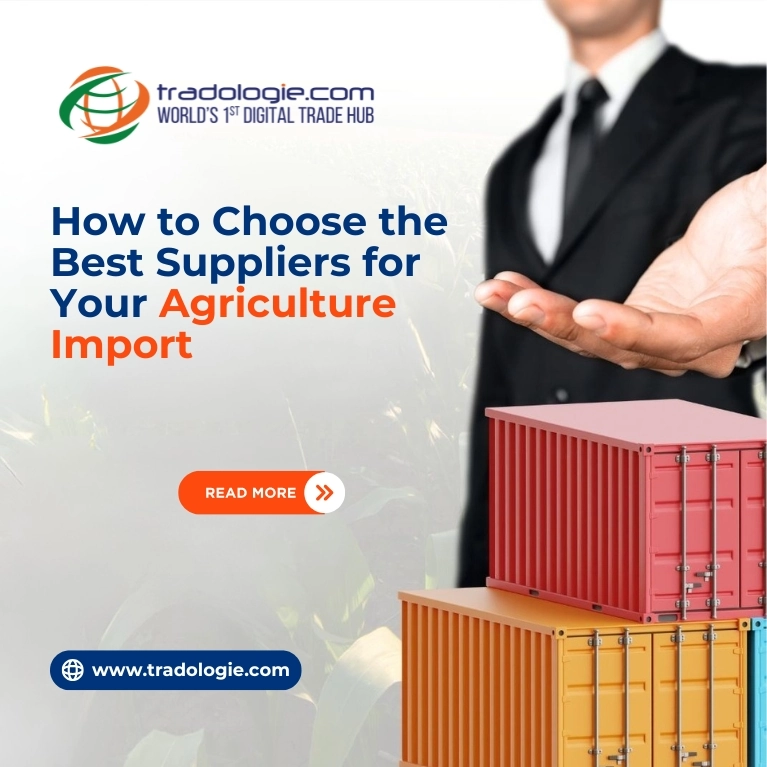
How to Choose the Best Suppliers for Your Agricultural Imports
For agro commodity importers, the quality of suppliers directly impacts operational efficiency, price competitiveness, and customer retention. As the global trade in agricultural products expands, importers must adopt a systematic supplier selection process to ensure consistency in quality, adherence to shipment schedules, and alignment with international trade standards.
Selecting reliable agriculture product suppliers is not merely about comparing price quotations. It involves evaluating supplier credibility, supply chain capacity, trade compliance, and responsiveness in fulfilling bulk requirements. Here are key considerations for agro commodity importers looking to establish long-term supplier relationships.
Verify Supplier Credibility
Before entering into trade agreements, assess the supplier's track record in the global agro commodities market. Check for:
- Trade history: Look for past export volumes, existing buyer references, and frequency of international shipments.
- Certifications: Ensure suppliers comply with required certifications such as ISO, HACCP, or specific phytosanitary certifications based on the commodity.
- Compliance history: Verify adherence to import-export regulations, including HS codes and destination-specific compliance requirements.
Engaging credible agro commodity suppliers reduces risks related to quality rejections, shipment delays, and disputes during customs clearance.
Assess Product Quality and Consistency
Agricultural imports are often exposed to quality variability due to seasonal and regional factors. It is essential to:
- Request pre-shipment samples for physical verification.
- Seek third-party inspection certificates from globally recognized agencies.
- Evaluate consistency in grain size, moisture content, and other quality parameters relevant to your specific agro commodity.
This ensures your agricultural products meet buyer requirements, reducing claims and enhancing your brand positioning in competitive markets.
Evaluate Logistics and Supply Chain Capacity
Bulk imports of agricultural products require suppliers capable of managing timely shipments, appropriate packaging, and documentation. During supplier evaluation:
- Assess average lead times and shipment frequency.
- Check if suppliers have established freight forwarder relationships to handle bulk cargo efficiently.
- Understand their packaging methods to avoid damage during transit and unloading.
Agriculture products suppliers with robust logistics networks reduce the chances of shipment delays, helping you fulfill contractual obligations with end buyers seamlessly.
Price Competitiveness and Transparency
Price remains a decisive factor, but low prices should not come at the cost of quality and reliability. Evaluate:
- Transparent breakdowns of pricing, including FOB, CFR, and CIF rates.
- Clarity on Incoterms and port handling charges.
- Currency stability considerations and payment terms.
Building long-term agreements with agro commodity suppliers offering competitive rates while maintaining consistent quality can improve your profitability in the agro import trade.
Evaluate Communication and Responsiveness
Trade operations require quick resolution of documentation, shipment planning, and quality concerns. Suppliers who maintain clear and timely communication reduce operational bottlenecks. During initial discussions:
- Assess response times to your RFQs.
- Observe clarity in addressing specifications and documentation needs.
- Ensure the supplier is comfortable with structured B2B processes, including LC documentation, invoice formalities, and packing lists.
Effective communication ensures smoother coordination throughout the procurement cycle.
Consider Sustainable and Ethical Sourcing
Global buyers increasingly prefer ethically sourced agricultural products. Evaluate whether your suppliers:
- Follow fair labor practices.
- Use sustainable farming practices to minimize environmental impact.
- Comply with relevant food safety and traceability standards.
Sustainable sourcing can position your import business favorably in global markets, especially among large institutional buyers and supermarket chains.
Conclusion
Selecting the right agriculture products suppliers is crucial for agro commodity importers seeking reliable, consistent, and quality-driven sourcing. By focusing on supplier credibility, product consistency, logistics efficiency, transparent pricing, and responsive communication, importers can streamline their procurement of agricultural products while minimizing trade risks. In today’s competitive markets, working with dependable agro commodity suppliers strengthens your supply chain and positions your business for sustained growth in global trade.




.webp "Top Global Food and Beverage Trade Shows 2026: Dates, Countries, and Complete Event Guide")