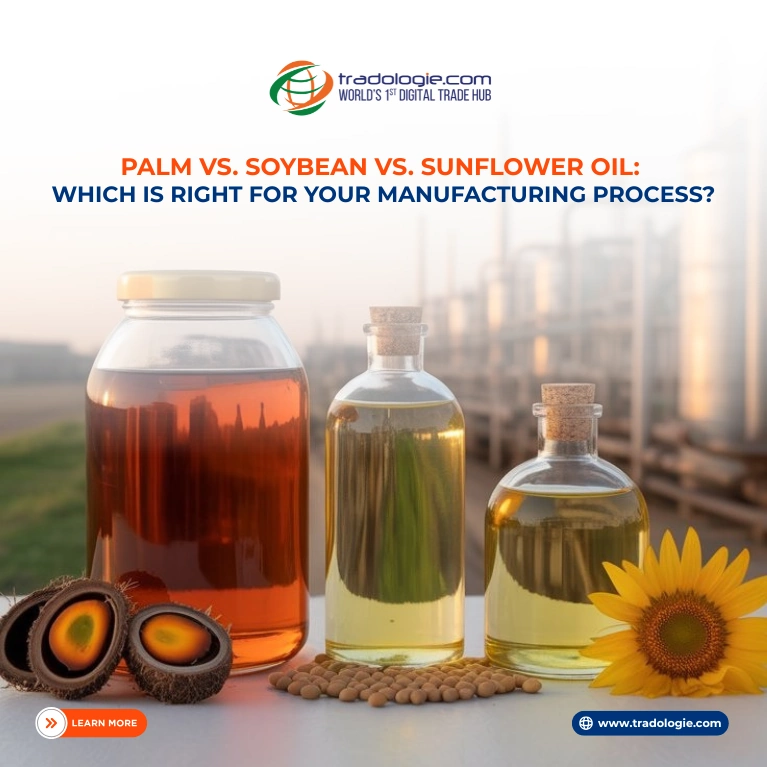
Exploring the Role of Sunflower Oil in Global Agro Trade and Its Health Benefits
Sunflower oil has established itself as a core commodity in the global edible oil trade. This widely consumed vegetable oil is recognized for its fantastic commercial versatility, wide acceptability in both households and big commercial kitchens, and its suitability across refined, crude, and value-added formats. It's classified under the code HS Code 151211.

In the context of cross-border agri-commodity flows, this mid-range oil occupies a central role in procurement portfolios of bulk sunflower oil buyers, refiners, food processors, FMCG firms, and national food distribution programs—particularly in developing economies where self-sufficiency in oilseed production remains limited.
Positioning in Global Edible Oil Trade
The global trade of sunflower seed or safflower oil (crude) stood at USD 12.7 billion, down from USD 15.4 billion in 2022 as per 2023 data published by the OEC. This market segment has recorded an average annual growth rate of 10.9% over the past five years despite the year-on-year contraction of 17.8%. This indicates its rising relevance in both food security and commercial procurement frameworks.
The edible oil market which has traditionally been dominated by palm, soybean, and canola has witnessed a diversification in sourcing strategies due to price shocks, trade restrictions, and demand for differentiated health profiles. Sunflower oil provides importers with a mid-range price point and health-conscious value proposition in this scenario. It often fits well in blended formulations and branded retail packs.
Why Sunflower Oil Is Widely Procured Across Markets
Sunflower oil's attractiveness stems from three core factors: neutral taste, high smoke point, and oxidative stability. These properties make it a preferred choice for:
- Institutional food service procurement (hospitals, airline, hotel kitchens)
- Processed food manufacturing (snack frying, dressing bases, mayonnaise)
- Branded edible oil blends marketed toward health-aware urban populations
Unlike palm oil, which may face consumer perception issues, or soybean oil, which can require refining to mask flavor notes, sunflower oil presents fewer barriers in consumer markets. This ease of market acceptance makes it a commercially safe commodity for importers looking to scale volumes while maintaining a clean-label brand positioning.
Health Attributes: A Commercial Differentiator
The health benefits of sunflower oil translate into marketing leverage and value chain compatibility from a B2B standpoint.
It is high in polyunsaturated fats, specifically linoleic acid, and contains naturally occurring Vitamin E (tocopherols) that acts as an antioxidant. It is free from trans fats and low in saturated fat which aligns it with international dietary guidelines and import norms in jurisdictions like the EU, GCC, and North America.
Manufacturers often highlight sunflower oil's lipid profile to gain retail shelf visibility, particularly in fortified cooking oil segments or in regions where heart health is a focal point of public policy. Moreover, its stability during high-temperature processing makes it a suitable base for packaged foods without compromising on shelf life or organoleptic quality.
Top Exporting and Importing Economies
The sunflower oil trade is heavily concentrated among a few key producers and high-consumption import markets. In 2023, the top sunflower oil exporters were:
- Ukraine - USD 4.62 billion
- Russia - USD 3.13 billion
- Argentina - USD 878 million
Together, these three countries account for over two-thirds of the global crude sunflower oil supply. Ukraine and Russia maintain pricing competitiveness even during periods of geopolitical instability because of their favourable agro-climatic zones and scale of cultivation. Argentina has emerged as a secondary supplier and often bridges market shortages caused by Eastern European disruptions.
On the demand side, the top importers were:
- India - USD 2.43 billion
- China - USD 1.59 billion
- Turkey - USD 1.45 billion
India remains the single largest importer, largely driven by its oil-deficit status and strong consumer acceptance of sunflower oil in urban centers. Procurement by Indian refiners is typically executed via bulk CIF contracts, with discharge at key ports like Kandla and Kakinada.
China's procurement is institutional in nature—driven by state trading enterprises and blended oil manufacturers—while Turkey operates both as an end-use importer and re-exporter of refined sunflower oil in the Mediterranean and Middle East region.
Logistics, Pricing, and Trade Sensitivities
Sunflower oil is shipped primarily in flexitanks or bulk tankers, with transit times and handling requirements varying by destination and weather conditions. It is typically traded in 20–25 MT lots, with pricing linked to Black Sea FOB quotations and Rotterdam CIF benchmarks.
The market is sensitive to:
- Geopolitical events, particularly in the Black Sea region
- Harvest outcomes in top-exporting countries
- Shipping disruptions due to conflict or port blockades
- Currency fluctuations impacting LC margins and spot procurement
Price risk is managed through forward contracts, floating index clauses, and alliances with bulk sunflower oil buyers, particularly in high-consumption regions like India and the MENA bloc.
Compliance and Regulatory Dynamics
Most importing countries require compliance with residue thresholds, peroxide values, and color index standards, as well as documentation on GM-free and non-allergenic processing. Countries like India and the EU may also require detailed traceability, given consumer concerns on oil adulteration and cross-contamination.
APEDA, FSSAI, and Codex Alimentarius standards are commonly referenced in bilateral trade contracts. Sunflower oil exporters must ensure that sunflower oil shipments are accompanied by:

Certificate of Origin
- Lab reports (FFA %, Moisture, Impurity levels)
- Phytosanitary certificate
- Packing list and quality assurance documentation
Conclusion
Sunflower oil has become a structurally significant commodity in the global Edible oil matrix with its unique combination of functional, nutritional, and logistical advantages. Its adaptability across food formats, compliance with evolving international import standards, and strong origin-sourcing strength have made it a preferred choice for refiners, food processors, and distributors. While the market remains exposed to macroeconomic and geopolitical factors, its role in food security and retail packaging positions it firmly within strategic procurement frameworks.


-distributorship-process-investment--margin.webp "Fortune Oil (Adani Wilmar) Distributorship: Process, Investment & Margin")