Key Highlights
- MDH is a well-established spice brand with strong market demand across India.
- Distributorship investment typically ranges between ₹5 lakh to ₹15 lakh.
- Spices are daily-use products with consistent and repeat demand.
- Storage is simple as spices do not require cold chain infrastructure.
- Distribution works on volume and repeat supply cycles.
- Retailers already stock MDH, making market entry easier for distributors.
- Success depends on inventory management and retailer relationships.
Introduction:
Spices have a way of doing more than just adding flavour.
They shape the entire dish.
Just a slight change in the blend, and everything feels different. Ah! that the aroma, the taste and even the way a meal is remembered. That’s probably why perhaps spices have always held a certain importance, not just in kitchens, but in trade as well.
For centuries, spices moved across regions and borders, quietly building their place in commerce. And even today, that hasn’t really changed. The format may be different, the scale much larger, but the demand… it’s still steady.
Because the thing is, spices are not a choice in most households.
They’re part of routine cooking.
And that’s exactly what makes the spice market one of the more stable segments in the broader FMCG space.
Keep reading this informative piece of blog if you want to become an MDH masala dealer. This this blog will provide important information on the same.
Why the Spice Market Continues to Grow
Unlike many packaged food categories that depend on trends or seasonal demand, spices operate differently.
They don’t need constant promotion to sell.
They already have a place in daily consumption.
From home kitchens to restaurant chains, from small eateries to large food processors — spices are used everywhere. And because of that, their movement in the market tends to remain consistent.
This is where the opportunity begins to take shape.
When a product category moves regularly, it naturally supports a strong distribution system, and over time, creates space for businesses that can manage supply efficiently.
That’s one of the reasons why many entrepreneurs start looking at established brands in this segment and explore how they can get MDH dealerships or gradually position themselves to become an MDH masala dealer in their region.
Not as a short-term idea, but as something that can build over time.
Understanding the Strength of MDH Masala
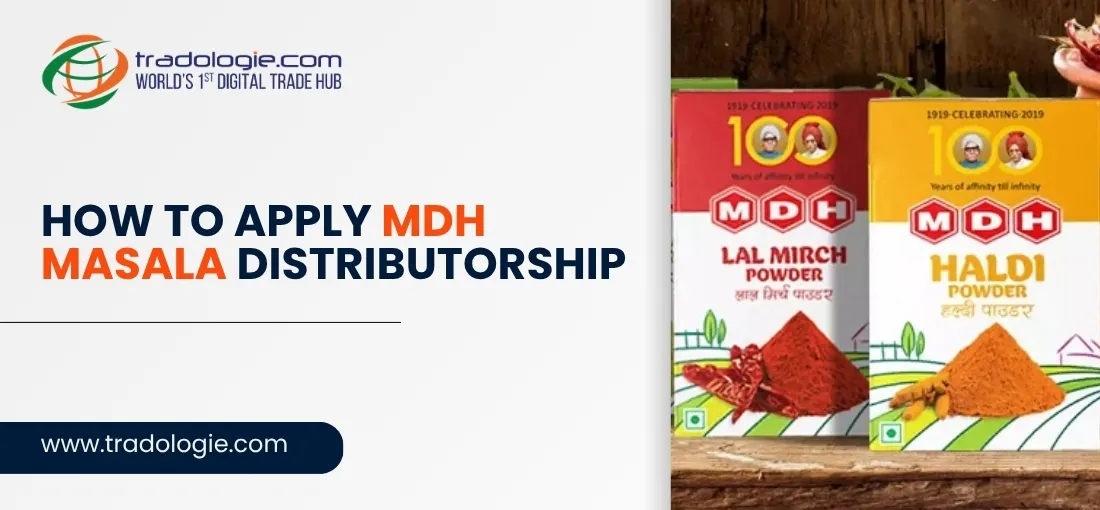
MDH, short for Mahashian Di Hatti, is not a new name in this space.
The brand has been around for decades, and over that time, it has built a very specific kind of reputation.
Not flashy.
Not overly aggressive.
Just consistent.
The same taste, the same blends, and a level of familiarity that people don’t usually question.
You’ll notice that with certain products.
Once people get used to them, they don’t switch easily.
That’s where MDH stands.
Today, with an annual revenue of over ₹3000 crore, the brand operates at a scale that reflects both its reach and its acceptance in the market.
Why Distributorship Becomes a Practical Opportunity
Now if you look at this from a business point of view, a few things start becoming clear.
First, you’re not dealing with an unknown product.
Retailers already stock MDH. Customers already ask for it. Which means you’re stepping into a system where demand already exists.
Second, the product range itself is wide.
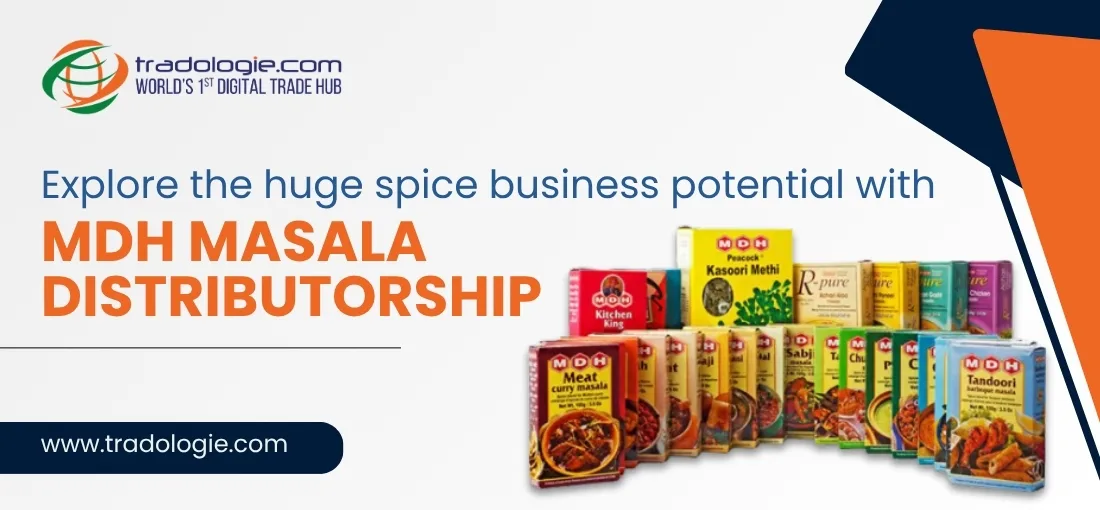
From everyday blends like garam masala and chana masala to more specific mixes, the brand covers multiple use cases. That naturally increases shelf presence and improves the chances of repeat orders.
And third, spices don’t usually have complicated storage requirements.
They’re relatively easy to handle, easy to stock, and move consistently.
All of this together makes the idea of an MDH masala wholesale distributor India a fairly practical business model, especially for someone entering the FMCG distribution space.
Investment and Basic Setup
Setting up this kind of distribution doesn’t require highly specialized infrastructure, from a practical standpoint.
A warehouse setup that is neat and professional, organised storage, and a logistics arrangement are usually enough to get started with an MDH dealership.
Investment levels can vary depending on the scale and area, but generally fall in the range of ₹5 lakh to ₹15 lakh.
This typically covers:
- initial stock
- working capital
- basic storage
- delivery support
The thing is, unlike categories that require cold storage or sensitive handling, spices are relatively easier to manage.
Which reduces complexity in operations.
How the Distribution Cycle Works
Once the setup is in place, the business starts following a fairly familiar pattern.
Stock comes in from the company or authorized channel, and then moves outward towards retailers and wholesalers.
Orders come in at regular intervals, depending on demand.
You supply, they sell, and then the cycle repeats.
Well… you receive stock, distribute it, and keep the flow going — pretty much the usual routine you’ll see in most FMCG setups.
But over time, you’ll notice it’s not just about supplying.
It’s about maintaining consistency
Retailers rely on distributors who don’t run out of stock and who respond quickly when needed.
Where Things Start Making a Difference
At a basic level, most distributors follow the same process.
But what separates one from another is how they manage the small things.
For example, understanding which products move faster in a particular area can help in planning stock better.
Keeping an eye on slow-moving inventory prevents unnecessary blockage of capita
And maintaining regular communication with retailers ensures smoother operations.
None of these are complicated ideas.
But together, they shape how efficiently the business runs.
Finding the Right Entry Point
In earlier days, most distribution opportunities came through local contacts or direct company interactions.
That still happens.
But now, many businesses also explore structured platforms where suppliers and distributors connect more directly.
Especially platforms that are focused on actual transactions rather than just listings.
Because instead of just expressing interest, you’re responding to real requirements.
That tends to make the process of applying for opportunities like an MDH distributorship more streamlined.
Final Thoughts
The spice business has always had a certain stability to it.
It doesn’t depend heavily on trends, and it doesn’t fluctuate as sharply as some other categories.
It simply continues.
And brands like MDH masala have built themselves right into that flow.
For someone looking to enter this space, the opportunity is less about creating demand and more about managing supply efficiently.
And once that supply chain starts running smoothly, the business tends to grow in a steady, almost predictable way.
Not very loud.
But consistent enough to keep moving forward.
Disclaimer
This article is for informational purposes only and does not constitute official business or financial advice. Investment requirements, margins, and distributorship processes for MDH masala may vary based on location, company policies, and market conditions. Readers are advised to verify details directly with MDH or its authorized representatives before making any business decisions.
Frequently Asked Questions
1. How can I apply for MDH distributorship in India?
To apply for MDH distributorship, you typically need to contact the company directly or reach out to their regional distributors. You’ll be required to share details like your business background, storage capacity, investment capability, and preferred area. Approval depends on market availability and your operational readiness.
2. What is the investment required for MDH distributorship?
The investment usually ranges between ₹5 lakh to ₹15 lakh, depending on your city, scale of operations, and territory size. This includes initial stock purchase, working capital, basic warehouse setup, and logistics arrangements.
3. What are the profit margins in MDH distributorship?
Profit margins generally fall between 6% to 12%, depending on product category and volume. While margins per unit may be moderate, consistent demand and repeat orders from retailers help generate stable income over time.
4. What are the benefits of taking MDH dealership?
Some key benefits include:
- Strong brand recognition and customer trust
- Consistent demand due to daily usage of spices
- Wide product range increasing sales opportunities
- No need to create demand from scratch
- Stable and long-term business potential
5. What infrastructure is required to start MDH distributorship?
You will typically need:
- A warehouse space of around 300–800 sq. ft.
- Basic storage racks
- Delivery vehicle or transport arrangement
- Inventory management setup
Since spices don’t require refrigeration, setup is relatively simple.
6. Do I need prior experience to become an MDH distributor?
Not necessarily, but having experience in FMCG, trading, or distribution can be helpful. What matters more is your ability to manage stock, handle logistics, and build relationships with retailers.
7. How does the MDH distribution business work?
The process is straightforward:
You procure stock → supply to retailers/wholesalers → retailers sell → repeat orders come in.
The business runs on consistent supply cycles and maintaining availability in the market.
8. What kind of retailers will I supply as an MDH distributor?
You will typically supply to:
- Kirana stores
- Supermarkets
- Wholesale shops
- Restaurants and food businesses
This wide customer base helps ensure steady demand.
9. Is MDH distributorship a profitable business in the long run?
Yes, it can be a stable and profitable business due to continuous demand. Spices are everyday essentials, and once you build a strong retailer network, the business tends to generate regular and predictable revenue.
10. What factors determine success in MDH distributorship?
Success depends on:
- Maintaining consistent stock availability
- Building strong retailer relationships
- Efficient delivery and sup
- Understanding fast-moving products in your area
Small operational improvements often make a big difference over time.



.webp "Indian Spices: Names, Origins, and the B2B Sourcing Guide")