
.webp "Indian Spices: Names, Origins, and the B2B Sourcing Guide (2026)")
India grows 109 varieties of spices across 3.21 million hectares and supplies nearly 48% of global spice exports by volume. The world's food depends on what India grows — yet most content about Indian spices either gives you a glossy name list with no context, or drowns you in trade statistics with no explanation.
Source: Spices Board of India, Annual Export Statistics 2023–24
This guide covers both. Every major Indian spice — what it is, where exactly in India it grows, what makes one origin better than another, and what it costs at wholesale. Home cooks and bulk buyers will find this more useful than anything currently ranking for these keywords.
The Major Indian Spices: Names, Origins, and What Sets Each Apart
No competitor currently explains the origin geography behind each spice. That is the gap this section fills.
Turmeric (Haldi)
The most universally used Indian spice — the ground rhizome of Curcuma longa, valued for its vivid yellow colour and curcumin content. Andhra Pradesh and Telangana dominate production. The Nizamabad Finger variety from Telangana trades at an 8–12% premium over generic grades because of its higher curcumin concentration (typically 3.5–4%). Maharashtra's Sangli market sets India's national turmeric price benchmark.
Buyer note: EU and US buyers typically specify a minimum 3% curcumin content. Always request a Certificate of Analysis — not just a supplier declaration.
Cumin / Jeera
The earthly, warm seed that is foundational to North Indian, Mexican, and Middle Eastern cooking alike. Rajasthan produces over 80% of India's cumin, but Unjha in Gujarat processes and exports over 90% of it — making Unjha the functional cumin capital of the world. Prices at Unjha APMC set the global cumin benchmark. When Rajasthan's March–April crop is hit by drought, cumin prices worldwide react within days.
Buyer note: EQ (Export Quality) grade specifies maximum 0.5% foreign matter and minimum 2.5% volatile oil. Any bulk cumin quote without a stated grade is unverifiable.
Cardamom (Elaichi)
The world's third most expensive spice by weight, after saffron and vanilla. India's Idukki and Wayanad districts in Kerala produce the Malabar variety that sets the global quality standard. The Spices Board of India conducts supervised electronic auctions at Vandanmedu and Kumily — providing unusually transparent price discovery for an Indian agricultural commodity. Guatemala also produces significant volumes but cannot replicate Kerala's oil content or flavour complexity.
Buyer note: Graded by pod size (6mm, 7mm, 8mm+), colour (bold green is premium), and moisture. The 8mm+ grade can trade at double the price of the 6mm grade. Monitor daily auction data at indianspices.com before placing orders.
Black Pepper (Kali Mirch)
Once used as literal currency in medieval trade, black pepper remains India's most historically significant spice export. India is no longer the largest producer by volume — Vietnam surpassed it decades ago — but Malabar and Tellicherry grades from Kerala and Karnataka's Coorg district hold a quality premium that Vietnamese pepper cannot match. Tellicherry is a grade specification (berry size above 4.25mm), not just a geographic label.
Buyer note: Ask for a sieve analysis confirming berry size distribution when ordering Tellicherry grade. Piperine content (the compound responsible for pepper's heat) should also be specified for food manufacturing applications.
Red Chilli (Lal Mirch)
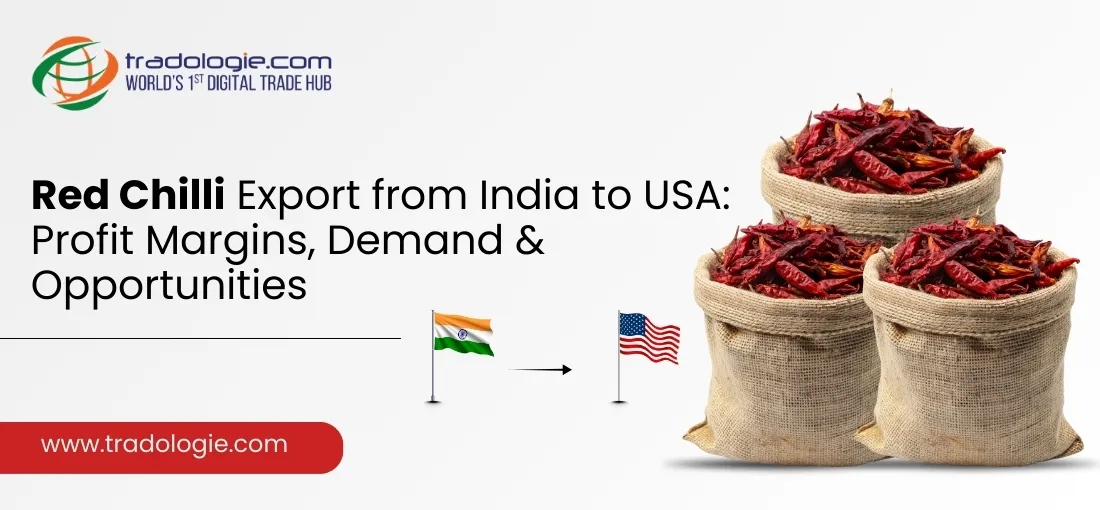
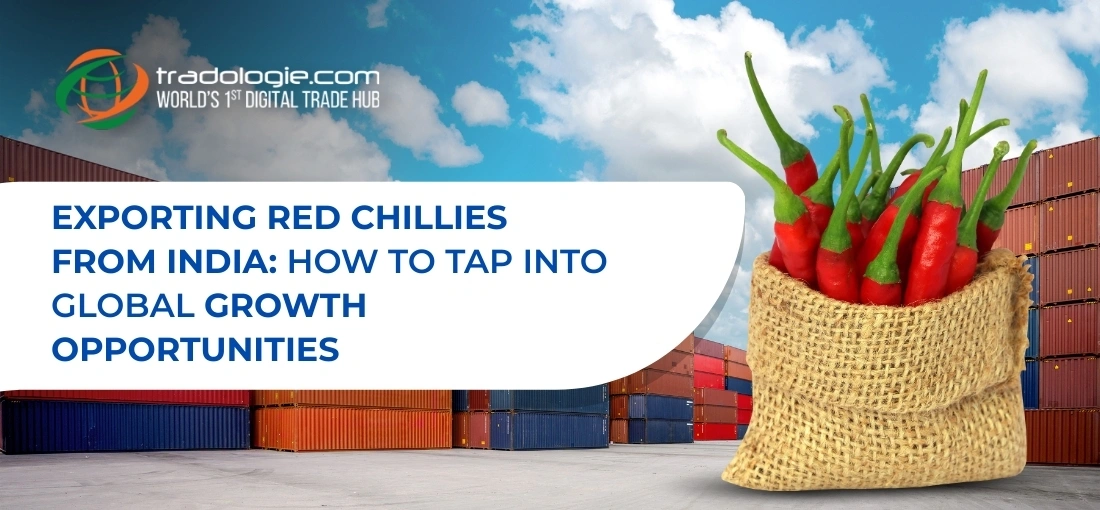
India's largest spice export by volume — 541,700 MT in 2023–24. Guntur in Andhra Pradesh is the world's largest chilli market, handling over 300 varieties. Not all Indian chillies are the same product: Guntur Sannam (S4) is the high-heat, high-volume export standard; Byadgi from Karnataka is prized almost entirely for its deep red colour (ASTA colour value 120+), not heat — making it the preferred choice for paprika-style and food colouring applications.
Buyer note: Always specify variety, ASTA colour value, and Scoville Heat Units in your purchase order. 'Red chilli' without these specs will get you whatever is cheapest at that moment.
Coriander (Dhaniya)
Both seed and leaf are used — but they taste almost nothing alike. The seeds carry a warm, citrusy, slightly woody aroma that forms the largest component by weight in most commercial garam masala and curry powder blends. Madhya Pradesh leads production; Ramganj Mandi in Rajasthan is Asia's largest coriander market and sets the Eagle-grade price benchmark for export buyers.
Garam Masala, Fenugreek, Fennel & the Rest
Garam masala is a blend, not a single spice — and every brand's recipe is different. For B2B buyers, the ingredient breakdown and proportions must be specified precisely; two suppliers quoting 'garam masala' may be selling entirely different flavour profiles.
Fenugreek (methi) seeds are powerfully bitter when raw but develop a maple-like warmth when tempered. Rajasthan and Gujarat dominate production; significant volumes export to the Gulf and EU for both culinary and nutraceutical applications (blood sugar management supplements).
Fenugreek (methi) seeds are powerfully bitter when raw but develop a maple-like warmth when tempered. Rajasthan and Gujarat dominate production; significant volumes export to the Gulf and EU for both culinary and nutraceutical applications (blood sugar management supplements).
Fennel (saunf) shares growing belts with cumin in Gujarat's Unjha region, making Gujarat a convenient one-stop source for both. Asafoetida (hing) is the most misunderstood entry — India is the world's largest consumer but grows almost none of it. The raw resin is imported from Afghanistan and Iran entirely; Indian processors compound it for commercial sale. Hing pricing is unusually sensitive to Central Asian trade conditions.
Wholesale Price Benchmarks (Q1 2025)
Retail and wholesale prices for the same spice differ by 40–70%. The table below reflects indicative origin-market wholesale ranges — not what you will pay at a grocery store, and not what a broker will quote you.
| Spice | Origin Market | Wholesale Range (Q1 2025) | Primary Price Driver |
|---|---|---|---|
| Turmeric (Finger, Nizamabad) | Nizamabad / Sangli | INR 6,500–9,500 /quintal | AP-Telangana rainfall; curcumin grade |
| Cumin / Jeera (EQ grade) | Unjha APMC, Gujarat | INR 24,000–32,000 /quintal | Rajasthan crop forecast (Mar–Apr) |
| Cardamom (Green, 7mm+) | Vandanmedu, Kerala | INR 1,400–2,200 /kg | Kerala monsoon; Guatemala supply |
| Black Pepper (Garbled) | Wayanad / Kochi, Kerala | INR 500–750 /kg | Vietnam export volumes; Kerala crop |
| Red Chilli (Teja S17) | Guntur APMC, Andhra Pradesh | INR 10,000–16,000 /quintal | AP crop estimate; export demand |
| Coriander (Eagle grade) | Ramganj Mandi, Rajasthan | INR 4,500–7,500 /quintal | MP/Rajasthan crop area |
| Fennel (Saunf) | Unjha, Gujarat | INR 9,000–13,000 /quintal | Export demand; Unjha crop estimate |
| Fenugreek (Methi) | Rajkot / Unjha, Gujarat | INR 5,000–7,500 /quintal | Gulf and EU export demand |
Source: Spices Board India (indianspices.com) | NCDEX | Agmarknet.gov.in | APMC daily reports — Q1 2025 indicative ranges only
Sourcing Indian Spices in Bulk: What Actually Works
The problem is never a shortage of suppliers — it is verification, pricing transparency, and broker layers. The typical B2B sourcing chain runs through three to four intermediaries, each adding margin with no quality accountability. Buyers routinely pay 15–20% above true wholesale prices and have no benchmark to compare against.
Sourcing Indian Spices in Bulk: What Actually Works
For exporters and importers, the certifications to verify before any transaction: FSSAI License (mandatory baseline), Spices Board Registration (searchable at indianspices.org.in), APEDA RCMC, ISO 22000 or FSSC 22000, and HACCP. For organic consignments, NPOP (India) or NOP (USA).
Frequently Asked Questions
What are the most important Indian spices?
By export volume: chilli (541,700 MT), cumin (227,600 MT), turmeric (155,200 MT), and coriander (102,300 MT). By value per kilogram, cardamom leads — trading at INR 1,400–2,200/kg wholesale. By cultural centrality, turmeric and cumin are used in virtually every regional Indian cooking tradition.
Which Indian state produces the most spices?
Andhra Pradesh leads by production area — roughly 26% of India's spice cultivation land, primarily through chilli and turmeric. Kerala leads in value for cardamom and pepper. Rajasthan produces 80%+ of India's cumin. No single state dominates; each major spice has its own geographic concentration.
What is today's wholesale price of cardamom in Kerala?
As of Q1 2025, green cardamom (7mm+ grade) trades at approximately INR 1,400–2,200/kg at Kerala auction centres. Updated daily at indianspices.com and cardamomauction.com. Prices soften after harvest (September–February) and firm in summer.
How do I find verified spice manufacturers in India?
Three reliable routes: the Spices Board's registered exporter directory at indianspices.org.in, APEDA's RCMC-holder database, and Tradologie.com — which verifies FSSAI, Spices Board, and APEDA credentials before listing any supplier and enables competitive bidding across all of them simultaneously.
Where is the Spices Board of India headquarters?
Kochi, Kerala. It operates under India's Ministry of Commerce and Industry. Login and exporter registry: indianspices.org.in.


.webp "Global Clove Import Demand: Industries Driving Bulk Trade Worldwide")