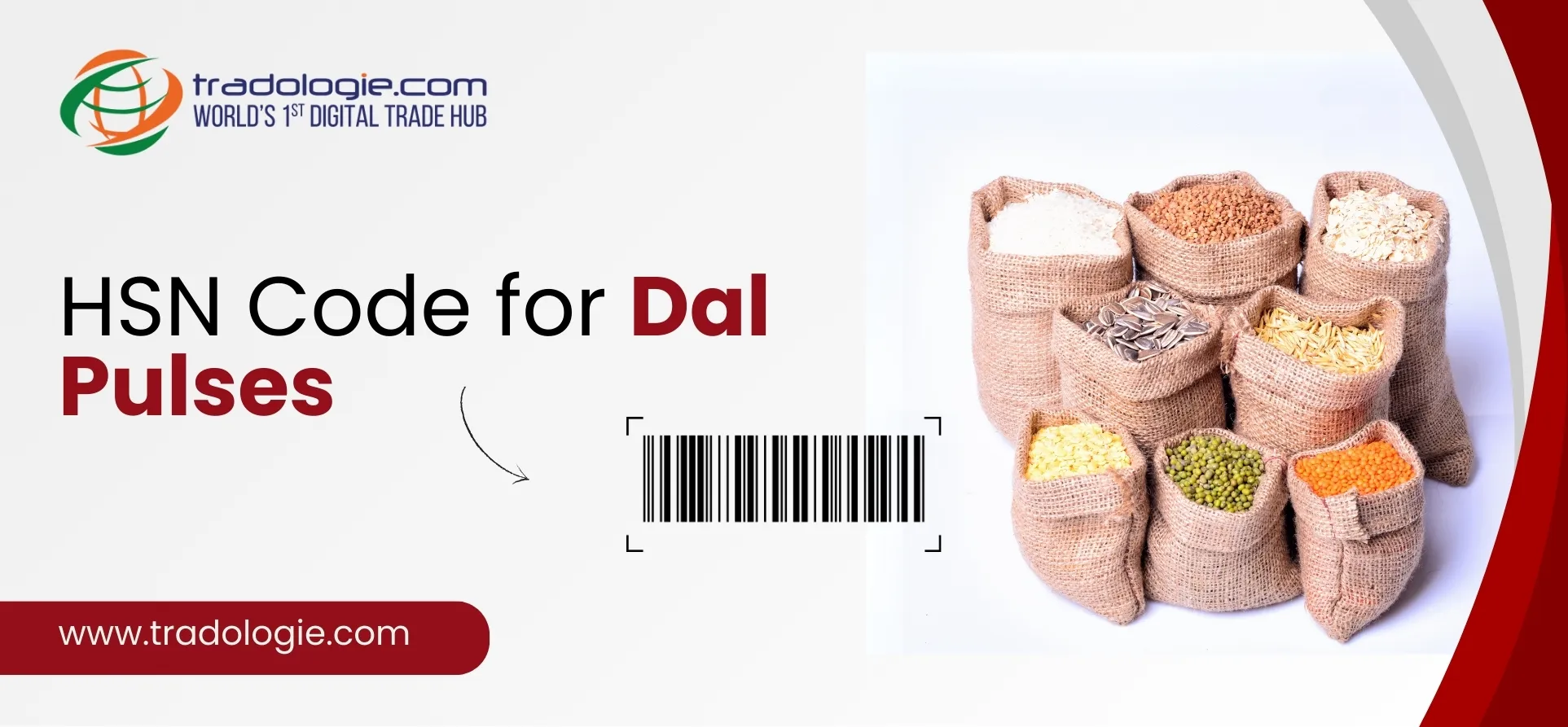
HSN code for pulses is used as an international trade and GST compliance to classify dried beans such as lentils, chickpeas, beans and other peas. The corrected version helps exporters and importers and then traders decide customs duty, GST rates and regulatory requirements when trading pulses as global.
In the Harmonized System (HS) classification, pulses fall under HS Code 0713, which covers dried leguminous vegetables that are shelled, whether or not skinned or split.
HSN Code Structure for Pulses
The HS/HSN system follows a hierarchical structure used worldwide for product identification.
| Level | Code | Description |
|---|---|---|
| Section | Section II | Vegetable Products |
| Chapter | 07 | Edible vegetables and certain roots and tubers |
| Heading | 0713 | Dried leguminous vegetables (pulses) |
| Subheading | 0713XX | Specific pulse varieties |
This classification helps customs authorities and businesses identify exact product categories for trade documentation and taxation.
List of Common Pulses with HSN Codes
Below is a list of commonly traded pulses and their corresponding HS codes.
| Pulse Type | HSN Code | Description |
|---|---|---|
| Chickpeas (Chana / Garbanzo) | 07132000 | Dried chickpeas |
| Lentils (Masoor Dal) | 07134000 | Dried lentils |
| Kidney Beans (Rajma) | 07133300 | Dried kidney beans |
| Green Gram (Moong) | 07133100 | Beans of species Vigna Radiata |
| Black Gram (Urad) | 07133100 | Vigna Mungo beans |
| Cowpeas | 07133500 | Dried cowpeas |
| Peas | 07131000 | Dried peas |
| Broad Beans | 07135000 | Horse beans or broad beans |
| Mixed Pulses | 07139090 | Other dried leguminous vegetables |
These codes allow traders to classify products accurately in customs declarations and invoices.
GST Rate on Pulses in India
The GST rate applicable to pulses depends on the type of sale and packaging.
GST Overview:
- 0% GST - Unbranded and unpacked pulses
- 5% GST - Branded or pre-packaged pulses
This GST structure applies to products classified under HSN Code 0713 and its subcategories.
Why the Correct HS Code for Pulses Matters
Using the correct HS code is crucial for smooth global trade and regulatory compliance.
Key reasons include:
- Accurate customs duty calculation
- Faster customs clearance
- Correct GST invoicing
- Compliance with import-export regulations
- Better trade data analysis for exporters
Incorrect classification can result in shipment delays, penalties, or incorrect tax calculations.
Pulses Covered Under HS Code 0713
HS Code 0713 covers a wide range of dried legumes, including:
- Lentils
- Chickpeas
- Peas
- Kidney beans
- Cowpeas
- Broad beans
- Green gram (moong)
- Black gram (urad)
These products are widely traded globally due to their high protein content, long shelf life and importance in food supply chains.
Conclusion
The HSN code for pulses (0713) plays a vital role in international trade, taxation and logistics for agricultural commodities. Whether you are an exporter, importer, or wholesale buyer, understanding the correct HS classification ensures regulatory compliance and smooth global trade operations.
Businesses dealing in bulk pulses should always verify the exact 8-digit HS code for their specific pulse variety before export or import to avoid customs issues.