Key Highlights
- Global trade growth is creating new opportunities for import export businesses in 2026.
- Starting exports requires business registration, PAN, IEC, and a dedicated bank account.
- The Import Export Code (IEC) is mandatory for all international trade from India
- Choosing products with existing global demand reduces risks for new exporters.
- Success depends on building reliable overseas buyers and stable supply relationships.
- Government schemes and export councils support Indian exporters in global markets.
Introduction:
The idea of starting an import export business in India has been floating around for years. But you’ll notice something interesting, if you look at the numbers lately. Global trade isn’t slowing down. In fact, supply chains are becoming more interconnected than ever.
That creates room for new exporters.
India already ships a wide range of products across the world — Rice, spices, chemicals, textiles, engineering goods, processed foods. The list goes on. And because digital trade platforms and logistics networks have improved, entering the export business today is far easier than it used to be.
Still, the process has a few steps. Nothing mysterious. But they matter.
Keep reading this informative piece of blog as it will provide you with vital information on how to start import export business from scratch complete guide.

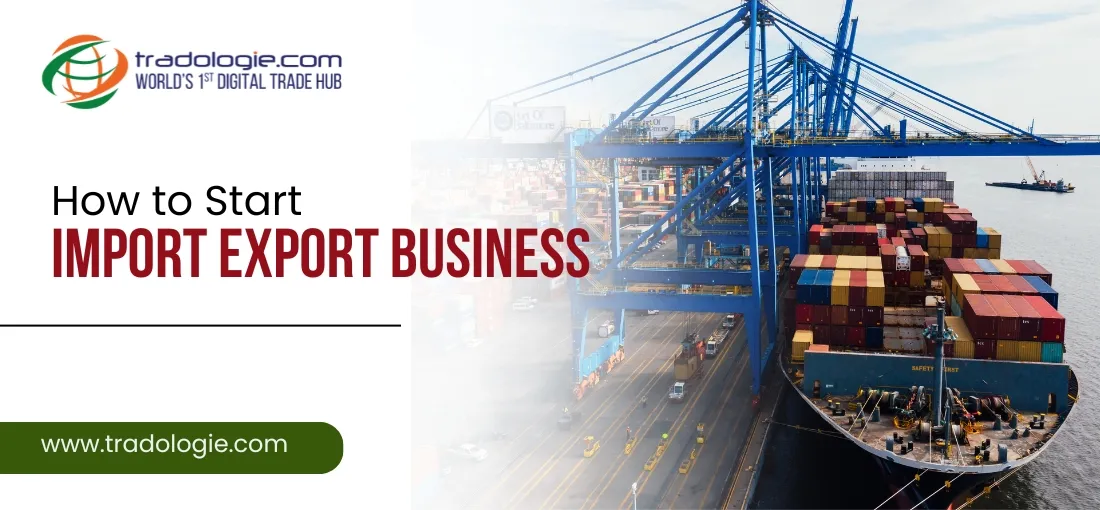
How to Start Import Export Business in India
When people search for how to start import export business, they usually imagine complicated procedures. The truth is a little calmer.
The export setup in India is fairly structured. Once you understand the sequence of registrations and documentation, things begin to fall into place.
The basic framework looks like this:
- Register a legal business entity
- Obtain a PAN for the business
- Apply for an Import Export Code (IEC)
- Open a current account in a bank
- Identify export products and markets
- Build buyer connections abroad
The thing is, exports are not just about shipping products. They are about building supply relationships. That takes time, but the entry barriers themselves are manageable.
Choose the Right Business Structure
Before anything else, the business must exist legally.
Indian exporters usually operate under one of these structures:
- Sole proprietorship
- Partnership firm
- Limited Liability Partnership (LLP)
- Private Limited Company
For small exporters starting out, a sole proprietorship is often enough. Larger export businesses tend to prefer LLPs or private limited companies because they offer better credibility in international trade.
You’ll notice that overseas buyers usually ask for company registration documents before discussing serious orders.
Apply for Import Export Code (IEC)
Now this is the step where many people pause. The Import Export Code, commonly called IEC, is essential.
Without it, you simply cannot export or import goods from India.
The IEC is issued by the Directorate General of Foreign Trade (DGFT). The application is submitted online and usually requires:
- PAN card
- Business address proof
- Bank account details
Once approved, the IEC becomes the identity of your export business in international trade transactions.
Simple rule: no IEC, no exports.

How to Start an Import Export Company: Choosing the Product
This is where strategy begins.
Many first-time exporters make the mistake of choosing products randomly. The better approach is to study demand patterns first.
India already has strong export sectors such as:
- Rice and grains
- Spices
- Marine products
- Pharmaceuticals
- Engineering goods
- Textiles
- Processed foods
If you’re wondering how to start an import export company, start with products that already have export demand. That reduces the risk.
You’ll also notice that government export promotion councils regularly publish product-wise export data. Those reports can be surprisingly useful.
Finding Buyers Overseas
This part is where the real business begins.
Exporters don’t succeed just by registering companies. They succeed by finding buyers.
In most cases, buyers come from:
- International trade platforms
- Import distributors
- Trade fairs and exhibitions
- Export promotion councils
- Direct B2B marketplaces
Many exporters also connect with buyers through digital procurement platforms today,. It has changed the way sourcing works.
Still, the fundamentals remain the same. Buyers want reliability. Competitive pricing. Consistent supply.
Logistics and Shipping Arrangements
Once an order is confirmed, logistics takes center stage.
Exports involve coordination between several parties:
- Freight forwarders
- Customs clearing agents
- Shipping lines
- Warehousing providers
Documentation also becomes important. Typical export shipments include:
- Commercial invoice
- Packing list
- Bill of lading
- Certificate of origin
- Export declaration
If you’re learning how to start import export business, understanding documentation is half the job.
Because once cargo reaches the port, paperwork determines how smoothly it moves.
Payments and Risk Management
Export transactions usually involve international payment terms. The most common ones include:
- Letter of Credit (LC)
- Advance payment
- Telegraphic Transfer (TT)
New exporters often prefer advance payments or small trial orders first. Over time, once trust builds, larger contracts begin to appear.
Banks also play an important role here. They help verify buyer credibility and process export payments.
The thing is, international trade always carries some risk. But with proper documentation and verified buyers, most of those risks can be managed.
Government Support for Exporters
One advantage Indian exporters have today is government support.
Various schemes exist to encourage exports, such as:
- Export Promotion Councils
- RoDTEP scheme (Remission of Duties and Taxes on Export Products)
- Market development assistance programs
You’ll notice that these initiatives aim to make Indian products more competitive in global markets.
For new exporters, these programs can help reduce costs and open new markets.
Final Thoughts
Starting an export business in 2026 doesn’t require a massive setup. What it requires is clarity.
Understand the process. Register the business. Obtain the IEC. Identify the right products. And most importantly, build reliable buyer relationships.
Once those pieces fall into place, the export journey begins to look much more practical.
That’s really the essence of how to start an import export business in today’s world. Not shortcuts. Just a clear structure and steady execution.
Disclaimer:
The information provided in this article is sourced from relevant Government of India websites and official resources. The details are based on currently available norms and guidelines for import export businesses in India. Regulations and procedures may change over time as per government policies, therefore readers are advised to verify the latest information from official government portals before making business decisions.
.webp "Top 10 Cow Dung Export Companies in India with Market Size and Global Demand")