Buffalo Meat
Minimum Order Quantity : 20-27 MT (Full container load)
Shelf Life : 18-24 months under frozen storage (-18°C or below)
Cold Chain Requirement : Mandatory frozen cold-chain throughout the supply chain
Common Incoterms : FOB, CIF, CFR
Documentation : Includes Health certificate, Veterinary certificate, Halal certificate, COA, Certificate of Origin, inspection reports, and destination-specific compliance documents.
Facilitated by Tradologie.com
Offered By : Buffalo Meat Exporters

This is a Non-Vegetarian product.
Introduction:
| Grade Type | Physical Parameters | Chemical Parameters | Microbiological Parameters | Purity / Size / Moisture / Tolerance | Applicable Standards | Testing & Inspection Methods | Specification Source |
|---|---|---|---|---|---|---|---|
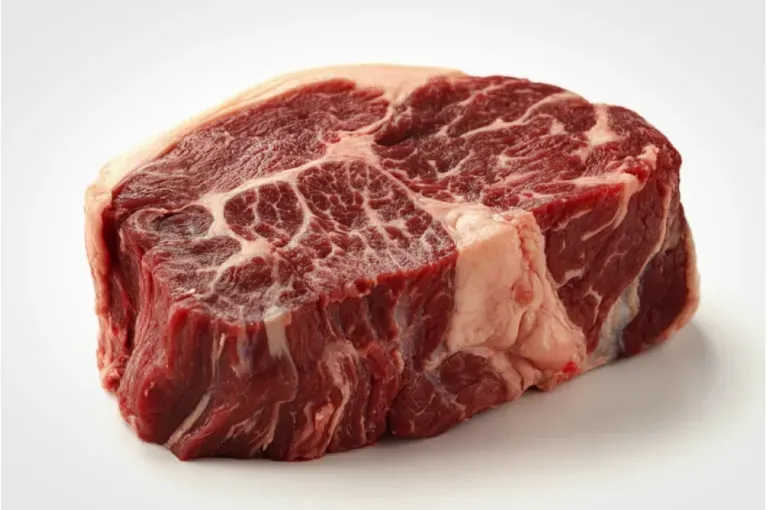
| Frozen Boneless Buffalo Meat | Bright red colour, firm texture, no blood clots, clean surface, vacuum packed, ≤ -18°C | Protein: 20-22%, Fat: 2-4%, Moisture: 70-74%, pH: 5.5-6.2 | TPC within export norms, Salmonella absent, E. coli within limit | Free from bone, cartilage, and foreign matter; moisture within Codex tolerance; uniform trimming | FSSAI, Codex, ISO 22000, HACCP | Microbial testing, residue analysis, third-party inspection | Export industry guidelines, buyer specification |
| Hindquarter Cuts | Uniform muscle structure, deep red colour, minimal connective tissue, firm | Protein: 21-23%, Fat: 1-3%, Moisture: 70-73%, pH: 5.4-6.1 | Absence of pathogens, low microbial load | Cut size as per buyer; minimal trimming loss; moisture retention standard | Codex, Halal, FSSAI, ISO | Visual inspection, lab testing, cold chain validation | Regulatory and trade norms |
| Forequarter Cuts | Slightly higher connective tissue, red colour, clean trimming | Protein: 19-21%, Fat: 3-5%, Moisture: 71-75%, pH: 5.6-6.2 | Standard export microbial limits | Size and trimming tolerance as per contract | Codex, FSSAI, ISO | Microbiological and chemical tests | Industry standards |
| Lean / Trimmed Meat | Low visible fat, fine grain, uniform colour | Protein: 22-24%, Fat: 1-2%, Moisture: 70-72%, pH: 5.5-6.0 | Strict pathogen-free requirement | No added water; high lean percentage; tolerance per buyer | Codex, ISO, HACCP | Lab analysis, fat ratio verification | Buyer technical norms |
| Manufacturing / Processing Grade | Mixed muscle cuts, red to dark red, suitable for further processing | Protein: 18-21%, Fat: 5-10%, Moisture: 72-76%, pH: 5.6-6.4 | Within processing-grade microbial limits | Size variation allowed; moisture tolerance higher | Codex, FSSAI | Chemical and microbial testing | Industrial processing standards |
| Offals (Liver, Heart, Kidney) | Fresh colour (species-specific), firm, no damage | Protein: 18-22%, Fat varies, Moisture: 70-78% | Strict pathogen control | Clean, properly washed, no contamination | Codex, Halal, FSSAI | Veterinary inspection, microbial test | Regulatory guidelines |
| Halal Certified Buffalo Meat | Same as respective grade; slaughtered as per Halal norms | Same as product type | Strict hygiene and traceability | Certified slaughter, full traceability | Halal, Codex, ISO, FSSAI | Halal audit, documentation, lab tests | Religious and regulatory norms |
Frozen Boneless Buffalo Meat:
Frozen boneless buffalo meat is the format that moves the most in global bulk trade. It is processed, properly cleaned, and then frozen so it can last longer and remain easy to handle during transport and storage. Large processors, importers, and distributors usually prefer this because it gives them flexibility. They can cut, portion, and process it further depending on what their end customers need.
Frozen Buffalo Cubes:
Frozen buffalo cubes are among the most unique types in this offering as they come in convenient, pre-cut, uniform pieces. So they are easy to handle and do their processing. This adds to the enormous popularity of quick-service restaurants, HORECA players, and frozen food manufacturers. The focus here is on convenience and portion control to speed up the production. It also eventually cuts down on labour and makes operations more efficient.
Buffalo Forequarter / Hindquarter Cuts
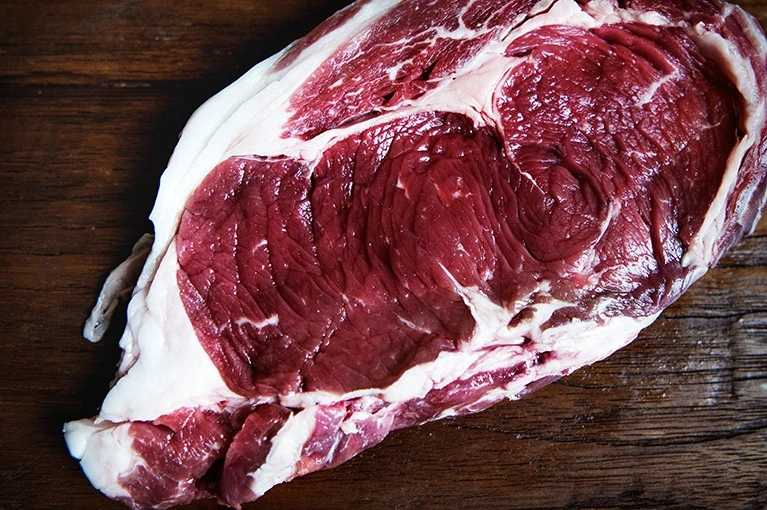
Forequarter and hindquarter cuts are supplied based on the muscle groups buyers actually need. This format is widely used in industrial processing, retail meat, and institutional catering. Buyers usually choose between these cuts depending on tenderness, fat level, and how the meat will be used. That's why they are important in customised bulk contracts.
Buffalo Offals (Liver, Heart, Tripe)
Buffalo offals like liver, heart, and tripe also move in large volumes in global trade, especially in price-sensitive and emerging markets. These are part of many traditional cuisines and are also used in processed meat products. Bulk sourcing of offals allows importers to get better value and manage their overall procurement costs more effectively.
Application-wise Mapping:
When you look at how it is used, buffalo meat fits into many different food applications depending on the cut and level of processing. Frozen boneless buffalo meat usually goes into further processing, marination, and value-added products. You'll usually see cubes and portioned cuts going more into ready meals, curries, kebabs, and food service.
Offals are used a bit differently. They are more common in traditional and regional cuisines, especially in price-sensitive markets where people still believe in using the whole animal and not letting anything go to waste.
Industry-wise Usage:
Frozen food manufacturers and institutional catering are some of the sectors, to name a few, from where most of the demand comes from. Quick-service restaurants and HORECA players also depend on bulk supply to keep their menus consistent and control costs, not to mention.
| Industry Segment | Key Applications | Why Buffalo Meat is Preferred |
|---|---|---|
| Food Processing Industry | Frozen foods, ready meals, processed meat, sausages | Cost efficiency, lean profile, scalable bulk supply |
| HORECA (Hotels, Restaurants, Catering) | Curries, grills, kebabs, institutional menus | Consistent pricing, portion flexibility, halal Buffalo meat availability |
| Quick-Service Restaurants (QSR) | Burgers, patties, wraps, fast-food products | Standardised cuts, stable supply, competitive protein cost |
| Retail & Private Labels | Frozen packs, chilled meat, ready-to-cook formats | Growing urban demand, packaged protein consumption |
| Institutional Buyers | Government supply, defence, large catering contracts | Bulk procurement, long-term contracts, affordability |
| Frozen & Convenience Food | Snacks, ready-to-eat, ready-to-cook products | Shelf life, processing suitability, uniform quality |
| Export & Wholesale Distributors | Bulk trading, re-export, regional supply chains | High volumes, global acceptance, logistics efficiency |
| Emerging Protein & Value-Added Products | Meat blends, alternative processed formats | Lean meat, blending flexibility, cost control |
Processing vs Retail vs Industrial Use
What you'll usually see in the market is that industrial buyers are mainly concerned about large volumes, uniformity, and steady long-term supply. Food processors look at things a bit differently. For them, it's really about consistency, fat levels, and shelf life so production keeps running without surprises. Retail and branded players think in another way. They worry more about appearance, hygiene, traceability, and packaging that connects with the end consumer. Since every segment looks at quality in its own way, procurement and product specifications often become customised.
Export-oriented Applications
What's quite clear in the market right now is that most of the demand still comes from the Middle East, Southeast Asia, and many parts of Africa. These are the regions where buffalo meat is used regularly across food service, retail, and institutional segments. Export shipments are usually planned around frozen formats, halal buffalo meat requirements, and longer shelf life so the supply chain stays practical. As protein demand keeps rising in developing markets, bulk trade is likely to remain the main way buyers secure long-term supply and support food security.
Top Importers of Buffalo Meat (India Focus)
| Rank | Major Importing Country | Key Demand Drivers |
|---|---|---|
| 1 | Vietnam | Large processing and re-export hub |
| 2 | Egypt | Strong domestic protein demand |
| 3 | Malaysia | Food processing and retail |
| 4 | Iraq | Price-sensitive bulk consumption |
| 5 | Saudi Arabia | HORECA and retail demand |
| 6 | UAE | Food service and redistribution |
| 7 | Indonesia | Population growth and protein consumption |
| 8 | Philippines | Retail and frozen meat segment |
| 9 | Jordan | Regional food demand |
| 10 | African markets (various) | Growing urban consumption |
| Rank | Importing Country | Key Demand Drivers |
|---|---|---|
| 1 | United States | Processed meat, food industry, specialty imports |
| 2 | Italy | Food processing, HoReCa, premium meat blending |
| 3 | Germany | Processed food, frozen meat, retail chains |
| 4 | Netherlands | Re-export hub, food manufacturing |
| 5 | Japan | Premium meat processing and niche consumption |
| 6 | France | Retail, processed foods, hospitality |
| 7 | United Kingdom | Multicultural demand, ready meals |
| 8 | South Korea | Frozen meat and food processing |
| 9 | Mexico | Retail and institutional consumption |
| 10 | Chile | Processed and frozen meat demand |
If you look at the past decade, the global buffalo meat market has seen steady growth. The buffalo meat market is expected to grow by around USD 3.8 billion, with a CAGR of about 5.1% between 2024 and 2029. Much of this growth will come from the rising global demand for lean and affordable protein.
A big reason behind this is the rising need for protein that is affordable and can scale with demand. Industry estimates now put the market in the multi-billion-dollar range, with strong consumption coming from developing economies and increasing interest from processors and institutional buyers. Unlike premium red meats, buffalo meat has built its space as a cost-efficient option. That’s one reason demand tends to stay relatively stable, even when economic conditions become uncertain.
Global buffalo meat production is mostly concentrated in a few regions, and India clearly leads the space. The country controls a large share of exportable supply because of its big buffalo population, organised processing, and strong export infrastructure. There are also producers in Southeast Asia and some parts of South America, but their role in bulk trade is still quite small. Because of this, most international buyers continue to look at India as their main sourcing origin.
| Parameter | Commercial Insight |
|---|---|
| Indicative Bulk Price Range | In global trade, frozen buffalo meat typically trades in the range of USD 3,000 - 4,500 per metric ton, depending on the cut, processing level, and compliance standards. |
| Unit of Trade | Most international transactions are quoted in USD per metric ton (MT) for containerised bulk shipments. |
| Export Price Trend | Prices remain relatively stable, supported by steady demand from Southeast Asia, the Middle East, and Africa, with moderate fluctuations linked to supply, feed costs, and global protein demand. |
| Regional Price Differences | Price sensitivity is higher in developing markets, while premium and high-compliance markets may pay slightly higher for certified and consistent supply. |
| Type of Buffalo Meat | HS Code | GST / Tax Classification |
|---|---|---|
| Frozen Boneless Buffalo Meat | 0202.30 | 0% GST on exports (Zero-rated supply) |
| Frozen Bone-in Buffalo Meat | 0202.20 | 0% GST on exports (Zero-rated supply) |
| Buffalo Forequarter / Hindquarter Cuts | 0202.20 | 0% GST on exports (Zero-rated supply) |
| Frozen Buffalo Cubes | 0202.30 | 0% GST on exports (Zero-rated supply) |
| Frozen Buffalo Offals (Liver, Heart, Tripe) | 0206 | 0% GST on exports (Zero-rated supply) |
| Processed / Value-Added Buffalo Meat | 1602 | 0% GST on exports (Zero-rated supply) |
Packaging Types:
In most cases, frozen buffalo meat is packed in vacuum-sealed or poly-lined cartons. There is also inner food-grade packaging to keep hygiene intact and reduce any risk of contamination. For bulk shipments, carton weight is often adjusted based on what the buyer wants and how the container is being loaded.
Storage & Shelf Life:
The cold chain is non-negotiable in real trade. The product has to stay at around -18°C or lower from storage to shipment. When this is managed well, frozen buffalo meat can easily last 12 to 24 months. But in the end, shelf life still depends on packaging and how carefully the product is handled along the way.
Export Documentation:
In most shipments, the paperwork side is quite standard. Buyers and authorities usually expect health and veterinary certificates, halal certification, certificate of origin, packing list, invoice, bill of lading, and inspection reports. Having all of this ready helps avoid delays and makes customs clearance much smoother in the destination market.
Mandatory certifications:
In most markets, Buffalo meat suppliers have to meet some basic regulatory requirements before shipments are approved. This usually includes health and veterinary certificates, halal Buffalo meat certification, and food safety declarations. In certain cases, phytosanitary clearance is also asked for. These checks are mainly to ensure the meat has been processed hygienically, is safe for consumption, and meets the import standards of the destination country.
Optional / Premium Certifications:
In many developed markets, buyers don't stop at the basic approvals. They often bring up additional certifications during discussions. Things like HACCP, ISO 22000, BRC, FSSC, and proper traceability usually come into the picture. These are not always mandatory, but they do influence buying decisions. Exporters who have these in place generally get better access to premium markets and stronger long-term relationships.
Region-Specific Compliance:
What buyers expect really changes from one region to another. In the Middle East, the focus is mostly on halal Buffalo meat and basic safety standards. In Southeast Asia, discussions are more around price, steady supply, and clear documentation. Developed markets are much stricter. They look at residue checks, audit approvals, and full transparency in the supply chain. Buffalo meat suppliers who adjust to these regional expectations usually see more stable and long-term growth.
Disclaimer: Market data, pricing, availability, and product specifications are indicative and may vary based on season, origin, volume, compliance requirements, logistics, and changing global demand–supply conditions. Final commercial and technical terms are subject to buyer requirements, destination regulations, and mutual agreement at the time of contract.
Get in Touch



The process is quite straightforward. First, you register as a buyer on the platform. After that, you submit your requirement with details like quantity, preferred cuts, delivery location, and payment terms. Once the inquiry is active, verified exporters join the negotiation and compete on price. This helps you compare offers and close the deal directly with the supplier.
You simply share your sourcing requirement on the platform. The system invites multiple verified exporters to participate in a live negotiation. They submit their quotations in real time, which gives you better price discovery and transparency.
No. Buyers can register and raise inquiries without paying any platform fees. The idea is to make bulk sourcing easier and more accessible for importers.
You can source different formats depending on your requirement. This includes frozen boneless buffalo meat, cubes, forequarter and hindquarter cuts, and buffalo offals. Suppliers also offer customised cuts based on processing, retail, or food service needs.
Yes, and that’s one of the main advantages. Buyers usually specify fat levels, cut size, trimming, packaging, halal certification, and inspection standards. Exporters quote based on these requirements.
The platform runs on a live negotiations system. Multiple buffalo meat exporters compete to offer the best price. After the session, you can still negotiate further and finalise the supplier you are comfortable with.
Exporters go through a screening process before they are allowed to participate. This helps reduce risk and ensures you deal with serious and compliant suppliers.
Yes. You can choose third-party inspection agencies or your own nominated agency. Inspection reports are usually shared before dispatch, which gives buyers more confidence.
Most buyers use secure options such as Letters of Credit or escrow. This reduces risk and ensures payment is released only after shipment or delivery milestones are met.
Yes. Many buyers use the platform to build long-term supplier relationships. Once you identify reliable exporters, you can continue structured sourcing and regular procurement through the same network.