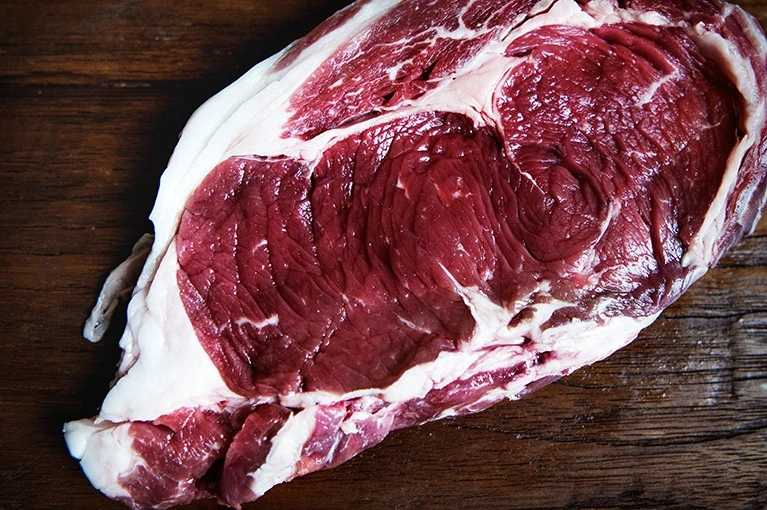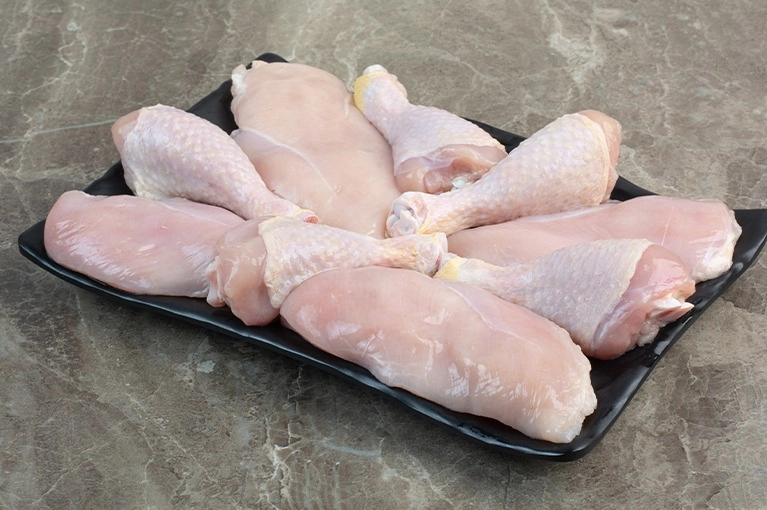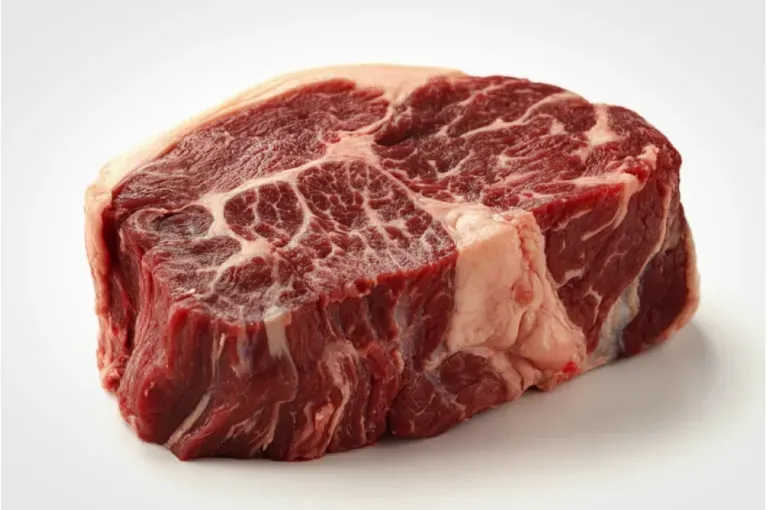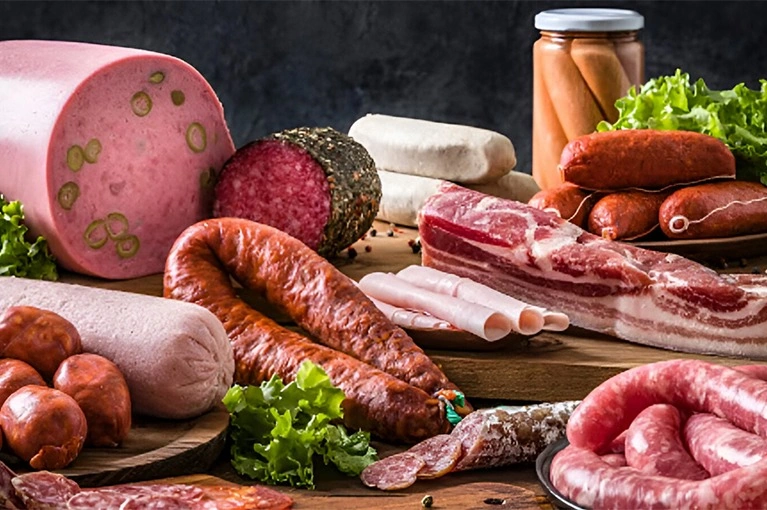
Processed Meat
Minimum Order Quantity : 26 MT
Shelf Life : 12-24 months under frozen storage at -18°C or below
Cold Chain Requirement : Maintained at -18°C to -40°C during storage, transport, and shipment
Common Incoterms : FOB, CIF, CFR
Documentation : Health Certificate (Veterinary), Halal Certificate (if applicable) , Phytosanitary / Sanitary Certificate ,Certificate of Origin (CO) , FSSAI / Export License (India) , Inspection Reports (SGS / Intertek / Bureau Veritas) ,Packing list and commercial invoice
Facilitated by Tradologie.com
Offered By : Processed / Frozen Meat Exporters, This product is non-vegetarian

This is a Non-Vegetarian product.
ABOUT THE PRODUCT

| Processed Grade Type | Physical Parameters | Chemical Parameters | Microbiological Parameters | Purity / Size / Moisture / Tolerance | Applicable Standards | Testing & Inspection Methods | Specification Source |
|---|---|---|---|---|---|---|---|
| Frozen Meat Cubes | Uniform cube size, bright colour, firm texture, no discoloration, stored ≤ -18°C | Protein 18-22%, Fat 3-10%, Moisture 70-75%, pH 5.6-6.4 | Salmonella absent, E. coli within limits | Size tolerance ±5%, free from bone and foreign matter | Codex, FSSAI, ISO 22000, HACCP | Lab testing, visual inspection | Buyer and trade standards |
| Minced / Ground Meat | Fine or coarse, uniform colour, hygienic | Protein 16-21%, Fat 5-20%, Moisture 70-76% | Pathogen-free as per norms | Grind size and fat ratio as per contract | Codex, ISO, FSSAI | Chemical and microbial testing | Industry and regulatory |
| Burger Patties | Uniform shape, stable frozen, no cracks | Protein 14-18%, Fat 10-25% | Microbial compliance | Weight tolerance ±3% | Codex, ISO, FSSA | Shelf-life and microbial tests | Processing industry |
| Sausages | Uniform diameter, intact casing | Protein 12-17%, Fat 15-30% | Controlled microbial load | Declared additives | Codex, Halal, ISO | Chemical and sensory testing | Buyer and regulatory |
| Meat Strips / Slices | Thin, uniform, clean trimming | Protein 17-21%, Fat 3-12% | Low microbial load | Thickness tolerance | Codex, ISO | Visual and lab testing | Trade standards |
| Nuggets / Breaded Meat | Uniform coating, stable structure | Protein 12-16%, Fat 12-22% | Microbial compliance | Coating and ingredient declaration | Codex, FSSAI, ISO | Sensory and shelf-life tests | Processing norms |
| Cooked / Ready-to-Eat Meat | Fully cooked, safe packaging | Protein 15-20%, Fat 8-20% | Pathogen-free | Shelf-life stability | Codex, HACCP, ISO | Thermal and microbial validation | Food safety authorities |
| Cured / Smoked Meat | Uniform curing, colour and aroma | Protein 16-22%, Fat 10-25% | Compliance as per processed norms | Salt and preservative limits | Codex, ISO, FSSAI | Chemical and microbial | Regulatory norms |
| Bacon | Uniform slices, characteristic aroma, proper curing | Protein 14-18%, Fat 20-35%, Moisture 45-60% | Pathogen-free | Thickness tolerance, curing consistency | Codex, ISO, FSSAI | Chemical and microbial testing | Regulatory and trade |
| Salami | Firm texture, even fat distribution, uniform fermentation | Protein 18-24%, Fat 20-40%, Moisture 30-45% | Controlled microbial fermentation | Moisture and fat tolerance | Codex, ISO, HACCP | Microbial and sensory tests | Industry standards |
| Ham | Uniform colour, smooth texture, properly cured | Protein 16-20%, Fat 8-18%, Moisture 55-65% | Pathogen compliance | Salt and curing limits | Codex, ISO, FSSAI | Chemical and microbiological | Buyer and regulatory |
| Halal / Kosher Meat | As per product type | As per base product | Strict hygiene | Certified production | Halal, Kosher, Codex | Certification and audit | Religious and regulatory |
Supply and Demand Countries of processed meat:
| Rank | Country / Region | Import Value (USD '000) | Import Value (USD Mn) | Quantity (Kg) |
|---|---|---|---|---|
| 1 | United States | 614,591 | 614.6 | 64,181,700 |
| 2 | United Kingdom | 306,603 | 306.6 | 47,536,300 |
| 3 | Canada | 226,559 | 226.6 | 26,296,100 |
| 4 | Germany | 160,289 | 160.3 | 19,534,500 |
| 5 | France | 141,385 | 141.4 | 21,370,200 |
| 6 | Netherlands | 137,057 | 137.1 | 15,077,100 |
| 7 | European Union | 116,850 | 116.9 | 15,490,300 |
| 8 | Belgium | 71,138 | 71.1 | 9,888,560 |
| 9 | Australia | 66,410 | 66.4 | 8,198,920 |
| 10 | Japan | 63,324 | 63.3 | 11,786,600 |
| Rank | Country / Region | Import Value (USD '000) | Import Value (USD Mn) | Quantity (Kg) |
|---|---|---|---|---|
| 1 | Brazil | 667,455 | 667.5 | 97,978,200 |
| 2 | European Union | 303,155 | 303.2 | 49,424,400 |
| 3 | United States | 277,134 | 277.1 | 39,841,800 |
| 4 | Germany | 262,856 | 262.9 | 39,404,100 |
| 5 | Ireland | 252,935 | 252.9 | 44,948,800 |
| 6 | Poland | 242,311 | 242.3 | 36,664,700 |
| 7 | New Zealand | 119,489 | 119.5 | 12,218,700 |
| 8 | Belgium | 112,876 | 112.9 | 13,644,200 |
| 9 | Netherlands | 105,815 | 105.8 | 13,163,800 |
| 10 | Australia | 86,468 | 86.5 | 12,115,600 |
| Parameter | Indicative |
|---|---|
| Indicative Bulk Price Range | USD 2,500 - 5,000 per metric ton |
| Unit of Trade | USD per metric ton (MT) |
| Export Price Trend | Generally stable, moves with raw meat and logistics costs |
| Regional Price Differences | Lower in price-sensitive markets; higher in premium, compliance-focused markets |
Disclaimer: Prices are indicative and may vary based on grade, volume, origin, certification, compliance, and logistics.
| HS Code | Product Category / Meaning |
|---|---|
| 0201 | Fresh or chilled bovine (including buffalo) meat |
| 0202 | Frozen bovine (including buffalo) meat |
| 0202.20 | Frozen bone-in bovine / buffalo cuts |
| 0202.30 | Frozen boneless bovine / buffalo meat |
| 0206 | Edible offals (liver, heart, tripe, etc.) |
| 0210 | Salted, dried, or smoked meat |
| 1601 | Sausages and similar processed meat |
| 1602 | Prepared or preserved meat (canned, ready-to-eat, heat-treated) |
| Tax Classification (India) | Exports under these categories are generally treated as zero-rated under GST, allowing exporters to claim input tax credit or refunds. |
| Parameter | What Importers Focus On |
|---|---|
| Quality | Food-grade, hygienic processing, low contamination, stable shelf life (e.g., vacuum-packed, cold-chain maintained) |
| Size & Grade | Standard cuts, fixed specs (e.g., 200-500g portions, uniform trimming, controlled fat %) |
| Testing | Compliance reports (e.g., residue, microbiology, purity, third-party lab testing) |
| Documentation | Mandatory export papers (e.g., health, halal, COA, certificate of origin, inspection) |
| Consistency | Same quality every shipment (e.g., fixed contract supply, timely delivery) |
| Parameter | What Usually Happens in Trade |
|---|---|
| Packaging Types | Vacuum-sealed pouches, retort cans (for canned meat), modified atmosphere packs (MAP), poly-lined cartons |
| Carton Size | Standard export cartons (e.g., 5-10 kg for retail packs, 10-20 kg for food service and bulk) |
| Storage | Frozen or chilled depending on product (typically -18°C for frozen, 0-4°C for chilled ready meat) |
| Shelf Life | 6-12 months for chilled processed meat, up to 18-24 months for frozen or heat-treated formats |
Storage is simple but critical. Temperature control is everything. If the product is handled well, shelf life is long and predictable. If not, losses can be huge. That's why experienced exporters invest heavily in cold storage and logistics partners.
| Incoterm | Why It Is Used |
|---|---|
| EXW | Buyer manages pickup and logistics |
| CIF | Supplier handles shipping and delivery |
When it comes to Incoterms, most global deals run on FOB and CIF. FOB gives buyers control over freight. CIF works when importers want a complete solution. EXW is used mostly in nearby or specialised deals where buyers handle pickup themselves.

| Category | What Buyers Usually Expect |
|---|---|
| Mandatory Certifications | Health & veterinary certificate, halal certification, food safety compliance, export inspection |
| Optional / Premium Certifications | HACCP, ISO 22000, BRC, FSSC, traceability and quality management systems |
| Region-Specific Compliance | Middle East - halal & safety; Europe - strict residue & traceability; North America - audits, documentation & transparency; Asia & Africa - compliance and reliability focus |
Demand is not going anywhere. If anything, it's picking up in Southeast Asia, the Middle East, and Africa as more people move to cities and protein becomes part of daily diets. These markets will keep the bulk trade busy.
Investment is moving into modern plants, cold storage, and smarter logistics. It's basic, but it changes the game. Better infrastructure means fewer surprises and smoother exports.
Technology is also creeping in—automation, tracking, and digital sourcing. It may sound small, but it helps buyers trust the process and stay with the same supplier longer.
Get in Touch



Delivery timelines depend on origin, shipping route, and contract terms. Typically, international shipments take a few weeks after production and documentation are completed.
You can find a wide range of options such as frozen meat cubes, minced meat, sausages, burger patties, nuggets, canned meat, ready-to-cook products, cured and smoked meat, bacon, salami, and ham. The availability depends on supplier offerings and market demand.
Prices are not fixed because they depend on volume, specifications, and destination. You can simply raise an inquiry on the platform and verified suppliers will share their quotations. This way, you get real market pricing instead of rough estimates.
Most bulk merchant buyers are food processors, frozen food brands, QSR chains, catering companies, and distributors. These businesses need consistent supply and long-term contracts.
In most cases, the starting point is a. However, this can vary depending on the product, supplier, and contract terms. Trial orders may also be possible in some cases.
Yes, buyers can request specific cuts, fat percentage, packaging, portion size, or processing level based on their business needs.
Common requirements include halal certification, health and veterinary certificates, and food safety compliance. Premium markets may also ask for HACCP or ISO standards.
You can ask for lab reports, third-party inspection, and compliance documents before shipment. Many buyers also appoint independent inspection agencies.