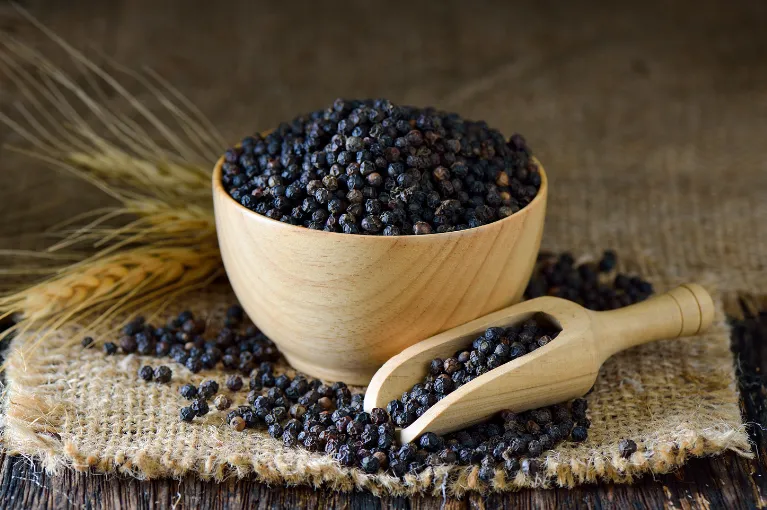
Black Pepper
Minimum Order Quantity : 15 - 25 MT (Full container load)
Available Bag Size
Available Bag Type
Shelf life : 24-36 months under cool and dry storage conditions
Storage Requirement : Store in a dry, well-ventilated environment away from moisture, pests, and direct sunlight
Common Incoterms : FOB, CIF, CFR
Documentation : includes Certificate of Analysis (COA), Phytosanitary Certificate, Certificate of Origin, Fumigation Certificate, inspection reports, and destination-specific compliance documents
Facilitated by Tradologie.com
Offered By : Black Pepper Exporters

This is a Vegetarian product.
Buy Black Pepper in Bulk From The Best Global Suppliers
This product is widely used in global spice trade, food processing industries, seasoning manufacturers, and HORECA supply chains.
Black pepper is one of those spices that quietly runs through the entire food industry. It shows up almost everywhere. Seasonings, marinades, ready meals, processed meats, restaurant kitchens — the list keeps going.
That's the reason demand never really disappears. Food manufacturers, spice blenders, and large distributors usually prefer to buy Black Pepper in bulk rather than deal with small shipments again and again. It simply keeps procurement easier.
Now here's the commercial side of the story. A large portion of global supply moves through a few producing regions — Indonesia, India, Brazil, and Sri Lanka. Buyers in the food industry normally lock in steady sourcing from these origins because flavour consistency matters a lot in large-scale production.
You'll notice something else too. Spice traders, food processors, and distributors regularly import bulk Black Pepper when they want stable supply for their production cycles. Once the quality, origin, and pricing align properly, those sourcing relationships tend to run for a long time.

| Category | Details |
|---|---|
| Grade Types | Whole Black Pepper (TGSEB, TGEB, FAQ) Cracked Black Pepper Ground / Powdered Black Pepper Steam-Sterilized Pepper Organic Black Pepper |
| Physical Parameters | Colour: Dark brown to black Appearance: Round peppercorns or fine powder depending on form Texture: Hard, dense peppercorns or free-flowing powder Odour: Strong, characteristic pepper aroma Taste: Sharp, pungent, spicy flavour |
| Chemical Parameters | Moisture: Typically ≤ 12% Piperine Content: ~3-6% depending on origin Volatile Oil: ~1-3% Total Ash: ≤ 6-7% |
| Microbiological Parameters | Total Plate Count within acceptable limits Yeast & Mold controlled Absence of pathogens such as Salmonella and E. coli Compliance with international food safety standards |
| Purity / Density / Size Tolerance | Free from foreign matter, stones, and extraneous materials Density typically 450-550 g/L depending on grade Uniform berry size for whole pepper Powder mesh size customizableMin 23% (Standard) to >28% (Premium) |
| Additives & Processing Options | Natural product without additives Steam sterilization option available for microbial control Clean-label processing/Brown (Standard) |
| Applicable Standards | FSSAI (India) Codex Alimentarius ISO 22000 / HACCP ASTA spice quality standards EU and US FDA compliance |
| Testing & Inspection Methods | Moisture analysis Piperine and volatile oil testing Microbial and heavy metal testing Pesticide residue analysis Third-party inspection (SGS, Intertek, Bureau Veritas etc.) |
| Packaging Standards | Food-grade PP / jute bags 25-50 kg export bags Laminated moisture-barrier packaging for powder form |
| Shelf Life & Storage | Shelf life: 24-36 months Store in cool, dry, and well-ventilated conditions Protect from moisture, pests, and direct sunlight |
| Specification Source | International spice trade standards Buyer specifications for food processing industries Regulatory and food safety authorities Global spice industry benchmarks |
These production specifications come handy if you want to buy Black Pepper in bulk from a bulk trade perspective.
By Product Type
Black pepper itself appears in a few closely related forms in trade. The most common one is whole black peppercorn and it comes from dried unripe berries of the pepper vine. That’s the format you’ll see moving in most export shipments.
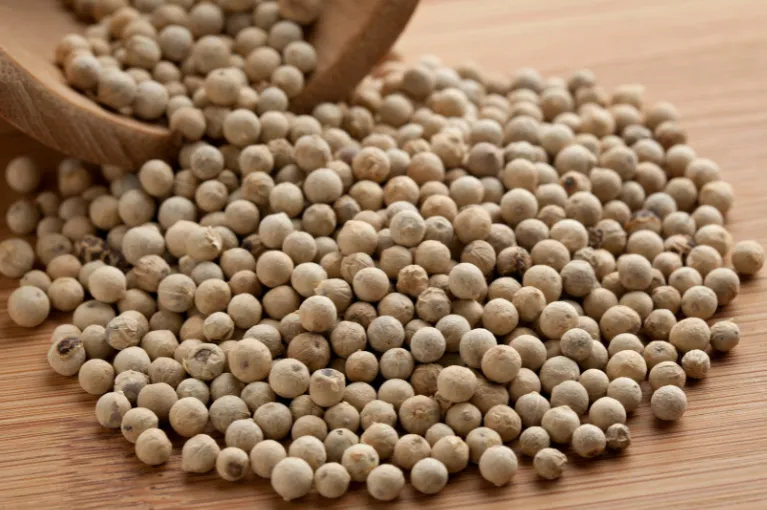
Then there's white pepper, which comes from the same fruit but goes through an additional soaking and outer skin removal process. White pepper has a slightly cleaner appearance and a milder flavour. You’ll notice it used more in sauces, processed meats, and certain European food products where colour matters.
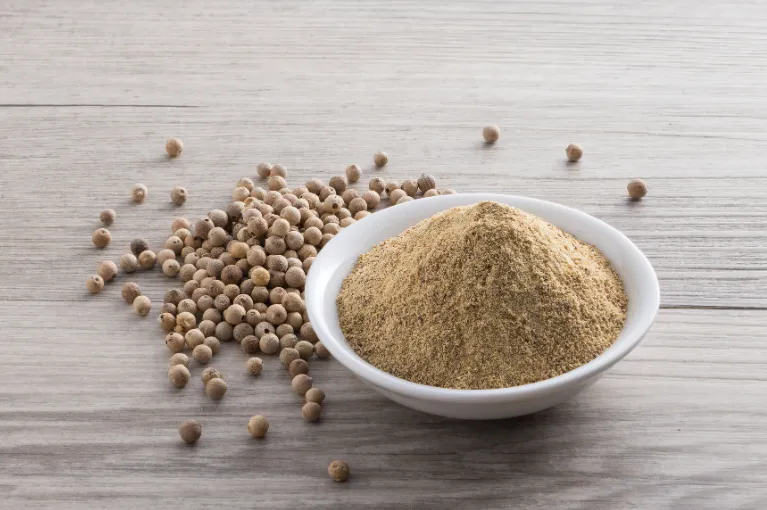
Ground pepper also exists in the market, but in bulk trade many buyers still prefer whole peppercorns. The reason is simple. Grinding usually happens closer to the final production stage.
By Origin
Origin plays a major role in the black pepper trade. Certain producing countries dominate the global supply.
Vietnam is currently the largest exporter. India, Brazil, and Indonesia follow closely. Each origin has its own characteristics — aroma strength, berry size, and oil content.
Because of these variations, many spice buyers stick to the same origin once they find a quality that fits their product line.
By Density Grade
In commercial contracts, black pepper is often discussed in density grades. This refers to how heavy the peppercorns are when measured by volume.
Grades like 500 g/l, 550 g/l, or 570 g/l come up frequently in export discussions. Higher density generally means the peppercorns are more mature and contain stronger flavour oils.
For that reason, many buyers in the spice blending and food processing industry prefer higher density grades.
By Commercial Export Grades
Black pepper in international trade is also divided into a few well-known commercial grades. In most bulk contracts, you'll hear buyers mention FAQ (Fair Average Quality) first. That's the standard grade that moves in large volumes.
Then of course there are some of the premium categories which we can't forget. Names like TGSEB (Tellicherry Garbled Special Extra Bold) or TGEB (Tellicherry Garbled Extra Bold) are the common names in the industry when buyers want those larger berries which have strong and punchy flavour. These grades mainly originate from none other than India and their prices mostly look high.
By Processing Method
Another way traders classify black pepper is by how it is processed after harvest.
Traditional shipments usually contain sun-dried pepper. A method dipped in simplicity, and the rooted Indian farmers have been using it for years. While at the same time, some exporters now use mechanical drying mainly to control moisture levels more evenly.
In certain cases, buyers also ask for steam-sterilized pepper. This is more common when the spice is going into large food manufacturing operations where extra microbial control becomes important.
By Moisture & Quality Parameters
Moisture content is one of the most closely watched specifications in the pepper trade.
If moisture runs too high, storage becomes risky during long sea shipments. That's why exporters usually are very much conscious about the moisture levels around safe export limits before dispatching cargo.
Buyers also check things like volatile oil content, foreign matter percentage, and cleanliness before finalizing contracts apart from just the moisture.
By Certification
Certification requirements usually depend on where the shipment is going.
Organic pepper has been gaining attention in some markets. Food safety standards and residue compliance also become important when exports move into Europe or North America.
Halal certification may also come into play when the spice is intended for certain food processing industries.
By End Use
Black pepper moves into several industries at once.
Spice blending companies use it for seasoning mixes. Packaged food manufacturers add it to ready meals and snacks. Meat processors use it in marinades and processed products. Even restaurant supply chains purchase large volumes.
Because of that wide usage, specifications often vary depending on how the buyer plans to use the spice.
Most Traded Grade
In global spice trade, FAQ grade whole black peppercorns remain the most commonly traded format. They offer a practical balance between quality and price.
Export-Preferred Grade
Premium grades such as Tellicherry pepper with higher density levels often attract stronger interest in export markets. As usual, the buyers usually prefer consistent size, low moisture, and strong aroma. This is especially true when the pepper is intended for food processing or spice blending.

| Rank | Exporting Country | Export Value (USD '000) | Export Quantity (Kg) | Notes |
|---|---|---|---|---|
| 1 | Indonesia | 300,729.98 | 53,954,400 | Major Southeast Asian pepper producer |
| 2 | Brazil | 278,290.18 | 59,663,100 | Largest supplier to US and Europe |
| 3 | Sri Lanka | 166,885.17 | 25,258,600 | Known for high-quality Ceylon pepper |
| 4 | Germany | 59,732.48 | 9,783,020 | Re-export hub for processed spices |
| 5 | India | 55,615.65 | 8,992,480 | Traditional origin of Malabar pepper |
| 6 | European Union | 38,659.76 | 3,526,270 | Regional re-export and processing hub |
| 7 | Netherlands | 38,343.69 | 5,737,670 | Major spice trading and distribution center |
| 8 | Cambodia | 34,538.43 | 7,300,400 | Emerging exporter (Kampot pepper) |
| 9 | Malaysia | 28,354.22 | 4,377,900 | Sarawak pepper origin |
| 10 | Mexico | 24,922.44 | 3,329,290 | Growing exporter to North American markets |
| Rank | Importing Country | mport Value (USD '000) | Import Quantity (Kg) | Notes |
|---|---|---|---|---|
| 1 | United States | 360,838.99 | - | Largest consumer market for spices |
| 2 | European Union | 306,408.12 | 52,787,900 | Major processing and re-export hub |
| 3 | India | 260,771.43 | 46,837,000 | Imports for domestic consumption and blending |
| 4 | Germany | 135,127.60 | 23,674,600 | Key spice processing hub in Europe |
| 5 | France | 58,013.82 | 9,141,320 | Large food industry demand |
| 6 | China | 50,832.23 | 9,276,080 | Growing demand from food processing sector |
| 7 | Pakistan | 43,583.23 | 16,200,500 | Strong consumption in spice blends |
| 8 | South Korea | 42,702.34 | 7,229,200 | Stable demand from food manufacturers |
| 9 | Japan | 37,462.46 | 5,075,980 | Premium quality spice imports |
| 10 | Egypt | 36,781.93 | 6,624,890 | Major spice importer in Middle East / Nort |
Application-wise Mapping
Black pepper shows up in far more food products than people usually notice. Seasoning blends are the obvious example. Spice companies grind the pepper and mix it into ready spice powders, meat rubs, and snack coatings.
But that's only one side of it. Food processors also use pepper in sauces, soups, instant noodles, frozen meals, and even processed meat products. Restaurant kitchens rely on it as well. Because of that steady demand, distributors often Import Bulk Black Pepper instead of dealing with small shipments again and again.
Industry-wise Usage
Different industries use black pepper in slightly different ways.
Spice blending companies usually buy whole peppercorns and grind them themselves. That gives them better control over flavour strength. Packaged food manufacturers, on the other hand, look more at consistency. Once a product recipe is fixed, the seasoning has to stay the same.
Then there are restaurant supply chains and institutional buyers. Their focus is simpler. They just need reliable supply that keeps kitchens running smoothly.
With so many sectors involved, the Black Pepper bulk trade rarely slows down.
Processing vs Retail vs Industrial Use
Industrial buyers usually work with large quantities. For them the priority is fairly clear — uniform flavour, stable aroma, and predictable supply.
Retail brands look at things a little differently. It's like packaging format, grind size, and visual appearance that entire customers start to matter more. The same pepper might appear as powder, crushed pepper, or whole peppercorns depending on how the brand wants to position it.
Processors sit somewhere in between. Many of them buy whole pepper and grind it later before supplying seasoning blends or finished spice products.
Export-oriented Applications
In international markets, black pepper is widely used by seasoning manufacturers, packaged food companies, and spice distributors.
Many buyers prefer working directly with Black Pepper suppliers for import once they find a source they trust. When quality and specifications match their needs, those sourcing relationships usually continue for years.
That's why black pepper exporters pay close attention to cleaning, grading, and moisture levels before shipments move. In the global spice trade, stability during transport matters almost as much as flavour itself.
Overall, black pepper remains one of the most active spices in the global food trade. Demand stays steady simply because so many parts of the food industry depend on it.
The black pepper market has been moving steadily for years. Nothing dramatic. But the demand rarely disappears. The reason is simple. Black pepper sits inside hundreds of food products — seasoning blends, snacks, sauces, ready meals. Once the food industry keeps growing, pepper moves with it.
Industry numbers give a rough idea of where the market stands today. The global black pepper trade was valued at around USD 4.75 billion in 2025 . From what analysts are seeing, the value should keep inching up. Somewhere close to USD 5.01 billion in 2026 , and if the demand keeps moving the same way, the market could reach about USD 7.77 billion by 2034. In simple terms, that's roughly 5.6% growth each year. Not explosive growth, but steady enough for a commodity that's already widely traded.
Asia Pacific clearly leads the space. In fact, the region held around 55.04% of the market share in 2025. Not surprising though. Vietnam, India, and Indonesia sit right at the center of global production.
And on the demand side? Food processors, spice blenders, and seasoning companies keep driving the Black Pepper bulk trade . Many of them regularly Import Bulk Black Pepper to maintain stable supply. That steady demand is what keeps the market moving.
A few things keep the black pepper market moving. Nothing complicated really. The spice simply finds its way into too many food products to slow down easily.
| Parameter | Indicative |
|---|---|
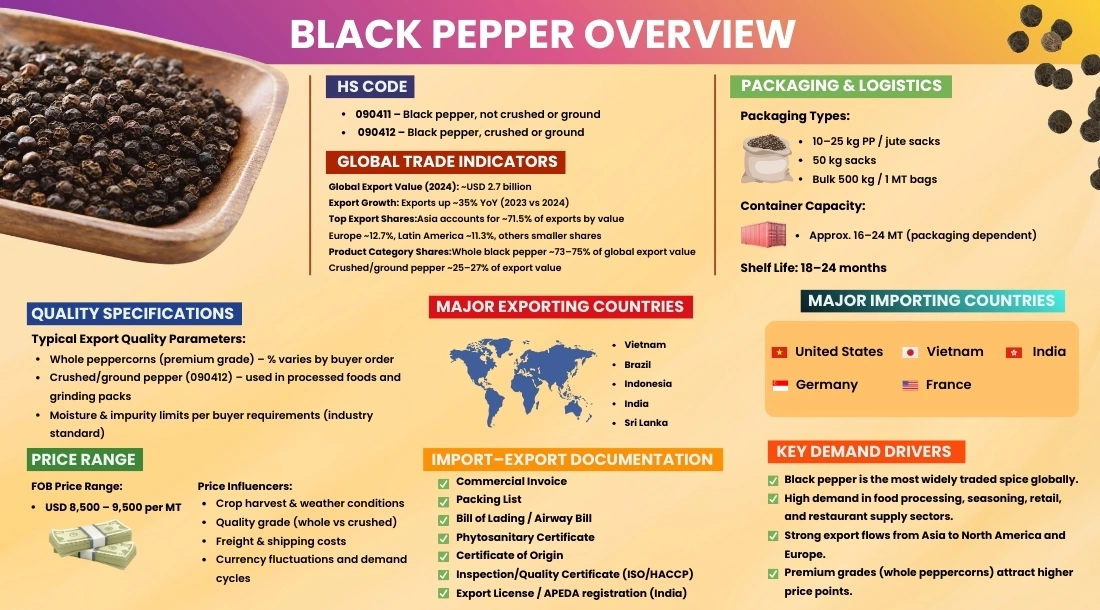
| Indicative Bulk Price Range | Black Pepper price per MT - USD 3,800 - 6,500 per metric ton (depending on origin, grade, and density such as 450-550 g/L) |
| Unit of Trade | USD per metric ton (MT) |
| Export Price Trend | Moderately volatile; influenced by harvest cycles in Vietnam, Brazil, Indonesia, and India |
| Regional Price Differences | Lower in Indonesia, Sri Lanka and Brazil due to large-scale production; higher in India and Sri Lanka for premium origin pepper |
| Premium Segment Pricing | Organic, steam-sterilized, and specialty peppers (Malabar, Tellicherry, Kampot) can exceed USD 7,000 - 9,000 per MT |
| Key Cost Drivers | Crop yield, weather conditions, pepper density grade, processing (steam sterilization), certifications, and logistics |
| Seasonal Impact | Prices tend to fluctuate during harvest cycles and supply shortages in major producing countries |
| Freight Sensitivity | Medium to high, especially for long-distance shipments to Europe, the US, and Middle East spice markets |
Disclaimer: Black Pepper prices per MT are indicative and may vary based on origin, density grade (FAQ, 500 GL, 550 GL), processing level, organic certification, buyer compliance requirements, shipment volume, and global logistics conditions.
| HS Code | Product Category / Meaning |
|---|---|
| 0904 | Pepper of the genus Piper, dried or crushed |
| 0904.11 | Black pepper, neither crushed nor ground |
| 0904.12 | Black pepper, crushed or ground |
| 0904.21 | Pepper of the genus Piper, dried (other forms) |
| 0904.22 | Pepper, crushed or ground (general classification) |
| Tax Classification (India) | Export: Zero-rated under GST (black pepper exporters can claim input tax credit or refund). Domestic trade: typically 5% GST under the spices category depending on product form and packaging. |
When buyers start talking about black pepper shipments, the discussion usually gets practical very quickly. Price is only one part of the picture. Most Black Pepper importers look at a few basic things before they commit to a bulk order.
Quality Parameters
The first thing buyers usually notice is the pepper itself. How the berries look, whether the aroma is strong when the bag opens, and whether the colour appears natural. Moisture is another thing they keep an eye on. If the pepper carries too much moisture, storage can become tricky later.
Size & Density Specifications
In many deals you'll hear buyers mention density numbers. Something like 500 g/l or 550 g/l. Those numbers basically tell the buyer how heavy and mature the peppercorns are. Higher density usually means better flavour, so spice processors tend to prefer it.
Cleaning & Processing Standards
Another thing buyers expect is clean cargo. Dust, broken berries, or unwanted particles inside the bags are not taken lightly. Some buyers even ask whether the pepper has gone through steam sterilization, especially when the spice will be used in food factories.
Testing & Compliance
Lab reports have become fairly common in this trade. Black Pepper importers sometimes ask for pesticide residue reports or basic microbiological checks. It's simply their way of making sure the pepper will pass food safety checks when it reaches the destination market.
Consistency of Supply
And then there is reliability. Once buyers find a supplier who delivers the right quality, they usually prefer to stick with that source. Changing suppliers every shipment rarely works well in spice trade. Consistent supply is what keeps the Black Pepper bulk trade running without disruptions.
Packaging Types
When black pepper moves in international trade, packaging suddenly becomes a bigger deal than most people expect. After all, pepper may be a dry spice, but long sea journeys can still affect its quality if the packing is careless.
In most shipments you'll see pepper packed in jute bags or polypropylene bags , sometimes even multi-layer laminated sacks . The usual packing size is 25 kg or 50 kg bags . That's the format buyers are comfortable handling in bulk.
Some Black Pepper importers go a step further. They ask for inner liners or sealed bags, especially when the cargo is travelling far.
The idea is straightforward really. Keep the moisture away. Protect the aroma. And make sure the pepper reaches the buyer looking and smelling exactly the way it did when it left the warehouse.
Storage & Transport
Black pepper travels mostly through container shipments . Standard dry containers are commonly used for this trade.
But storage conditions still matter. Pepper needs to stay in dry, well-ventilated spaces before loading. Excess humidity can affect quality, and nobody wants that during export shipments.
That's why black pepper exporters usually check moisture levels carefully before dispatching cargo. Once the pepper is properly dried and packed, it handles long sea routes quite well.
Incoterms Used in Black Pepper Trade
In the Black Pepper bulk trade, a few Incoterms show up quite frequently.
In many spice deals, buyers prefer CIF shipments , especially when they Import Bulk Black Pepper for food processing or distribution.
Export Documentation
Every shipment of pepper also travels with a set of documents. Nothing unusual here, but they are essential.
Buyers working with reliable Black Pepper suppliers for import usually check these documents carefully before the shipment is released.
Once everything is in order, the cargo moves smoothly through customs and reaches the buyer's warehouse.
When black pepper starts crossing borders, the conversation quickly moves beyond just quality and price. Paperwork enters the picture. Buyers want to see that the spice meets the safety rules in their country before the shipment even leaves the port.
Mandatory Certifications
In most spice shipments, the first document that shows up is the phytosanitary certificate . It confirms that the pepper has been inspected and is free from pests or plant diseases.
Buyers usually expect a few basic food safety records as well. These simply indicate that the pepper was cleaned, dried, and handled under acceptable conditions before export.
For traders working in the Black Pepper bulk trade , this kind of documentation is already part of normal export preparation.
Optional / Premium Certifications
Then there are the certifications that come up when the buyer happens to be a large food manufacturer.
You'll often hear names like HACCP, ISO 22000, or FSSC during sourcing discussions. Not every importer insists on them, but many food processing companies feel more comfortable when suppliers follow these systems.
Because of that, many Black Pepper suppliers for import maintain these certifications in advance rather than arranging them later.
Region-Specific Compliance
Regulatory expectations also change depending on the destination market.
European buyers usually spend a lot of time checking pesticide residue limits . North American importers tend to focus on food safety documentation and traceability.
In some Middle Eastern markets, Halal certification may also enter the conversation, especially when the pepper is being supplied to food manufacturers.
The process becomes much smoother once exporters clearly understand and become habituated to what each region expects. Buyers start to feel confident about the shipment, and the cargo clears regulatory checks without unnecessary hassles and complications.
The outlook for black pepper looks fairly steady. Nothing too dramatic, but the demand keeps ticking along. The reason is simple. Pepper sits inside a long list of everyday food products, and the global food industry isn't slowing down anytime soon.
Growing Food Processing Industry
Food manufacturers continue to expand their product lines. Snacks, ready meals, seasoning blends, sauces — many of these rely on pepper as a basic flavour ingredient. As food processing grows across Asia, the Middle East, and Africa, the demand for pepper usually follows.
Expansion of Packaged Foods
Packaged food consumption has been rising in many markets. Urban consumers rely more on convenience foods than before. That means more seasoning blends, more processed meals, and naturally more black pepper moving through the supply chain.
Premium and Value-Added Segments
It is worth noting that some buyers are also paying closer attention to premium grades. Tellicherry pepper, steam-sterilised pepper, and residue-compliant supplies are gradually attracting interest from food manufacturers and even re-exporters and most importantly, those who want consistent quality.
Stable Role in Global Spice Trade
Black pepper has been traded internationally for centuries, and that position hasn't really changed. As long as seasoning demand remains strong, the Black Pepper bulk trade is expected to stay active.
Disclaimer: Market data, pricing, availability, and product specifications are indicative and may vary based on season, origin, volume, compliance requirements, logistics, and changing global demand–supply conditions. Final commercial and technical terms are subject to buyer requirements, destination regulations, and mutual agreement at the time of contract.
Get in Touch



Buyers can buy black pepper in bulk in multiple varieties, including:
MG1 (Malabar Garbled) – premium, hand-sorted Indian pepper
TGEB / TGSEB (Tellicherry Grades) – long, dense, highly aromatic grains
Ungarbled / Black Peppercorns – standard bulk pepper for general use
Vietnamese 500GL / 550GL – dense pepper with high oil content
Brazilian B1 / B2 – medium to high-quality pepper from South America
GL (Grams per Liter) measures density and quality. Higher GL indicates better quality pepper with heavier, more uniform berries.
Export-quality black pepper has moisture ≤ 12%, ensuring longer shelf life and resistance to mold.
Moisture: ≤12%
Light berries: ≤2%
Foreign matter: ≤1%
Broken peppercorns: as low as possible
Volatile oil content: ≥4–5% depending on origin
Aroma: strong, pungent, and fresh
25 kg and 50 kg PP woven bags
Jute bags for bulk trade
Vacuum-packed or sealed premium packaging for high-grade pepper
Custom or private-label packaging available
Being a spice, MOQ can be as low as 1–5 metric tons, depending on supplier and origin. Larger shipments of 10–20 MT are common for bulk buyers.
Pricing depends on:
GL density
Broken percentage
Moisture content
Purity and uniformity
Volatile oil content
Quantity, origin, and long-term supply agreements Pricing is generally negotiated live on B2B platforms like Tradologie.com.
Register as a buyer for free
Post your bulk black pepper requirement
Access verified quotations from multiple black pepper suppliers
Compare offers, negotiate live, and finalize deals
Third-party inspection before shipment is mandatory for export-quality compliance
Vietnam – largest exporter, 500GL–550GL grades
India – Malabar, Tellicherry, and MG1 grades
Indonesia – standard black pepper varieties
Brazil – B1/B2 grades
Sri Lanka – medium-quality pepper
USA, Germany, UK, Netherlands, France
Middle East countries like UAE, Saudi Arabia
Japan and other Southeast Asian markets These countries are major bulk black pepper importers.
Irrevocable LC at Sight
Telegraphic Transfer (TT)
Yes, suppliers provide:
Phytosanitary Certificate
Certificate of Origin
Quality reports (SGS, Intertek, or equivalent)
Fumigation certificate (if required by importing country)
Importing black pepper through Tradologie.com is a simple digital procurement process designed for bulk buyers. Importers first register on the platform and submit their requirement with details such as quantity, origin preference, grade, and Incoterms. Verified exporters then participate in the procurement event and submit offers. Buyers can compare multiple quotations, negotiate specifications, and finalize the supplier directly through the platform.
The minimum order quantity for bulk shipments can start from around 5 metric tons, depending on the exporter and packaging requirements. However, many international shipments move in larger volumes such as 15–25 MT or full container loads, as this helps optimize freight costs and logistics efficiency.
No. Tradologie is completely free for importers. Buyers can register, post procurement requirements, and receive quotations from multiple verified exporters without paying platform fees. The platform generally charges a small success fee from exporters after the transaction is successfully completed.
Based on current global spice trade indicators, the Black Pepper price per MT typically ranges between:
USD 3,800 – USD 6,500 per metric ton
The final price depends on several factors such as:
Origin (Vietnam, India, Brazil, Indonesia, etc.)
Density grade (FAQ, 500 GL, 550 GL)
Processing method (sun-dried, steam-sterilized)
Certifications (organic, residue-compliant)
Shipment volume and freight conditions
For accurate and updated quotations, buyers are usually advised to contact the Tradologie sourcing team or initiate a procurement event on the platform.
Yes. Importers can specify detailed requirements such as:
Origin country (Vietnam, India, Brazil, Indonesia, Sri Lanka)
Density grade (500 g/L, 550 g/L, TGSEB, TGEB, FAQ)
Processing type (whole peppercorn, ground pepper, steam-sterilized)
Packaging format (25 kg or 50 kg export bags)
This allows buyers to source black pepper that fits their food processing or distribution needs.
Bulk shipments usually include the following export documentation:
Commercial Invoice
Packing List
Certificate of Origin
Phytosanitary Certificate
Certificate of Analysis (COA)
Fumigation Certificate
Bill of Lading
Third-party inspection report (if required)
These documents help ensure smooth customs clearance and regulatory compliance at the destination port.
Yes. Buyers can request third-party inspection agencies such as SGS, Intertek, or Bureau Veritas to verify parameters like moisture, density, cleanliness, and microbiological compliance before shipment. This is a common practice in the international spice trade.
Bulk black pepper buyers commonly include:
Spice blending companies
Food processing manufacturers
Seasoning and snack producers
Restaurant and HORECA supply chains
Global spice trading companies
These industries rely on consistent large-volume supply, which is why many prefer to buy Black Pepper in bulk through structured sourcing platforms.
Buyers look for:
Moisture ≤12%
Light berries ≤2%
Broken peppercorns minimal
Foreign matter ≤1%
Strong pungent aroma and high volatile oil
Cleaned and sieved to remove foreign matter
Graded based on density (GL), size, and quality
Machine-sorted or hand-sorted for premium grades
Properly dried to maintain ≤12% moisture
Yes. Mandatory third-party inspection (SGS, Intertek, TUV, etc.) ensures quality, builds trust, and facilitates smooth export.
Register as a supplier and exhibit your black pepper products
Provide grade, GL, moisture, and broken %
Connect with verified bulk black pepper importers
Participate in live negotiation
Submit mandatory third-party inspection reports before shipment
Share all necessary export documents digitally
For spices like black pepper, MOQ can be 1–5 metric tons, and smaller shipments below 5 MT are also entertained depending on buyer requirements.
For commodities like wheat, sugar, pulses, rice, and other bulk grains, Tradologie.com generally.
Pricing is influenced by:
GL density
Moisture and broken %
Purity and uniformity
Volatile oil content
Packaging type and shipment volume
Long-term contracts or spot orders Pricing is negotiated live on B2B platforms like Tradologie.com
USA, Germany, UK, Netherlands, France
UAE, Saudi Arabia, and other Middle Eastern countries
Japan, South Korea, and Southeast Asia
Phytosanitary Certificate
Certificate of Origin (COO)
Quality inspection reports (SGS/Intertek)
Fumigation Certificate if required
Buyers prefer uniform grades, but mixed containers can be offered if packaged separately
Private label and custom packaging for premium buyers are widely accepted
Fast responses (within hours) significantly increase conversion rates and order confirmations