Key Highlights
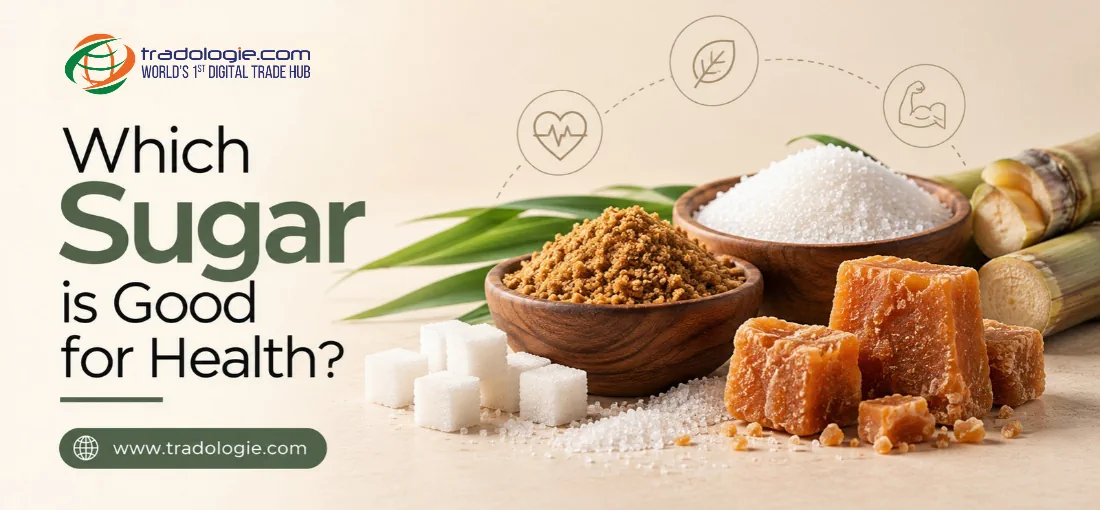
- If you want to know which sugar is good for health , compare white sugar, brown sugar, jaggery, honey and coconut sugar based on their nutritional properties, flavour and overall sugar content.
- Understand that brown sugar offers little nutritional advantage over white sugar, while jaggery may contain modest amounts of minerals depending on its ingredients and manufacturing process.
- Remember that honey contains free sugars, and coconut sugar remains a significant source of sugar despite its different flavour and composition.
- Follow the World Health Organization's guidance to keep free sugars below 10% of daily energy intake, with a further reduction to below 5% offering additional health benefits.
- Choose sweeteners according to their intended use, whether for tea and coffee, traditional Indian recipes, dressings or baking, rather than assuming that a natural alternative is automatically healthier.
- If you want to improve your sugar intake, focus on reducing added sweetness, limiting sugary drinks and desserts, and checking for hidden sugars in processed foods.
Introduction
Many people look to determine the healthiest sugar to use in their tea, coffee or homemade desserts. Many wonder whether natural jaggery is a healthier alternative to white sugar, whilst others are wondering if honey should be incorporated as part of a healthy diet. Although, there is no definitive answer to these questions. All of these different sweeteners have varying properties, however they are all still an unhealthy addition to our diets.
An effective way to approach this is to examine the benefits offered by each sweetener and understand how much sugar we are consuming.
This informative blog piece will tell you which sugar is good for health.

Types of Sugar in The Global Markets
Whilst these are all sources of energy they generally do not contribute much in terms of nutritional value. Let's take a look at 5 popular types:
| Type | Key Features | Health Considerations |
|---|---|---|
| White Sugar | Highly refined source of sucrose | Provides energy but has negligible micronutrient content |
| Brown Sugar | Contains molasses | Very similar to white sugar in terms of nutritional value |
| Jaggery (Gur) | Natural sweetener made from cane or palm | May provide modest amounts of minerals due to being less refined. |
| Honey | Contains glucose, fructose and other compounds | Contributes free sugars |
| Coconut Sugar | Made from sap of the coconut palm tree | Still a significant source of sugar. |
1. White Sugar - Is Refined Sugar Bad?
When determining which sugar is good for health , the white sugar is often criticised as it is highly refined (molasses and most natural minerals removed), this doesn't necessarily mean it is unhealthy to consume.
It's important to consider how much you're consuming. A small amount in your tea is not a concern but consuming high amounts regularly from soft drinks, sweets, desserts and processed foods can be.
White sugar also has some advantages such as rapid dissolution and consistency when cooking. For the majority of people there wouldn't be much of a nutritional justification to switch to a higher-priced version of sugar unless there was a reduction in overall sugar intake.

2. Brown Sugar - Is it Healthier?
Brown sugar contains molasses, giving it a darker colour and distinctive flavour. Whilst molasses does contain modest amounts of minerals, brown sugar is very similar to white sugar in terms of nutritional value.
As it contains high amounts of sucrose it can be a suitable choice in baking, sauces and desserts.
3. Jaggery - Popular in India
Jaggery has long been a popular sweetener in Indian cooking. It can be found in chikki, laddoos, traditional sweet treats and regular recipes. As it is less refined it may contain modest amounts of minerals.
However, the quantity will depend on the raw ingredients and how it is manufactured. This means that regular amounts won't necessarily provide you with a consistent intake of minerals.
It is still a significant source of sugar and calories. Switching from white sugar to the same amount of jaggery won't eliminate any concerns around excessive sugar intake.
Use it for the flavour and variety it offers.
4. Honey
Honey contains glucose, fructose and modest amounts of other compounds. It also has a distinctive flavour making it useful in dressings, marinades and certain drinks.
However, the World Health Organisation (WHO) classifies honey as containing free sugars. This means that it isn't exempt from guidelines around sugar intake.
Honey can be part of a healthy, balanced diet. However, adding it to a sugary drink won't make it healthier.
5. Coconut Sugar - Is it a Healthier Option?
Coconut sugar is made from the sap of the coconut palm tree, it has a caramel-like flavour. Depending on how it is processed it may contain modest amounts of minerals.
However, it is still a significant source of sugars. Be cautious around claims that it has a lower glycaemic effect. Don’t consider it a low-sugar option.
For the majority of people it is best to consider it another alternative in cooking.
How Much Sugar Should We Consume?
Rather than constantly searching for the healthiest sugar to consume, it can help to start by examining the guidelines.
According to the WHO guidelines we should aim to keep free sugars to less than 10% of our total daily energy intake. We can aim to reduce this to less than 5% for additional health benefits.
This would equate to:
| Total Daily Energy Intake from Free Sugars | Amount of Sugar |
|---|---|
| Less than 10% of total energy intake | 50g |
| Less than 5% of total energy intake | 25g |
For someone consuming 2000 calories per day.
Note that this is a guideline and free sugars include added sugars in cooking/manufacturing, plus sugars naturally present in honey, syrups and fruit juices.
Sugars from whole fruits will not count as they remain part of the natural structure of the fruit.
Cutting back on sugary drinks, limiting frequent desserts and gradually reducing how much you put in your tea/coffee can be more beneficial.
Which Sugar is Good For Health?
This will depend on your personal preferences and requirements. However the general rule is to consume it in moderation.
- Tea/Coffee - Add a little white sugar. Brown sugar can be used for a different flavour but there won't be much of a nutritional advantage.
- Traditional Indian Recipes - Jaggery will work well.
- Dressings - Honey can impart flavour but will count as free sugars.
- Baking - Use whichever sweetener will deliver the right flavour and texture.
- Reducing sugar intake - Gradually reduce the amount you use. Be mindful of hidden sugars in processed foods.
Those with diabetes shouldn't assume that jaggery, honey or coconut sugar are healthier alternatives to white sugar. They will all contribute sugars/carbohydrates and you should follow individual dietary advice.
Global View - Which Sugars are Traded the Most?
Sugar is also a major global commodity. From agricultural producers to food manufacturers, refineries and consumers.
According to the World Bank data (accessed via World Integrated Trade Solution (WITS)) conventional sugars are traded globally:
The following categories apply to these sugars:
| HS Code | Product Category |
|---|---|
| 1701 | Cane or beet sugar; chemically pure sucrose, in solid form |
| 1702 | Other sugars, including glucose, fructose and sugar syrups |
| 1703 | Molasses obtained from sugar |
According to WITS the leading exporting countries for HS 1701 in 2023 were:
| Country | Value |
|---|---|
| Brazil | US$15.75 Billion |
| India | US$3.72 Billion |
| Thailand | US$3.49 Billion |
This illustrates how conventional cane and beet sugars are the principal sugars traded globally. In 2023 India exported 6.53 Billion Kilograms under HS 1701.
However, this doesn't distinguish white sugar, brown sugar, jaggery and coconut sugar as separate options for consumers. It represents cane or beet sugar/chemically pure sucrose in solid form. Therefore it would be misleading to claim that one of these options is the most traded sweetener in the world.
This data provides insight into supply and demand.
The Healthiest Option May Be to Reduce Your Intake
Whilst using a sweetener won't diminish all the enjoyment of your diet, traditional sweets can be savoured, desserts can be enjoyed occasionally and a small amount in your tea can be enjoyed as part of a balanced diet.
However, if you're regularly adding extra sweetness it can become a concern.
If you like using jaggery then great, use it for the flavour. If you're using honey in a recipe then use it! If you find white sugar works best in your tea then there's no point switching to a more expensive alternative.
Ultimately the healthiest sugar to use will depend on your overall diet and how much you are consuming. It won't be a special type of sugar that allows you to consume excessive amounts.
For the majority of people it will be best to use the sugar they prefer in moderation as part of a balanced diet. Sometimes the most effective step is to gradually learn to use less.
Disclaimer
This article provides general nutritional information and is not a substitute for personalised medical or dietary advice. Individual requirements may vary, particularly for people with diabetes or other health conditions. Consult a qualified healthcare professional for advice suited to your circumstances. Nutritional guidelines and trade statistics should be checked against the latest available sources.