Key Highlights
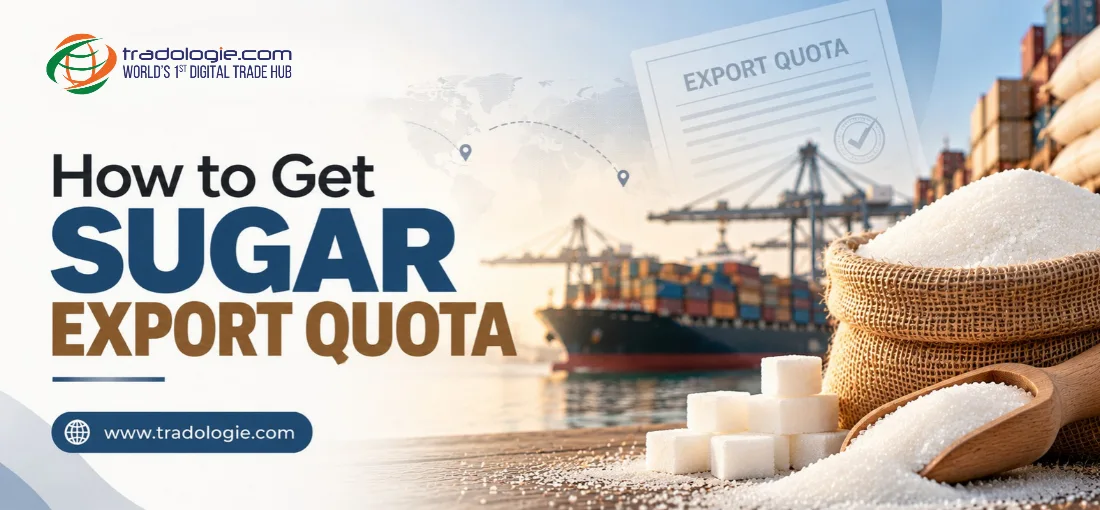
- If you want to know how to get sugar export quota in India, start by checking the latest DGFT export policy and whether an applicable quota allocation is open for your proposed shipment.
- Identify whether your export falls under a general sugar allocation for eligible mills or a destination-specific quota, such as an EU tariff-rate quota (TRQ).
- Check the latest Department of Food and Public Distribution (DFPD) and DGFT notifications for eligibility, application deadlines, permitted quantities and shipment conditions.
- If you are a merchant exporter, confirm how the supplying mill's allocation applies to your transaction before committing to an overseas order.
- Once the required allocation is confirmed, prepare the applicable export documents, including the commercial invoice, packing list, shipping bill and any quota-specific certificates.
- Before finalising the deal, verify the shipment deadline, sugar availability, logistics costs, buyer credentials and payment terms.
Introduction:
Having a sugar buyer overseas is one thing; getting the shipment cleared for export is another. In India, sugar exports are subject to government policy, and the availability of an export quota can determine whether a proposed deal can go ahead. For businesses researching how to get sugar export quota, the first step is to check whether exports are permitted under the current policy and whether an applicable allocation is open.
The procedure depends on the type of export. General allocations may be issued to eligible sugar mills for a particular season, while separate quotas apply to certain destinations, including the European Union. Knowing which route applies will help you avoid preparing the wrong application or committing to a shipment that cannot proceed.
Keep reading this informative piece of blog on how to get sugar export quota in India.
India's Sugar Export Quota: What You Need to Know
The government regulates sugar exports partly to manage domestic availability and prices. Export permissions and allocations can change from one sugar season to another, so a quota granted previously does not guarantee eligibility in the current season.
During the 2025–26 sugar season, the Department of Food and Public Distribution (DFPD) issued mill-wise export allocations and later announced additional allocations and reallocations.
A separate arrangement applies to some destination-specific exports. For example, DGFT Public Notice No. 32/2026–27, dated 9 October 2026, covered 5,841 metric tonnes of sugar for export to the European Union under its tariff-rate quota (TRQ) for October 2026 to September 2027.

Before applying, establish which category fits your shipment:
- General sugar export allocation: Check whether the government has announced an allocation for eligible sugar mills.
- Destination-specific quota: Check the separate rules for the relevant market, such as the EU or US quota arrangements.
- No applicable permission or allocation: Do not assume that a buyer's order allows the shipment to proceed.
Who Can Apply for Sugar Export Quota?
Eligibility depends on the government notification governing the allocation.
For general allocations, the government may invite eligible sugar mills to express their willingness to export or assign quantities to individual mills. A merchant exporter purchasing sugar from a mill should not assume that the mill's allocation automatically gives the trader an independent right to export.
If you operate as a merchant exporter, clarify the arrangement with your supplying mill before negotiating a firm shipment commitment. If you are applying under a destination-specific quota, check that scheme's eligibility conditions separately.
An Importer Exporter Code (IEC), a registered business and a confirmed overseas buyer are not substitutes for the required export permission.
How to Apply for Sugar Export Quota in India
The process of getting sugar export quota in India begins with the latest government notification. There is no single application procedure that applies to every sugar export scheme.
Step 1: Check the Current Export Policy
Visit the Directorate General of Foreign Trade (DGFT) website and check the export policy for the relevant sugar category under Chapter 17 of the ITC (HS) classification.
Look for:
- The current policy status of the product
- Any restrictions or exceptions
- The effective dates of the notification
- Conditions governing the relevant quota
For example, DGFT Notification No. 6/2026–27, dated 13 May 2026, restricted exports of specified sugar categories until 30 September 2026 or until further orders, whichever was earlier, subject to exceptions for prescribed EU and US quota arrangements.
That notification is historical context, not confirmation of today's policy. Check for subsequent orders before proceeding.
Step 2: Find an Active Quota Notification
Check DFPD notices for general sugar export allocations and DGFT public notices for destination-specific quota arrangements.
Read the full notification and confirm:
- Who is eligible to apply
- How much sugar is available for allocation
- Whether applications are open
- The application deadline
- The permitted destination and shipment period
An old allocation notice may remain online even after its application window has closed.
Step 3: Prepare and Submit Your Application
The required information depends on the scheme. The notification may ask for details of the sugar mill or exporting entity, the proposed quantity, product classification, supporting declarations and other particulars.
Follow the prescribed procedure carefully. If eligible mills are invited to express their willingness to export, use the specified format. If a formal application is required, submit it through the designated route.
Keep the submission acknowledgement and respond promptly if the authority requests additional information.
Step 4: Confirm the Allocation
Submitting an application does not guarantee approval. The authority decides the allocation under the applicable rules and within the available quantity.
If approved, check the following before planning the shipment:
- Name of the eligible entity
- Quantity allocated
- Validity period
- Permitted destination, where applicable
- Shipment and reporting conditions
If you are a merchant exporter working with a mill, clarify how the allocation applies to your transaction before making a firm delivery commitment.

Step 5: Complete Export Documentation
Once the required permission or allocation is confirmed, arrange the documentation applicable to the shipment.
Depending on the transaction, this may include:
- Commercial invoice and packing list
- Shipping bill and bill of lading
- Certificate of origin, where required
- Quality or other certificates required by the buyer or destination
- Documents prescribed under the relevant quota arrangement
For EU quota shipments, follow the certificate-of-origin and other requirements specified in the applicable DGFT notice. Do not assume that the documentation for a general export shipment will satisfy a special quota arrangement.
Sugar Export Quota Allocation Process in India
The sugar export quota allocation process in India depends on the particular scheme, but the main stages are straightforward:
- Government notification: The applicable export policy and quota conditions are announced.
- Application or expression of willingness: Eligible entities submit the required information within the prescribed period.
- Assessment: The authority considers eligibility and the quantity available.
- Allocation: Approved applicants receive the permitted quantity and conditions.
- Shipment: The allocated sugar is exported within the applicable deadline, with the required documents and reporting.
The 2025–26 season showed that allocations can change through additional allocations and reallocations. Exporters should therefore monitor subsequent notices rather than rely solely on an initial announcement.
A destination-specific TRQ follows its own conditions. An EU allocation cannot be treated as general permission to export sugar to any country.
Before Confirming an Overseas Sugar Order
Quota approval is only one part of the transaction. The price, delivery schedule and buyer's requirements still need to make commercial sense.
Before confirming an order, check these points:
- Supply: Can your mill or supplier provide the required quantity and quality?
- Permission: Is the proposed export allowed under the current policy?
- Quota: Is the required allocation available and applicable to your transaction?
- Delivery: Can the shipment meet the allocation deadline?
- Costs: Have you accounted for procurement, transport, handling, freight and insurance?
- Payment: Have you checked the buyer's credentials and agreed on payment terms?
These checks are particularly important when working with a merchant exporter and a supplying mill. Agree on who is responsible for the allocation, documentation and shipment conditions before the order is finalised.
Conclusion
Getting a sugar export quota in India starts with checking the current policy and identifying the allocation that applies to the proposed shipment. General allocations for eligible mills and destination-specific quotas follow different procedures, so exporters need to establish the correct route before applying.
For businesses looking into how to apply for sugar export quota in India, the key details are eligibility, application deadlines, available quantities and the conditions attached to approval. These can change between seasons.
Check the latest DFPD and DGFT notices, confirm that the export is permitted and secure the required allocation before committing to shipment. A little verification at the beginning can prevent costly problems later.
Disclaimer
Sugar export policies, quota allocations, eligibility conditions and application deadlines may change between sugar seasons. General allocations and destination-specific quotas follow different rules. Exporters should verify the latest DGFT and DFPD notifications and confirm the applicable requirements with the relevant authorities before applying for a quota or committing to an overseas shipment.