What is a product distributorship, and how do you get one?
A distributorship gives a business the legal right to buy, store, and resell goods in a specific area. This applies to bulk farm products and fast-moving consumer goods (FMCG). To get one, you must submit a formal application. You can apply online through a brand's website. You can also apply offline by contacting regional sales teams. You will need to show proof of money, warehouse space, and import licenses. The approval process takes 3 to 6 weeks. During this time, you will agree on your sales territory (exclusive or non-exclusive). Once approved, you take on the financial risk. You will manage the global shipping and sell the goods locally.
1. How Distributors Actually Get Contracts
People rarely get bulk trade contracts by just making a quick phone call. Big manufacturers actively look for very capable partners. They want distributors who can handle huge volumes and high financial risks.
The real way to win a contract is to prove your supply chain strength. Brands do not just want good salespeople. They want established logistics networks. Exporters will choose you if you have a solid track record. You must prove you can move thousands of tons of cargo. You also need to show that you can clear complex customs rules without delays.
2. What You Need to Qualify
Bulk trade takes a massive amount of money. Brands will reject your application immediately if you lack the right setup. You must meet a few strict rules before you even contact a supplier.
Basic Requirements:
- Strong Finances: You must be able to open multi-million-dollar Letters of Credit (LCs). This should not hurt your daily cash flow.
- Large Warehouses: You need to own or lease large storage spaces. If you handle meat or FMCG products, you must have verified cold storage.
- Delivery Trucks: You need your own commercial trucks or solid contracts with delivery companies. This is vital for breaking down big shipments and making local deliveries.
- Legal Knowledge: You must have good relationships with local food safety teams and customs agents. This ensures your goods do not get stuck at the port.
3. Exact Documents You Need to Register
Paperwork is heavy in bulk trade. Get these documents ready before you apply. Having them organized will speed up your approval time.
- Business Proof: Your official company registration or incorporation certificate.
- Tax Numbers: Valid tax certificates (like GST or VAT) and an Importer-Exporter Code (IEC).
- Bank Records: Audited bank statements from the last 2 to 3 years. You also need a letter of good standing from your main bank.
- Space Proof: Lease agreements or ownership papers for your warehouses.
- Health Licenses: Any required safety and food handling licenses (like FSSAI in India or the FDA in the US).
- Company Profile: A file showing your current brand partners, your delivery reach, and your yearly revenue.
4. How to Apply (Online vs. Offline)
The way you apply depends entirely on the company. Modern brands prefer websites. Traditional mills often prefer face-to-face meetings.
The Online Application Process
Digitized exporters use online portals to filter out bad applications fast.
- Find the Portal: Go to the target company’s website. Look for a page that says "Partner With Us" or "Distributorship."
- Fill Out the Form: Enter your details. Make sure to highlight your warehouse size, your budget, and the area you want to cover.
- Upload Your Files:Attach digital copies of your bank records and legal licenses.
- Wait for Screening: The company's system will review your data. You should get an email or a call within 5 to 7 business days.
The Offline Application Process
For raw farm materials, offline deals are still the normal standard.
- Find the Contact: Look up the regional sales manager. You can find them at trade shows or by calling the main office.
- Send a Proposal: Write a formal Letter of Intent (LOI). Explain why you want to partner. Attach your business profile and mail it directly to them.
- Pass the Inspection: The exporter will likely send someone to visit you. They will check your warehouses and cold storage in person.
- Meet to Negotiate: You will sit down together to finalize the exact prices and delivery areas.
5. Approval Timeline and Choosing Your Territory
Getting a final contract takes time. You should expect the whole process to take 3 to 6 weeks.
The most important part of this time is agreeing on your sales area. This is called territory allocation. Your contract will use one of these three models:
| Type of Territory | What It Means | Best Used For | Result for the Distributor |
|---|---|---|---|
| Exclusive | You are the only person allowed to sell the product in a set area. | Rare farm goods or expensive machines. | You get total control and the highest profit margins. |
| Selective | A few chosen sellers are allowed in an area. | Premium goods like organic rice or high-grade poultry. | Keeps the brand looking premium but allows more sales. |
| Non-Exclusive | Many sellers can sell the exact same product in your area. | Fast-moving goods (FMCG) like bulk sugar or snacks. | Profits per item are very low. You must sell massive amounts to make money. |
6. Understanding Global Trade Rules and Payments
Once you start working as a distributor, the job gets highly technical. You must manage global shipping and massive bank transfers every day.
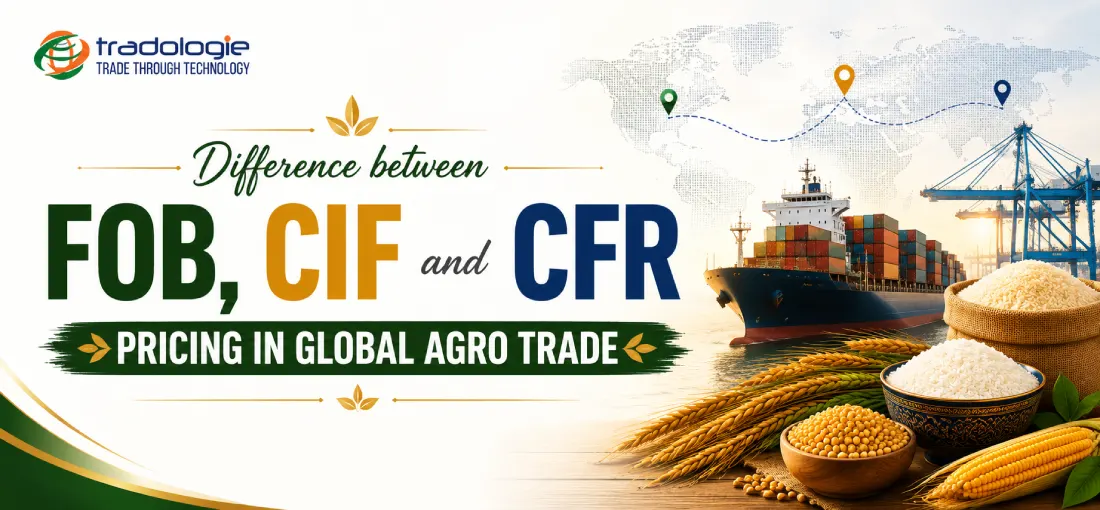
Rules of Shipping (Incoterms)
You never just "ship" a bulk order. You have to agree on exactly when the risk shifts from the seller to the buyer. We use global rules called Incoterms for this.
- FOB (Free On Board): You (the buyer) pay for the shipping ship. You also take on the risk the moment the goods are put on the ship. Big buyers like this because they can control the shipping costs.
- CIF (Cost, Insurance, and Freight): The seller pays for the shipping to your port. The risk still transfers when the goods are loaded. New exporters use this to show buyers a simple, final price.
Note: The United Nations Conference on Trade and Development (UNCTAD) states that ships move over 80% of all global trade. This makes sea shipping your biggest daily challenge.
Keeping Huge Payments Safe
You cannot use simple credit cards for 5,000 tons of cargo. You must use formal banking tools to keep the money safe.
The International Chamber of Commerce (ICC) reports that Letters of Credit (LCs) cover roughly 10% to 15% of all world trade. This is the safest method. A bank steps in and guarantees the seller will get paid if the shipping papers are correct. Another option is Documentary Collections (DP/DA). Here, the bank simply holds the shipping papers until you make your payment.
7. Finding Suppliers: Traditional Ways vs. Tradologie.com (Apply Online)
As a distributor, you must decide how to buy your goods. The old way of buying is very slow and hard to see clearly.
In traditional networks, every broker adds a fee. This often raises your final cost by 3% to 10%. Furthermore, the World Trade Organization (WTO) notes that strict health rules affect over 60% of global farm trade. This adds even more costs for third-party checks.
Digital platforms fix these old problems. Platforms like Tradologie.com completely remove the middleman.
- Live Prices: You stop waiting for phone quotes. You use a live bidding system to see real prices
- No Extra Fees: You connect directly with global mills. You do not pay any middleman markups.
- Safe Sellers: Everyone on the platform is checked. This lowers your risk of bad deals or failed health checks.
Distributors usually make very small profits, often just 2% to 5% per item. Using digital platforms helps you protect that small profit by showing you the true cost of goods.
[ Register as a Buyer on Tradologie ] | [ Register as a Seller on Tradologie ]





.webp "Shipping Cost Breakdown for Agro Exports")