Key Highlights
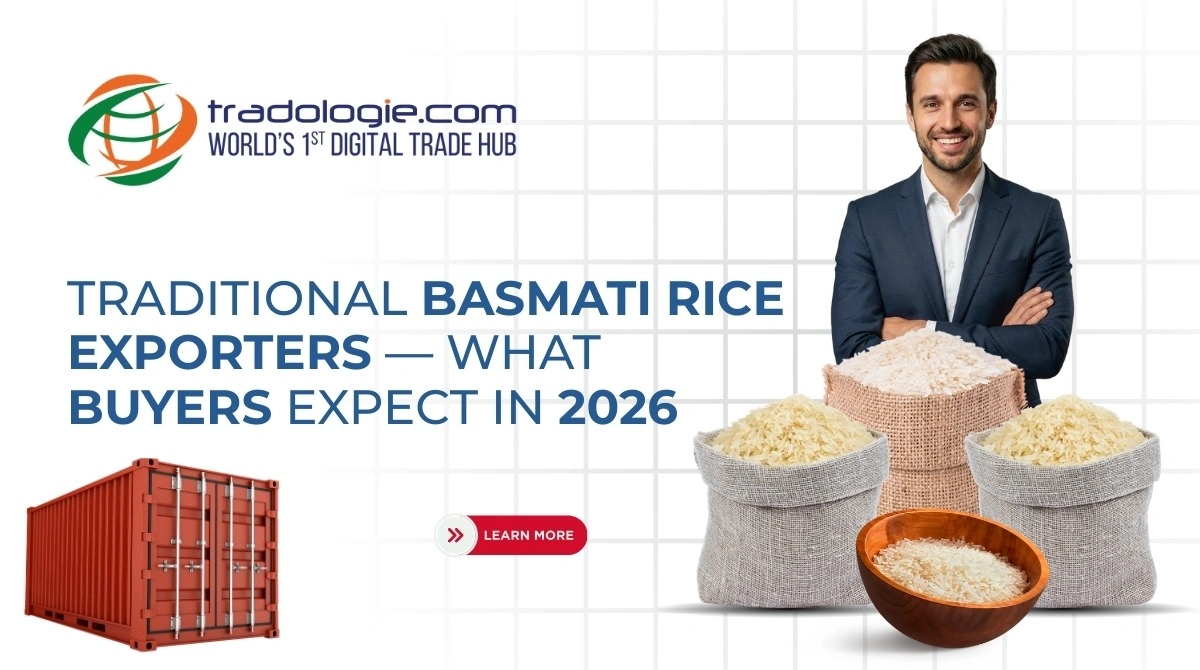
- India remains the world’s leading exporter of Traditional Basmati Rice, supplying over 4.9 million tonnes to global markets in 2023–24.
- Global buyers in 2026 demand a premium experience—quick competitive offers, multilingual communication, customised packaging, and flexible payment terms (LC/TT).
- Quality consistency is the top priority, with buyers expecting uniform grain length, aroma stability, predictable cooking performance, and strict defect control across every shipment.
- Speed and efficiency matter, with buyers seeking shorter lead times, transparent documentation, and reliable logistics for consistent turnaround.
- One-stop sourcing is preferred, with importers expecting exporters to offer multiple Basmati varieties, value-added options, and strong service capability for long-term partnerships.
Introduction:
Ask any international rice importer which country's name comes to his mind immediately when talking about Basmati rice, he would definitely say India. This is because of the enormous volume, vast variety, and impeccable quality India possesses in Basmati rice exports is far beyond that of Pakistan. India boldly and firmly stands as the single largest basmati rice exporter to all the key markets across the Middle East, Europe, North America, and the entire Asia.
During FY 2023–24, India exported more than 4.9 million tonnes of Basmati Rice to international buyers, which reaffirms its unchallenged leadership in the global aromatic rice grain categories. As global demand grows and premiumisation accelerates across foodservice, retail, and private-label segments, 2026 is expected to redefine sourcing standards and expectations from B2B Bulk Basmati Rice Buyers worldwide.
However, despite all of this, the global trade environment is changing rapidly. The Basmati Rice buyers globally expect more than just order-full fulfilment, they want a premium procurement experience.
Premiumisation Is Redefining Basmati Rice Procurement
As we all know, traditional Basmati rice is not just a simple rice grain in the global rice market; it is treated as a highly premium rice commodity for HORECA because of its high aroma and long grains. Retailers, distributors and modern trade chains increasingly look for high aroma retention, slender grains, consistent elongation, and superior cooking texture.
This shift toward premiumisation means basmati rice buyers expect exporters to demonstrate:
- Credible crop traceability
- Consistency across batches and shipments
- High-grade ageing standards (12–24 months)
- Advanced processing: polishing, sorting, grading, de-stoning, and metal detection
Basmati rice importers want suppliers who can align with global quality benchmarks, maintain replication across multiple shipments, and guarantee reliability at scale.
Competitive and Quick Offers: Speed Is Now a Differentiator
Our life is becoming faster and that is the harsh reality. And the 2026 era is also no different. The buyers expect instant competitive quotes and quick order processing.The quick turnaround time for quotations, important documentations related to trade, and efficient logistics are not just an option but an indispensable reality of trade. They are a part of the premium experience the buyers get.
Global buyers expect exporters to provide:
- Same-day or next-day pricing
- Clear breakup of FOB/CIF/Ex-Work quotations
- Visibility on freight, insurance, and destination-port requirements
- Transparent policy on moisture, broken percentage, and grading
Speed builds trust. And trust is currency in B2B commodity trade.
Multilingual Communication: Speaking the Buyer’s Language
International buyers increasingly expect exporters to adapt communication styles to their language and culture. Whether dealing with Arabic-speaking Middle Eastern markets, French-speaking African hubs, or English-speaking institutional buyers, language customisation demonstrates professionalism.
In 2026, the exporters, who are able to provide multilingual support to the international importers, enjoy a competitive edge in terms of the experience they provide to the customers. Having a team that can easily communicate in Arabic and its different variations spoken in different Gulf countries always provides an advantage in terms of boosting business sales.
Customised Packaging: The New Norm for Global Retail and HORECA
Buyers today do not want standardisation; they want customisation.
Exporters who can provide flexible packaging options will gain a clear edge.
Common expectations include:
- Private-label packaging for retail chains
- B2B bulk packs (10 kg, 20 kg, 25 kg, 40 kg, 50 kg)
- Foodservice packs with moisture barriers and durable sacks
- Eco-friendly or recyclable materials to meet regional compliance
Being able to support both bulk shipments and branded packs makes an exporter more attractive across diverse buyer categories—from supermarkets to hotels to institutional caterers.
Flexible Payment Structures: LC and Telegraphic Transfer
Global buyers expect suppliers to be adaptable and secure in their payment offerings. In Basmati Rice trade, the preferred payment modes remain:
- Irrevocable Letter of Credit (LC)
- Telegraphic Transfer (TT)
Basmati rice exporters who demonstrate flexibility while maintaining financial discipline are viewed as trustworthy. Buyers also appreciate exporters who have the capability to manage:
- Trade credit insurance
- LC amendments and structured settlements
- Clear INCOTERM compliance
Financial transparency instills confidence and strengthens long-term trade relationships.
Quality Consistency: The Most Critical Expectation for 2026
Buyers repeat orders only when quality is stable.
Consistency expectations include:
- Grain length uniformity
- Same cooking performance across batches
- Stable aroma and flavour profile
- Low foreign matter and defect levels
- Steady moisture content
- Reduced variance in ageing grades
Traditional Basmati is a premium category, and even minor inconsistencies can disrupt retail offerings or foodservice experiences. Exporters who maintain predictable quality will lead the market.
Shorter Lead Times and Efficient Logistics
In a world of rising freight volatility and global supply chain disruptions, importers expect exporters to offer:
- Shorter processing and shipment lead times
- Accurate delivery schedules
- Coordination with international freight partners
- Real-time visibility on order movement
Speed, transparency, and predictability in logistics directly influence procurement decisions.
Variety and One-Stop Sourcing: Buyers Want a Full Portfolio
Buyers increasingly prefer dealing with a single integrated supplier who can provide all major Basmati varieties:
Being a one-stop sourcing partner reduces the buyer’s workload and builds deeper partnerships.
Conclusion: The 2026 Export Landscape Rewards Value, Not Just Pricing
In conclusion, India remains the largest and undisputed leader in the global Basmati rice market. But as we are moving toward 2026, customers are becoming more advanced and conscious. They don’t just want to procure a rice commodity; rather, they want a seamless procurement experience. Right from receiving price quotations to the final logistics and delivery. They want everything to be smooth, transparent, and efficient. This is why basmati rice exporters must bring a strong differentiation factor to the table and not just quality commodities.
.webp "Sustainable Rice Farming Practices: Benefits & Guide")