Rice production is an important part of India’s economy. The country is also known as the “Rice Bowl of the World,” as it is one of the largest producers of rice, commanding more than 40% of the global exports. India, as a leading Basmati rice exporter, has a significant impact on the global rice market.

Let us try to understand the different varieties of rice cultivated in India and the nation’s contribution to global rice trade due to high demands from top rice importing nations.
There are 3 main categories of rice in India:
-
Basmati rice
-
Non-Basmati rice
-
Specialty rice
Within these categories, India cultivates more than 6000 varieties.
Rice Varieties in India: A Brief Overview
There are more than 6,000 rice varieties grown in India, each with its own distinctive aroma, texture, and flavour. As per the latest data from 2024, India has become the world's largest exporter and consumer of rice, producing about 130 million metric tons.
The major varieties of rice can be broadly classified into basmati and non-basmati rice. Within these categories, there are many regional and specialty varieties, each with unique properties suited to specific dishes and preferences.
Let us know in detail about the different varieties grown in India.
1. Basmati Rice:
Basmati rice is a premium variety known for its long grains, aromatic fragrance, and soft texture. We know that India is the largest exporter of basmati rice, catering to the high global demand, especially from the Middle East (countries like Saudi Arabia, UAE, Iran, Iraq, and Kuwait are the largest importers), Europe (UK, Germany, and France import basmati rice for both retail consumption and restaurant use), Africa (Nigeria, South Africa, and Kenya), and the USA, etc. Valued for its aroma and long grains, basmati rice is used to make dishes such as biryani, pilaf, and many savoury dishes. Basmati rice is becoming highly sought after for its unique taste and quality, making it a major player in the international rice market. Its main types include the following:
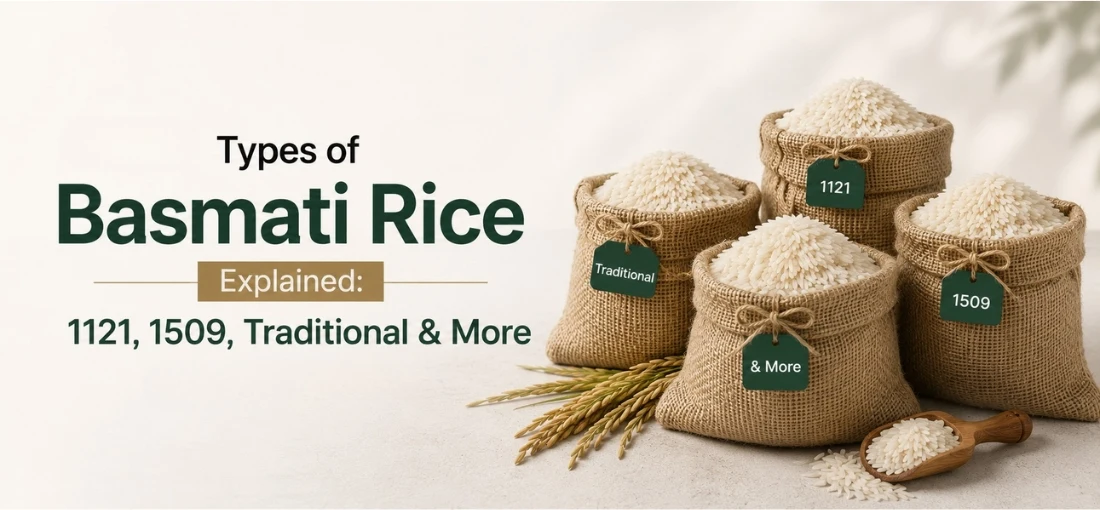
- Traditional Basmati: it is known for its rich aroma and delicate flavor.
- Pusa Basmati: this hybrid variety with extra-long grains.
- 1121 Basmati rice (Creamy, Golden Sella & Steam): The world's longest grain rice, ideal for biryani.
- 1509 Basmati: this high-yielding variety that has gained popularity for its quality and aroma.
- Sharbati Basmati: premium, aromatic rice with delicate texture.
- Sugandha Basmati: Fragrant, flavorful rice for everyday meals.
And many more.

2. Non-Basmati Rice:
Non-Basmati rice includes a variety of short, medium and long grain varieties grown across India’s geography. These rice grains are consumed as a staple food by millions of people and are exported to high demand countries such as Africa (Nigeria, Kenya, South Africa), Middle East (Saudi Arabia, UAE), South East Asia (Bangladesh, Thailand) and Europe (Italy, Spain). Non-Basmati rice is popular due to its affordable price and versatility, making it a major player in the global rice markets. Its best types include:
- IR36 and IR64 (Raw & Parboiled): highly productive varieties produced mainly for the home and export markets.
- Long Grain Rice (Raw & Parboiled): Versatile, non-sticky rice with elongated grains.
- Swarna Rice (Raw & Parboiled): Affordable, soft-textured rice for daily consumption.
- Sona Masoori (Raw & Parboiled): Light, aromatic, used in most South Indian recipes
- PR-11 rice (Raw & Parboiled): Economical, long-grain rice for staple use.
- 100% Broken Rice (Raw & Parboiled): Affordable, quick-cooking option for diverse dishes.
And more.
Cultivation Regions and Diversity
The variability in rice varieties is largely because of India's varying geography.
- Northern Plains: Famous for quality Basmati rice.
- South: Sona Masoori, Ponni, and Matta are a major rice.
- Eastern States: Known for the fragrant Gobindobhog and nutritious red rice.
- Northeastern States: Known for exotic varieties such as black rice and sticky rice.
Factors Influencing Rice Export from India
India's rice exports are impacted by domestic policies, global market dynamics, and environmental factors. In 2023, India imposed a ban on the export of non-basmati white rice to stabilize local markets, but the ban was lifted by September 2024, with a minimum export price of $490/tonne. In October 2024, the government also removed the export tax on parboiled rice, boosting shipments after stocks increased following a favorable monsoon. These policy changes significantly impact global rice prices and supply chains, with monsoon conditions playing a key role in production and export decisions.
India’s Contribution to Global Rice Trade
- Alongside being a top consumer, India plays a pivotal role in meeting global rice demand of around 150 countries
- India’s rice exports of all varieties have surpassed exports from major exporting nations such as Thailand and Vietnam.
- India is also the biggest basmati rice exporter , accounting for approximately 70% of the global basmati rice exports. The top countries to which India exports basmati rice are Saudi Arabia, Iran, Iraq, Yemen, etc. Non-basmati rice contributes nearly 75% of India’s total rice exports.
- India is not only a top consumer but also the largest exporter of rice globally, accounting for approximately 40% of the global rice trade in 2024.
Conclusion
India's rice diversity is a vital example of the country's agricultural heritage and regional culinary traditions. Basmati rice is aromatic, while red and black rice are rich in nutrients, and each variety of rice is unique in quality to suit different tastes and requirements. Whether you are buying rice for domestic consumption or international trade, it is very important for you to understand India's vast rice landscape.
If you are a rice importer, discover premium-quality Basmati and non-Basmati rice from verified rice exporters on Tradologie.com. Our trusted digital platform connects buyers and sellers directly, ensuring competitive pricing and reliable sourcing. Start your rice business today with B2B platform Tradologie.com and explore the richness of India's rice varieties.