Top 5 Pulse Varieties in High Export Demand in 2026

Key Highlights:
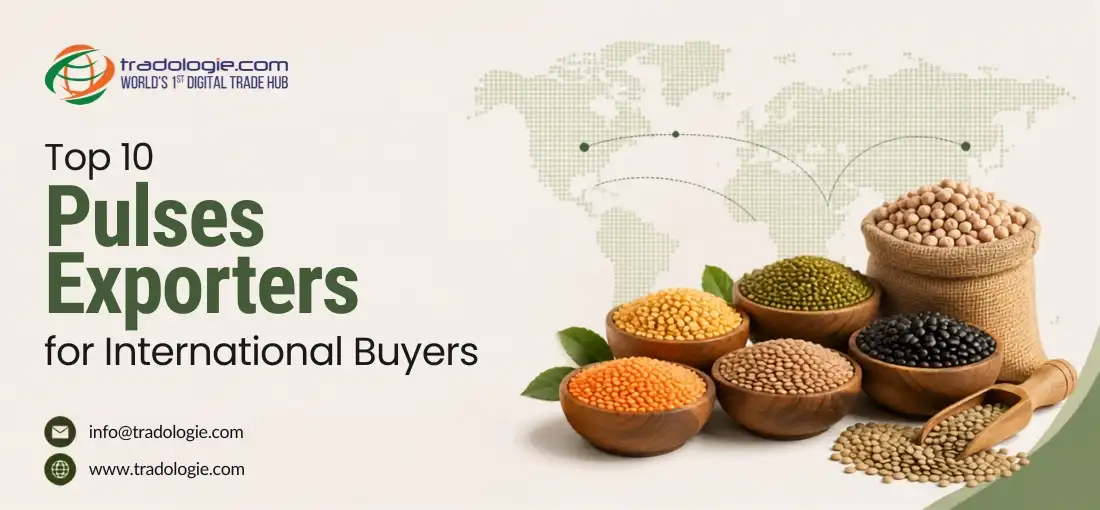
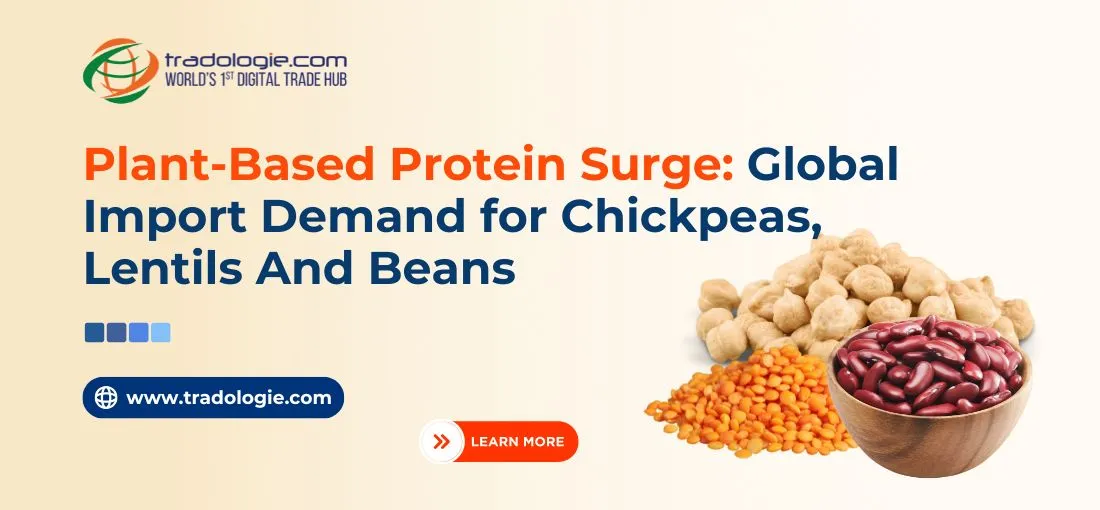
Global demand for pulses is rising in 2026, with chickpeas, lentils, dry beans, peas, and pigeon peas leading bulk trade.
- Chickpeas dominate with India, Australia, and Turkey as key exporters; annual trade volume crosses 17 million tonnes, making them a top choice for pulses importers worldwide.
- Lentils remain crucial in MENA and South Asia markets; Canada leads exports with over 6 million tonnes yearly, catering to large-scale pulses importers across these regions.
- Dry Beans see strong demand from Latin America and Africa; Myanmar, USA, and China are primary suppliers, ensuring steady supply for pulses importers.
- Peas are heavily imported by China for food and feed use, with Canada and Russia as top suppliers, strengthening opportunities for global pulses importers.
- Pigeon Peas maintain niche but high-value trade, with India and African nations driving imports, keeping them relevant for targeted pulses importers.
- Verified trade sources like FAO, ITC Trade Map, and UN Comtrade confirm strong growth trajectories in pulse trade flows.
- Bulk pulses exporters and pulses importers benefit from bulk order facilitation, live trade insights, and shifting regional consumption trends.
Introduction:
In the global agriculture trade, pulses carry the quiet strength of the soil-tiny seeds that nourish nations and sustain global trade.There is no surprise that the global pulse market has consolidated itself as a significant trading segment within agri-commodities, with ~21 million metric tonnes (MMT) of pulses moving through international markets every year.
International pulses suppliers who can deliver quality, grading precision, and compliance documentation are in a strong position to secure long-term trade flows. Unlike consumer-driven FMCG products, pulse exports are largely B2B-driven transactions where volume, consistency, and contracts determine margins.

In this informative blog, we will explore the top five pulse varieties that are shaping global demand in 2026. It will be backed by trade data and b2b centric insights for traders. So, let us get the ball rolling.

Red Lentils (Masoor)
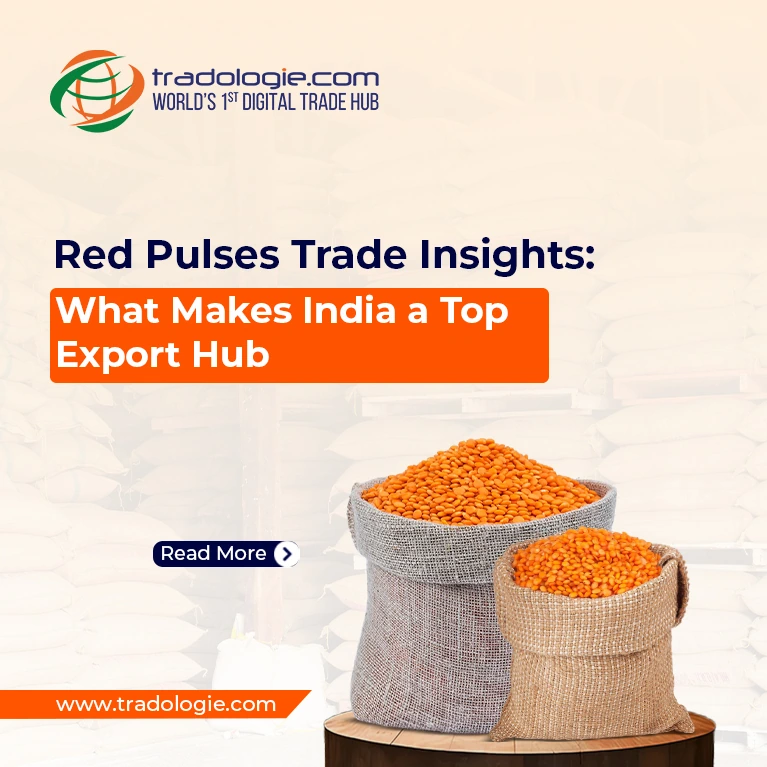
Red lentils are among the most heavily traded pulse categories and the without any doubt form the backbone of supply contracts into South Asia, Middle East, and North Africa. For bulk pulses exporters, lentils offer stable trade volumes in terms of strong demand from across retail and industrial buyers. This magnificent protein rich commodity also offers a scope for value-addition through cleaning and de-hulling.
Trade Data: Global lentil trade reached ~5.0 million metric tonnes in 2023, nearly 20% higher than the prior year, with India driving import demand. Canada remains the top destination, exporting over 851,284 metric tons to India alone in 2023 despite diplomatic strains.
For B2B operators, masoor contracts are often executed in containerized shipments, and bulk pulses suppliers who can align with Indian buying cycles capture the most stable margins.

Chickpeas (Kabuli & Desi)
Chickpeas represent high commercial value due to their dual demand: kabuli varieties fetch retail premiums in Europe, North Africa, and the Gulf, while desi varieties move in bulk to South Asia and Africa.
Trade Data: Global chickpea production in 2024-25 is projected at 17.1 million tonnes, up 2% from last year. Australia, a dominant exporter, shipped over 500,000 MT in just October-November 2024, highlighting the scale and speed at which origin surpluses are monetised.Exporters targeting chickpeas must manage price volatility through forward contracts and hedging, as buyer demand remains strong but highly price-sensitive.
Dry Peas (Green & Yellow)
Dry peas are a processor-driven commodity , used in protein concentrates, flour milling, pet food, and TVP (textured vegetable protein) applications. Their appeal lies in consistent grading standards and high industrial off-take.
Trade Data: In 2023, global dry pea trade was about 5.5 million tonnes, rising 8% year-on-year. Canada alone exported 2.54 million tonnes, accounting for nearly half of global flows. The U.S. and Turkey also contribute sizable volumes above 300,000 MT each.
For exporters, dry peas are less about spot arbitrage and more about securing multi-shipment processor contracts that ensure regular cash flow.
Mung Beans (Green Gram / Moong)
Mung beans enjoy steady demand in Southeast Asia and niche ethnic markets globally. They are purchased both for bulk processing (sprouting, dal milling) and for premium packaging in specialty retail.
Trade Data: Global trade in urd/mung beans stood at ~2.1 million tonnes in 2023. Ethiopia alone earned US$40 million from mung bean exports in 2024, reflecting the growing importance of smaller African origins in global supply chains. Exporters working with mung must invest in origin aggregation and moisture control, as inconsistent seed quality can limit access to higher-value buyers.
Pigeon Peas (Toor/Arhar) & Black Gram (Urad)
Though regionally concentrated, pigeon peas and urad remain strategic export Commodities due to their high unit value and cultural demand in South Asia and East Africa.
Trade Data: Global pigeon pea imports in 2023 were ~1.3 million tonnes , while Mozambique exported 9,790 MT worth ~US$3.28 million. Urad volumes, though smaller globally, remain critical for Indian buyers and attract attractive FOB premiums.
Exporters who build direct buyer relationships in India can capitalise on seasonal shortfalls, as the country frequently switches between exporter and importer depending on crop cycles.
Commercial Outlook for Exporters in 2026
- Contract Discipline : Multi-shipment, fixed-specification contracts with industrial processors and traders remain the safest path for predictable cash flows.
- Value-Addition : Cleaning, grading, and pre-packaging continue to create export premiums, particularly in lentils, chickpeas, and mung beans.
- Risk Management : Hedging against origin shocks (weather, policy restrictions) is essential, especially in chickpeas and pigeon peas.
- Compliance & Certification : Importing nations are tightening residue and labeling standards; exporters who invest in compliance readiness win faster market access.
Closing Note
The global trade in pulses continues to be driven by consistent demand across food, feed, and processing industries. From chickpeas and lentils to beans, peas, and pigeon peas, each variety carries significant commercial value for exporters and offers steady sourcing opportunities for pulses importers. With shifting dietary patterns, population growth, and regional consumption trends, bulk trade in pulses remains a strong pillar of agri-commodities. For businesses engaged in the sector, aligning with verified buyers and suppliers will be key to securing long-term growth in 2026 and beyond.