.webp "How to Source Pulses from India: Buyer’s Guide 2026")
Key Highlights:
- India exported 626,000+ MT of pulses in FY 2023–24 (APEDA), underscoring its capability to handle large-volume bulk orders.
- Chickpea, lentils, pigeon pea, urad, and moong remain the most commercially reliable export varieties with consistent year-round supply.
- Government push through the Aatmanirbharta in Pulses Mission is improving productivity, storage, seed quality, and export-readiness across major pulse belts.
- India’s export momentum continues, with 2024 shipments hitting 729,000 MT, the highest in the country’s history (AgPulse Analytica).
- Strategic markets like China, UAE, Bangladesh, USA, and Sri Lanka drive stable demand, making long-term contracts more viable for importers.
- Advancements in post-harvest handling, grading, and packaging ensure better moisture control, purity levels, and export-grade quality for bulk buyers.
- Competitive pricing, scale, and diversified agro-climatic zones make India a cost-efficient and resilient sourcing base for pulses in 2026.
Intro:
When people talk about agricultural exports from India, rice and spices usually steal the limelight—and for good reason. They’ve long been the flag-bearers of India’s export story. But that’s only half the picture.
Behind the scenes, India has also carved out a solid place in the global pulses trade, comfortably sitting among the world’s top ten pulses exporters. With its rich agricultural base and diverse growing regions, India quietly caters to niche procurement needs across select markets. It may not always make the loudest noise, but in pulses, India knows how to deliver where it counts.The coming 2026 year also presents a fantastic opportunity for the global buyers to buy pulses in Bulk from India.
This informative piece of blog will guide you on how you can leverage the wide network of Indian Pulsar suppliers and merchant pulses exporters and simplify your procurement process.
1. Understanding India’s Pulse Export Landscape
India’s global pulses export is dependent on the solid volumes and growing global demand. According to the Agricultural and Processed Food Products Export Development Authority (APEDA), India exported 626,653.8 metric tonnes of pulses in FY 2023–24, which was valued at around USD 686.9 million.The major export destinations listed include Bangladesh, China, the UAE, the USA, and Sri Lanka.
This export growth is not at all accidental. In fact, a recent strategic report by NITI Aayog clearly highlights that pulses have seen “a significant and exponential growth” over recent years. Not to mention, this also includes a surge in export earnings from USD 211 million in FY 2020 to USD 686.9 million in FY 2023–24.
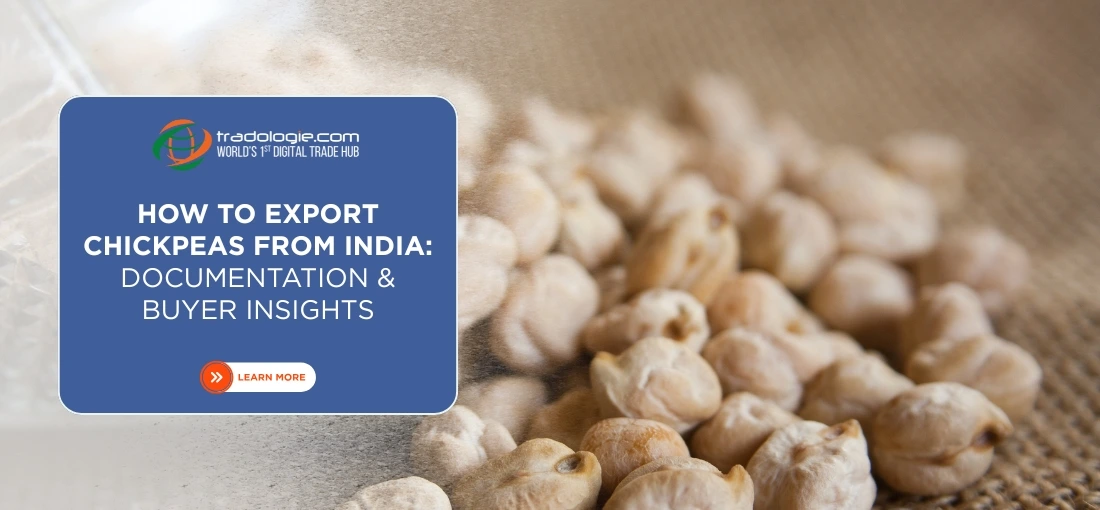
The same report makes it pretty clear who’s leading the charge. Chickpeas take the lion’s share, accounting for about 44.6% of India’s total pulse exports. Lentils come next at 19.6%, followed by peas at 15.7%. Then you’ve got black gram (9%), pigeonpea (6.7%), and green gram (4.4%) rounding things off.
2. Macro Trends: Why 2026 Is a Good Time to Source from India
- Production Strength & Government Support: India’s government has on several occasions reaffirmed its commitment to pulse self-reliance through programs like the six-year “Mission for Aatmanirbharta in Pulses,” which was announced in the Union Budget 2025–26. This visionary mission aims to improve climate-resilient seed development, their productivity, strategic storage, and post-harvest infrastructure for the seamless selling and exporting across the world and retaining India’s position among the top 10 pulses exporters with a wide network of merchant pulses sellers.
- Export Momentum: As per market-analysis firm AgPulse Analytica, India’s pulse exports touched around 729,000 tonnes in 2024, comfortably clearing the previous year’s 688,000 tonnes—which, not too long ago, was the highest single-year figure on record. In other words, the bar has been raised, and then some.
- What’s also changing the game is how buyers are sourcing. Pulse importers are increasingly leaning on reliable trade-intelligence and procurement platforms such as APEDA’s Agriexchange portal. It’s become a practical bridge, helping overseas buyers cut through the noise and connect directly with verified Indian pulse suppliers, without too much guesswork.
- Policy Stability and Export Interest: Despite India being a net pulses importer of many conventional pulses, exports remain a priority. The government is balancing domestic demand with export potential via strategic programs and policy support.
3. Sourcing Strategy: Step-by-Step for Pulses Importers
a) Identify Pulse Variants Aligned to Your Market Needs
It is important to understand that different markets demand different pulses. For example, chickpeas (gram) dominate India’s export basket, but lentils, pigeon pea, urad, and green gram also have strong export potential. Chickpea alone is nearly 45% of exports, as noted by NITI Aayog. It is important to access what your customers demand, like conventional vs organic, split vs whole, variety type, and match that with Indian pulses wholesalers capabilities if you want to buy pulses in bulk.
b) Use APEDA’s Agriexchange Portal or B2b platforms
This is perhaps the most powerful tool for B2B buyers. The Agriexchange platform maintained by APEDA or b2b platforms like Tradologie serve as a meeting point: buyers can locate pulses suppliers, view product specifications, and initiate trade enquiries.
Leverage this portal to filter by suppliers who comply with international standards, capacity, and quality certifications.
c) Analyze Country-Specific Export Data
Before putting your money on the table, it’s worth taking a good hard look at the numbers. APEDA’s country-wise exports tell you a lot if you actually dig. Take China in 2024–25—they scooped up about 101,274 tonnes of pulses from India. That’s not just a stat; it’s a hint about where the demand is hot, where volumes are moving, and what kind of pricing game is going on. Think of it as doing your homework before stepping into the ring—you don’t want to get caught flat-footed.
d) Evaluate Quality, Certifications, and Storage
Here’s the thing: export-grade pulses are a bit picky. Buyers expect certifications—ISO, FSSAI, Global GAP, organic, whatever floats the market’s boat. But India’s pulse infrastructure can be quirky. Post-harvest losses, patchy storage, and seeds that aren’t always uniform—these are realities.
A quick sanity check usually saves a lot of headaches:
- Peek at inventory and warehouses—make sure they’re not selling you smoke.
- Packaging and shelf-life—pulses travel far; a flimsy bag or sloppy storage will bite you later.
- Certifications—organic? Check NPOP compliance. This isn’t just red tape; it protects your supply and your brand.
e) Negotiate Long-Term Contracts & Risk Mitigation
Pulse markets can swing faster than a pendulum. One year you’re flush, next year you’re scrambling. Multi-year offtake agreements make sense if you want some breathing room. But don’t leave anything vague:
- Price mechanics—fixed, floating, or a clever mix, whatever keeps both sides sane.
- Quality standards—spell them out or risk nasty surprises.
- Logistics—FOB, CIF, Incoterms, all in plain sight.
- Risk-sharing—force majeure, crop failures, whatever curveballs, better to hash it out upfront than run around panicking later.
Because India wears both hats—exporter and importer—the pulses trade can get a little tricky. Buyers need to keep their ears to the ground on policy shifts and volume swings. In FY 2023–24, India imported around 47.39 lakh tonnes of pulses, nearly double last year. That kind of jump can shake up domestic availability and sometimes ripple into export supply. Bottom line: stay sharp, or you risk getting caught off guard.
Build Relationships & Local Partnerships
In India, local knowledge isn’t just useful—it’s gold. Setting up a sourcing office, teaming up with a reliable agent, or even trying a joint venture can seriously strengthen your supply chain. The right partner gives you eyes on the ground—inside info on production cycles, farmer networks, and logistics quirks that no spreadsheet can show.
Leverage Government & Export-Promotion Schemes
There’s help out there, but only if you know where to dig. APEDA and other government programs are handing bulk pulses exporters financial perks, certification support, and market diversification tools—but the trick is getting your suppliers to actually use them. When they do, it’s not just a win for them; it trickles down to you too. Better pricing, smoother scaling, and a supply chain that can roll with surprises without breaking a sweat. Platforms like Tradologie make it even easier—it connects you directly with verified bulk pulses exporters who know how to leverage these schemes, cutting out the middlemen and guesswork.
4. Key Risks and How to Mitigate Them for B2B Buyers
- Production Risk – Pulses can be moody. A late monsoon, unexpected heat, or seasonal hiccups can throw off yields. Ask your suppliers for crop forecasts, and consider hedging with strategic bulk purchases or smart derivatives. Staying a step ahead means fewer nasty surprises down the line.
- Quality Variability – Not every shipment lands identical. That’s where trouble can quietly creep in. Push for batch testing and pre-shipment inspections, and insist on detailed quality reports covering moisture, purity, mycotoxins. When you work through a platform like Tradologie, you can also filter suppliers based on past performance and verified quality checks—so you’re not flying blind.
- Regulatory Risk – Indian import-export rules can pivot fast. Keep yourself updated via the Ministry of Commerce, and make sure contracts have clauses to adapt on the fly. It’s better to have flexibility baked in than scramble when rules change overnight.
- Logistics Risk – Pulses are bulky, heavy, and sometimes stubborn to move efficiently. Nail down freight terms, explore container optimization, and plan shipments smartly. Platforms like Tradologie can help you connect with freight-forwarders experienced in pulses, saving both time and cost.
5. The Business Case: Why Sourcing from India Makes Sense in 2026
- Scale and Diversity – India is moving over 0.6 million tonnes of pulses through APEDA-monitored channels. That’s massive, but what matters for you is access to consistent, large volumes without chasing multiple fragmented suppliers.
- Growing Export Infrastructure – More wholesalers, more exporters, and platforms like Agriexchange and Tradologie are streamlining the process. Add government support for storage and certifications, and buyers now have real choice, transparency, and assurance.
- Strategic Advantage – Locking in long-term contracts now isn’t just planning ahead—it’s hedging against future supply risks. India is serious about the Atmanirbhar Pulse Mission, and buyers who move early get preferential access to reliable volumes.
- Competitive Pricing – India’s scale, efficiency, and infrastructure usually mean better pricing than other origins, especially for staples like chickpeas and lentils. Combined with verified pulses exporters via Tradologie, you’re not just buying pulses—you’re buying predictability, efficiency, and a procurement strategy that actually works.
Conclusion
For B2B buyers looking at pulses in 2026, India isn’t just a supplier—it’s a powerhouse with scale and export-ready chops. The trick is knowing how to play it smart. Tap the right channels like Tradologie, forge solid local partnerships, keep a finger on policy shifts, and lock in well-structured contracts. Do this, and you’re not just buying pulses—you’re building a resilient, cost-efficient procurement engine that can keep delivering year after year.