Key Highlights
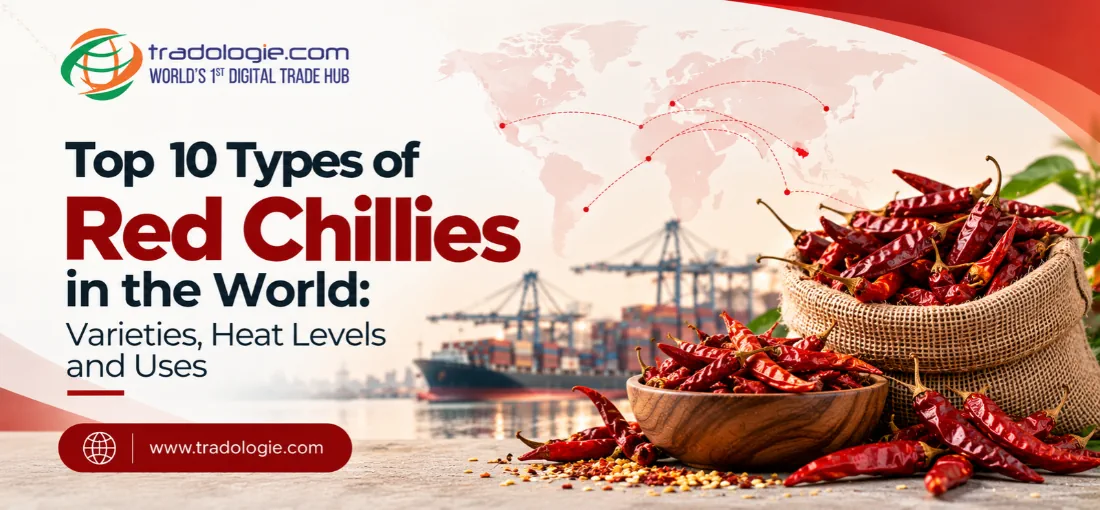
- The top 10 types of red chillies in the world include Kashmiri, Byadgi, Guntur Sannam, Teja, Bhut Jolokia, Thai Bird's Eye, Cayenne, Habanero, Scotch Bonnet and Aleppo pepper.
- Kashmiri and Byadgi chillies are valued for their rich red colour and relatively mild heat, while Teja and Bhut Jolokia are known for their extreme pungency.
- Guntur Sannam and Cayenne are widely used in chilli powders, sauces and commercial spice blends.
- Habanero and Scotch Bonnet are popular in Caribbean and Mexican cuisines, particularly for hot sauces and marinades.
- Chilli varieties differ in heat levels, measured in Scoville Heat Units (SHU), flavour, colour and commercial applications.
Introduction
Red chillies are some of the most widely used spices worldwide. They impart heat, colour and distinctive flavour to food throughout Asia, Africa, Europe and the Americas. Depending on the characteristics, some of the major varieties of red chillies globally are selected for their high pungency whilst others are favoured for their rich colour, mild heat and fruity flavour.
The top 10 red chilli varieties in the world include many types, which are cultivated for different purposes within the spice industry. These include Indian varieties such as Guntur and Kashmiri chillies, alongside Mexican (cayenne) and Caribbean (Scotch bonnet) varieties. When choosing which variety to use or sell, the differences between each variety will play a key role.
Here are the top 10 major varieties of red chili in the world . This includes details of their heat, flavour and uses.

Top 10 Types of Red Chillies in the World
1. Kashmiri Red Chilli (India)
Kashmiri red chillies rank on top when it comes to major varieties of red chillies globally. They are known for their vibrant red colour and mild heat. They are not a suitable choice if looking for extreme heat, but an excellent option if looking for rich colour.
These chillies will generally have a deep red appearance once dried. They have mild heat and a subtle fruity flavour.
- Heat (on average): 1000-2500 SHU
- Origin: Kashmir (India). However, varieties of Kashmiri chillies are sold from other growing regions.
- Uses: Tandoori marinades, curries, gravies, chilli powder.
Kashmiri chilli powder is very popular in Indian cooking. It gives dishes like butter chicken, rogan josh and paneer dishes their signature red colour.
2. Byadgi Chilli (India)
Byadgi is among the popular top 10 red chilli varieties in the world which is cultivated in India. It is largely grown in the state of Karnataka. This chilli has a rich red colour and wrinkled appearance.
It is popular among spice manufacturers due to its colour. It can also be used to produce chilli oleoresin.
- Heat (on average): 5000-15000 SHU
- Origin: Karnataka (India).
- Uses: Chilli powder, spice blends, masala.
This chilli can be an excellent option for those looking for more colour with less heat. However, it depends on the actual colour value of the consignment.
3. Guntur Sannam Chilli (India)
Guntur Sannam is one of the most well-known commercial chilli varieties in India. They are largely cultivated in Andhra Pradesh and surrounding areas.
They tend to be medium to hot. They are available in different grades.
- Heat (on average): 30000-50000 SHU
- Origin: Andhra Pradesh (India).
- Uses: Chilli powder, curry powders, sauces, pickles, spice blends.
This variety is particularly relevant to bulk buyers. It can be used in multiple food-processing applications. It is sold whole and dried.
4. Teja Chilli (India)
Teja chillies are known to be a highly pungent variety. They are cultivated in Andhra Pradesh and Telangana and are a key variety in the dried red chilli trade.
They are generally not selected for their colour like Byadgi, but for their high heat. They are long and have a vibrant red colour.
- Heat (often): 75000-100000 SHU+
- Origin: Andhra Pradesh & Telangana (India).
- Uses: Hot chilli powder, sauces, spice blends, instant foods, food processing.
Teja is an excellent option for manufacturers looking for high pungency. They will depend on the heat, colour, moisture and condition of the dried chillies.
5. Bhut Jolokia/Ghost Pepper (India)
The Bhut Jolokia, also known as the Ghost Pepper, is a highly pungent variety that became internationally recognised. They are traditionally cultivated in Assam and other north-eastern states of India. They are among the hottest varieties of chilli grown.
They are generally long, wrinkled and have a deeply textured surface. Depending on the variety and growing conditions, they can be red, orange and other colours when ripe. They have a distinctive fruity and slightly smoky flavour.
- Heat (on average): 850000-1000000 SHU
- Origin: North East India.
- Uses: Extremely hot sauces, chilli extracts, speciality spice blends, limited cooking.
This is not a chilli that is used in everyday cooking. Due to its extreme pungency, only a small quantity would be needed to change the heat of a product. It would be more relevant for those looking to manufacture speciality hot sauces.
6. Thai Bird's Eye Chilli (Thailand & South East Asia)
Thai bird's eye chillies are very popular in South East Asia. They are small and slender. They are generally consumed fresh or dried.
They ripen to a vibrant red colour. They have an intense, direct heat. Their flavour is ideal for dishes that need concentrated heat.
- Heat (on average): 50000-100000 SHU
- Origin: Widely cultivated throughout Thailand & South East Asia.
- Uses: Thai curries, chilli sauces, stir-fries, soups, dips, dried chillies.
Bird's eye chillies are a common ingredient in Thai & Vietnamese cooking. They are also used in sauce production due to their intense heat.
7. Cayenne Pepper (Central & South America)
Cayenne peppers are one of the most well-known red chillies in the industry. They are generally long, slender and pointed. Once fully ripe, they develop a vibrant red colour.
They are often ground to produce Cayenne powder. This can be used in many different cuisines. They deliver noticeable heat but do not have the same intensity as bird's eye, habanero or ghost peppers.
- Heat (on average): 30000-50000 SHU
- Origin: Associated with South America. Now cultivated in many countries.
- Uses: Seasoning blends, hot sauces, marinades, soups, meat dishes, chilli flakes.
Cayenne peppers are very important in the global spice industry. They are well established and can be processed into different formats. They are used by food manufacturers in seasoning blends, packaged foods and sauces.
8. Habanero Chilli (Mexico & Caribbean)
Habaneros are well known for their intense heat and distinctive fruity flavour. Red habaneros are very popular with hot sauce manufacturers.
They are generally small with a lantern shape. They have a smooth or slightly wrinkled texture. They can have citrus, tropical and floral flavour notes.
- Heat (on average): 100000-350000 SHU
- Origin: Mexico & Caribbean.
- Uses: Hot sauces, marinades, salsa, speciality seasonings, spicy condiments.
Habaneros are very popular in Caribbean & Mexican cooking. Their distinctive flavour and intense heat make them an appealing choice for those looking to create premium hot sauces.
9. Scotch Bonnet (Caribbean)
Scotch bonnets are a popular variety in the Caribbean. They have a similar heat range to Habaneros. They have a distinctive appearance and can resemble a small bonnet or flat lantern.
They are valued for their intense heat and fruity flavour. Depending on the variety, they can be red, yellow, orange and other colours when ripe.
- Heat (on average): 100000-350000 SHU
- Origin: Caribbean.
- Uses: Jerk seasoning, Caribbean curries, hot sauces, marinades, peppery condiments.
Scotch bonnets are an important ingredient in Caribbean cooking. They are very popular in Jamaican jerk dishes. Their flavour is particularly important, so they are often used in sauces and marinades.
10. Aleppo Pepper (Syria & Turkey)
Aleppo peppers are a popular dried chilli. They are associated with Syria and southern Turkey. They are generally ground into coarse flakes.
They are not as hot as some of the other varieties. They have a subtle fruity, earthy and mildly sour flavour. The flakes often have an oily texture and are ideal for seasoning.
- Heat (on average): 5000-10000 SHU
- Origin: Aleppo region (Syria) & surrounding areas of Turkey.
- Uses: Meat seasoning, kebabs, salads, dips, roasted vegetables, spice blends.
Aleppo peppers are highly valued in Middle Eastern & Mediterranean cooking. They offer a balance of colour, flavour and heat. They are an excellent choice for products that do not require intense heat.
Red Chilli Variety Comparison Table
| Red Chilli Variety | Main Origin | Heat (SHU) | Main Use |
|---|---|---|---|
| Kashmiri | India | 1000-2500 | Colour, curries & chilli powder. |
| Byadgi | India | 5000-15000 | Colour extraction & spice blends. |
| Guntur Sannam | India | 30000-50000 | Chilli powder & food processing. |
| Teja | India | 75000-100000+ | High-pungency products. |
| Bhut Jolokia | North East India | 850000-1000000 | Extreme heat sauces. |
| Thai Bird's Eye | South East Asia | 50000-100000 | Sauces & Asian cuisine. |
| Cayenne | South/Central America | 30000-50000 | Seasoning & chilli powder. |
| Habanero | Mexico & Caribbean | 100000-350000 | Hot sauces & condiments. |
| Scotch Bonnet | Caribbean | 100000-350000 | Jerk seasoning & sauces. |
| Aleppo | Syria & Turkey | 5000-10000 | Flakes & Middle Eastern seasoning. |
This is just a guide. The actual heat can vary depending on the variety, growing conditions, ripeness, drying and storage.

What Makes a Red Chilli Valuable?
When choosing what type of red chilli to use or buy as a spice manufacturer or international buyer, you will need to determine what you are looking for. Certain varieties will be more suitable depending on the application.
Some key factors to consider:
- Pungency - This is measured using Scoville Heat Units (SHU). Depending on how hot you need your product to be, Teja & Bhut Jolokia would be a suitable choice. If you are looking for a milder flavour, then Kashmiri & Aleppo would be a good option.
- Colour - This is a particularly important factor for chilli powder manufacturers, seasoning companies and food processing. Byadgi & Kashmiri are valued for their colour.
- Moisture - It is important that the chillies are dried properly. This will help with storage and transport. Excessive moisture can cause mould.
- Physical Quality - Most buyers will look at the size, colour, broken pieces, stems, foreign objects and damage. This can affect how efficiently they process.
- Food Safety - If exporting, you may need to ensure they comply with food safety standards at their destination. This can include pesticide, aflatoxin, microbial and other limits. Ask for the appropriate lab reports to ensure they are compliant.
Conclusion
There are many different varieties of red chillies around the world. Some are hotter than others and some have more colour. Those looking for colour will choose Kashmiri & Byadgi. Guntur & Teja are important choices for traditional and high-pungency spice products. Thai bird's eye, cayenne, habanero & scotch bonnet have become popular in international cuisines and sauce production.
Depending on what you are looking to use the chilli for, there will be a suitable variety for you. Knowing the differences will help you choose the right raw material for your business.
Want to export or import red chillies globally? Register as a seller on Tradologie today.
Disclaimer
Chilli heat levels can vary depending on the variety, growing conditions, ripeness, drying and storage. The SHU figures mentioned in this article are approximate ranges and should be treated as indicative rather than fixed values. Buyers and exporters should verify actual pungency, colour, moisture, physical quality and applicable food safety requirements before purchasing or trading red chillies.