Key Highlights
- India exported USD 4.45 billion worth of spices in 2024–25.
- Direct sourcing offers fresher products and better pricing.
- MDH, Everest, Catch, and Synthite are among top spices exporters.
- Reliable spice exporters hold Spices Board registration and food safety certifications.
- Digital B2B platforms make supplier verification easier.
- Product samples and third-party inspections reduce import risks.
Introduction:
When you think about the global spice trade, what's the very first country that pops into your mind? If you’re anywhere near the food industry, it’s almost certainly India. And honestly, why wouldn't it be? We’ve all grown up knowing that India is practically the world’s spice bowl and it ships out tons of fiery red chillies, warm cumin, fragrant cardamom, and bright golden turmeric every single day. In fact, India exported around 4.45 billion dollars of spices in the year 2024-2025 according to government data.
But if you’re a bulk buyer sitting thousands of miles away trying to source container loads of whole or ground spices, you already know the real story, don't you? Finding a truly reliable Indian spice exporter isn't as simple as doing a quick web search and picking the first shiny company that pops up.
So, how do you cut through all the noise and actually spot dependable spice exporters in India who live up to their promises?
Keep reading this informative piece of blog as it will provide you the important information on top 10 spices exporters in India.

Why Sourcing Direct from India Changes the Whole Game
Have you ever wondered why global spice buyers prefer going straight to Indian processors instead of taking the easy route through international brokers in Europe or Dubai? It really comes down to how spices behave as a crop.
Spices are natural products, after all. The moment they are harvested from the farm, the clock starts ticking on their aroma and flavor.
What makes India so special is its incredible geography. Different states across the country specialize in completely different crops:
- Andhra Pradesh is where you go for those intense, fiery dry red chillies.
- Gujarat and Rajasthan grow the lion's share of cumin and coriander seeds.
- Kerala, down in the south, yields some of the finest black pepper and green cardamom you can buy.
When overseas bulk spices importers, food manufacturers, and wholesale spice suppliers buy direct from primary processors in these regions, a few great things happen:
- You keep your margins healthy: Skipping multi-tiered brokers simply keeps your costs down.
- You get much fresher stock: Sourcing close to the farm gate means higher essential oil retention—which translates straight into stronger flavor and a better shelf life.
- You get custom processing options: Need a specific mesh size for your powders? Need steam sterilization or special ocean-barrier packaging? Direct suppliers can easily tweak these for you.
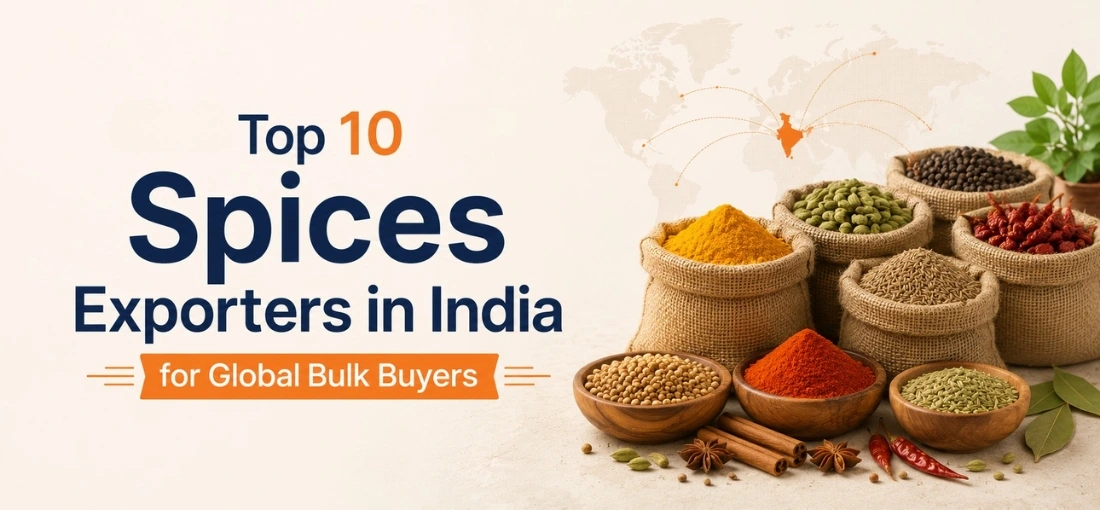
Top 10 Spices Exporters and Suppliers in India
When you’re vetting agro commodity exporters for large bulk contracts, you want companies that have real infrastructure, proper lab credentials, and proven track records. Here are ten top spices exporters in India and suppliers currently leading the Indian spice market:
1. MDH (Mahashian Di Hatti)
Mention Indian spices to anyone, and MDH is probably one of the first names they'll drop. Starting out way back in 1919 before setting up its main hub in Delhi, MDH has grown into an absolute household titan. But beyond those familiar red boxes on kitchen shelves, they run over 15 high-tech automated processing plants. Because their sourcing connects directly into primary agricultural markets (mandis), they are able to keep their color and flavor batches consistent, even when farm yields drop.
2. Everest Spices
Everest is another giant we all know well. Over the years, they’ve built a massive international footprint, exporting to over 58 countries across the globe. Operating out of large automated plants in Maharashtra and Gujarat, Everest uses cold-grinding systems to make sure the heat of milling doesn't burn off essential oils. For a bulk buyer, that means real peace of mind—a container of chilli powder ordered today will match the exact same quality as one ordered six months from now.
3. Catch Spices (DS Group)
Catch Spices, under the DS Group banner, really changed the game by bringing Low-Temperature Grinding (LTG) into the spotlight. You see, traditional high-speed milling creates a lot of friction heat, which can cook away delicate flavor oils. By keeping processing temperatures low, Catch locks in the spice's raw aroma. In fact, many commercial kitchens find they can use less powder by volume just to hit their target flavor.

4. Synthite Industries Ltd.
Now, if your business needs spice extracts, oleoresins, or natural food colors instead of raw ground powders, Synthite is the big name you need to know. Operating out of Kerala, this B2B giant commands a huge share of the global spice extract market. They specialize in supercritical CO₂ extraction, supplying liquid-form flavor bases that dissolve completely clean—without leaving any grit or leaves behind in beverages or food formulations.
5. ITC Spices
ITC is one of India's biggest corporate names, and their agricultural spice division is all about supply chain transparency. Through their famous "e-Choupal" network, they work directly with thousands of farming families. For buyers in Europe or North America who have to deal with strict pesticide limits, ITC is a huge favorite because they track soil treatment and farm practices right from the ground up.
6. Ramdev Spices
Based out of Gujarat—right in the heart of India’s seed spice belt—Ramdev has turned into a major powerhouse for whole seed commodities. Their processing facilities use multi-stage optical sorters specifically calibrated for cumin, coriander, and fennel seeds. What does that mean for you? You get bulk shipments that clear 99% to 99.5% purity, saving you the headache of extra cleaning after import.
7. Badshah Masala
With over six decades of experience under their belt, Badshah Masala balances traditional regional blends with heavy bulk export orders. Their export division supplies ethnic supermarket chains, catering buyers, and commercial kitchens across the Middle East, the UK, and North America—places where getting that authentic, home-style regional taste is everything.
8. Vallabhdas Kanji Limited (VKL)
Starting way back in the historic spice port of Alleppey, Kerala, VKL (now part of dsm-firmenich) focuses on industrial seasonings and custom flavor systems. They don't just sell standard raw powders; their culinary teams work hand-in-hand with Quick Service Restaurant (QSR) chains and snack brands to create custom marinades, rubs, and flavor coatings.
9. Aachi Spices & Foods
Coming out of South India, Aachi has expanded at a blistering speed, shipping to more than 60 countries. They are especially famous for sourcing premium South Indian spice varieties, like high-curcumin turmeric and fiery regional chillies. Plus, they operate modern steam-sterilization plants so their shipments easily meet strict microbial standards abroad.
10. Asian Food Industries
Asian Food Industries works mostly as a dedicated B2B contract manufacturer and exporter. They process a wide range of whole seed spices, powders, and dehydrated crops. If you're an international wholesaler looking for contract manufacturing under your own private brand name, they offer total flexibility on mesh sizes, moisture caps, and third-party inspection reports (like SGS or Intertek).
What Actually Makes a Spice Exporter Reliable?
Branding and decades of history are nice to read about, but when your money is on the line, how do you know if a supplier can handle your specific container shipment without any glitches? You have to look at their basic operational foundation.
1. Spice Board Registration
This one is completely non-negotiable. Never transfer funds to any supplier who can't show you a valid registration with the Spices Board of India. It’s the official government body regulating spice exports, making sure companies meet legal safety and export standards before anything leaves the port.
2. Lab Credentials and Safety Badges
Spices are sensitive natural products. A sudden trace of aflatoxins in chillies or salmonella in ground powders can get an entire ocean container seized or destroyed by customs. Look for suppliers holding clear quality badges like:
- ISO 22000 / FSSC 22000 (Food Safety Management)
- BRCGS (Global Standard for Food Safety)
- HACCP & GMP (Hygiene and Process Control)
- ASTA Guidelines (American Spice Trade Association standards)
3. In-House Steam Sterilization
If you’re shipping into markets with strict regulations—like the US, Europe, or Australia—microbiological safety is something you just can't skip. Suppliers equipped with modern steam sterilization can clean the spices thoroughly without burning off delicate natural oils or leaving harsh chemical residues behind.
How Sourcing Spices Has Changed Over the Years
Remember how bulk spice buying used to work years ago? You had to take long flights to walk through dusty auction yards in Guntur or Unjha, or rely completely on local buying agents who added their own heavy commissions on every single ton.
Things have gotten a lot easier now, haven't they?
Digital trade platforms have completely changed how international buyers connect with Indian millers. Today, reliable suppliers complete their Global B2B Seller Registration on specialized portals. This means you can easily audit supplier licenses, check plant capacities, and review test reports online before ever placing an order.
And on the flip side, if you're an Indian processor looking to expand overseas, taking the time to Register as a Spice Exporter on these digital trade channels gives you a direct bridge to global buyers—without needing to spend a fortune on overseas sales offices.
A Quick 4-Step Checklist Before You Pay Your Deposit
Before you wire an advance payment or open a Letter of Credit for a bulk order, just walk through these quick steps to keep your investment safe:
- Request Production Samples: Always get a 500g sample pulled directly from the active production lot. Run a quick lab test for moisture levels, volatile oil percentage, and color value (ASTA units for chilli or curcumin levels for turmeric).
- Book a Third-Party Inspection: Add a clear clause in your contract requiring an independent agency (like SGS or Intertek) to inspect the cargo and supervise container stuffing at the Indian port.
- Double-Check Packaging Specs: Spices soak up atmospheric moisture very quickly during long ocean voyages. Make sure your supplier packs everything in food-grade multi-wall paper bags, PP bags with poly-liners, or vacuum packaging.
- Cap the Moisture Ceiling: Set a strict maximum moisture limit (usually under 10% to 12%) so mold doesn't have a chance to grow inside the container while it's out at sea.
Wrapping Things Up
At the end of the day, running a smooth spice import business isn't about chasing the cheapest price per ton you can find—it's about finding partners who care about long-term consistency just as much as you do.
By making sure your suppliers have Spices Board credentials, insisting on third-party lab testing, and using verified digital trade hubs, you can secure high-grade Indian spices smoothly—without any costly surprises waiting for you at the port.
Disclaimer
The information provided in this article is for educational and informational purposes only. Company rankings, certifications, export capacities, and food safety regulations may change over time. Buyers should independently verify supplier credentials, Spices Board registration, laboratory reports, and commercial terms before placing bulk orders.




.webp "Top 10 Health Benefits of Cinnamon ( Daal Chini )")