Key Highlights
- India's FMCG market is projected to reach USD 1.15 trillion by 2034.
- Biscuits, atta, noodles, tea, and edible oil are India's top-selling FMCG food products.
- ₹5 and ₹10 packs drive high-volume retail sales across India.
- Kirana stores continue to dominate grocery distribution.
- Quick commerce is reshaping urban FMCG buying habits.
- Rural demand and premium products are driving future growth.
Introduction:
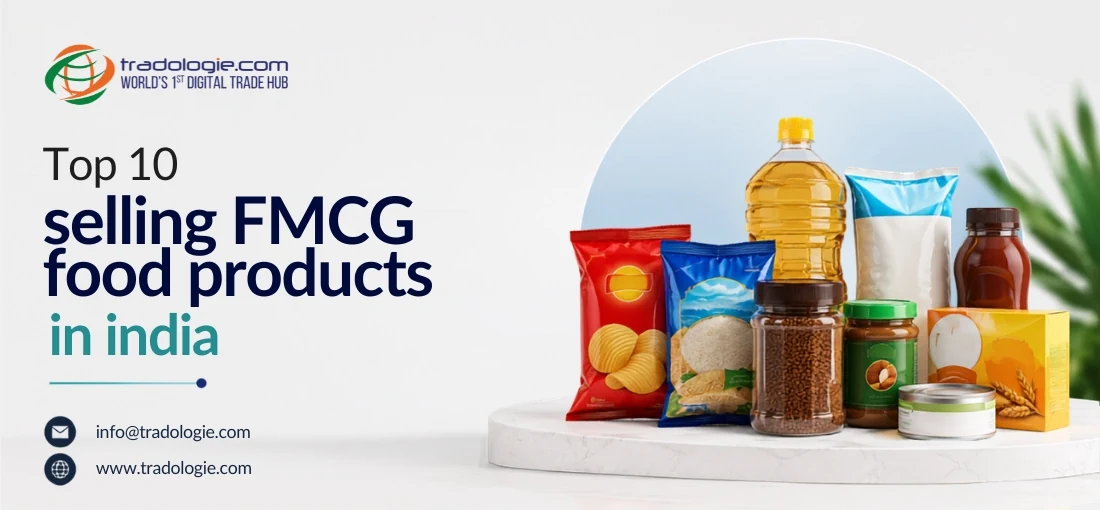
Walk into any neighborhood kirana shop anywhere in India—whether you're squeezing through a narrow lane in South Mumbai or taking a chai break at a roadside shop in rural UP—and you'll see the exact same retail story playing out every single day. Bright red ₹5 biscuit packets hang on plastic strips right by the doorway, while heavy 10 kg sacks of branded atta sit stacked up right near the cash counter and all the famous top 10 selling FMCG food products in India.
That steady, non-stop daily foot traffic is what keeps the country's FMCG sector running like a machine. According to market data from IMARC Group, the FMCG market size in India reached a massive $287.91 billion in 2025 and is projected to touch $1,150.21 billion by 2034. While personal care items take up a good share of the overall trade, everyday packaged food and drinks are what people spend hard-earned money on every single morning.
For food manufacturers, millers, and distributors, understanding what actually makes the most sold food products in India fly off shelves comes down to real ground-level trade realities. It shows you how Indian eating habits actually work on the ground, where the bulk orders are coming from, and how leading FMCG food brands manage to stay on top.
Let's take a close look at the top 10 selling FMCG food products in India , see what makes them tick, and look at the big consumer shifts happening behind the counter.

What Makes FMCG Food Products Move So Fast in India?
Food retail in India is a whole different ballgame compared to Western countries. Instead of three or four big supermarket chains controlling everything, the humble neighborhood kirana store still controls over 70% of all grocery sales. On top of that, 10-minute quick-commerce apps are shaking up big cities like crazy.
To rank among India's top FMCG food products by sales , a product category basically needs three things going for it:
- The Power of Low Unit Pricing (LUP): Those small ₹5 and ₹10 packs are pure magic in Indian retail. They make quick impulse buying super easy for office workers and keep branded snacks well within reach for rural families on daily wages.
- Daily Household Use: These aren't fancy, once-a-month treats. People consume them daily—whether it's morning chai, school tiffins, or basic family dinners.
- Rock-Solid Distribution: A brand must have its supply chain sorted from top to bottom so products reach millions of small retail counters without ever going out of stock.
Top 10 Selling FMCG Food Products in India
Here is how the top ten categories perform in terms of actual sales volume, daily demand, and overall retail presence across India.
1. Packaged Biscuits and Cookies
You can't even start talking about popular FMCG food products in India without mentioning biscuits first. Chai is an absolute daily emotion across India, and a packet of biscuits is almost always sitting right beside the teacup.
The sheer variety here is mind-boggling. On the budget side, basic glucose biscuits like Parle-G rule mass volume sales—in fact, Parle-G has been a household staple for generations. Then you have cream biscuits, butter cookies like Britannia Good Day, Marie Gold, and ITC’s Sunfeast range catering to afternoon tea breaks. These products move in massive numbers simply because a ₹5 or ₹10 pack fits everyone's pocket, lasts for months without spoiling, and can be picked up from literally any shop in the country.
2. Packaged Wheat Flour (Chakki Atta)
Most Indian families bought raw wheat grain from local mandis and carried it to a neighbourhood chakki to grind into flour a couple of decades ago. Fast forward to today's era, and you will notice that, amid the busy city schedules and hustle and bustle, the growing demand for clean and hygienic food has completely changed the scenario. People prefer buying packaged wheat flour instead of taking the pain and hassle to visit chakki shops.
Packaged atta has turned into a massive multi-thousand-crore category. Household names like Aashirvaad by ITC, Fortune by Adani Wilmar, and Pillsbury lead the pack here. Since rotis are cooked twice a day in millions of homes, repeat purchases happen like clockwork every 15 to 30 days. On top of that, health-conscious urban buyers are pushing big sales in multi-grain and high-fiber blends.
3. Instant Noodles and Convenience Pasta
Indians are simply crazy for noodles, which is evident from the fact that India is currently one of the largest markets for instant noodles worldwide. Nestlé Maggi, as a brand, holds a very strong emotional brand loyalty across India. ITC’s Yippee and Hindustan Unilever's Knorr noodles are the main competitors. However, they are still not able to surpass the popularity of Nestlé Maggi. These products are very much the retail shops' favourite just because of the fact that they move quite quickly off the shelves. In other words, that 5-minute noodle thing is always trending among Indians.
4. Packaged Tea (CTC and Leaf Tea)
In India, tea isn't just another item on the grocery list—it's the fuel that gets the day started. Unbranded loose tea sold out of open sacks often has quality issues, which is why packaged, branded tea has completely taken over kitchen shelves across the nation.
The demand here is non-stop. Premium leaf tea sells heavily in metro centers, while budget-friendly CTC blends drive massive volume across Tier 2 towns and rural belts. Major players like Tata Tea, Red Label, Taj Mahal, and Wagh Bakri rule the roost. Because chai is brewed multiple times a day in almost every home, store inventory turns over super fast.
5. Edible Oils (Mustard, Sunflower, Soybean, and Palm)
If you peek into any Indian kitchen, cooking oil is the one commodity that gets poured into the pan every single day. That constant utility is precisely why oil sales generate some of the biggest billing numbers for wholesale distributors month after month.
The days of buying loose, unbranded oil out of messy tin cans are practically ancient history in urban areas. Today, families want clean pouches or clear PET bottles from trusted household names like Fortune, Saffola, Dhara, or Gemini. Because an average household burns through a pouch every few weeks, shopkeepers get rapid inventory turnover—with blended oils and cold-pressed varieties picking up serious steam in city markets.
6. Dairy Products (Packaged Milk, Pouch Curd, and Butter)
India leads the world in milk production, so it's no surprise that packaged dairy moves a serious volume every single morning. But unlike dry groceries that can sit on a shelf for weeks, dairy operates on a high-stakes, 365-day cold chain that can't afford a single day's hiccup.
Every morning before sunrise, millions of fresh milk pouches, dahi tubs, butter blocks, and paneer packs hit retail counters. Co-operatives like Amul and Mother Dairy, alongside regional heavyweights like Nandini and private giants like Nestlé, handle this massive daily flow. Consumers rarely switch their milk brand once they're hooked, giving dairy some of the highest repeat-purchase rates in the entire retail space.
7. Savory Snacks (Namkeen and Potato Chips)
When Indians want something crunchier with their evening tea or during a workday break, they split their loyalty between traditional fried namkeen and western-style potato chips.
That dual craving has turned salty snacks into a massive, fast-moving sector. Walk up to any kirana counter and you'll see Haldiram’s iconic bhujia and ratlami sev hanging right alongside colorful bags of Lay’s, Kurkure, Bikaji, or Balaji. The secret sauce here lies in the ₹5 and ₹10 impulse packs. Customers rarely plan to buy snacks; they just grab a pouch on their way out while settling their grocery bill.
8. Packaged Spices (Masala Powder and Blends)
Spices are the absolute heart and soul of Indian cooking. While grandmothers used to spend hours grinding whole spices on stone slabs, today’s home cooks rely heavily on ready-made packaged powders to keep up with daily meal prep without breaking a sweat.
The market splits into two distinct plays. First, you have basic daily staples like turmeric, red chilli, and coriander powder that move in continuous volume. Then you have specialized recipe masalas—like biryani, chole, or pav bhaji blends—where brands like MDH, Everest, Catch, Aachi, and Badshah rake in their highest profit margins. Basic powders bring shopkeepers steady foot traffic, while blended masalas drive up the total bill value nicely.
9. Chocolates and Confectionery
It wasn't that long ago when chocolates were treated purely as festive gifts or birthday treats. Nowadays, they've turned into an everyday sweet craving for school kids, teenagers, and working adults looking for a quick pick-me-up.
The market spans from ₹1 fruit-flavored candies all the way to high-end imported dark chocolate bars. Cadbury Dairy Milk by Mondelēz continues to hold an incredible grip on consumer minds, while Nestlé’s KitKat and Munch, Ferrero, and Amul fight for the rest of the counter space. By hanging these colorful packs right at eye level near the cashier, retailers convert loose change into instant sweet sales.
10. Carbonated Soft Drinks and Packaged Fruit Juices
Fizzy sodas like Thums Up, Sprite, and Mountain Dew battle for throat share against other famous drinks that are made from mango, like Maaza, Slice, and Frooti, along with packaged fruit juice brands like Dabur Real that dominate breakfast tables. The affordable 2 L family bottles, the single-serve PET bottles and cans that teenagers and commuters can grab easily and enjoy the sips, is what makes these brands move off retail racks in huge numbers.
When the Indian summer hits its peak, beverage sales don't just increase—they go through the roof. But even outside the hot months, urban centers keep cold drink sales ticking along through restaurant orders, office deliveries, and weekend house parties.

At a Glance: Top FMCG Food Products in India
For distributors and retail traders, a quick look at the most sold food products in India shows how deeply purchase frequency tied to price points controls stock movement:
| Category | Primary Target Audience | Dominant Price Points | Key Growth Driver |
|---|---|---|---|
| Packaged Biscuits | Mass market (Rural & Urban) | ₹5, ₹10, ₹20 packs | Daily tea-time habit, long shelf life |
| Wheat Flour (Atta) | Household kitchens | 1 kg, 5 kg, 10 kg bags | Shift from loose grain to hygienic packaged flour |
| Instant Noodles | Youth, kids, working adults | ₹12 to ₹30 single packs | Fast cooking convenience, strong kid appeal |
| Packaged Tea | Mass market households | ₹10 sachets to 500g boxes | Morning routine, consistent blend quality |
| Edible Oils | Kitchens & food service | 1L pouches, 5L cans | Switch to branded, health-focused options |
| Packaged Dairy | Mass market urban/semi-urban | Daily fresh pouch pricing | Daily fresh supply, high brand trust |
| Namkeen & Chips | Impulse buyers, youth | ₹5, ₹10, ₹20 packs | Snacking culture, wide flavor variety |
| Packaged Spices | Home cooks & caterers | ₹10 sachets to 100g boxes | Time-saving convenience, authentic taste |
| Confectionery | Kids, teens, impulse buyers | ₹1, ₹5, ₹10, ₹50 bars | Festive gifting, impulse purchases at checkout |
| Soft Drinks / Juices | Youth, urban commuters | ₹10 to ₹40 bottles | Summer heat demand, quick-commerce expansion |
Key Trends Driving the FMCG Food Market in India
The reason these ten categories stay at the top of the food chain is that the companies behind them react quickly to how Indians shop. If you look at India's top FMCG food products by sales , three big market shifts stand out clearly:
1. Rural Demand Is Blowing Up
Rural sales aren't just an extra bonus anymore—they are the main engine driving volume growth across the board. Better roads, widespread UPI payments, and rising rural incomes mean families in small towns are actively choosing branded packaged food over unbranded loose stock. Companies that master the ₹5 and ₹10 pack strategy are hitting the jackpot in rural markets, and this is how leading FMCG food brands keep their distribution channels running at full capacity.
2. Quick Commerce Has Changed the Game
In cities like Delhi-NCR, Mumbai, Bengaluru, and Hyderabad, 10-minute apps like Blinkit, Zepto, and Instamart have totally flipped grocery shopping on its head. If you look at India's top FMCG food products by sales , quick commerce has totally changed repeat order behavior. Nobody waits for weekend supermarket runs anymore. If you run out of milk, tea, or biscuits, you order on an app and it arrives before you even finish making the grocery list.
3. Urban Consumers Are Trading Up
While low-price packs drive sheer mass volume, urban shoppers in big cities are happily paying extra for healthier alternatives. When we analyze popular FMCG food products in India , the trend toward premium wellness options is impossible to ignore. Products like multi-grain atta, digestive oats biscuits, cold-pressed oils, and sugar-free drinks carry much higher profit margins and are growing at a rapid double-digit pace.
Final Thoughts
At the end of the day, building a successful food brand in India isn't about overcomplicating things. The success of the top 10 selling FMCG food products in India boils down to three simple rules: keep prices easy on the pocket, deliver great taste consistently, and make sure your distribution network never lets local store shelves run on empty.