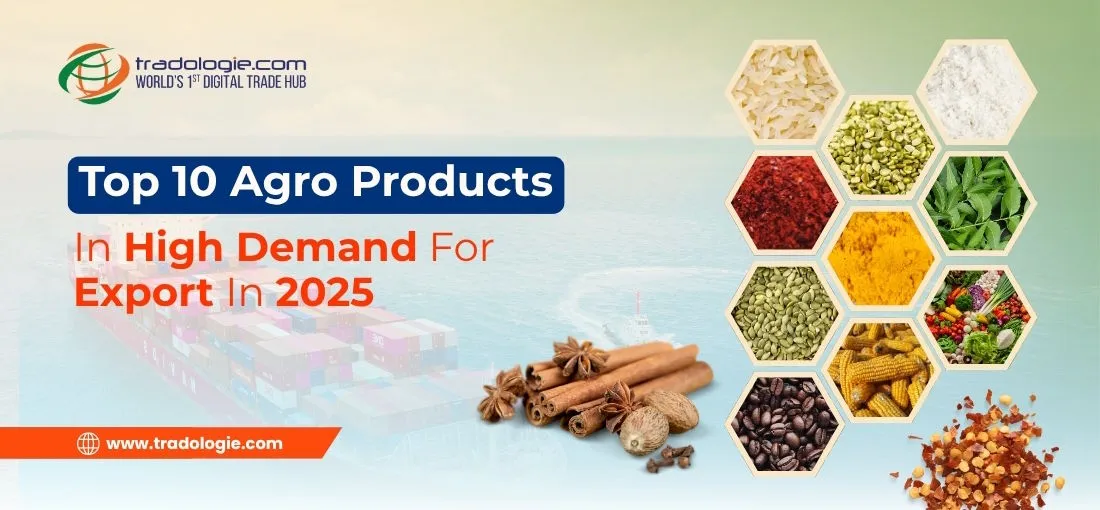
Top 10 Agro Products in High Global Demand for Export in 2026
India’s agricultural exports are entering a new growth phase in 2026, driven by rising global food demand, climate-related supply disruptions, and increasing focus on food security across Asia, Africa, and the Middle East. Countries are actively diversifying their sourcing partners, creating new opportunities for Indian exporters in rice, spices, pulses, oilseeds, and value-added agricultural products.
Global Agro Export Outlook 2026
Global food inflation, population growth, and climate change are reshaping agricultural trade flows. Import-dependent countries are building long-term supply partnerships, while demand for traceable, sustainable, and high-quality agro products is increasing. This trend is expected to accelerate Indian agri exports in 2026 and beyond.
Why Are These Agro Products in High Demand?
The global appetite for Indian agro products is growing rapidly, and it’s no coincidence. A mix of economic, health, and policy-driven factors is driving this surge in demand across continents.
Several factors are contributing to the global demand for Indian agro products such as :
- Rising population and food security concerns worldwide.
- Preference for organic and sustainable farming outputs.
- Supportive Indian agri-export policies and infrastructure development.
- Global health trends boosting the demand for Indian spices, pulses, and herbal crops.
- Expansion of FTAs and bilateral trade relationships.
Let's discuss the top agri products in high demand for export in 2026.
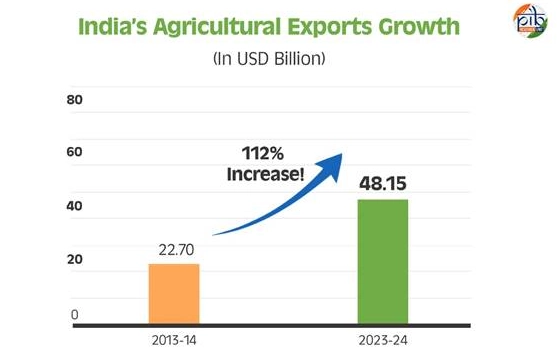
Agricultural Exports Growth
India’s agricultural exports increased from USD 22.70 billion in 2013-14 to USD 48.15 billion in 2023-24. We can understand this growth in simple way by the given figure.
Top 10 Agro Products for Export in 2026
As global markets shift towards healthier, sustainable, and quality agricultural imports, India continues to shine as a leading agro-export hub. Here’s a detailed look at the top 10 agro products that are driving India’s export engine in 2026:
1. Basmati and Non-Basmati Rice
India is the largest rice exporter globally, and this trend will continue in 2026. With consistent demand from the Middle East, Africa, and parts of Europe, Indian rice, especially basmati rice varieties, remains a staple in international kitchens.
- FY 2023-24 exports: More than 17 million tonnes .
- Top buyers (importers) : The top importers countries are Iran, Saudi Arabia, UAE, Iraq, and the USA, etc
The ROI is highest when buyers schedule pre-fixed meetings with shortlisted suppliers and follow up with third-party audits or sampling post-event.
Demand for Indian rice is expected to remain strong in 2026 due to rising imports in Indonesia, the Philippines, and African nations. Supply uncertainties in other exporting countries are also supporting India’s competitive position in global rice trade.
2. Wheat
Global wheat shortages and climatic changes are increasing India's importance as a key wheat exporter. With good harvests and buffer stock availability, India is well-positioned to meet demand from Southeast Asia and Africa. Government initiatives under the Indian export policy also support this growth.
3. Pulses (Lentils, Chickpeas, Moong, etc.)
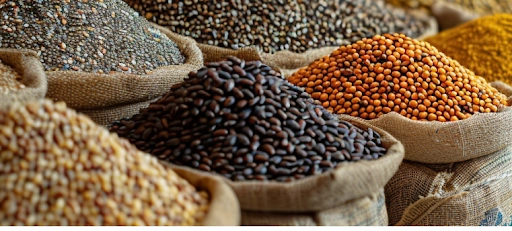
Pulses are the main source of protein globally and it is a most profitable agricultural product for Indian farmers. India is not only the world’s top producer of pulses but also a key exporter, with major shipments going to Canada, the USA, and the UAE. With global demand for plant-based protein sources increasing, pulses remain highly profitable.
- Export growth in 2024: More than 20% YoY.
4. Spices (Black Pepper, Turmeric, Cumin, etc.)
Spices are among India’s most iconic export products, cherished for their quality, aroma, and medicinal properties. Global buyers highly value Indian spices like Tellicherry pepper, Lakadong turmeric, and Rajasthan cumin for their authenticity and potency. The global demand towards natural remedies and health conscious diets has increased the demand for Indian spices, mainly in the USA ,Germany,Uk, and Middle East.
- Top markets: The top markets of spices are USA, Germany, UK, UAE,etc.
5. Oilseeds (Soybean, Mustard, Groundnut)
Oilseeds are an evergreen export category in Indian agri exports in 2026. Countries like China, Vietnam, and the EU continue to import soybean and mustard oil in bulk for edible oil production and industrial use.
- FY 2023-24 oilseed export : Oilseed exports are $1.8 billion.
The global edible oil supply chain remains volatile, which is supporting demand for diversified sourcing. Indian oilseed exports are likely to benefit from this shift.
6. Maize (Corn)
Maize is used both as human food and animal feed, maize exports from India are growing due to competitive pricing and quality standards. Demand from Vietnam, Malaysia, and South Korea is rising in 2026.
7. Tea and Coffee
India’s premium Darjeeling tea and Arabica coffee continue to dominate European and American markets. With a growing taste for authentic and organic beverages, Indian exports are set to grow even further in 2026.
- Top destinations: The top importers are The USA, Germany, and, Russia.
8. Fruits and Vegetables (Mango, Grapes, Onion, etc.)
Fresh produce exports are rising, especially for Alphonso mangoes, Thompson seedless grapes, and Nashik onions. With improved cold-chain infrastructure, India is set to boost perishable exports.
- Fresh fruit exports FY 2024-25: Projected growth 25%.
9. Cotton
India ranks among the top cotton exporters, meeting demand from textile giants like Bangladesh, China, and Vietnam. Government support to promote cotton clusters and ginning units is also boosting exports.
10. Herbal and Medicinal Plants (Neem, Tulsi, Ashwagandha)
With global wellness trends booming, India’s herbal and ayurvedic sector is becoming a high-potential segment. Demand for raw medicinal plants is rising in Europe and North America.
- Herbal product exports FY 2024: It is $1 billion+.
What’s Boosting Growth in India’s Agri Exports?
India’s agri-export sector has grown faster in recent years, thanks to a combination of b policy support, infrastructure development, and evolving global trade dynamics. Some key drivers are given below :
- Supportive Agri Export Policy 2018 and new FTAs .
- Mega Food Parks and Infrastructure Investments.
- Quality certification and traceability via APEDA & Spices Board.
- Market diversification towards Europe, Asia-Pacific & Latin America.
Often facilitated by local trade chambers or embassies, such visits are especially important when sourcing through a long-term contract.
Fastest Growing Import Markets for Indian Agro Products
Key emerging markets include Indonesia, Vietnam, Bangladesh, African countries, and the Middle East. These regions are increasing imports due to population growth, food inflation, and limited domestic production.
Conclusion
As global food demand continues to grow, Indian exporters who focus on quality, compliance, and long-term partnerships are expected to gain the most in 2026. Access to verified buyers and transparent trade processes is becoming an important factor in building sustainable export businesses.
Want to export top Indian agri products without the hassle of middlemen and market uncertainty?
Tradologie.com simplifies bulk agri trade through real-time negotiation, verified buyers, and transparent deals

.webp "Trade Shows vs. Digital Trade Hubs in 2026: Why Smart Agro Exporters Prefer Tradologie for Verified Global Buyers")