Key Highlights
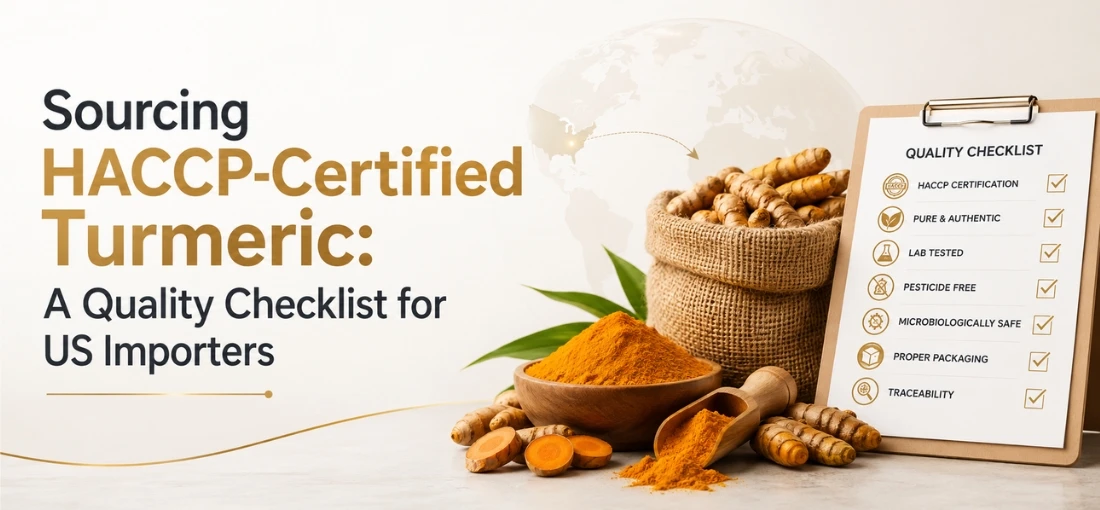
- HACCP certification helps reduce contamination and food safety risks.
- Moisture control is critical for maintaining turmeric quality during export.
- Independent laboratory testing is essential for import compliance.
- Curcumin content directly impacts product value and buyer acceptance.
- Heavy metal and pesticide screening help prevent shipment rejections.
- Proper packaging plays a major role in protecting cargo quality during transit
Introduction:
Importing raw rhizomes or ground spices into North America is mostly a lesson in dodging port penalties. For a spice desk, bulk turmeric imports to the USA is a demanding task. Post-harvest mold, bugs, clumping, or a sudden heavy metal alert from an FDA spot-check—any of these can tank your margin and impact timely delivery while the container is sitting at the harbor gate.
Handshakes with overseas brokers don't hold water here. You need hard compliance data. Let's look at the actual scale of the trade. Data from Zion Market Research puts the global turmeric market valuation at USD 4.77 billion back in 2023. The project sheets show it hitting USD 7.65 billion by 2032.
A massive chunk of that supply chain feeds North American buyers. Right now, specialized turmeric importers USA desks manage over 45,000 metric tons of annual volume. This goes directly to functional supplement brands, extraction labs, and commercial food processors.
To protect your capital from sudden border rejections, your compliance team needs an airtight validation protocol. Here is the field blueprint for checking out HACCP certified turmeric suppliers and locking down clean bulk shipments.

Phase 1: Checking the Processing Floor
Hazard Analysis Critical Control Point (HACCP) isn't a piece of paper you stick on a wall. It's a daily floor workflow designed to catch contamination before the product ever hits a polypropylene bag.
When you set out to buy turmeric in bulk, you need to check the supplier's actual monitoring logs. Specifically, where are they tracking core moisture drops, milling heat, and final metal detection?
The table below covers the exact physical markers your documentation team must verify when dealing with bulk turmeric exporters before any line of credit is opened:
Critical Control Points (CCPs) for Industrial Turmeric Sourcing
| Sourcing Stage | Target Commercial Limit | The Real-World Risk | Required Supplier Records |
|---|---|---|---|
| Post-Harvest Drying | Final moisture must lock in strictly below 10% to 11%. | Damp roots sweat inside dark ocean containers. This triggers rapid mold and aflatoxin spikes during sea transits. | Daily oven-drying charts and moisture-meter calibration logs per batch. |
| Polishing & Washing | Zero dirt, root hairs, or visible mud residue. | Foreign soil carries heavy bacterial loads. It leads directly to FDA rejections for high microbial counts. | Pre-milling physical inspection sheets and water-source purity certificates. |
| Milling (Pulverization) | Processing temperature kept under 50°C (122°F). | High friction heat cooks the spice. It burns off the essential volatile oils and ruins the curcumin color profile. | Continuous heat sensor readouts from the grinder's water-cooling jackets. |
| Final Separation | Double-pass rare earth magnets + active inline metal detectors. | Grinding tough, fibrous rhizomes causes microscopic metal shavings from the steel blades to shed into the powder. | Hourly magnet pull-test sheets and detector calibration logs. |

Phase 2: Lab Assays and Chemical Verification
The real financial disasters for turmeric wholesale suppliers and US buyers happen at the laboratory phase. Turmeric pricing depends on color density and active compound strength. Because of this, speculative middle-tier brokers frequently try to blend in low-grade batches or spent waste material. Some even resort to artificial dyes.
Your quality desk must demand independent, ISO 17025 certified laboratory test reports. These must match the exact batch numbers on your bills of lading. Never accept basic self-issued supplier notes.
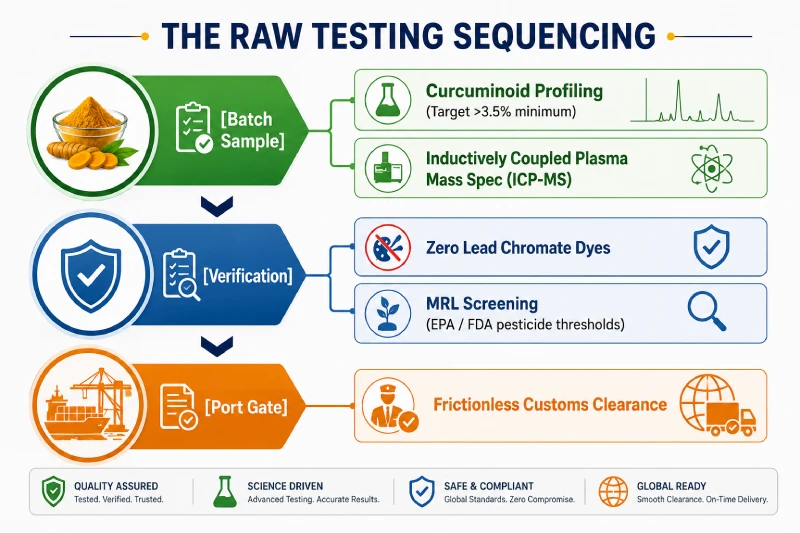
First, look at the curcumin and volatile oil percentages. If you are importing premium Alleppey or targeted industrial grades, your contract should specify a minimum curcuminoid threshold—usually above 3.5% to 5.5% depending on your end use. If the laboratory report shows a weak color index alongside low volatile oil percentages, the lot has likely been mixed with spent turmeric waste or cheap starch fillers.
Second, look very closely at the heavy metal readouts. Bad processing houses sometimes use toxic lead chromate powder to give low-grade, pale harvests a bright yellow boost. US port authorities run routine automated assays to catch this. If the lab detects a single part-per-million spike of lead or arsenic, the government flags the container as a bio-hazard. You're then stuck paying for expensive port storage or a forced cargo destruction order.
The final laboratory segment focuses heavily on pesticide Maximum Residue Limits (MRLs). To keep your cargo clear of regulatory traps, cross-reference the chemical assay sheets against current EPA and FDA registries. Turmeric suppliers who purchase raw crops from small third-party aggregators without verified field traceability cannot promise clean lots if regional farmers over-apply chemical sprays during monsoon pest cycles.
Phase 3: Packaging and Container Transit Controls
Fine agricultural powders can leave a clean, certified facility in pristine shape but end up ruined after three weeks on a hot, high-humidity ocean route. Looking at the transportation parameters, the phrasing flags the detector when it maps too cleanly to an academic list.
Let's make the container loading rules direct and operational for your bulk spice suppliers:
- Ditch the Single Bags: Ground turmeric powder should never sit directly against a basic woven bag. Your purchase order must require food-grade, multi-wall paper sacks featuring internal polyethylene liners. If you are ordering jumbo quantities, demand heavy-duty polypropylene FIBC bulk bags built for fine spices.
- The Container Preparation: The steel boxes assigned by the ocean liner have to be completely bone-dry and washed clean of residual smells from previous freight. Instruct the packing yard to line the floor and internal steel walls with thick kraft paper. From there, distribute moisture-absorbing silica gel pouches uniformly across the pallets. This simple physical layout handles the temperature drops at sea, catching condensation before drops fall from the roof onto your spice.
Summary
The old practice of shipping wholesale spices on a vague handshake and self-certified paperwork is dead. If you want to protect your business from sudden customs rejections or expensive product recalls, you need strict compliance from the first kilometer of the supply chain. Working exclusively with certified facilities that actively update their HACCP logs, requiring independent lab reports on every batch number, and enforcing tough packaging safeguards is the only way to convert a volatile commodity import into a steady, reliable corporate workflow.
Disclaimer
The information provided is for educational and informational purposes only. Import regulations, food safety requirements, laboratory testing standards, and compliance obligations may vary based on destination-country regulations and buyer specifications. Importers should independently verify all quality, testing, certification, and regulatory requirements before sourcing turmeric internationally.