Key Highlights
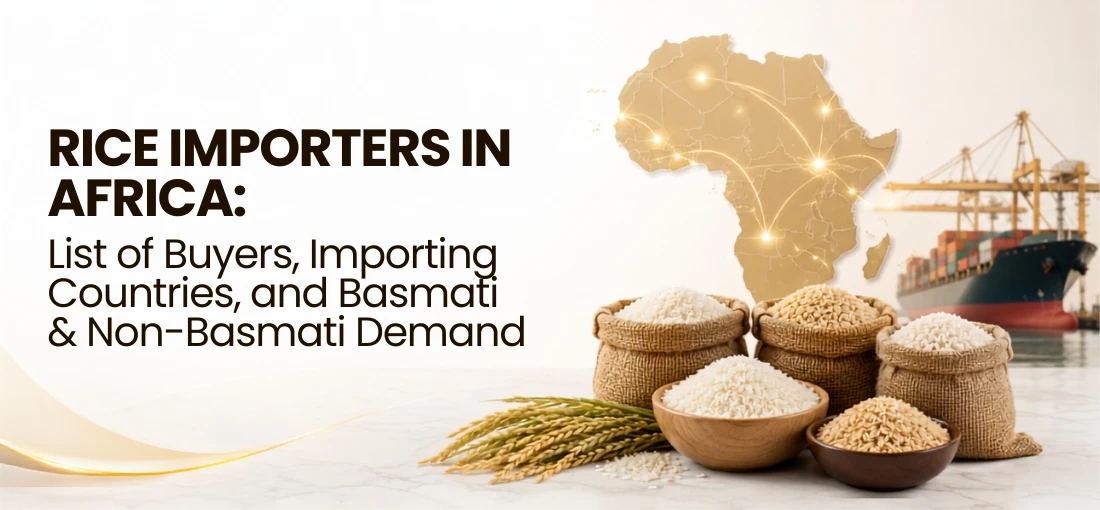
- Africa remains one of the world's largest rice import regions.
- Kenya, Benin, Côte d'Ivoire, Somalia, and Guinea are major rice import markets.
- Demand spans both premium Basmati and high-volume non-Basmati rice
- Urbanization continues to drive rice consumption across the continent.
- Direct engagement with importers can improve export margins.
- Compliance and documentation remain critical for successful exports.
Introduction:
If you run an international agricultural trading desk, the continent of Africa cannot be treated as a secondary thought. It represents the absolute frontline of the global rice trade. Driven by booming urban populations and shifting household eating habits, regional production cannot keep up with local consumption networks.
But if you want to access these margins safely and export rice in bulk to Africa, stop looking at the continent as a single, uniform market. Selling rice into Sub-Saharan corridors requires a highly technical approach to localized taste profiles, strict payment mechanics, and separate product lanes.

The baseline market totals tell an incredible story of growth. According to verified analytics from Grand View Research, the global rice market size reached USD 294.3 billion in 2023, and it continues to scale up steadily. Within this massive framework, African demand functions as a primary engine. The Africa rice market size is projected to grow from USD 29.98 billion in 2025 to USD 31.23 billion in 2026 and is forecast to reach USD 38.30 billion by 2031 at a 4.17% CAGR over 2026-2031 according to Mordor Intelligence.
To map out a profitable export program, your business must master the operational realities behind the two completely different product streams dominating the continent: the premium, high-value aromatic basmati lanes, and the massive, high-volume parboiled and broken non-basmati networks.
The Basmati Frontier: Tracing Luxury and Premium Niches
Let's dismantle a common trade myth: that African rice importers only look for the cheapest possible non-basmati options. If you examine the detailed data by the India Rice Exporters Federation, you find an active, highly profitable premium aromatic segment expanding across multiple regional hubs.
The export data highlights a permanent shift in purchasing power, as evidenced by the multi-year trajectory of basmati rice importers in south africa and East African gateways:
India Basmati Rice Exports to African Countries
| Target Destination Market | FY 2021-22 Volume (Metric Tons) | FY 2021-22 Value (INR Crores) | FY 2024-25 Volume (Metric Tons) | FY 2024-25 Value (INR Crores) | Core Supply Chain Dynamic |
|---|---|---|---|---|---|
| Kenya | 11,074 | 71 | 68,369 | 478 | High-velocity expansion; serves as the main logistics gateway for East African retail networks. |
| Algeria | 18,263 | 112 | 48,936 | 379 | High-value Mediterranean corridor demanding top-tier grain elongation profiles. |
| South Africa | 15,878 | 123 | 28,714 | 284 | Premium retail-driven market focusing heavily on branded pouch configurations. |
| Somalia | 9,716 | 59 | 24,459 | 192 | Steady, long-term procurement lines anchored by traditional consumer preferences. |
| Libya | 4,961 | 35 | 15,790 | 133 | Intense North African niche paying top value for elite long-grain aromatic lots. |
| Nigeria | 4,622 | 39 | 14,564 | 138 | Growing affluent urban consumer segment bypassing standard raw white grains. |
| Mauritania | 5,450 | 36 | 12,250 | 102 | Expanding West African footprint with consistent gains in value density. |
| Tanzania | 7,748 | 49 | 12,325 | 100 | Stable East African retail lane with a steady consumption baseline. |
(Data Sourced via India Rice Exporters Federation)
The Non-Basmati Engine: Pushing Heavy Tonnage Into the West
While basmati holds down the luxury retail sector, non-basmati rice configurations act as the heavy engine for the entire rice import in africa ecosystem. This is a game defined by massive bulk sea-freight vessel charters and deep-port offloading operations.
To map out where the bulk weight is dropping, your sales team can trace the major rice importing countries in Africa using the latest transactional custom logs:

High-Volume Non-Basmati Destination Matrix (African Corridors)
| Sovereign Target Country | Closing Export Volume (Metric Tons) | Global Export Value (USD Millions) | Sovereign Supply Chain Status | Core Market Realities & Overland Routing |
|---|---|---|---|---|
| Benin | 1,527,821 | $554.35 | Excellent | Absolute volume epicenter; Cotonou port acts as the primary pipeline for landlocked West African hubs. |
| Guinea | 903,514 | $339.66 | High Growth | Massive coastal consumption sink for 100% broken white rice profiles. |
| Cote D'Ivoire | 725,210 | $271.17 | High Growth | High-velocity procurement lane for parboiled grains targeting urban supply grids. |
| Kenya | 541,691 | $219.87 | High Growth | Commercial backbone for East African redistribution networks. |
| Somalia | 492,708 | $187.32 | Growing | Core market for long-grain white rice varieties, anchored by deep trading networks. |
| Liberia | 370,742 | $142.45 | Stable | Consistent, non-volatile bulk parboiled imports feeding localized populations. |
The On-the-Ground Buyer Matrix: Corporate Importing Houses
To bypass expensive intermediary brokers and protect your export margins, your business must establish direct lines of communication with the verified corporate African rice importers managing the container slots at the major ports.
This list has the primary companies importing rice in Africa alongside their target procurement preferences:
Top Basmati Rice Importers in Africa
These top Basmati Rice importers in Africa manage premium, high-value aromatic grain portfolios. They focus heavily on strict grain elongation specifications, aged profiles (like 1121 and 1509), and branded retail pack distributions for affluent urban and specialty consumer segments.
| Verified Corporate Importer | Primary Regional Hub | Target Basmati Specifications | Core Distribution Grid & Brands |
|---|---|---|---|
| Tiger Brands | South Africa (Johannesburg) | Premium 1121 & 1718 Sella / Steam Basmati | Dominates the southern retail corridor; manages high-end product placements across major supermarket chains. |
| Akila Trading | South Africa (Durban) | Containerized premium 1121 Sella and aromatic long-grain | Highly active independent trading house executing direct B2B supply arrangements across the SACU region. |
| Aqsa Commodities Limited | Kenya (Nairobi) | Branded 1121 Sella and traditional Basmati retail pouches | Premier East African distributor specializing in premium consumer-pack placements in regional retail networks. |
| Olam Agri Africa | Côte d'Ivoire / Nigeria | High-end aromatic long-grain and branded Basmati variants | Multinational supply chain giant; leverages premium brands like Royal Aroma to capture affluent urban demographics. |
Top Non-Basmati Rice Importers in Africa
These top non-basmati rice importers in Africa handle the heavy tonnage engine of the African continent. Their operations are built around large-scale container logistics or full bulk vessel charters, focusing on parboiled variants, wholly milled long-grain white rice, and 100% broken configurations.
| Verified Corporate Importer | Primary Regional Hub | Target Non-Basmati Specifications | Core Distribution Grid & Brands |
|---|---|---|---|
| SDTM (Groupe Carré d'Or) | Côte d'Ivoire (Abidjan) | Double-sortexed parboiled lots and 100% broken white rice | The absolute volume titan of Côte d'Ivoire; frequently controls up to 25% of the coastal import block. |
| Stallion Group | Nigeria / Côte d'Ivoire | Bulk charters of 5% to 25% broken long-grain white rice | Mega-infrastructure setup across major West African deep-water berths; manages massive regional wholesale transit pipelines. |
| Pioneer Foods (PepsiCo) | South Africa (Cape Town) | Bulk parboiled rice lots for industrial and retail pack lines | Pulls massive volume frameworks directly through the Port of Durban to feed the market-leading Spekko brand footprint. |
| Willowton Group | South Africa (Pietermaritzburg) | High-volume parboiled rice configurations | Mega-milling and distribution group utilizing an extensive private transport fleet to distribute the Allsome brand. |
| Olam Agri Africa | Nigeria (Lagos) | Standard parboiled rice and 5% broken white rice | Manages market-leading bulk volume brands like Mama's Pride alongside domestic agri-processing networks. |
| Wacot Rice Limited | Nigeria (Lagos) | Husked, brown, and semi-processed bulk long-grain inputs | Agri-industrial corporate anchor focusing on large-scale raw material procurement to feed major domestic milling assets. |
| Framara Merchants Limited | Kenya (Mombasa) | Wholly milled long-grain white rice and parboiled lots | Prominent East African trade house executing high-frequency bulk cargo procurement and regional wholesale distribution. |
Comprehensive Exporter Compliance Matrix
If you want to move cargo smoothly into any rice importing countries in Africa, you cannot rely on loose verbal agreements or secondary clearing agents. Your document control team must verify this exact seven-point compliance folder before your containers are ever loaded onto a vessel:
| Mandatory Trade Document | Primary Issuing Authority | Practical Purpose at African Customs Port |
|---|---|---|
| Import Export Code (IEC) | DGFT Portal (India) | Your primary ten-digit border passport; required to file any export manifests. |
| APEDA RCMC Certificate | APEDA Authority | Verifies your legal status as a licensed exporter of subcontinental grains. |
| Certificate of Origin (CoO) | Chamber of Commerce / DGFT | Statutorily proves where the crop was grown; essential for clearing regional tariff rules. |
| Phytosanitary Certificate | Plant Quarantine Bureau | Confirms the physical batch is completely free from regulated agricultural pests and crop diseases. |
| Laboratory CoA (PCR Assay) | Accredited Testing Facility | Explicitly proves the cargo matches zero-GMO thresholds and meets strict heavy metal guidelines. |
| Clean Bill of Lading (B/L) | Ocean Shipping Line | The ultimate title document detailing the exact container numbers and port-to-port routing. |
| FDI / Pre-Import Clearance | Destination Ministry of Agriculture | Must be secured by the African buyer prior to shipping to ensure immediate port entry permissions. |
Defensive Logistics for High-Tonnage Shipping
Because African port gateways face intense local congestion and use strict manual and automated custom audits, smart trading firms don't just focus on finding a buyer. They aggressively insulate their capital from terminal variables using a clear, multi-stage defensive strategy:
| Operational Risk Factor | Direct Financial Consequence | Mandatory Logistics Defense Clause |
|---|---|---|
| Destination Port Congestion / Custom Audits | Triggers unexpected processing hold-ups, causing standard container timelines to fail. | Contractual Buffer: Insist on a minimum 14-day factory-to-dock free-time clause listed explicitly on your bills of lading. |
| Terminal Free-Time Exceedance | Compounds daily port demurrage penalties and shipping line container detention charges simultaneously. | Financial Defense: This extended window ensures that a slow paper review or random botanical assay won't drain your transaction margins. |
| Clerical Typographical Errors | Systems flag discrepancies instantly, forcing containers into staging yards for manual physical checks. | Manifest Cross-Verification: Documentation desks must manually cross-verify every single invoice line against weight slips prior to vessel departure. |
| High Ambient Transit Humidity | Triggers container sweat, leading to rapid clumping and severe internal mold decay. | Material Protection: Line container walls with heavy craft paper, pack cargo in multi-wall moisture-barrier bags, and deploy clay desiccants along roof tracks. |
Summary
The era of the casual commodity broker who relies on loose documentation and basic, uncleaned agricultural lots is drawing to a close. The future of international agricultural trade belongs to supply-chain-literate trade desks that treat technical compliance, precise packaging quality, and strict terminal risk management as core business priorities. By professionalizing your processing standards, securing your container logistics against environmental threats, and maintaining an absolute, error-free paper trail, you can effectively insulate your trading desk from volatility and transform shifting African demand into a highly predictable, maximum-profit enterprise.
Want to export rice in bulk to Africa? Connect with interested buyers on Tradologie today.




.webp "Types of Rice in India’s Export Market: Complete Guide for Global Buyers")