Key Highlights
- Record Growth & Targets: The industry hit a massive record of 280.40 million kg in exports in 2025, with the Tea Board setting an aggressive 300 million kg target for 2026.
- Top Destinations: The UAE acts as the primary hub (re-exporting heavily to Iran and the MENA region), while China saw a massive 158% demand surge for orthodox blends.
- Production Divide: Assam serves as the volume backbone for bulk black tea (CTC and Orthodox), whereas Darjeeling operates as a highly lucrative, low-volume premium niche facing climate-related yield drops.
- Severe EU Compliance Risk: Stricter EU Maximum Residue Limits (MRLs) rolling out through 2026 threaten over 40 million kg of tea; certified third-party testing and farm-to-port tracking are now absolute necessities.
- Export Codes: Standard bulk black tea shipments utilize HS 09024020 and require mandatory clearances from both APEDA and the Tea Board of India.
- Supply Chain Shift: Smallholder farmers now account for over 50% of India's total tea production, making grassroots sustainable farming practices critical for continued global market access.
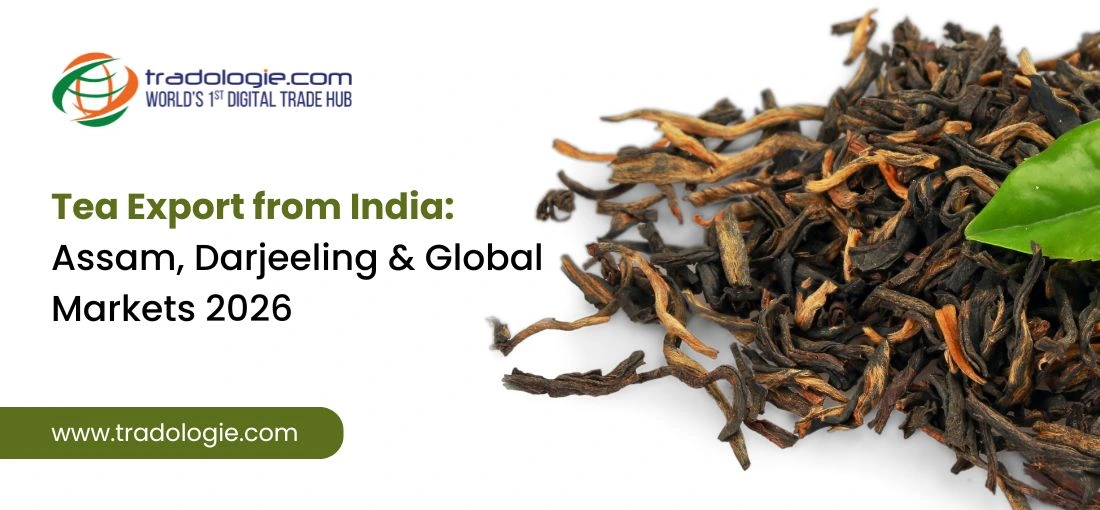
Farm products face a tricky mix of world events, weather changes, and shifting buyer tastes. Indian tea stands out in this mix. The path of tea export from India is a great example of tough trade and flexible farming. In 2025, the industry hit a massive record. Total shipments reached 280.40 million kilograms. Now, the sector enters 2026 with strong energy. This growth did not happen by chance. It came from finding new markets. It also came from smart trade rules and better farm supply chains. India's top tea exporters made this happen.
Large buyers, global sellers, and trade experts need to look closely at this sector. They must look past just the tea leaf itself. It takes deep study of bulk trade moves and local farm yields. It also needs a look at the big money policies shaping world trade. We can map the future of this huge farm business. To do this, we must look at how different areas sell their goods. We study the high hills of West Bengal. We also study the wide valleys of the Northeast. Indian teas sit at many price points. They range from daily grocery store blends to rare luxury types. This keeps India as a top player in meeting world drink demands.
Analyzing the Core Indian Tea Export Markets
The global tea trade map has changed a lot lately. Old bases in Europe are still important for top-tier teas. However, Indian tea export markets look different now. High sales to the Middle East are now common. We also see surprise jumps in demand from East Asia. Let's look at numbers from the Tea Board of India and APEDA. Export earnings crossed the USD 923 million mark by late 2024-25. This shows about 13% growth over three years.
This money growth connects directly to smart moves. For example, high tariffs hurt the US market for a while. Sellers quickly found new buyers. This pivot worked well. Export amounts to China jumped by 158% in early 2025. This built a strong new base for orthodox tea types.
Table: Primary Export Destinations and Strategic Importance (2025-2026)
| Export Destination | Market Share (%) | Strategic Trade Role |
|---|---|---|
| United Arab Emirates (UAE) | 17.9% | Primary re-export hub for the Middle East and North Africa (MENA). |
| Iraq | 13.4% | Leading destination for orthodox black tea bulk purchases. |
| Russian Federation | 7.0% | Legacy market stabilizing long-term contract volumes. |
| United States (USA) | 9.2% | Experienced a 2025 volume decline (15.21M kg vs 17.14M kg in 2024) due to temporary tariff disruption. Tea was eventually exempted from US reciprocal tariffs in November 2025. Recovery expected in 2026 with renewed buyer interest. |
| China | ~6.0% | Rapidly expanding frontier market for specialized orthodox blends. |
Iran — The Hidden Fifth Market:
Iran recorded 11.25 million kg of Indian tea imports in 2025. This is up from 9.25 million kg in 2024. That is a 21.6% increase in just one year. However, most tea meant for Iran does not arrive there directly. It moves through the UAE first. The UAE acts as India's most important trade bridge for Iranian buyers. Because of this, the UAE's massive import numbers (50.71 million kg in 2025) hide a big secret. A huge part of that tea actually goes to Iran and the wider Middle East. Indian sellers must understand this setup to set the right prices. UAE handlers add their own fees to the cost. If trade rules allow it, selling directly to Iran brings much higher profits.
The United States (USA):
US volumes dipped to 15.21 million kg in 2025 from 17.14 million kg in 2024. This drop happened after the sudden start of harsh tariffs. However, tea was freed from these tariff rules by November 2025. The new trade deal framework should help sales bounce back in 2026. The US remains a very high-value premium market. It is especially strong for specialty and organic tea grades.
Data from the Food and Agriculture Organization (FAO) backs up these market shifts. The FAO notes that European tea drinking has stalled. But, demand in the Near East and Asia is growing steadily at 2.5% per person. For global buyers, this means 2026 will be a highly crowded and tight market to buy in.
Assam Tea Export: The Backbone of India's Bulk Trade
High volume is the base of commodity trading. For Indian farming, Assam drives this volume. The state has clear natural perks. It has low ground, high dampness, and heavy rain. These factors create the strong, malty taste that the world wants. Because of this, Assam tea export is the true backbone of India's global sales.
Assam farms use two main methods to make tea. Here is how they break down:
- CTC (Crush, Tear, Curl): This is the staple for local drinking and standard tea bags worldwide.
- Orthodox: This loose-leaf style is currently leading the massive export boom. Picky buyers in Iraq, Iran, and Turkey really prefer these orthodox grades. This preference drives very heavy bidding at auctions.
Keeping up this huge output takes hard work. Farms must always invest in healthy soil and bug control. Experts see more farms in the Assam Valley using Voluntary Sustainability Standards (VSS). This change is very important. The FAO says over 24% of world tea now follows VSS rules. You must meet these green standards to sell to eco-minded buyers in Europe and North America.
Darjeeling Tea Export: Premium Niche in the Global Agrimarket
Assam gives high yields on flat land. The steep hills of West Bengal offer a totally different story. People often call it the "Champagne of Teas." Darjeeling tea export does not work like normal bulk trade. Instead, it is a very premium, low-volume, and high-priced farm product.
True Darjeeling has a strict Geographical Indication (GI) tag. It only grows on 87 special estates. The land sits high up in the mountains. It gets strong sun, has unique soil, and sees big shifts in day and night heat. This forces the tea plant to grow slowly. The slow growth packs rich scents into the leaf. The harvest has different seasonal flushes. The First Flush is very floral. The Second Flush has a fruity muscatel flavor. Trading it is like trading fine wine.
But this top-tier tea faces hard farm problems. Climate change brings weird rain patterns and long dry times. This hurts the vital first flush crops. Total yields have dropped. This makes buying very hard. Because of this, buyers in Japan, Germany, and the UK act early. They lock in contracts way ahead of the harvest to ensure they get tea. For global traders, Darjeeling offers high profits. However, it requires smart planning to deal with bad weather risks.
Critical Compliance Alert: EU's Stricter MRL Regulations and Their Impact on Indian Tea
The biggest rule risk for Indian tea sellers in 2026 comes from Europe. The European Union is forcing tighter limits on pesticide traces. These are called maximum residue limits (MRLs). The new MRL rules start rolling out between May 2025 and March 2026. Experts think this directly threatens over 40 million kilograms of high-end tea. Assam black teas face the highest risk. Managing EU MRL tea India rules is now a top priority to keep trade flowing.
Germany and the UK are the most exposed markets. Together, they buy about 20 million kilograms of Indian tea each year. Normal Assam CTC and orthodox teas might fail the new tests if they use certain bug sprays. This leads to border bans. If it happens too often, suppliers get blacklisted. This hurts business badly and takes years to fix.
For EU and UK buyers, this shift changes how they must shop. Here are the needed steps:
- Ask for fresh third-party MRL test papers. Do this for all Assam black tea orders before signing 2026 deals. Make sure they test for the exact EU chemicals.
- Write organic or IPM-certified (Integrated Pest Management) needs into your buying contracts. These safer grades pass the tough EU tests much easier.
- Pick suppliers who use full farm-to-port tracking. The Tea Board of India export system offers a strict tool for this.
Indian industry leaders want government help. The Tea Board is helping Assam estates switch to safer farming faster. But buyers should not wait around. Checking certificates early is the absolute safest way to buy EU-bound tea in 2026.
The Mechanics of Bulk Tea Export from India: Processing to Port
Moving raw crops into a global trade good needs a tight system. Bulk tea exports from India run like a well-oiled machine. Mostly, it runs through seaports like Kolkata in the east and Kochi in the south. New inland dry ports also help. They move cargo faster from far-away farms straight to the ships.
The world heavily favors black tea. It makes up 96% of all Indian tea sent out. Farms process the crop first. Then, they grade, sort, and pack it into large sacks.
HS Codes for Tea Export from India
| Product | HS Code | Primary Application |
|---|---|---|
| Black tea in bulk | 09024020 | Standard bulk container shipments |
| Black tea in small packets (3–20kg) | 09024010 | Retail-ready and B2B small lot |
| Green tea | 09021000 | Specialty and health food export |
| Other processed tea | 09029090 | Blended, decaffeinated, specialty |
Note: All exports require Tea Board of India registration and APEDA RCMC. EU-bound shipments require full MRL documentation for the specific compounds under EU Regulation 2017/625.
The journey from farm to ship follows key steps:
- Estate Mixing: Small farm crops mix at central hubs. This keeps quality and moisture perfectly even.
- Sales: Digital auctions still help set base prices. But, direct private deals are growing fast. Buyers like private deals for custom blends.
- Health Checks: Shipments face strict tests. They must prove chemical limits meet border laws.
- Shipping: Workers pack the goods into 20-foot or 40-foot sea boxes. They use special liners to block moisture on the ocean.
This fast setup moves huge amounts quickly. It is a big plus when world events or bad crops hit rival nations like Kenya or Sri Lanka.
Key Challenges and Opportunities for Tea Exporters in India
Working in world trade is tough. Tea exporters in India must always adjust their plans to stay profitable. The biggest issue is still the changing weather. The FAO warns that hotter days and weird rain could lower crops in old tea regions. This means farms must spend big money on water pipes and tough new plant types.
Working in world trade is tough. Tea exporters in India must always adjust their plans to stay profitable. The biggest issue is still the changing weather. The FAO warns that hotter days and weird rain could lower crops in old tea regions. This means farms must spend big money on water pipes and tough new plant types.
However, the chances for profit in 2026 are great. Let's look at the bright spots:
- Bilateral Trade Deals: The new Indo-US trade framework erased many tariff doubts. It gives better access to buyers who pay top dollar.
- Untapped Geographies: Sellers are rushing to North Africa. Markets like Algeria, Morocco, and Egypt help balance out flat sales in Europe.
- Value Addition: Sellers want to ship finished, branded retail packs now. This grabs the extra profit margins that foreign packing plants used to take.
The Agrarian Foundation: Sourcing, Sustainability, and the FAO Perspective
To grasp Indian tea's future, look at its farm roots. The old model of giant, single-owner estates is fading. Now, small farmers are taking the lead. Today, smallholders grow more than 50% of all Indian tea.
The FAO states that growing tea helps cure rural poverty. Export money directly pays for local food and better roads. But, getting these small farms into world supply chains needs strict rules. Quality must remain steady.
The Indian government steps in here. Through the Tea Board, it helps pay for green farming. Programs to cut chemical sprays and build healthy soil are not optional anymore. They are absolute musts for trade. Buyers in 2026 demand clear tracking. Can a seller show a clean path from a tiny farm in the Nilgiris to a warehouse in Rotterdam? That ability is now the biggest way to beat the competition.
Future Trajectory: Sustaining Growth in Global Tea Trade
As 2026 goes on, the plan for Indian tea is very clear. It must protect the huge volume from Assam. It must guard the rare, premium status of Darjeeling. It must also keep speeding up the bulk shipping network. India is chasing new trade routes in the Middle East and East Asia. It is also sticking to strict green rules. India is not just playing in the global tea trade. It is actively building its future.
The Tea Board of India feels confident. They are buoyed by the 2025 record of 280.40 million kilograms. Now, they have set a bold goal of 300 million kilograms for 2026. This represents a further 7% growth from the 2025 high. Reaching this goal takes smart work. Sellers must push harder in China. There, China Indian tea export volumes of orthodox teas show shock demand. Growth must also continue in Iraq tea import India numbers. Finally, the US market share must bounce back after the 2025 tariff fix.
For global buyers and farm investors, picking Indian sellers makes great sense. It offers a steady, high-quality, and increasingly green base for their commodity plans.



-(1)converted.webp "Tradologie Reviews: Bridging Global Trade Gaps Through Technology")