Key Highlights
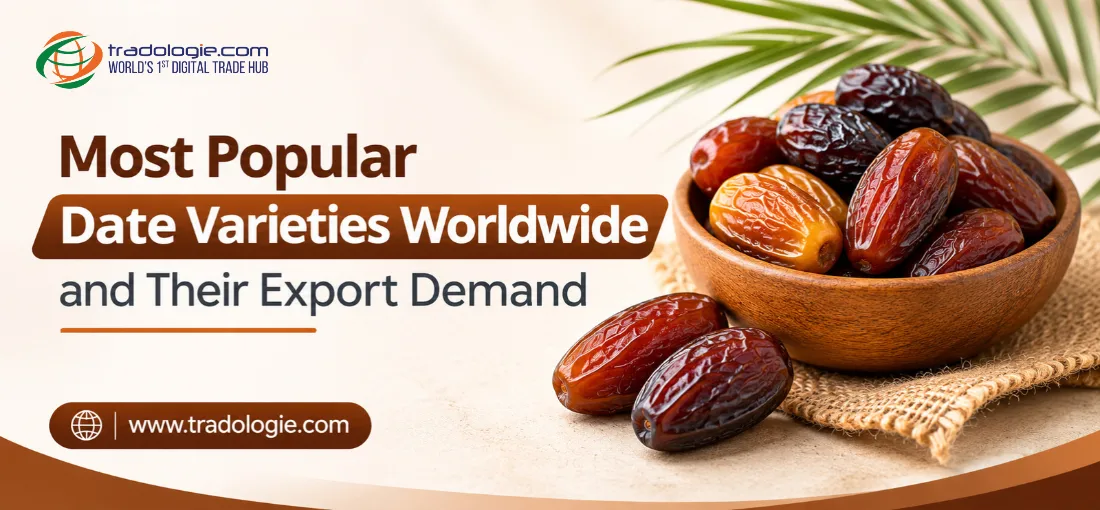
- The most popular date varieties worldwide include Medjool, Deglet Noor, Ajwa, Barhi, Khalas, Sukkari, Mazafati, Zahidi, Halawy and Khadrawy.
- Saudi Arabia, Egypt, Algeria and Iran were the leading date-producing countries in 2024, with Saudi Arabia producing approximately 1.93 million MT.
- Saudi Arabia led global date exports in 2024, valued at US$452.21 million, followed by Israel and Tunisia.
- The European Union was the largest import market in 2024, while India imported approximately US$286.19 million worth of dates.
- Dates are traded internationally under HS 080410, with variety, origin, ripeness, moisture and grade influencing sourcing decisions.
Introduction
Dates are one of the most popular fruits in the Middle East, North Africa and South Asia. There are many different types of dates available including Medjool, Ajwa, Deglet Noor and Khalas. Knowing which dates are the most popular will help you as an importer, exporter, food manufacturer or distributor know what dates to source.
This guide will give you information on the most popular date varieties worldwide. We will look at where they originate from, their commercial properties, major producing countries and export demand.
Different Types of Dates Globally:The Most Popular Varieties
1. Medjool Dates
Medjool dates are one of the most popular date varieties. They are originally from Morocco, however are now commercially grown in many countries including Israel, Jordan, Saudi Arabia, Egypt and the USA.
They are large dates which are soft and chewy. They are sweet tasting with a caramel-like flavour and have lots of flesh on them. This makes them popular in premium packaging, gift boxes, supermarkets and health food.
They are very popular in Europe and North America. They are often seen as a premium natural snack. They are relatively expensive compared to many other dates so it is important to look for uniform sizing, good appearance, moisture control and careful handling.

2. Deglet Noor Dates
Deglet Noor dates (sometimes spelled Deglet Nour) are one of the most commercially important dates. They are commonly associated with Algeria and Tunisia but are also grown in other areas of Libya and the USA.
They are commonly known for their translucent golden amber colour. They are a semi-dry date with a balanced sweet taste. Due to them being quite firm they are popular in packaging, pitted dates, confectionery and food manufacturing.
They are very popular in Europe. France is a key market for North African dates and Deglet Noor makes up a large percentage of Algeria’s date export. They come in a variety of grades so are popular for both retail and food manufacturing.
3. Ajwa Dates
Ajwa dates are also among the most popular date varieties which originate from Madinah in Saudi Arabia. They are dark brown to almost black in colour and have a relatively soft texture. They have a unique mild sweet flavour.
They are unique to the region so are very different to other bulk dates. They are popular in premium packaging, specialty food stores and for those looking for dates from a specific region.
As an importer it is important to ensure the dates are genuine. Ask your supplier for proof that they are genuine and ensure they are described correctly. Do not assume they are interchangeable with other dark dates.
4. Barhi Dates
Barhi dates (sometimes spelt Barhee) are a popular date which can be found in Iraq, Saudi Arabia and other date growing regions. They are well known for being eaten at various stages of ripeness.
They are generally yellow at the Khalal stage and quite firm with a mild sweet taste. As they ripen they become softer and sweeter with a caramel flavour. This makes them unique compared to other dates which are usually sold when fully dried.
They are popular in fresh food stores, specialty food and for those looking for softer dates. As their texture changes as they ripen it is important to ensure they are harvested at the right time. The handling, packaging and cold chain can all have a big impact on their quality.
5. Khalas Dates
Khalas dates are one of the well-known dates from the Arabian Peninsula. They are commonly associated with Saudi Arabia and the United Arab Emirates. They are soft with a balanced sweet flavour and caramel taste.
They are very popular in the Gulf region and are used for everyday eating, hospitality, packaging and traditional foods. They are well known by consumers so are popular for regional wholesalers and supermarkets.
They are available in a variety of grades. Ensure you know what texture, moisture, size and packaging you require.
6. Sukkari Dates
Sukkari dates (sometimes spelt Sukari) are another well-known date from Saudi Arabia. They are commonly associated with the Qassim region. They are very sweet with a soft texture.
They are golden brown in colour with a sweet taste. This has made them very popular with consumers in Saudi Arabia and neighbouring Gulf regions. They are commonly sold as a table date and are popular in packaging. They are popular with distributors and specialty date retailers.
When purchasing, ensure you know what ripeness you require.
7. Mazafati Dates
Mazafati dates (sometimes known as Bam dates) are a soft date which are popular in Iran. They are commonly associated with the Bam region. They are dark brown to black in colour with a high moisture content. They are soft with a rich sweet taste.
They are commonly sold as a fresh or semi-fresh date. Due to their texture they are popular with consumers looking for softer dates. However, care must be taken when storing, packaging and transporting.
They are popular in South Asian and Middle Eastern retail. Ensure you know what moisture, ripeness, shelf life and cold chain requirements there are.

8. Zahidi Dates
Zahidi dates are a semi-dry date which can be found in countries such as Iraq, Iran and the USA. They are a golden/yellow to light brown colour with a firm texture. They have a mild sweet taste.
Their firmness makes them popular in bulk, retail and food manufacturing. They are used in baking, confectionery, date pastes and other processed foods.
They are a versatile date so are popular for those looking for dates to eat directly and those looking for a suitable raw material.
9. Halawy Dates
Halawy dates (sometimes spelt Halawi) are a soft date which originate from Iraq. They are commonly found in other date growing regions. They are a golden brown colour with a tender texture. They have a sweet taste.
They are suitable for eating directly and some processing. Their softness means ripeness, moisture and handling is important.
They are also well known in agricultural research and commercial growing in India. They are commonly found in date growing regions in Rajasthan and Gujarat.
10. Khadrawy Dates
Khadrawy dates (sometimes spelt Khadrawi) are a soft date which traditionally originate from Iraq. They are a dark brown colour with a tender texture. They have a rich sweet taste.
They are eaten as a table date and can be used in foods where a softer texture is preferred. They are different to semi-dry dates like Deglet Noor and Zahidi.
When importing ensure you know what ripeness, moisture, quality and packaging there is.
Major Date Producing Countries
Dates are commonly grown in arid and semi-arid regions. This means they are popular throughout the Middle East and North Africa. In 2024 there was approximately 9.9 million tonnes of dates produced worldwide.
The leading producers were:
| Country | 2024 Production (approx) |
|---|---|
| Saudi Arabia | 1.93 million MT |
| Egypt | 1.75 million MT |
| Algeria | 1.34 million MT |
| Iran | 1.18 million MT |
| Pakistan | 604,243 MT |
| Iraq | 587,190 MT |
| Sudan | 443,134 MT |
| Oman | 400,655 MT |
| Tunisia | 400,219 MT |
| UAE | 333,632 MT |
Saudi Arabia, Egypt, Algeria and Iran make up a large percentage of the world’s production. However, the variety, grade, processing, consumption and positioning will all affect how much is exported.
It is also important to note that these figures are for the total dates produced. The International Nut and Dried Fruit Council have a statistical yearbook which shows how much dates are packaged as table dates. In 2023/24 there was approximately 1.407 million tonnes.
Global Date Export Value
Dates are categorised within the international trade statistics under HS Code 080410. This means it is difficult to split the trade value into individual varieties.
The top exporters in 2024 were:
| Exporter | Value (US$ Million) | Quantity (MT) |
|---|---|---|
| Saudi Arabia | 452.21 | 351,489 |
| Israel | 312.67 | 60,555 |
| Tunisia | 307.42 | 97,594 |
| Egypt | 105.57 | 22,546 |
| Netherlands | 95.97 | 20,209 |
| Algeria | 87.10 | 26,481 |
| United States | 80.53 | 14,298 |
| Jordan | 71.95 | 20,083 |
Saudi Arabia was the top exporter in 2024. Tunisia and Algeria are also well known for exporting dates. The Netherlands are also a key exporter due to their role in international distribution.
Key Import Markets
The top importers in 2024 were the European Union with approximately US444.18 million worth of imports.India and Morocco were also key importers with US286.19 million and US$247.77 million respectively.
France, Turkey, Netherlands, United States and Germany were also key importers. India is a key market for dates. In 2024 they imported approximately US$286.19 million worth of dates. This equates to around 526,596 metric tonnes (HS 080410). The top exporters by value were UAE, Iraq, Iran and Saudi Arabia.
This makes India an important market for exporters looking for buyers.
HS Codes for International and Indian Dates
It is important to know what category your dates fall into.
Internationally they fall into the 6 digit category:
HS 080410: Dates, fresh or dried.
In India they fall into the following categories:
| Indian ITC-HS Code | Description |
|---|---|
| 08041010 | Fresh dates other than wet dates |
| 08041020 | Soft dates (Khayzur or wet dates) |
| 08041030 | Hard dates (Chhohara or Kharek) |
| 08041090 | Other dates |
These are categories based on the type of date and not the variety. Ensure you know what category your dates fall into. Check with your supplier to ensure they are categorised correctly according to the product and current customs tariff.
What to Look For When Importing Dates
The value of your dates will depend on more than just the variety. Ensure you have a written specification for your dates. This should include:
- Variety and Origin: What variety and country or region are they from?
- Ripeness and Moisture: Are you looking for fresh, soft, semi-dry, or dried dates?
- Size and Grade: What size, weight, uniformity, and defect levels are acceptable?
- Appearance and Texture: What colour, flesh quality, skin separation, and texture do you require?
- Pests and Contamination: Are there any pests, mould, foreign objects, or food safety risks?
- Packaging: Are you looking for bulk cartons, packaged dates, pitted dates, or loose dates?
- Storage and Transport: What temperature, humidity, shelf life, and handling conditions do you require?
- Documentation: Ensure you have the correct documents, including an invoice, packing list, certificate of origin, transport documents, and any required health or phytosanitary certificates.
The Codex Standard for Dates recognises that dates can vary depending on the variety. They can also vary depending on if they are pitted, unpitted, pressed or loose. Ensure your dates meet the specification.
Conclusion
There are different varieties of dates available in the international market. Medjool and Deglet Noor are very well known internationally. Ajwa, Khalas, Sukkari, Barhi and Mazafati cater to different consumer markets.
The most important thing to consider when sourcing dates is that they are genuine, of a good quality, correct ripeness, reliable and meet the requirements of your destination market. Knowing this will help you assess your suppliers and choose the right product for your target markets.
Disclaimer
The information presented in this article is intended for general informational purposes. Production figures, export values, import demand and international trade conditions may change over time. The trade statistics cited relate to 2024, while production figures represent the reported estimates for that year. International HS classifications and Indian ITC-HS categories should be verified against the latest applicable customs tariff. Importers and exporters should also confirm product specifications, food-safety standards, documentation and destination-country regulations with the relevant authorities before entering into commercial transactions.