Key Highlights
- Vietnam serves as both a major spice consumption market and a global spice processing hub.
- Indian spice exports to Vietnam reached approximately USD 40.45 million in 2024.
- Black pepper remains the largest spice category exported from India to Vietnam.
- Vietnamese processors source Indian spices for blending, extraction, and re-export operations.
- Demand is rising for high-ASTA chillies, high-curcumin turmeric, and machine-cleaned seed spices.
- Batch traceability and mycotoxin compliance have become critical buyer requirements.
- Moisture control and laboratory testing play a major role in shipment approvals.
- Direct engagement with processors often delivers better margins than broker-led transactions.
Introduction:
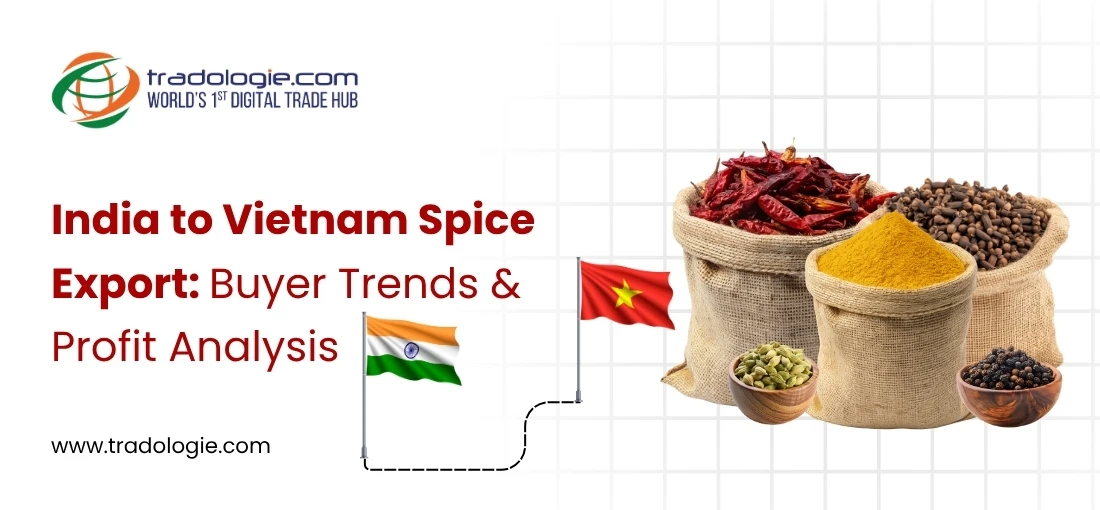
To trace the spice export from India to Vietnam is to watch an ancient maritime corridor transform into a high-octane modern supply chain. There is a specific literary rhythm to this trade—one that mirrors the monsoon winds that originally carried wooden dhows across the Bay of Bengal. Today, however, those dhows are replaced by thousand-TEU container vessels clearing the hubs of Mundra and Chennai, bound for the bustling terminals of Ho Chi Minh City and Haiphong.
For the modern network of India to Vietnam spice export, it represents a complex, fascinating market. It is simultaneously a high-volume consumption sink, a regional culinary powerhouse, and an aggressive, value-adding processing engine that re-exports refined botanicals globally. Maximizing profit in this corridor requires shifting away from basic, speculative commodity dumping toward a highly technical understanding of what Vietnam spice importers actually want.

Market Sourcing Architecture and Sector Valuation
The broad economic blueprint of the Vietnamese market shows a highly resilient consumption space. Independent sector tracking puts Vietnam's overall spice and culinary herb market—including its massive export-oriented processing hubs—at approximately USD 1.8 billion. Driven by rapid urbanization, expanding middle-class disposable incomes, and a booming processed-food manufacturing infrastructure, project models point toward a steady compound annual growth rate (CAGR) of over 6% through the current macro-cycle.
This domestic expansion has created a structural supply deficit that local agricultural systems cannot plug alone. This is where the specialized bulk spice export pipeline from India steps in. Data from the Directorate General of Commercial Intelligence and Statistics (DGCIS) highlights that India handles a critical structural layer of Vietnam's raw material intake.
The overall trading floor parameters are best contextualized by mapping the actual bilateral shipping velocity tracked at border terminals:
Macro India-to-Vietnam Spice Sourcing Profile
According to verified custom data ledger sets pulled from the Trading Economics Database, the specific bilateral segment tracking "India Exports of coffee, tea, mate and spices to Vietnam" settled at an actual value layer of USD 40.45 Million for the 2024 calendar year. The often-quoted multi-billion-dollar figures floating around commercial trade blogs are an analytical error, confusing India's total multi-sector export footprint to Vietnam with this specific agricultural niche.
Commodity Deep-Dive: What Spices Does India Export to Vietnam?
The broad product matrix leaving Indian sorting floors splits into distinct botanical layers. When you analyze the granular shipment logs from Trading Economics alongside the long-term export ledger of the Spices Board of India, the actual itemized commodity flow highlights clear market niches:
1. The Pepper Complex (Genus Piper, Capsicum, or Pimenta)
According to Trading Economics data, this single dominant category brought in an export valuation of USD 20.74 Million in 2024. For a long time, industry outsiders found this line item puzzling: why ship pepper to Vietnam when it is famously the world’s leading black pepper producer?
The answer lies in industrial arbitrage. Vietnamese re-exporters and grinding mills frequently buy Indian whole black and red pepper lots to optimize their blending formulations, manage domestic price spikes, or process specific extraction-grade capsicum variants that local farms don't produce at scale.
2. Seed Spices and Indigenous Inclusions
Operating as a major secondary revenue engine for Indian shipping desks, this segment logged an export value of USD 8.01 Million in 2024, based on global customs tracking.
Granular historical data from the Spices Board of India outlines how specific seed varieties and bulk items scale over time within the Vietnam corridor:

Historical India-to-Vietnam Volume & Realization Trends: Spice export from India to Vietnam
| Commodity Category | Fiscal Cycle | Volumetric Export Weight (Tons) | Total Financial Valuation (INR Lakhs) | Total Financial Valuation (USD Millions) | Sourcing & Quality Specifications |
|---|---|---|---|---|---|
| CHILLIES | 2022-23 | 6,177.55 | 12,247.94 | 15.24 | S4/S17 Stemless, high-ASTA color lot specs. |
| 2023-24 | 11,154.17 | 24,977.18 | 30.17 | Increased intake for regional hot sauce lines. | |
| 2024-25 | 5,780.39 | 9,438.59 | 11.19 | Late-cycle adjustments at destination ports. | |
| TURMERIC | 2022-23 | 520.56 | 477.39 | 0.59 | Nizamabad/Selam whole polished finger. |
| 2023-24 | 441.31 | 502.02 | 0.61 | Stable processing allocation for food coloring. | |
| 2024-25 | 460.74 | 826.08 | 0.97 | Premium high-curcumin extract lots. | |
| FENNEL | 2022-23 | 176.96 | 258.66 | 0.32 | Machine-clean sorting for wholesale mix desks. |
| 2023-24 (*) | 149.48 | 222.21 | 0.27 | Core alignment with regional flavoring demand. | |
| 2024-25 (**) | 295.65 | 253.42 | 0.30 | Late-season volume surge for essential oils. | |
| GARLIC | 2022-23 | 3,082.05 | 1,357.81 | 1.69 | Dehydrated cloves and extraction grade flakes. |
| 2023-24 (*) | 1,735.29 | 1,364.51 | 1.65 | Bulk manufacturing inputs for stable bases. | |
| 2024-25 | 1,501.00 | 1,980.29 | 2.34 | Marked value optimization per metric ton. | |
| TAMARIND | 2022-23 | 5,258.51 | 2,583.58 | 3.22 | Block pastes destined for confectionery lines. |
| 2023-24 | 4,122.86 | 1,958.97 | 2.37 | Concentrated pure pulp extract blocks. | |
| 2024-25 | 16,366.84 | 9,475.69 | 11.13 | Massive multi-fold structural volume spike. |
Sources: Spices Board of India Official Custom Tracking Ledger
Technical Specifications: Indicative Market Pricing
Wholesale pricing across the spice trade between India and Vietnam is highly sensitive to seasonal harvest variables across Gujarat, Rajasthan, and Andhra Pradesh, as well as final volatile oil analysis metrics. Bulk spice importers evaluate contract offers based on specific grading brackets:
Indicative Export Price Ranges (Procurement Benchmarks)
| Botanical Classification | Standard Sourcing Format | Indicative Export Range (FOB Indian Port / USD per kg) | Primary Industrial Application |
|---|---|---|---|
| Grinding Grade Cumin | Machine Cleaned (99% Purity) | USD 3.40 – USD 4.10 | Wholesale seasoning blends and curry powder configurations. |
| Curcumin-Rich Turmeric | Polished Finger Whole | USD 1.85 – USD 2.30 | Extraction of pharmaceutical-grade curcuminoids and cosmetic dyes. |
| Whole Coriander | Eagle Quality (Double Parrot) | USD 1.15 – USD 1.45 | Essential oil distillation and regional instant-noodle spice packets. |
| Bold Black Pepper | 550 G/L (Grams per Liter) Density Whole | USD 5.20 – USD 6.10 | Re-blending lines and value-added retail packaging tracks. |
Mandatory Pricing Disclaimer: Export prices are indicative only and may vary based on product grade, organic certification, destination market, order volume, packaging requirements, quality specifications, and prevailing market conditions.
Shifting Vietnam Spice ImportersTrends: What Vietnamese Spice Importers Actually Want
If you talk to anyone running a logistics desk in Ho Chi Minh City today, they will tell you the old way of doing business is dead. The classic playbook—buying generic, low-grade bulk bags on the spot market and worrying about the documentation later—no longer cuts it. Modern Vietnamese buying houses have integrated deeply with Western global supply chains, meaning they now pass down incredibly strict compliance mandates to their Indian suppliers.
The most significant trend is the institutional demand for Batch Traceability and Mycotoxin Verification. Top-tier Vietnam spice importers will instantly walk away from a deal if you cannot provide a clear paper trail tracking the batch back to the regional farming cluster.
Furthermore, laboratories at Vietnamese entry ports have significantly tightened their validation screens for Aflatoxin and Ochratoxin A. Bulk spice exporters must ensure their seed and rhizome shipments go through rigorous mechanical cleaning and pre-shipment laboratory checks to verify moisture levels are kept strictly below 9% to 11%. This step completely neutralizes the risk of internal mold developing inside steel container holds during long tropical sea transits.
Profit Analysis: How to Maximize Returns in this Corridor
To build a reliable blueprint for how to get maximum profit in exports within this specific geography, your enterprise has to move away from public bidding wars and aggressively streamline its operational logistics.
First, eliminate the middlemen via direct corporate outreach. The quickest way to watch your net margins erode is to rely on multiple layers of regional brokers and unverified B2B boards. Profit optimization requires targeting major Vietnamese processing houses directly. Identify the industrial grinders and instant-food manufacturers operating out of Vietnam’s specialized economic zones (like Binh Duong or Dong Nai) and approach them with precise, technical product data sheets.
Second, lock in freight variables and multi-tier SLAs. Because agricultural commodities carry heavy volumetric parameters, small container-handling delays can quickly trigger devastating port-side fees. Guard your business by negotiating long-term, extended free-time agreements directly with the ocean liners. Never settle for a generic three-day gate allotment at the exit port. Insist on a minimum 14-day factory-to-dock free-time window to ensure that a sudden customs inspection or local documentation delay won't trigger immediate demurrage or detention penalties.
Third, focus on your container space. Get a packaging engineer to look at your master cases so you aren't paying to ship empty air across the ocean. Every cubic inch in a 20-foot or 40-foot box needs to be working for you. Wrap the pallets tight in heavy-duty shrink wrap and hang clay desiccants on the container walls. It is a simple way to protect your seeds, red pepper, or processed cargo from container sweat and stop transit damage claims before they happen.
Conclusion
Protecting your margins in the agricultural export game isn't about pulling off a massive logistical miracle. It really comes down to boring, daily discipline. Once you start tightening your CHA contracts, maximizing your container space, and locking in your bank rates, those unexpected leaks stop happening. Moving away from risky spot trading and running a tight, predictable supply chain is exactly how you turn a volatile trade desk into a highly profitable, sustainable international business.