The Western Hemisphere & European Basmati Anchors
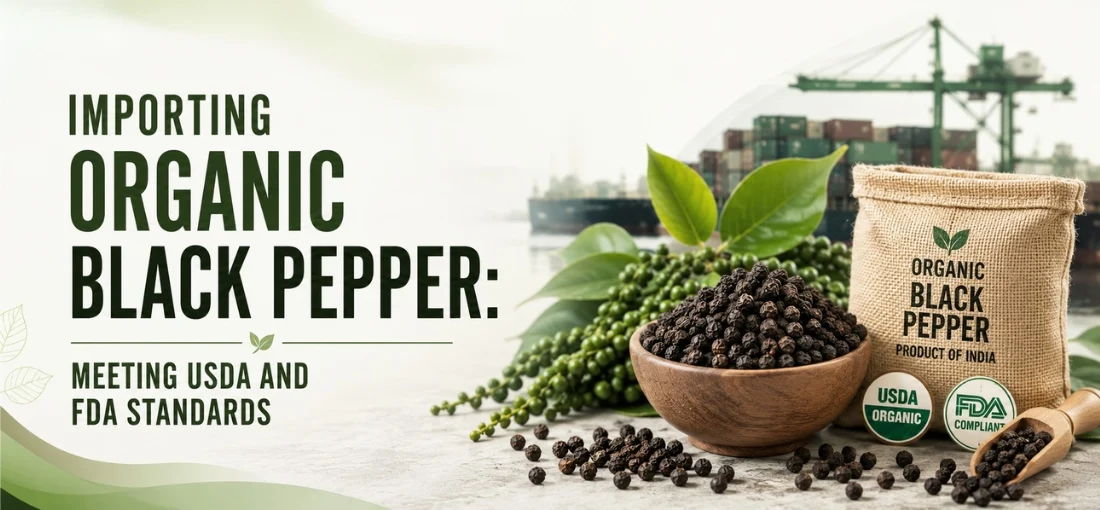
- USDA and FDA compliance are both required for importing organic black pepper into the US.
- Electronic NOP Import Certificates are mandatory for organic shipments.
- Organic black pepper cannot be treated with Ethylene Oxide (ETO).
- FDA closely monitors pesticide residues, Salmonella risks, and heavy metal contamination.
- ISO 17025 laboratory testing helps reduce port detention risks.
- Proper packaging and moisture control are critical during ocean transit.
Introduction:
Navigating the stringent maze of pepper import regulations in the United States requires a tight, document-first approach from the moment a container is booked at the origin port. For any spice desk managing high-volume positioning, bringing in bulk Piper nigrum is far more complex than standard commercial logistics. The US market treats imported agricultural lots with extreme, risk-based regulatory oversight, focusing heavily on chemical residue clearing and organic tracing. If your documentation misses a beat, your cargo will face automated holds or manual inspections before it ever gets a chance to clear the terminal gate.

Securing clean, high-margin lots of wholesale black pepper means understanding that the FDA and USDA do not negotiate on compliance. From farm-level pesticide tracking to validating your steam-sterilization parameters, your supply chain must be a transparent book.
The Regulatory Dual-Gate: USDA Organic vs. FDA Safety
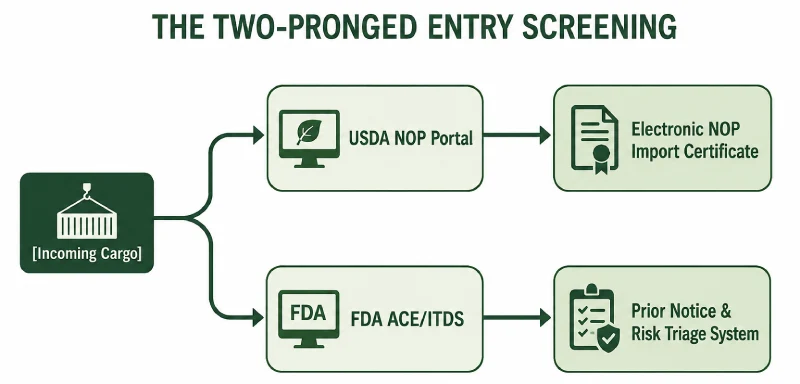
Importing organic spices means satisfying two distinct federal bodies, each policing a different side of the cargo's integrity. The USDA handles the "Organic" claim validation, while the FDA enforces strict biological and chemical safety rules under the Food Safety Modernization Act (FSMA). While directionally straightforward, successfully clearing these gates in the real world requires working alongside a licensed customs broker and verifying all supplier credentials in the USDA's live INTEGRITY database before wire transfers are authorized.
1. The USDA National Organic Program (NOP) Gate
You cannot market a single bag of pepper as "Organic" in the US retail or processing space just because your overseas supplier claims it is. All organic spice shipments must be accompanied by an electronic NOP Import Certificate generated through the USDA’s Organic Integrity Database.
- The Workflow: Your certified exporter's accredited certifier must issue this digital document before the shipment leaves the origin country.
- The Operational Vulnerability: The electronic NOP certificate is mandatory, but minor data mismatches on the paperwork or an unverified certifier accreditation will cause an immediate loss of your organic claim at the port of entry.
2. The FDA Safety Gate
While the USDA checks the organic paperwork, the FDA evaluates the physical safety of the lot. Black pepper is universally considered a higher-risk commodity for Salmonella, pesticide over-application, and foreign filth. While the agency doesn't physically sample every single incoming shipment, their automated risk-based screening can pull containers for testing at any moment.
- Treatment Options: Most US buying houses require a validated pathogen reduction step. For standard spices, chemical fumigation like Ethylene Oxide (ETO) is common.
- Organic Processing Constraints: ETO is strictly prohibited under organic handling rules. For organic pepper, processing facilities must use validated steam-sterilization methods instead. These steam setups must be tightly calibrated to meet FDA pathogen reduction standards without violating NOP organic integrity guidelines.
Chemical Compliance: Mastering MRL Limits for Spices USA
The highlighted sections in image_ae129f.png target the core administrative traps that cause sudden port holds. When you are looking at chemical compliance, small farm realities conflict directly with rigid entry screening. Even if an international farm follows strict organic guidelines, pesticide drift from adjacent fields or chemical residue left on local concrete drying floors will leave trace chemical signatures on your peppercorns.

When your team is verifying MRL limits for spice USA parameters, keep in mind that the Environmental Protection Agency (EPA) updates tolerances under 40 CFR 180, while the FDA checks the shipments at the maritime gate.
Illustrative Chemical Classes and Operational Port Risks
| Chemical Group | Illustrative US Action Levels & Baselines | Destination Port Risk Profile | Recommended Verification File |
|---|---|---|---|
| Piperonyl Butoxide / Synergists | Variable crop-specific tolerances apply; must match current 40 CFR 180 entries. | Used frequently in regional storage warehouses to keep beetles away; triggers immediate automated rejections if detected over the limit. | Gas Chromatography-Mass Spectrometry (GC-MS) multi-residue screen. |
| Fungicides / Metalaxyl | Monitored tightly based on crop-specific EPA registries. | Over-applied during damp monsoon growing blocks to prevent vine rot at farm level. | Liquid Chromatography-Tandem Mass Spectrometry (LC-MS/MS) assay. |
| Heavy Metals (Lead / Cadmium) | Risk-based enforcement; practical action levels typically track around ~1 ppm via industry/state guidance. | No strict federal "zero tolerance" exists for bulk pepper, but lines are monitored for industrial soil or concrete drying pad contamination. | Inductively Coupled Plasma Mass Spectrometry (ICP-MS) heavy metal profile. |
Looking at the testing note markers in image_ae1266.png, you can see where automated text filters get triggered by overly generic compliance phrasing. To make this operational for a quality control team: the numbers in the table above are general benchmarks. Because real-world EPA regulations are entirely numeric and change based on specific chemical compound classifications, your trading desk must secure an independent, ISO 17025 accredited laboratory assay before a container is allowed to clear the origin loading dock.
Logistics and Border Prep: Managing the Clock
Navigating pepper import regulations requires flawless timing well before the ocean liner docks at New York or Long Beach. Minor administrative errors can stall a shipment for weeks, turning a high-margin transaction into a logistics deficit.
Your customs broker must file your FDA Prior Notice entry through the automated ACE/ITDS system. While "no less than 8 hours" before arrival is a reasonable operational baseline for water vessels, the exact legal window depends on your transport mode. Failing to hit this window—or submitting data with mismatches in product codes or factory facility registrations—will trigger an immediate port hold.
The physical packing parameters highlighted at the bottom of image_ae1266.png are just as vital as the digital customs entry. Black pepper contains highly volatile oils and absorbs ambient moisture out of the air instantly. You cannot allow overseas suppliers to pack your wholesale black pepper into cheap, single-layer woven sacks. Your purchase order must explicitly require multi-wall, food-grade paper bags lined with thick polyethylene moisture barriers. For bulk processing lots, demand heavy-duty polypropylene FIBC bags built with integrated moisture protection.
The ocean voyage through varying geographic climate zones creates severe temperature changes inside standard steel boxes. This temperature drop causes water to condense directly on the container ceiling—a hazard known as container rain. Instruct the loading yard to line the upper walls and roof with thick kraft paper and place industrial hanging desiccants across the pallets. This keeps container rain from dripping onto your paper sacks, preventing mold growth that would cause an immediate custom failure.
Summary
The days of moving wholesale spices based on loose handshakes and generic crop certificates are entirely over. Protecting your trade capital means maintaining strict control over the details of your supply chain from the very start. By working exclusively with certified processing facilities that understand the limits of organic validation, requiring independent multi-residue lab screens for every batch, and enforcing tough packaging protocols, you protect your company from port detentions and turn a complex commodity import into a smooth, highly predictable business model.
Disclaimer
The information provided is for educational and informational purposes only. USDA organic regulations, FDA food safety requirements, pesticide residue limits, and import procedures may change over time. Importers should verify all compliance requirements with USDA, FDA, customs brokers, certification bodies, and accredited laboratories before importing organic black pepper into the United States.





-transactions.webp "Top First-Class International Banks for Secure Letter of Credit (LC) Transactions")