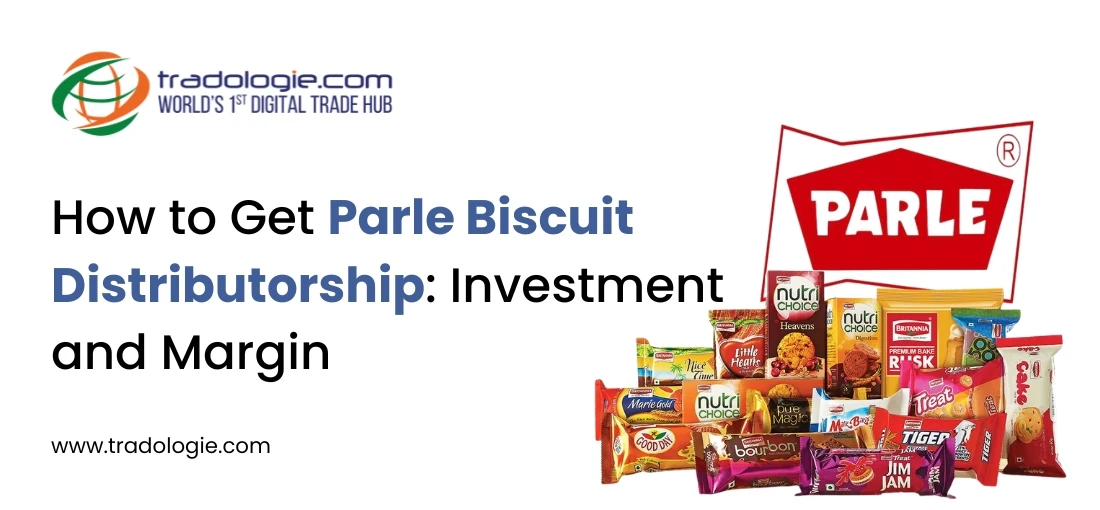
In the competitive world of Indian consumer goods, few names carry as much weight as Parle Products. The company started in 1929 with a single factory in Vile Parle. Today, it has grown into a global leader in the food industry. For those looking to enter the bulk trade or agricultural commodity space, a Parle distributorship is a great choice. It offers a way into a market that stays strong even during tough economic times.
This guide looks at how you can secure a distributorship with Parle. We will focus on what you need to invest and the profit margins you can expect. We will also look at how bulk trade is changing in the 2026 market.
The Strategic Position of Parle in Global Bulk Trade
Parle is much more than just a local biscuit maker. It is a major player in the global agricultural supply chain. Every year, the company processes a lot of sugar and wheat. Because of this, Parle connects Indian farmers with people all over the world who want to buy their goods.
The global biscuit market is expected to be worth $141.32 billion by 2026. It grows at a steady rate of 5.4% every year. For a distributor, this means joining a system that is tied closely to bulk trade. When you distribute Parle products, you manage inventory that moves very fast. The high volume of sales makes up for the thin profit margins typical of this industry.
Estimating the Investment Infrastructure
Starting a new distributorship requires a serious financial plan. Parle uses an "Intensive Distribution" strategy to reach as many people as possible. This network currently covers over 425,000 retail stores through more than 1,500 wholesalers. To be part of this, you must have the right setup.
Investment Breakdown (Estimated 2026)
| Investment Head | Estimated Amount (INR) |
|---|---|
| Security Deposit | ₹2,00,000 – ₹5,00,000 |
| Initial Inventory/Stock | ₹3,00,000 – ₹6,00,000 |
| Warehouse & Infrastructure | ₹2,00,000 – ₹5,00,000 |
| Working Capital (Monthly) | ₹5,00,000 – ₹10,00,000 |
| Total Startup Capital | ₹12,00,000 – ₹26,00,000 |
Note: These costs can change based on your location. Costs in big cities are usually higher than in rural areas. The specific products you choose to sell will also affect the total price.
Competitive Landscape & "Shelf Share"
In the 2026 market, your biggest challenge will be the "War for the Shelf." You will be competing against other big brands like Britannia and ITC. Success depends on how well you balance your product mix.
Smart distributors use Parle-G as a "hook" because everyone wants it. Even though the margin is low, it helps you get into retail shops. Once you are in, you can sell premium items like Hide & Seek or the Platina range. These premium products offer higher profits and increase the total value of each delivery.
Navigating Margins and ROI in High-Volume Trade
In bulk trade, you don't measure success by a high profit on one item. Instead, you look at how fast your money moves. This is known as "Rotation of Capital." Parle relies on selling massive quantities. The percentage of profit might look small, but the sales happen almost every day.
- Distributor Margin: Usually between 3% and 6%.
- Retailer Margin: Usually between 10% and 15%.
- ROI Timeline: You can typically recover your investment in 2.5 to 3.5 years.
Successful distributors focus on "Inventory Turns." If you rotate your stock twice a month, you do 24 turns a year. At a 5% margin, this creates a very strong annual return on your money. For those interested in exports, there is even more room to grow. Large traders often collect stock to sell to institutions or export to Africa and Southeast Asia.
Infrastructure and Logistical Requirements
Parle products are made from agricultural ingredients like flour and sugar. They must stay fresh to be sellable. Because of this, your warehouse must meet high quality standards. Parle has specific rules to keep the supply chain efficient.
- Warehouse Space: You need 300 to 2,000 sq. ft. of space.
- Climate Control: Premium items like chocolates need a cool environment.
- Logistics: You should have at least 1 or 2 delivery vehicles, like a Tata Ace.
- Staffing: A small team of 4 to 8 people is usually enough. This includes sales staff, loaders, and an accountant.
- Technology: You must use Parle’s Distribution Management System (DMS).
- Fintech: In 2026, using digital payment tools is a must. This helps manage credit and keeps your cash safe.
Risk Mitigation and Damage Claims
High-volume trade comes with certain risks. You need a plan to protect your business.
- Perishability: Always use climate-controlled storage for cream biscuits and chocolates. Indian summers can easily ruin these products.
- Market Returns: Sometimes stock expires or gets damaged. This is called "Ex-Stock."
- Protocols: Parle has a clear system for returning these items. They will reimburse you within a set time. This ensures your money isn't tied up in goods you can't sell.
The Application and Selection Process
Parle is very careful about who they partner with. They prefer people who understand trade and know their local area well.
- Enquiry: Start by sending an interest form on the official Parle website. You can also visit a local Regional Sales Office.
- Verification: A Sales Manager will visit you. They will check your warehouse and your financial strength.
- Documentation: You need several papers ready. These include your GST registration, Trade License, and FSSAI certificate.
- Security Deposit: After you are approved, you pay the refundable deposit. Then, you are assigned your specific territory.
Agri-Perspective: Sourcing and Seasonality
As a distributor, you should understand how farming affects Parle. The cost of making biscuits changes when the price of wheat or sugar goes up.
In 2026, health-conscious grains like millets are becoming popular. Parle has added many healthy options to its list. If you focus on these "Healthy Grains," you can reach urban markets. These items often have higher margins—up to 7% or 8%. This is better than the profit on standard mass-market biscuits.
Future Outlook: E-commerce and B2B Integration
The old way of selling to small "kirana" stores is changing. A modern distributor in 2026 must be ready for online orders. Platforms like Zepto and Blinkit are growing fast. Your job is no longer just taking orders. Now, you are a key part of the delivery system.
Data is now a big part of the job. You must use tools to predict when you will run out of stock. This is very important during busy festival seasons like Diwali or Holi.
Key Takeaways for New Entrants:
- Think Big on Volume: Don't worry about the 5% margin. Focus on selling stock quickly and often.
- Offer Variety: Sell the whole range, including snacks and sweets. This makes every delivery more profitable.
- Stay Legal: Keep your FSSAI standards high. This helps you qualify for big bulk contracts and exports.
Frequently Asked Questions
How much investment is required to start a Parle distributorship in 2026?
The total startup capital ranges between ₹12,00,000 and ₹26,00,000. This includes a refundable security deposit (₹2L–₹5L), initial inventory (₹3L–₹6L), and essential working capital for the first few months of operations.
What is the profit margin for a Parle distributor?
Distributors typically earn a margin of 3% to 6%. While this percentage may seem thin, the high "Rotation of Capital" and massive sales volume allow for a strong annual return on investment. Premium product lines can push margins higher, up to 7% or 8%.
How much space do I need for a Parle warehouse?
Depending on your territory size, you need between 300 and 2,000 sq. ft. of warehouse space. The facility must be climate-controlled, especially for storing premium items like chocolates and cream-based biscuits, to prevent heat damage.
How long does it take to see a Return on Investment (ROI)?
Successful distributors generally reach their break-even point and start seeing a full return on investment within 2.5 to 3.5 years. Profitability is heavily dependent on "Inventory Turns"—the speed at which you sell and restock your inventory.
What documents are required for the application process?
To apply, you need a valid GST registration, a Trade License, and an FSSAI certificate. Parle also evaluates your financial solvency, local market reputation, and your ability to manage a small team of 4 to 8 staff members.
How can I apply for a Parle distributorship?
You can initiate the process by filling out the official enquiry form on Parle’s website or by visiting the nearest Regional Sales Office. A Sales Manager will then conduct a physical verification of your site and financial background.
.webp "Indian Agriculture Seasons — Kharif, Rabi and Zaid Complete Step-by-Step Guide")