Key Highlights
- If you want to know how to export wheat from India to USA, first verify India's current wheat export policy and confirm that your product's ITC-HS code falls under the applicable permitted category.
- Obtain an Importer Exporter Code (IEC) and check the applicable APEDA registration, GST and other business requirements before accepting an order.
- Confirm that the specific wheat shipment is admissible in the United States and check the applicable USDA APHIS plant-health and FDA food-import requirements.
- Agree on wheat specifications, including variety, protein content, moisture, test weight, foreign matter, damaged kernels and applicable contaminant limits.
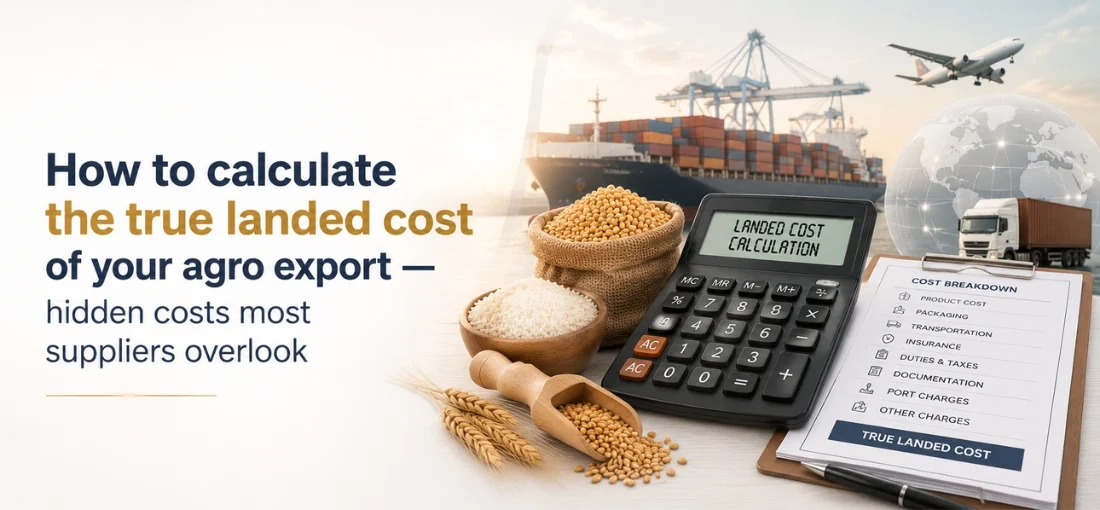
- Calculate the complete export cost, including procurement, quality testing, inland transport, port charges, freight, insurance and banking expenses.
- Finalise the required documents, payment terms, shipping arrangements and US import-clearance responsibilities before dispatch.
Introduction:
Exporting wheat to the United States requires two checks before a business commits to a shipment: whether the Indian wheat can be exported under the current government policy, and whether the particular product can enter the US under its agricultural import rules. For anyone researching how to export wheat from India to USA, these checks should come before buying stock or negotiating a large order. Wheat is traded in substantial volumes internationally, but that does not mean every variety, origin or shipment automatically qualifies for entry into the American market.
India has a large wheat-producing and grain-trading industry, with supplies used for flour milling, food manufacturing and other purposes. An exporter considering the US market needs to identify the intended buyer first. A flour mill, grain trader and food ingredient company may have different requirements for wheat variety, protein content, moisture, test weight and foreign matter. The commercial case depends on whether an Indian supplier can meet those requirements at a price that remains competitive after freight, testing, customs clearance and other costs.
1. Understand the Wheat Export Opportunity in the US Market
The United States is a major wheat producer and exporter, so Indian businesses should not approach it as a market where imported wheat automatically has a price advantage. An overseas supplier needs a clear reason for a US buyer to consider its offer, whether that relates to a particular grain specification, a sourcing requirement or a commercially workable contract.
Potential buyers include grain traders, flour mills, food manufacturers and importers that handle agricultural commodities. However, a business should establish that the buyer actually imports wheat from overseas and is interested in the type of wheat available from India.
The specifications matter. Wheat intended for flour milling may be evaluated on protein content, test weight, moisture, falling number, damaged kernels and other quality indicators. A buyer processing wheat for a particular flour or food product may have a narrow acceptable range.
Indian exporters should also distinguish between the different wheat types and grades they can source. A buyer looking for a specific milling characteristic may not consider another type of wheat an acceptable substitute, even if the price is lower.
Before investing in stock, research the buyer's sourcing history, intended use and import requirements. Trade data can help identify potential importers, but broad US wheat import figures alone do not establish demand for Indian wheat. Check the relevant product classification and country-of-origin data wherever possible.

2. Check India's Current Wheat Export Policy
Indian wheat export policy has changed over time, so exporters should not rely on older articles that describe the commodity as prohibited for export.
DGFT Notification No. 35/2026-27, dated 24 August 2026, revised the export policy for specified wheat categories under ITC (HS) codes 10011900 and 10019910 from “Prohibited” to “Free”. Exporters should consult the current notification and applicable policy conditions to confirm that the exact product they intend to ship falls within the permitted category.
This is a crucial step in the process of exporting wheat from India to USA. A product's general description as wheat is not enough; its correct classification and the policy currently applicable to that classification must be established.
Confirm the Correct HS Code
Wheat falls under HS heading 1001, but the full tariff classification depends on the product. Common distinctions include durum wheat and other wheat, while seed intended for sowing may be subject to different requirements from grain intended for consumption.
The exporter should confirm the applicable Indian ITC-HS code with a customs broker or trade professional. The US importer or customs broker should separately verify the corresponding US tariff classification.
Do not assume that a code used for a previous shipment, a different variety or another destination will automatically be correct for the current order.
Check for Additional Conditions
Even when an export policy is listed as “Free”, other applicable requirements may still need to be met. These can include documentation, customs procedures, product-specific conditions and destination-country rules.
Before signing a contract, check the latest DGFT notifications and ensure that the commercial arrangement does not depend on an outdated policy condition.
3. Complete the Registrations Required for Wheat Export From India
Once the product and policy conditions have been checked, the exporter should ensure that the business has the necessary registrations to undertake the transaction.
Obtain an Importer Exporter Code (IEC)
The Importer Exporter Code (IEC), issued by the Directorate General of Foreign Trade (DGFT), is generally required for commercial exports from India.
Applications are made through the DGFT portal. Ensure that the business's PAN, banking information and other details are accurate, and maintain the IEC in accordance with applicable requirements.
Check APEDA Registration Requirements
APEDA covers scheduled agricultural products and provides information and support relevant to agricultural exports. Exporters should confirm whether an APEDA Registration-cum-Membership Certificate (RCMC) is required for their particular wheat product and export activity.
The applicable requirement should be checked through APEDA and the relevant DGFT process rather than assumed to be identical for every grain or business model.
Review Tax and Business Requirements
Depending on the business structure and transaction, GST and related export documentation may also be relevant. The exporter should confirm the applicable tax treatment and documentation with a qualified tax professional or customs broker.
For a first shipment, it is sensible to establish these requirements before accepting a firm delivery date. A registration or documentation issue discovered after the goods have been purchased can create avoidable costs.
4. Confirm Whether the Specific Wheat Can Enter the United States
This is one of the most important parts of the export plan. US agricultural import rules can depend on the commodity, country of origin, intended use and form in which the product arrives.
The buyer should verify the applicable requirements with the relevant US authorities and its customs broker before the exporter commits to procurement or shipment.
Check USDA APHIS Plant-Health Requirements
The US Department of Agriculture's Animal and Plant Health Inspection Service (USDA APHIS) regulates the entry of many plants and plant products to reduce the risk of introducing agricultural pests and diseases.
The requirements are commodity-specific. Wheat intended for consumption may be treated differently from wheat intended for planting, and the applicable conditions may depend on the country of origin.
The US importer should check the relevant APHIS import requirements and confirm whether the proposed shipment is admissible, whether an import permit is required and whether a phytosanitary certificate, treatment or other documentation applies.
Do not assume that wheat can enter the United States simply because the same product is regularly exported to another country. The US importer should establish admissibility before the shipment is booked.

Understand FDA Requirements for Food Shipments
Wheat imported for human food may also fall under applicable US Food and Drug Administration (FDA) requirements. The precise obligations depend on the product and the parties involved.
Where applicable, the foreign food facility must meet FDA registration requirements, and the shipment must comply with the relevant Prior Notice rules. FDA may inspect imported food and detain shipments that do not meet US requirements.
The US importer should determine whether the wheat is covered by the relevant food regulations and arrange the required filings before arrival. The exporter should provide accurate product, facility and shipment information in time for the importer or its broker to complete the process.
Foreign Supplier Verification Program (FSVP)
Under the FDA's Foreign Supplier Verification Program, US importers generally have responsibilities for verifying that imported food meets applicable US food-safety requirements, subject to the rules and exemptions that apply to the particular transaction.
The importer may request supplier details, food-safety information, product specifications, hazard-related documentation or testing records from the Indian exporter.
Exporters should be prepared to provide accurate information about sourcing, storage and handling. They should also clarify which records the buyer needs before production or dispatch, rather than trying to assemble them after the shipment has left India.
5. Agree on Wheat Quality and Specifications Before Procurement
Wheat is not purchased on price alone. The grain must suit the buyer's intended use, and the commercial contract should describe the quality requirements clearly enough to avoid disagreements after delivery.
Before quoting, confirm the following with the buyer:
- Wheat type: The specific type or grade required.
- Protein content: The required percentage and the method of measurement.
- Moisture: The maximum moisture level accepted by the buyer.
- Test weight: The agreed minimum or target value.
- Foreign matter: The permitted level of dust, stones, weed seeds and other impurities.
- Damaged kernels: The allowable limits for damaged or discoloured grains.
- Infestation: Requirements relating to live insects and pest contamination.
- Mycotoxins and contaminants: Any applicable legal limits or buyer testing requirements.
- Crop year and origin: Where these are part of the purchasing specification.
- Quantity and shipment tolerance: The agreed volume and acceptable variation.
- Inspection and sampling: The method used to assess the cargo and handle a dispute.
These specifications should be included in the purchase order or sales contract. If the buyer requires a laboratory report or independent inspection, agree on the sampling method and acceptable testing arrangements before procurement.
Source Wheat From Reliable Suppliers
Exporters may source wheat from traders, aggregators, processors or other established suppliers. The right sourcing arrangement depends on the quantity required, the grade and the ability to maintain consistent quality.
Check the grain before accepting stock. Confirm that it meets the agreed specification and that the supplier can provide the required records. If wheat is sourced from multiple lots, establish a process for keeping the quality consistent across the shipment.
Storage is also important. Wheat must be protected from moisture, pests, contamination and unsuitable warehouse conditions. Maintain batch and supplier records so that the origin and quality of the shipment can be traced if the buyer raises a concern.
6. Find Suitable Buyers in the United States
An exporter should target buyers whose requirements match the wheat available from India. A flour mill may be interested in particular milling characteristics, while a grain trader may evaluate price, origin, shipment size and delivery reliability.
Potential buyer categories include:
- Grain importers and commodity traders.
- Flour mills and milling companies.
- Food manufacturers that purchase wheat as a raw material.
- Agricultural commodity distributors.
- Importers supplying industrial or food-processing customers.
Start by checking whether the prospective buyer has experience importing wheat and whether it is open to sourcing from India. A company's involvement in the food industry does not necessarily mean it is authorised or equipped to import bulk grain.
When contacting a buyer, share a clear product profile that includes the wheat type, origin, available quantity, specifications, loading point and expected shipment period. Provide test results or quality documents where available and relevant.
B2B trade platforms such as Tradologie can also help exporters connect with prospective buyers, exchange product requirements and discuss commercial offers. Regardless of the channel, verify the buyer's business identity and purchasing capability before committing stock or offering credit.
For a first transaction, clarify who will act as the importer of record, who will arrange US customs clearance and who will be responsible for any inspection, treatment or other destination requirements.
7. Calculate the Export Price and Logistics Costs
A wheat export quotation needs to account for the complete transaction, not just the price at which the grain is purchased.
The cost calculation should include:
- Wheat procurement.
- Cleaning, grading and any other agreed preparation.
- Quality testing and inspection.
- Storage and handling.
- Inland transport to the Indian port.
- Export customs clearance and documentation.
- Port handling and loading.
- Ocean freight.
- Cargo insurance, where applicable.
- Financing and banking charges.
- The exporter’s margin.
The shipment size and delivery terms can materially affect the final price. A large cargo may have different logistics economics from a smaller shipment, while the buyer's preferred delivery location may affect freight and onward transportation costs.
The exporter and buyer should agree on an Incoterm and named place or port. An FOB quotation, for example, does not cover the same responsibilities as a CIF quotation. State clearly which costs are included and which remain the buyer's responsibility.
The US importer or customs broker should confirm the applicable tariff classification, import duties, fees and other charges. Do not rely on a general estimate without checking the actual product classification and the transaction's circumstances.
A quotation should identify the product, quality specifications, quantity, price, currency, shipment window, payment terms and validity period. If the price is subject to a change in the grain market, state the conditions clearly.
8. Prepare the Export and Import Documents
The exact documentation depends on the product, shipping arrangement and regulatory requirements. A typical export file may include the following:
| Document | Purpose |
|---|---|
| Commercial invoice | Records the goods, quantity, value, buyer and seller. |
| Packing list or weight details | Describes the cargo, packaging and weights, as applicable. |
| Shipping bill | Export customs declaration filed through the applicable Indian customs process. |
| Bill of lading | Records the sea-carriage arrangement and receipt of cargo by the carrier. |
| Certificate of origin | Establishes origin where required by the buyer or destination rules. |
| Phytosanitary certificate | Required if the applicable plant-health conditions call for it. |
| Certificate of analysis or inspection report | Supports the agreed grain specifications where required. |
| Import permit or other official documentation | Required where the US import conditions specify it. |
| Insurance certificate | Relevant when insurance is arranged under the agreed delivery terms. |
| Purchase order or sales contract | Records the commercial terms and quality specifications. |
Additional documents or declarations may be required for the particular shipment. The exporter should confirm the documentation list with the customs broker, freight forwarder, buyer and relevant authorities before the cargo is dispatched.
The buyer and its broker should also coordinate any required FDA Prior Notice and customs entry filings. These are not substitutes for the Indian export documents; they are part of the destination-side import process.
Check that the product description, tariff classification, weights, origin, consignee information and shipment details are consistent across the documents. Errors can delay clearance or create payment disputes if the documents do not match the sales contract or letter of credit.
9. Arrange Shipping From India to the United States
For commercial quantities of wheat, sea freight is generally the first option to evaluate. The choice of route and loading port depends on the exporter's location, cargo volume, freight rates and the buyer's delivery point in the United States.
Before booking the cargo, confirm:
- The Indian port of loading and US port of discharge.
- Whether the shipment will move in containers or through a suitable bulk-cargo arrangement.
- The cargo-ready date and expected transit time.
- Freight, handling and destination charges.
- Any required inspection, treatment or certification arrangements.
- Cargo insurance responsibilities.
- Who will arrange import clearance and inland delivery.
Wheat must be kept dry and protected from contamination throughout storage and transport. Containers, holds and loading equipment should be suitable for food grain and free from conditions that could compromise the cargo.
Do not treat a shipping schedule as a guaranteed delivery date. Port congestion, transshipment, customs checks and other operational issues can affect arrival. Keep the buyer informed of the shipment status and share the documents within the agreed timeline.
Most importantly, do not book transport until the US importer has confirmed that the specific wheat shipment can enter under the applicable import conditions.
10. Agree on Payment Terms Before Dispatch
An export order is only commercially useful if the payment arrangement protects the business from unnecessary financial exposure.
Common payment methods include:
- Advance payment: The buyer pays all or an agreed portion before shipment.
- Letter of credit (LC): A bank undertakes to pay against documents that comply with the credit terms.
- Documentary collection: Banks handle the documents and collection process but do not provide the same payment undertaking as an LC.
- Open account: The buyer pays after receiving the goods, leaving the exporter exposed to credit risk.
For a new buyer, avoid accepting unsecured credit simply to win the order. Check the company's credentials, agree on the payment trigger and assess whether the business can absorb a delay.
If using a letter of credit, review its conditions before shipping. The invoice, bill of lading and other required documents must comply with the credit terms. A mismatch can delay payment even when the cargo has been dispatched correctly.
The contract should also set out the agreed quality inspection procedure, the claims deadline and how disputes will be resolved. For a bulk grain shipment, these details should be settled before loading, not after the buyer receives the cargo.
11. Steps to Export Wheat From India to USA
The process of exporting wheat from India to USA becomes easier to manage when the export policy, product specifications and US import conditions are checked before procurement. The procedure for wheat export from India to USA will depend on the exact wheat category, the buyer's requirements and the applicable regulatory conditions.
The main steps to export wheat from India to USA are:
- Verify the export policy. Check the latest DGFT notification and confirm that the product's ITC-HS code is covered by the current policy.
- Complete business registrations. Obtain an IEC and check the applicable APEDA and other business requirements.
- Identify a suitable buyer. Confirm the buyer's interest in Indian wheat and its ability to import the commodity.
- Check US admissibility. Have the importer verify the applicable APHIS plant-health conditions and other US import requirements.
- Agree on the grain specification. Confirm wheat type, protein, moisture, test weight, foreign matter and other quality parameters.
- Calculate the full export cost. Include procurement, inspection, inland transport, port charges, freight, insurance and financing.
- Finalise the contract and payment terms. Agree on the Incoterm, shipment schedule, quality inspection and payment method.
- Prepare the shipment. Source and inspect the wheat, arrange any required testing and obtain the necessary documentation.
- Complete customs and shipping formalities. File the Indian export documents and coordinate with the importer on the required US filings.
- Track delivery and close the transaction. Share the documents, follow up on payment and retain the shipment records.
These are the main steps to export wheat from India to USA, but the order may need to be adjusted for a particular shipment. Businesses comparing the procedure for wheat export from India to USA should verify the product-specific import conditions rather than assuming the same requirements apply to every type of wheat.
How to Start a Wheat Export Business in India
Anyone researching how to start a wheat export business in India should first decide how the business will source and sell grain. One model is to purchase wheat from established suppliers and export it against confirmed buyer requirements. Another involves building longer-term relationships with suppliers, processors and overseas customers to support repeat shipments.
The first model may require less investment in processing infrastructure, but it still depends on sourcing, quality checks, logistics and working capital. Trading in bulk grain can tie up substantial funds before the buyer makes payment, so the financial plan should account for procurement, storage, transport and the time required to complete the transaction.
Start with a defined product and buyer segment. Establish the wheat specifications you can supply consistently, identify markets where the product is admissible and understand the relevant trade documentation. A confirmed buyer enquiry is useful, but it is not a substitute for verifying the buyer's credentials and import arrangements.
For anyone considering how to start a wheat export business in India, the current export policy deserves particular attention. Rules can change, and an exporter should verify the latest DGFT conditions before purchasing grain for an overseas order.
Maintain records of suppliers, grain quality, laboratory reports, purchase contracts, shipping documents and payments. These records help resolve disputes, support repeat business and make it easier to assess the profitability of each shipment.
The aim should be to build a reliable supply arrangement and a clear commercial process before expanding into larger volumes. In bulk commodity trade, a repeat customer and a well-managed transaction can be more valuable than a large order accepted without sufficient checks.
Conclusion
Exporting wheat from India to the United States requires a clear understanding of both Indian export policy and US import conditions. A shipment may be commercially attractive, but the exporter must still verify the product classification, destination admissibility, quality specifications, documentation and payment arrangements before dispatch.
For businesses learning how to export Indian wheat to the USA, the practical starting point is to confirm that the wheat can be exported under the current Indian policy and that the US importer has verified the applicable import requirements. Only then should the exporter finalise the price, source the grain and arrange transport.
A well-defined specification, reliable sourcing, accurate documents and secure payment terms give an Indian exporter a stronger foundation for developing a sustainable wheat export business.
Disclaimer
Wheat export policies, customs classifications, registration requirements and destination-country regulations may change. Requirements can vary according to the wheat category, intended use and country of origin. Exporters should verify the latest DGFT notifications, confirm US import admissibility with the importer and relevant authorities, and check all applicable documentation and food-safety requirements before purchasing stock or dispatching a shipment.