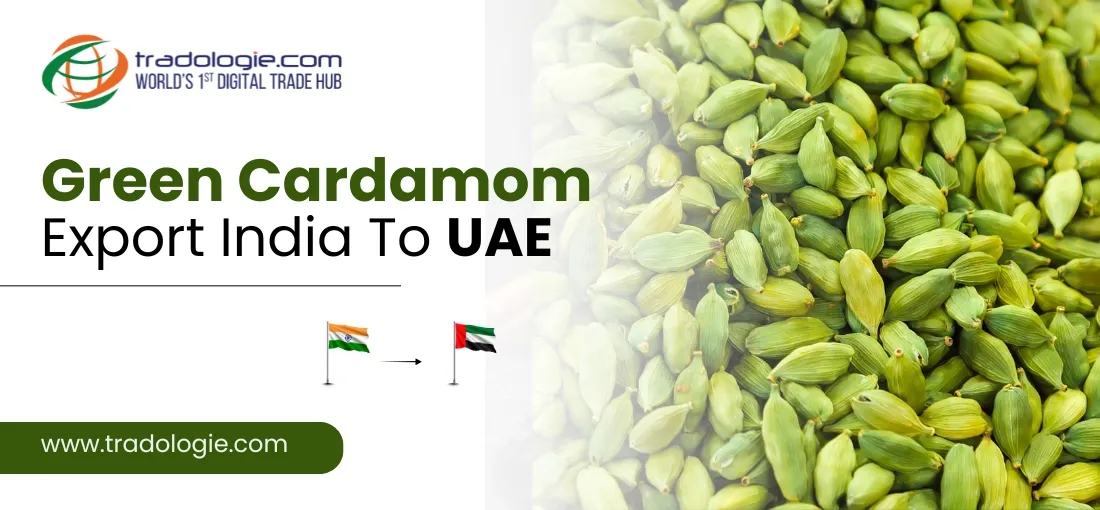
There are a lot of moving parts in the international spice trade. Green cardamom is one of the most valuable products in this network. It is a high-quality farm product that people often call the "Queen of Spices." It also helps India export a lot of spices.
India and the United Arab Emirates (UAE) engage in extensive trade. This is due to close geographic proximity and long-standing historical ties. Both countries also like the same kinds of food and flavors. Farm aggregators and bulk traders need to know this market well. People who work in import and export also need to know this. The only way to make money in the long run is to know these things.
The Current Landscape of Global Agricultural Trade
You must first look at the farm level to understand export trends. Indian green cardamom mainly grows in the Western Ghats. The Idukki district in Kerala is the main hub. Farms also exist in parts of Karnataka and Tamil Nadu.
Cardamom farming reacts strongly to small weather changes. The Spices Board of India tracked national production recently. During the 2023–2024 season, farmers produced 22,868 tons. They grew this on about 40,345 hectares of land. However, farming outcomes are rarely stable.
Recent data shows that shifting weather patterns hurt crop yields. Farms faced long dry spells. The monsoon rains were also very irregular. Because of this, industry experts warned of a 30% to 40% drop in output for the 2024–2025 season. Warm weather, water shortages, and snail attacks caused this drop. This farm-level risk directly changes how much cardamom is available. It also heavily impacts bulk pricing for exporters.
2. The Global Rivalry: India vs. Guatemala
India doesn't trade in a vacuum. The competition with Guatemala is the most important thing in the global cardamom trade. Central America is where Guatemala is. In the past, it was the world's biggest producer and exporter of this spice.
There are two clear sides in the competition. Guatemala sells a lot of things for less money. India does things differently. India sells cardamom that is very high quality. Indian pods smell stronger and have more oil in them.
The balance between supply and demand has changed recently. Reports from late 2025 said that Guatemala had a huge crop failure. They thought they would make 17,000 tonnes, but they only made that much. They usually make between 40,000 and 50,000 tonnes. This lack in Guatemala gives Indian exporters a rare chance. People in the Gulf who used to buy cheap cardamom are changing how they shop. They are now looking at Indian auction houses to fill their huge orders.
3. Market Dynamics: The UAE’s High Demand
The UAE plays a double role in the global spice market. First, its own people consume a massive amount of cardamom. Second, it acts as a major hub to re-export spices across the Middle East and North Africa (MENA).
Cardamom is essential in this region for several reasons:
- It is a core ingredient in traditional Arabic coffee (Gahwa)
- It is heavily used in daily Middle Eastern cooking.
- This daily use means the demand rarely drops, even if prices go up.
Trade numbers prove this high demand. The Observatory of Economic Complexity (OEC) shared data for 2024. It showed the UAE was the second-largest buyer of cardamom in the world. The country imported $222 million worth of the spice. India controls a huge piece of this market. In 2024 alone, India sold $80.5 million of cardamom to the UAE. This was a massive jump of $49.2 million from the year before.
4. Quality Standards and Grading: Meeting B2B Expectations
In the bulk export business, buyers judge quality using strict grading systems. The UAE market loves premium goods. They demand the absolute best cardamom available. Buyers look at pod size, green color, and oil content to decide the final price.
B2B exporters must know the standard export grades. You cannot sell in the Middle East without this knowledge. Here is a simple guide to the grades buyers want:
| Grade Classification | Pod Size | Characteristics & Market Target |
|---|---|---|
| 8mm & Above (Jumbo) | > 8.0 mm | Deep green color and fully mature. It has the highest oil content. It commands premium prices. It is preferred for luxury retail and high-end Gahwa. |
| 7.5mm - 8mm (Extra Bold) | 7.5 mm - 8.0 mm | Excellent green color and robust smell. This is the standard for premium bulk imports into the UAE. |
| 7mm - 7.5mm (Bold) | 7.0 mm - 7.5 mm | Good quality pods. They are widely used in commercial food and drink processing. |
| Alleppey Green Extra Bold (AGEB) | Premium Blend | A specific regional name. It is known for amazing smell and bright color. It is highly prized in Middle Eastern markets. |
5. UAE Infrastructure: Ports and Distribution Hubs
You must understand the physical trade routes to succeed in the UAE. Bulk shipments from India do not just disappear into the city. They move through very specific trade centers.
- Jebel Ali Port: This is the main sea gate for bulk farm goods entering Dubai. Buyers often ask for CIF (Cost, Insurance, and Freight) pricing here. They also ask for DDP (Delivered Duty Paid) pricing for large shipping containers.
- Al Ras Spice Market: This old market is in Deira, Dubai. It is the beating heart of the wholesale spice trade. Big distributor groups work from here. They buy in bulk and sell to local retail shops.
- Dubai Multi Commodities Centre (DMCC): This center is for massive, corporate-level trading. The DMCC offers the legal and financial setup needed for huge farm commodity deals.
6. Trade Finance: Securing B2B Payments
Exporting "green gold" takes a lot of money upfront. Indian exporters must protect themselves from payment risks. They are dealing with buyers across borders. Good trade finance is the only way to stay safe.
Here are the standard payment methods used in this trade:
- Letter of Credit at Sight (Sight L/C): This is the safest method. The buyer's bank promises to pay the exporter. The payment happens as soon as correct shipping documents are shown.
- Cash Against Documents (CAD): This is a middle-ground choice. The buyer can only take the goods after paying the required bank draft.
- Advance Payments (T/T): Buyers sometimes pay a 20% to 30% advance via bank transfer. This secures the deal. It also helps the exporter pay for packing. The rest is paid when a copy of the Bill of Lading is shared.
Exporters should also use bank services to manage currency values. They need to handle shifts between the Indian Rupee, US Dollar, and UAE Dirham.
7. The Export Process: Logistics and Compliance
Moving cardamom from Kerala to Dubai takes careful planning. You must follow strict shipping and legal rules. The spice easily absorbs moisture. Moisture destroys the green color and causes fungus to grow.
The main steps for a successful export include:
- Buying and Curing: You must buy pods through Spices Board online auctions. Then, you must cure them properly to keep the green color.
- Paperwork: You need a special exporter certificate (CRES) from the Spices Board of India. You also need commercial invoices, packing lists, and Origin Certificates.
- Health Checks: You must get a phytosanitary certificate. This comes from the Indian plant protection office. It proves your shipment has no pests.
- Packing: You must use food-grade, moisture-blocking liners. Place these inside strong jute bags or thick boxes. This protects the valuable oils during the ocean trip.
Navigating Customs? Let's make it easy.
Figuring out the right export codes shouldn't slow down your shipment. Don't let paperwork hold up your premium pods at the port. Find the exact customs classifications you need instantly:
8. Economic Impact and Pricing Trends
The money side of the cardamom trade has been very wild lately. When supply drops, prices naturally shoot up. The 2024–2025 season had bad harvests in both India and Guatemala. Because of this, market prices exploded.
By early 2025, auction prices in India crossed Rs 4,500 per kilogram. This equals about $36 USD per kilogram. It was the highest price seen in five years.
This creates both risk and reward for bulk exporters. Buying the spice costs a lot of money right now. However, UAE buyers are willing to pay high prices for top-quality Indian cardamom. This allows exporters to make good profits. Also, the overall global market for green cardamom is growing. Experts valued it at $1.13 billion in 2025. They expect it to reach $1.63 billion by 2032. This shows a steady growth rate of 5.4% every year.
9. Strategic Considerations and Future Outlook
B2B traders must look to the future. The modern UAE buyer cares about where their food comes from. They want safe and clean supply chains.
There is a growing demand for organic cardamom. Indian exporters must adapt to this trend. They need to track their spices from the farm to the port. They must show fair labor practices. They must also prove they use very few chemicals. Exporters who do this will win long-term contracts. Those who only compete on cheap prices will lose.
Exporting green cardamom to the UAE is high stakes. But it also offers high rewards. You need to know how farming works. You must plan flawless shipping routes. You also need smart financial plans to handle price jumps. Indian exporters have a great chance to grow. They just need to focus on UAE demands, secure safe payments, and supply premium quality. If they do this, they will rule this fragrant trade route for years.
Ready to conquer the global spice trade?
High stakes mean high rewards. Whether you are looking to source premium Indian green cardamom or you're an exporter ready to meet soaring UAE demand, the market is waiting for you. Take the next step and connect with verified trade partners today:
[ Buyer Registration ] | [ Seller Registration ]
Frequently Asked Questions
Why is the UAE such a large market for green cardamom?
The UAE consumes massive amounts domestically for traditional Gahwa (Arabic coffee) and daily cooking, and it also serves as a major re-export hub for the entire Middle East and North Africa (MENA) region.
Who is India's main competitor in the global cardamom trade?
Guatemala is India's primary rival. While Guatemala historically exports larger volumes of cheaper cardamom, India focuses on premium pods with superior aroma and oil content.
What cardamom grades are most requested by UAE buyers?
UAE buyers demand premium pods based on size, color, and oil content. Top grades include Jumbo (8mm+), Extra Bold (7.5mm–8mm), Bold (7mm–7.5mm), and the regional Alleppey Green Extra Bold (AGEB).
Why have green cardamom prices spiked recently?
Prices surged due to severe supply shortages. Both India and Guatemala have experienced major crop failures caused by shifting weather, prolonged dry spells, and pest attacks.
What are the safest payment methods for exporting spices to the UAE?
To mitigate risk, exporters generally use a Letter of Credit at Sight (Sight L/C), Cash Against Documents (CAD), or require a 20% to 30% Advance Payment via bank transfer (T/T).
What certifications are required to export cardamom from India?
Exporters need a CRES from the Spices Board of India, a Phytosanitary Certificate (health check), a Certificate of Origin, alongside standard commercial invoices and packing lists.
How should bulk cardamom be packed for ocean freight?
It must be packed in food-grade, moisture-blocking liners placed inside strong jute bags or thick boxes to prevent moisture absorption, fungal growth, and color loss during transit.
Where are the main spice trading hubs located in Dubai?
Key hubs include Jebel Ali Port for incoming bulk freight, the Al Ras Spice Market in Deira for wholesale distribution, and the DMCC for large-scale corporate trading.