Key Highlights
- India exported 2.87 lakh tonnes of edible oil in FY 2024–25, with groundnut oil accounting for 2.27 lakh tonnes.
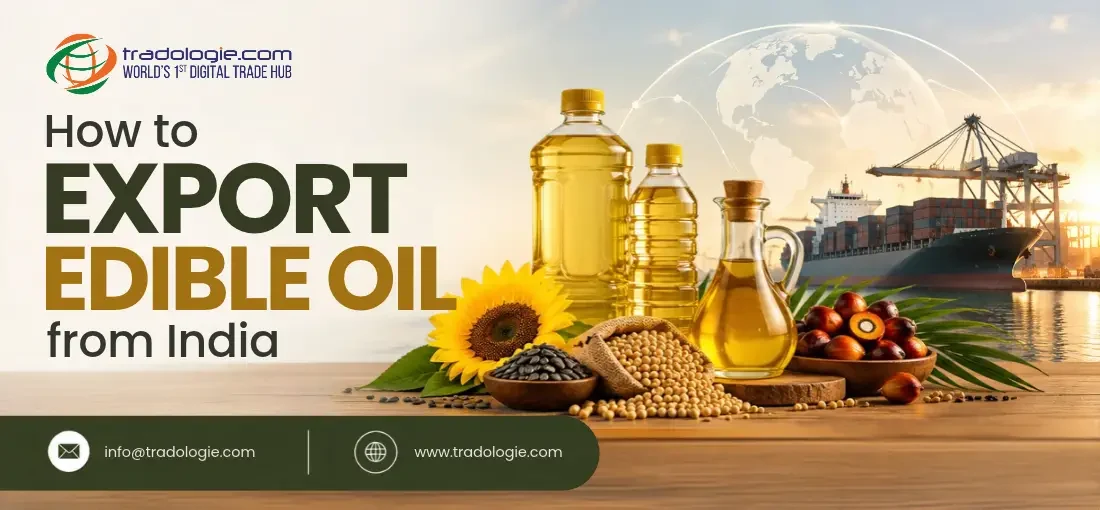
- Export opportunities include groundnut oil, sesame oil, soybean oil, sunflower oil, rice bran oil and mustard oil.
- Export policies differ by oil type, so check the latest DGFT and Department of Food and Public Distribution notifications before purchasing stock.
- Exporters generally need an IEC, while applicable FSSAI requirements and other registrations depend on the business and product.
- Quality checks may cover acid value, peroxide value, moisture, impurities, fatty acid profile and packaging integrity.
- Tradologie helps edible oil exporters explore connections with potential international buyers through B2B trade opportunities.
Introduction:
India's edible oil market is shaped by a simple commercial reality: domestic consumption is large, and imports fill much of the gap between demand and local supply. Yet Indian businesses also export certain oils, particularly products such as groundnut oil, sesame oil and soybean oil. The opportunity depends on the type of oil, how it is processed and who is buying it. Anyone researching how to export edible oil from India needs to understand these differences before approaching suppliers or negotiating with an overseas customer. A shipment of refined groundnut oil packed in retail bottles is a very different business from a tanker or flexitank shipment of soybean oil. One involves packaging, labels and retail distribution; the other may depend on bulk specifications, loading arrangements and a buyer's processing requirements. The costs and paperwork can differ just as much as the products themselves.
Keep reading this informative blog piece as it will tell you the edible oil export process from India.
1. Decide Which Edible Oil to Export
India’s edible oil exports reached 2.87 lakh tonnes in the financial year 2024–25. Groundnut oil led the way in this export statistics. Its exports reached an enormous 2.27 lakh tonnes, according to figures published by the Department of Food and Public Distribution, based on DGCIS data. That being said, start with the oil you can source consistently. Your supplier network, access to processing facilities and the type of buyer you can reach will all influence the choice.
| Edible oil | Potential buyers | Points to consider |
|---|---|---|
| Groundnut oil | Food distributors, retailers and food manufacturers | Flavour, refining, quality and packaging |
| Sesame oil | Food manufacturers, specialty distributors and retailers | Purity, aroma, processing method and intended use |
| Soybean oil | Bulk commodity buyers, food processors and distributors | Crude or refined form, specifications and shipment volume |
| Sunflower oil | Food distributors, wholesalers and processors | Refining, quality parameters, packaging and price |
| Rice bran oil | Food manufacturers, distributors and bulk buyers | Processing, stability and buyer specifications |
| Mustard oil | Retailers, food distributors and specialty buyers | Export conditions, pack size and applicable minimum export price |
These are potential buyer groups, not a guarantee of demand in a particular country. Before investing in stock, identify which businesses import your chosen oil and what specifications they expect.
The form of the product matters from the beginning. Retail-ready oil needs suitable bottles or containers, labels and outer packaging. Bulk oil requires appropriate storage, loading and transport arrangements. Decide which market you are targeting before asking suppliers for quotations.

2. Check the Export Policy Before Purchasing Oil
This is one part of the edible oil export process from India that deserves particular attention. The applicable rules depend on the product classification, and mustard oil has different conditions from most other edible oils.
The Department of Food and Public Distribution states that exports of edible oils are generally permitted, subject to specific conditions. Its published policy allows exports of most edible oils without quantitative restrictions, while mustard oil is subject to a maximum pack size of 5 kg and a minimum export price of US$900 per metric tonne. Check the latest applicable notification before relying on these conditions for a live transaction.
| What to verify | Why it matters |
|---|---|
| Type of oil | Export conditions may differ by product. |
| HS code | Determines the classification used in export declarations. |
| Crude or refined form | Product classification and requirements may differ. |
| Pack size | Restrictions may apply to particular oils. |
| Minimum export price | Must be met where the policy prescribes one. |
| Latest notification | Conditions may change after an earlier quotation or agreement. |
Check the current rules through the Department of Food and Public Distribution and the DGFT website.
Do this before purchasing a large quantity or confirming a shipment date. If a minimum export price or pack-size restriction applies, it affects the commercial terms from the outset. A buyer's purchase order does not override Indian export policy.
3. Find a Supplier and Get the Product Specifications in Writing
Edible oil may be sourced from mills, refineries, processors, bulk traders or established manufacturers. The right supplier depends on whether you are exporting crude oil, refined oil or a finished retail product.
Price matters, but consistency matters too. A supplier may offer an attractive rate for one batch and struggle to provide the same specification for the next. That can become a problem if the overseas buyer expects repeat shipments.
Before placing an order, establish:
- Whether the oil is crude, refined or processed to another specification.
- The source of the oil and the quantity available.
- The delivery schedule and consistency of supply.
- The quality parameters and testing methods.
- Packaging options and shelf-life information.
- Whether a certificate of analysis or laboratory report is available.
A bulk buyer purchasing crude soybean oil for further processing may have different requirements from a distributor ordering refined groundnut oil in retail bottles. Make sure the product description reflects what the buyer actually needs.
Ask for a sample and the relevant quality documents before committing to a large quantity. If the shipment will combine oil from multiple suppliers, check that the final product meets one consistent specification.
4. Understand the Quality Standards for Export Edible Oil
Oil can look clear and still fail a laboratory test. Buyers may ask for evidence of its composition, condition and suitability for their intended use. The relevant tests depend on the oil and its processing method.
| Quality parameter | What it helps establish |
|---|---|
| Free fatty acids (FFA) or acid value | Indicates the level of free fatty acids. |
| Peroxide value | Helps assess primary oxidation and deterioration. |
| Moisture and volatile matter | Checks for moisture and other volatile material. |
| Impurities | Measures unwanted particles or foreign matter. |
| Fatty acid profile | Helps verify the oil's composition and identity. |
| Colour, odour and appearance | Checks whether the product matches the agreed specification. |
| Packaging integrity | Helps prevent leakage and contamination during transit. |
These are common parameters, not a universal testing checklist. The buyer's specification should state which tests apply, the acceptable limits and the methods used to assess the results.
Food-safety requirements in the destination country need separate attention. They may cover contaminants, permitted additives, ingredient declarations, nutrition information, language, date marking and shelf-life details. Packaged oil sold to consumers may face requirements that differ from those for bulk oil supplied to a processor.
If the buyer requests a certificate of analysis or independent inspection, arrange it before loading. Keep the reports with the shipment records in case the buyer questions the quality on arrival.

5. Complete the Required Registrations
The registrations depend on your business activities. A company manufacturing or refining oil may have different operational requirements from a merchant exporter purchasing finished oil from a supplier.
Import Export Code (IEC)
An IEC from the Directorate General of Foreign Trade is generally required to export goods from India. Applications and current guidance are available on the DGFT website.
FSSAI requirements
Because edible oil is a food product, check the applicable Food Safety and Standards Authority of India requirements for your business. The relevant formalities may depend on whether you manufacture, process, store, pack or trade the oil.
GST and business documentation
Keep your applicable GST registration, PAN, business constitution documents, bank details and other commercial records ready.
Other product-specific requirements
Additional registration, certification or approval may apply depending on the oil, processing activity and destination. A registration used for one product should not automatically be assumed to cover every edible oil export activity.
FSSAI also publishes guidance for food products manufactured exclusively for export to the importing country's specifications. If your arrangement falls into this category, check the applicable conditions, including whether a No Objection Certificate is required.
6. Find International Buyers for Edible Oil
Your buyer search should reflect the product you can supply. Retail distributors may ask about bottle sizes, labels and shelf life. Bulk purchasers are more likely to focus on volume, price per metric tonne, quality certificates and delivery terms.
You can approach prospective buyers through:
- Tradologie: A B2B platform for exploring connections with potential international buyers.
- Food and agricultural trade exhibitions: Useful for meeting importers, distributors and food manufacturers.
- Industry directories and associations: Can help identify companies involved in edible oil imports and distribution.
- Direct outreach: Contact prospective buyers with a clear product profile and commercial offer.
When contacting an importer, give them something concrete to evaluate: the oil type, whether it is crude or refined, available quantity, packaging, quality specifications, indicative price and expected shipment period.
Ask about their requirements before settling on a quotation. Do they want bulk delivery or retail packaging? Which quality parameters must the oil meet? What is the destination, and when is the shipment needed?
These details help you avoid spending time negotiating for a product that does not fit the buyer's needs. Before accepting an order, verify the buyer's business credentials and understand the payment terms.
7. Calculate the Export Price and Agree on Contract Terms
The supplier's price is only the starting point. Processing, packaging, storage, testing and freight all contribute to the cost of the finished shipment.
| Cost component | What to include |
|---|---|
| Oil procurement | Purchase price from the mill, refinery or supplier |
| Processing | Refining, filtration or other preparation where applicable |
| Packaging | Bottles, drums, tins, labels, cartons or bulk-loading arrangements |
| Quality testing | Laboratory analysis, sampling and inspection where required |
| Storage and handling | Warehousing, tank handling and loading |
| Inland transport | Movement to the port or export point |
| Port and freight | Port charges, customs clearance and ocean or air freight |
| Documentation | Applicable certificates and shipment-document charges |
| Finance | Bank charges, currency conversion and payment-related expenses |
| Contingency | Allowance for delays or unexpected costs |
The delivery terms can change the calculation substantially. An FOB quotation and a CIF quotation cover different costs, so compare them on the same basis rather than looking only at the headline price.
The contract should identify the oil, agreed specifications, quantity, permitted tolerance, packaging, price, currency, delivery terms, shipment period and required documents.
Payment needs attention before the order is confirmed. For a first transaction with an unfamiliar buyer, an advance payment or letter of credit may help manage exposure, depending on the circumstances. Review the proposed arrangement with your bank before accepting the order.
8. Prepare the Agricultural Export Documents
The agricultural export documents required for edible oil depend on the product, its processing and packaging, the destination and the contract.
| Document | Purpose |
|---|---|
| Import Export Code (IEC) | Identifies the exporter for Indian export transactions |
| Commercial invoice | Records the product, value, buyer and seller |
| Packing list | Shows package count, weights and packing details where applicable |
| Shipping bill | Filed with Indian Customs for export clearance |
| Bill of lading or airway bill | Transport document for sea or air freight |
| Certificate of origin | Establishes origin where required by the buyer or destination |
| Certificate of analysis | Provides laboratory results where required |
| Inspection certificate | Required when specified by the contract or applicable rules |
| Insurance certificate | Relevant when insurance is arranged or required under the agreed terms |
| Letter of credit documents | Required where the payment arrangement calls for them |
Additional certificates or declarations may be needed for particular products or markets. Packaged oil must also comply with applicable labelling requirements in the destination country.
Not every shipment requires every document listed above. Confirm the final checklist with the buyer, customs broker or freight forwarder and the relevant authorities before loading.
APEDA provides general guidance through its export documentation resources. For product-specific rules, check the relevant regulatory authorities as well.
9. Arrange Packaging, Transport and Customs Clearance
The shipping arrangement depends on the quantity and the form in which the oil is sold. Retail products may be packed in bottles or tins, while bulk shipments may use drums, flexitanks or other suitable arrangements.
The practical concern is protecting the oil during handling and transit. Containers must be suitable for food-grade oil, and the loading arrangement should minimise the risk of leakage or contamination.
Before dispatch, confirm that:
- The oil meets the agreed quality specification.
- Quantity and packaging match the invoice and packing list.
- Required laboratory reports and certificates are available.
- Containers and loading arrangements are suitable for the product.
- Shipping documents and customs declarations are prepared correctly.
- Freight bookings match the agreed shipment schedule.
A customs broker or freight forwarder can coordinate the shipping bill, customs clearance, port handling and transport. After the goods have shipped, retain the final documents and follow up on payment according to the contract.
Common Challenges in Edible Oil Export
A few problems can affect the economics of an order even when the buyer and supplier are ready to proceed.
Export policy changes: Requirements can differ by oil type, packaging and applicable conditions. Check the latest policy before committing to stock.
Price movements: Procurement costs, international prices and freight rates may change between quotation and shipment. A margin calculated too early can shrink by the time the goods are ready.
Quality disputes: Results can differ when the buyer and supplier use inconsistent sampling or testing methods. Agree on specifications and testing arrangements before dispatch.
Packaging and leakage: Unsuitable containers or poor handling can damage goods and lead to claims. Confirm the packaging and transport plan before loading.
Destination compliance: Labelling, food-safety and import requirements vary by country. Check them before production or packing.
Payment risk: An unfamiliar buyer may request credit or terms that leave the exporter exposed. Verify the business and review the payment arrangement before accepting the order.
Conclusion
The edible oil export process from India begins with choosing a product you can supply and checking the rules that apply to it. From there, the commercial work is about matching the oil to the buyer's requirements, maintaining consistent quality and getting the costs, documents and shipping arrangements right.
For a new exporter, one well-defined product and clear buyer requirement are a more manageable starting point than trying to trade several oils at once. Establish what the buyer needs, confirm that your supplier can deliver it and calculate the full cost before committing to a shipment.
Tradologie can be one route for exploring international B2B buyer connections. Reliable sourcing, clear specifications and careful planning are what help turn an overseas inquiry into a completed export transaction.
Disclaimer
Edible oil export policies, minimum export prices, packaging restrictions, registration requirements and destination-country food-safety standards may change. Exporters should verify the latest applicable rules with the relevant authorities and confirm product specifications, documentation and import requirements with their buyers before committing to a shipment. Export figures and policy conditions mentioned in this content relate to the reporting period or published guidance referenced in the article.