
Key Highlights
- Agro exports require specialized freight forwarding expertise beyond standard cargo handling.
- Moisture, temperature, and documentation risks can significantly impact shipment outcomes.
- APEDA and Plant Quarantine compliance are critical for smooth export clearance.
- Reefer management capabilities are essential for temperature-sensitive commodities.
- Strong carrier relationships help secure container space during peak export seasons.
- The cheapest freight quote is not always the most cost-effective option.
Introduction:
Let's face it—moving a regular container of auto parts or plastic tupperware across the ocean is a breeze compared to handling agricultural shipping. When you deal with food, you are fighting a non-stop battle against shifting humidity, tight customs deadlines, and microscopic pests. One tiny paperwork mistake or a lazy port handover can instantly turn a highly profitable trade into a total loss.

If you are trying to export rice in bulk, export spices in bulk, or move delicate fruits, your choice of a logistics partner can literally make or break your business. Finding the best provider for freight forwarding for agro exports isn't just about hunting for the lowest ocean freight quote on a screen. You need a partner who understands that a container of living, breathing agricultural cargo requires constant attention.
The stakes in this sector are incredibly high. India's agricultural export engine has grown into a massive global operation, with total food and agro-product exports comfortably crossing 53 Billion USD annually in FY 24 according to recent trade data from the Ministry of Commerce and Industry. To move this staggering volume, the country relies on a vast commercial shipping industry. India's domestic freight and logistics market size is currently valued at over 250 Billion USD by the Ministry of Electronics and Information Technology (MeitY), serving as the backbone for international trade
When the scale of operations is this massive, you cannot afford to leave your supply chain to chance. Here is a practical, no-nonsense guide on how to choose a logistics provider that will actually protect your cargo and your capital.
Why Agro Commodity Logistics Management Requires Specialized Expertise
A lot of general freight forwarders claim they can ship anything that fits inside a standard steel box. But the truth is, agricultural commodity shipping follows a completely different set of rules than generic retail goods. General cargo doesn't rot, it doesn't attract beetles, and it doesn't get rejected by foreign border agents because a humidity sensor spiked for twelve hours.
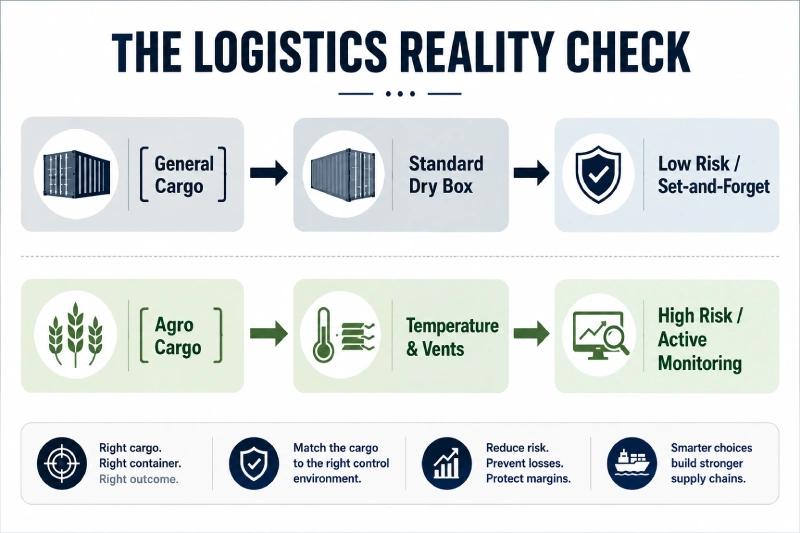
Take a regular deal to export food commodities like raw spices or oilseeds. If your forwarder just throws those goods into a standard dry box without checking moisture levels or thinking about the brutal heat on maritime transit routes, you are heading straight for a disaster. Once the ship hits hot tropical waters, the temperature inside that sealed container can easily spike past 50°C. That extreme heat makes the cargo sweat, creating heavy condensation that triggers rapid mold growth and leads to immediate rejections at destination ports.
A specialized specialist in agro commodity logistics management knows how to prevent these exact headaches. They will look at your cargo and immediately calculate the right ventilation settings, recommend moisture-absorbing desiccant bags, or advise you on whether a cool-chain setup is necessary to preserve the product's natural oils and aroma.
Critical Questions to Screen Your Shipping Partner
When you are interviewing potential providers for export logistics services in India, you need to look past their glossy corporate brochures. Dig into their actual field experience by asking specific, targeted questions:
1. "Do you have direct relationships with the major container lines?"
In peak harvest seasons, container space out of major Indian gateways like Mundra or Nhava Sheva gets incredibly tight. A small, secondary broker might offer you a cheap quote, but they will be the first ones to get your containers "rolled" (bumped to a later voyage) if a shipping line runs out of physical space. You need a partner with solid, direct allocations with the carriers to ensure your cargo actually moves on schedule.

2. "How do you handle local phytosanitary and customs clearance?"
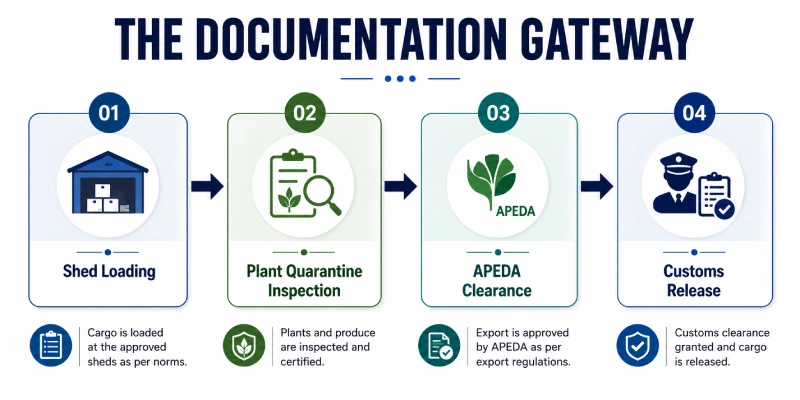
Agricultural shipments face intense regulatory scrutiny before they even leave Indian docks. Your forwarder must have an in-house customs brokerage team that is completely fluent in the documentation loops of the Agricultural and Processed Food Products Export Development Authority (APEDA) and Plant Quarantine inspectors. A single typo on a phytosanitary certificate can tie your container up in red tape for weeks, costing you thousands in port demurrage fees.
3. "What is your fallback plan if a reefer container fails?"
If you are shipping fresh green vegetables or frozen foods, you are completely dependent on a continuous electrical supply. Ask the forwarder directly about their emergency protocols. Do they track live return-air temperatures? Do they have backup generator sets (gensets) readily available at the inland container depots? If they give you a vague answer, walk away.
Balancing Bulk Shipments and Containerized Cargo
Depending on your specific business setup, your logistical needs will shift between two primary modes:
- Bulk Agricultural Export Shipping: Here, you are dumping huge, unbagged volumes of grain or sugar right into the hold of a massive vessel. You need a forwarder who actually knows how to work with complex port loading gear, handle intense dock labor, and manage strict charter contracts so you don't get hit with massive delays and fines while the ship just sits there.
- Containerized Freight and Logistics for Exporters: This is the go-to route if you are shipping high-value spices, processed items, or retail rice packs. The whole game shifts to securing container seals, loading the boxes properly so the cargo doesn’t slam around mid-ocean, and picking the fastest sailing routes to keep the product fresh.
To make the selection process easier, use this quick checklist to evaluate your choices:
Forwarder Evaluation Matrix
| Capability Requirement | General Freight Forwarder | Specialized Agro Forwarder | Why It Matters For Your Cargo |
|---|---|---|---|
| APEDA & Plant Quarantine Fluency | Rare / Outsourced | In-House Experts | Prevents border rejections and costly documentation delays. |
| Reefer Container Expertise | Basic Setup Only | Active Cold-Chain Management | Ensures proper ventilation and guards against internal moisture damage. |
| Carrier Space Guarantees | Spot Market Dependent | Fixed Seasonal Allocations | Keeps your cargo moving during peak harvest panics. |
| Inland Mandi Network Connections | Limited to Port Cities | Deep Inland Rail Connections | Streamlines transport directly from northern agricultural belts. |
The Tactical Verdict
At the end of the day, looking for the absolute cheapest freight rate is a dangerous trap in the agricultural export sector. Saving a couple of hundred dollars on ocean freight means nothing if your entire shipment arrives at a foreign destination covered in mold or gets seized by border officials over a messy paperwork error.
When looking at India agro export logistics, real success belongs to the exporters who treat their freight forwarder as a core strategic partner. Take your time to thoroughly vet their operational track record, verify their field experience with your specific commodity class, and ensure they have a robust network at both the source mandis and the final discharge ports.
Investing in a top-tier partner who offers true global shipping solutions for agro export gives you the ultimate competitive advantage: the peace of mind that your cargo will arrive fresh, compliant, and exactly on time.
Disclaimer
The information provided is for educational and informational purposes only. Freight rates, carrier allocations, customs procedures, phytosanitary requirements, APEDA regulations, and logistics conditions may vary depending on the commodity, destination market, and shipping season. Exporters should independently evaluate freight forwarders and verify all operational and regulatory requirements before entering into logistics agreements.




-export-from-india-market-size-price--trade-process.webp "Garlic Export from India: Market Size, Prices, and the Global Trade Process")